
Add ₹999 more to unlock FREE SHIPPING!
Your sacred cart is currently empty.
Shop Photo FramesKnown as the presiding deity of Beed city and a place of faith for thousands of devotees, the Khandeshwari Devi Temple is situated on a hill on the eastern side of the city. Goddess Khandeshwari is considered a form of Renuka Mata, and this temple is renowned as a ‘Jagrut Devasthan’ (an awakened, powerful shrine). It is said that the original structure of this temple was built by a Dhangar named Kaloji. Later, Punyashlok Ahilyadevi Holkar renovated the temple and bestowed grandeur upon it. The fair held here during the Navratri festival is famous far and wide.
The legend associated with this temple states that hundreds of years ago, a Dhangar named Kaloba Veer lived in Beed city. He was a devout follower of Renuka Devi of Mahur. Every full moon (Paurnima), he would travel to Mahurgad to seek the Goddess’s blessings. As he grew old, it became difficult for him to travel to Mahur, so he requested the Goddess to come to his village. The Goddess set a condition, saying, “I will follow you in my radiant form; however, the moment you look back, I will manifest and stay at that very spot.” Kaloba accepted the condition and began his return journey. He could feel the presence of the Goddess behind him. While passing through the rocky area where the Khandeshwari Temple stands today, a doubt suddenly crossed Kaloba’s mind: Is the Goddess truly following me, or is this just an illusion? In this state of indecision, upon reaching the outskirts of Beed, Kaloba lost his composure and looked back. The moment he looked back, the Goddess fulfilled her promise. She stopped right there. She manifested in the form of a ‘Tandala’ (a naturally formed stone icon) from a rocky boulder and became stationary. Since the Goddess’s journey was ‘khandit’ (interrupted) at that spot, she came to be known as Khandeshwari. The place where this event occurred is where the present-day Khandeshwari Temple stands.
Punyashlok Ahilyadevi Holkar is known as one of the greatest rulers and a devotee of Lord Shiva in Indian history. She was born in the village of Chondi in the district of Ahilyanagar (formerly Ahmednagar), located on the border of Beed district. Thus, she had an emotional connection with Beed and the surrounding region. During her reign, alongside her administrative duties, Ahilyadevi rebuilt temples, ghats, and dharmashalas that had been destroyed across the country. Her work extended from Kashi, Mathura, Gaya, and Somnath to Rameshwaram. According to historical records, Ahilyadevi Holkar also renovated the ancient temple of Khandeshwari Mata. During a period when many temples had fallen into disrepair due to Mughal and Nizam invasions, this work undertaken by Ahilyadevi was of immense significance. She not only renovated the temple but also established arrangements for daily worship and festivals.
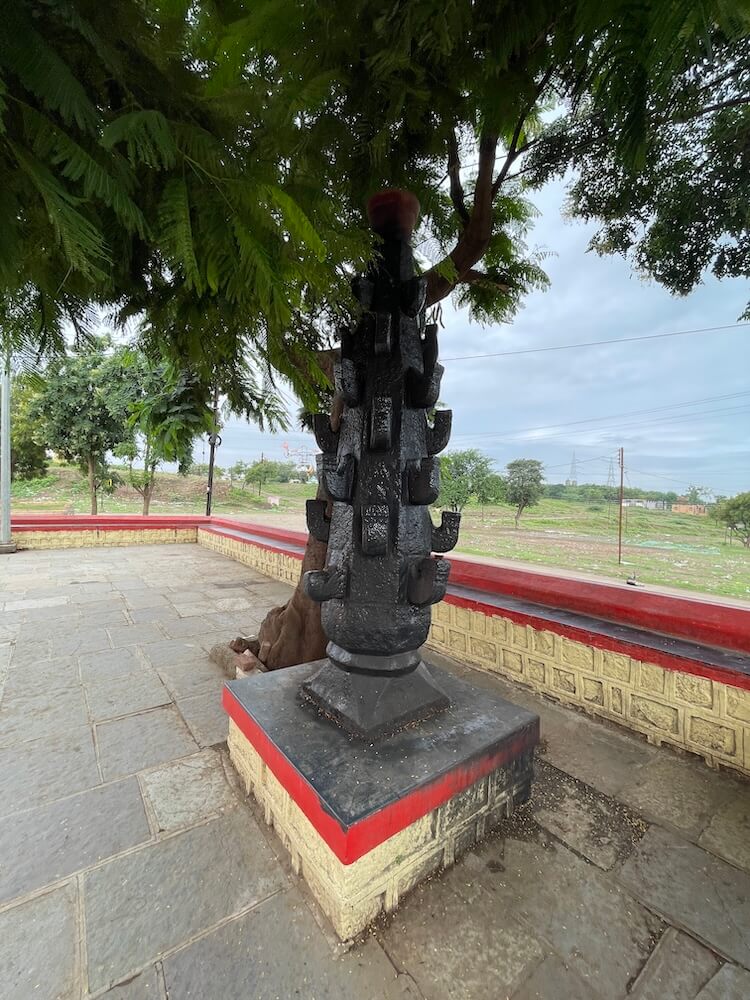
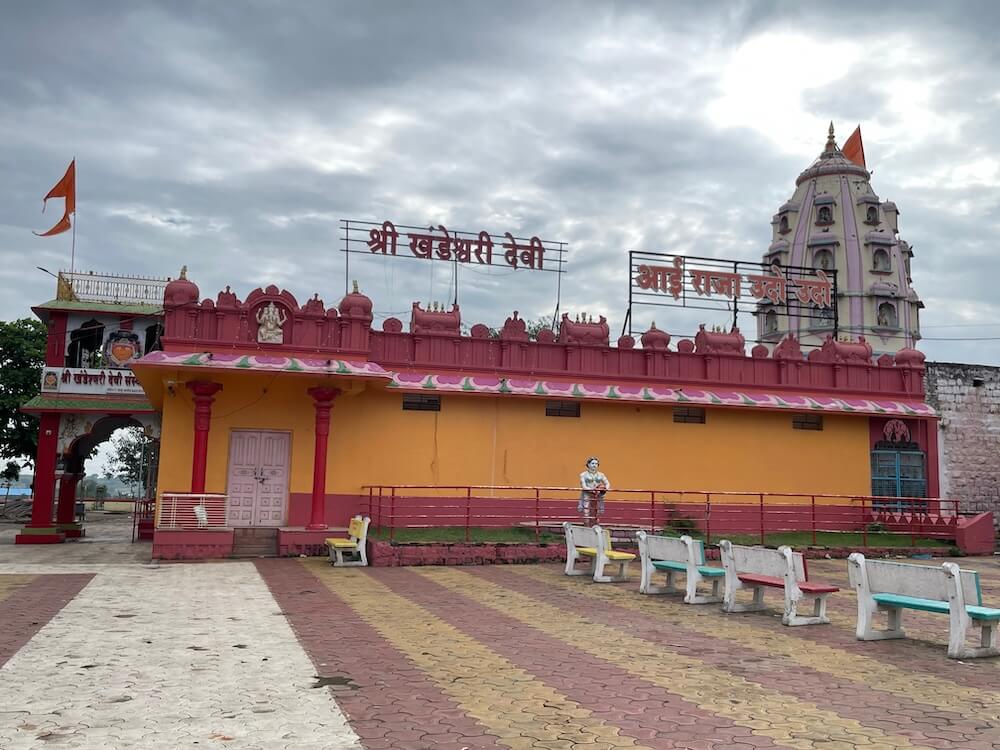
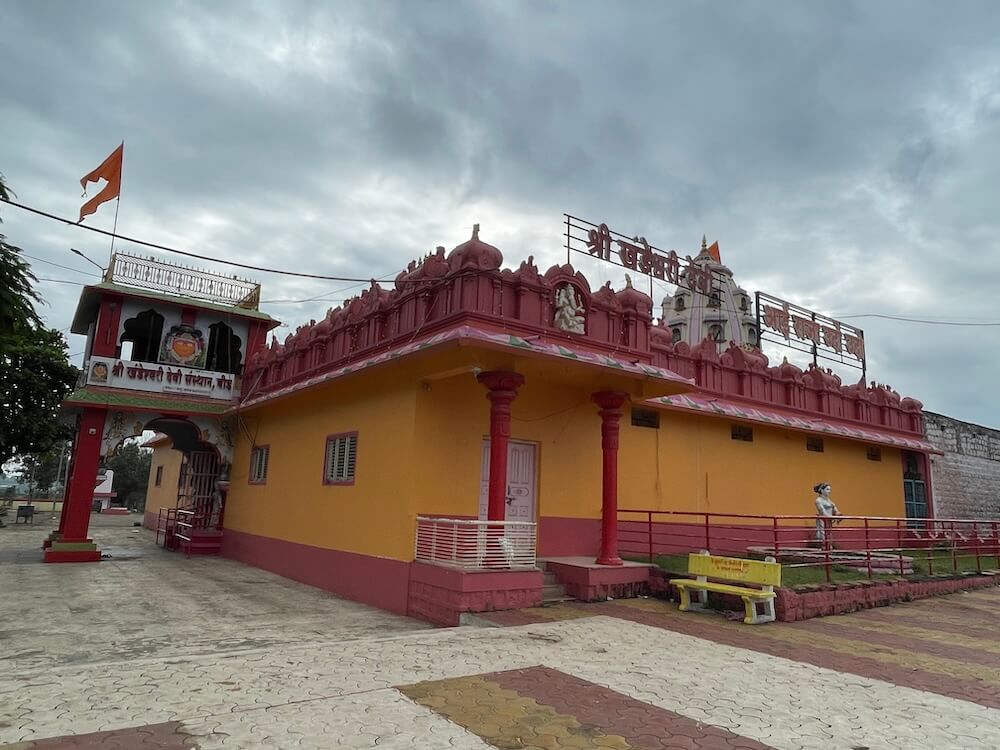
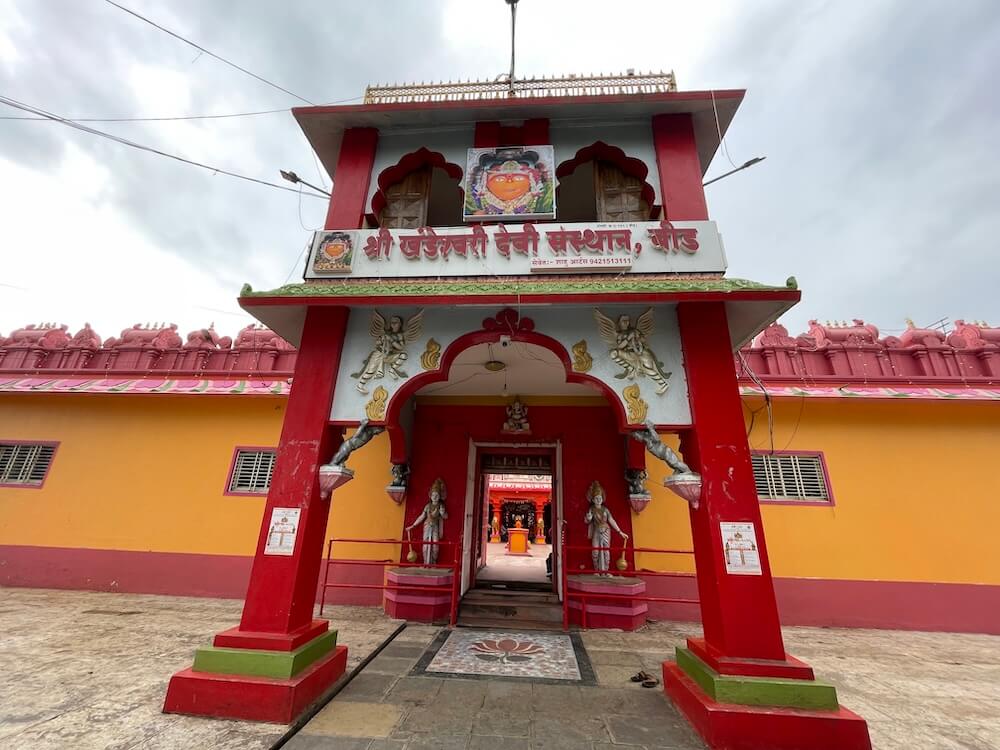
Built in the Maratha architectural style, this temple is situated along the main road in Beed city and is elevated above the road level. The temple has a double fortification. There are five steps to climb into the courtyard of the first fortification. To the left of the stairway stands an ancient Deepmal (lamp tower). In this part of the courtyard, near the second fortification, there is a small Pushkarini (stepped tank). On the edge of this tank is a ‘Kumbhasundari’ sculpture. There are seats in the courtyard for devotees to sit. The second fortification of the temple is sturdy and about ten feet high, featuring an entrance gate. In front of the entrance is a two-storied ‘Ardhamandapa’. The Ardhamandapa has two square pillars in the front, adorned with sculptures of Yakshas supporting the weight of the arched lintels. Similar sculptures are found on both sides of the entrance in the fortification. On both sides of the entrance are pedestals for gatekeepers (Dwarpal) with corresponding sculptures. Above, on the front wall of the fortification, is a sculpture of Lord Ganesha. This entrance has double doors; the outer ones are made of iron mesh, while the inner ones are ornate wooden doors. On the second floor of the entrance is a ‘Nagarkhana’ (drum house) and guard rooms on the inside.
In front of the entrance, in the spacious courtyard paved with paver blocks, lies the Samadhi of the Goddess’s devotee, Kaloba Veer. The Samadhi features ‘Charan Paduka’ (footprints) and a face sculpture. In front of the Samadhi is a Yajna Kund (sacrificial fire pit). Along the fortification are cloisters (ovaryas), which are used as resting places for devotees and as a Bhaktaniwas (pilgrim lodging).
The temple structure consists of a Sabhamandapa (assembly hall) and a Garbhagriha (sanctum sanctorum). The front side of the enclosed Sabhamandapa is open, where sculptures of ‘Swagat Sundaris’ (welcoming beauties) standing in Padmasana are placed on both sides. In front of the Sabhamandapa, there are lion sculptures on Vajra-pedestals on both sides. The Sabhamandapa has four rows of four ornate pillars each. All pillars stand on square bases. The space between the four central pillars is raised by about a foot, where a tortoise sculpture is placed. In the front wall of the Garbhagriha, on both sides of the entrance, are niches containing deity idols. The entrance to the Garbhagriha has five door frames with faint carvings and a Ganesha sculpture on the lintel. The front wall of the Garbhagriha surrounding the entrance is decorated with glass inlay work (Minakari). Inside the Garbhagriha, there are four ornate pillars on a Vajra-pedestal, supporting a silver-ornamented canopy (Makhar). In this Makhar resides the Swayambhu Tandala of Goddess Khandeshwari. The Goddess wears a silver crown. Additionally, the Goddess’s eyes and nose are made of silver. Beside the Goddess stands a brass Trishul (trident). The walls and the dome-shaped ceiling of the Garbhagriha are decorated with glass inlay work.
The roof of the temple has a parapet on all four sides. The front side of the parapet has five niches, with the central one housing an idol of Lord Ganesha. Above this niche is a South Indian-style horizontal Shikhar (spire) featuring a row of five finials (Kalash). On both sides of the Ganesha niche are two niches each, containing idols of various deities. The niches on the other three sides of the parapet also contain deity idols. Above the roof of the Garbhagriha is a five-tiered octagonal Shikhar that tapers towards the top. Each tier of the Shikhar has eight niches containing idols of various deities. At the apex of the Shikhar is a stupika and a Kalash.
Navratri is the main annual festival celebrated here with great enthusiasm. During this time, programs such as Devi’s Aarti, Bhajans, music, Jagaran, and Mahaprasad are organized. For nine consecutive days, a ‘Chhabina’ (procession) of the Goddess is taken out in the evening, circumambulating the temple. During this period, various programs continue until midnight. On the seventh, eighth, and ninth days of Navratri, the Navchandi Yajna is organized. Festivals such as Chaitra Padwa, Dussehra, Diwali, Chaitra Navratri, and Shakambhari Navratri are also celebrated in the temple. The temple sees a special influx of devotees on full moon days, new moon days, Ashtami, Tuesdays, and Fridays.
This sacred temple stands as a testament to deep spiritual devotion, ancient architectural grandeur, and rich local cultural traditions.
The sanctum sanctorum houses the divine idol consecrated according to ancient Vedic traditions, surrounded by serene courtyards and traditional temple architecture.
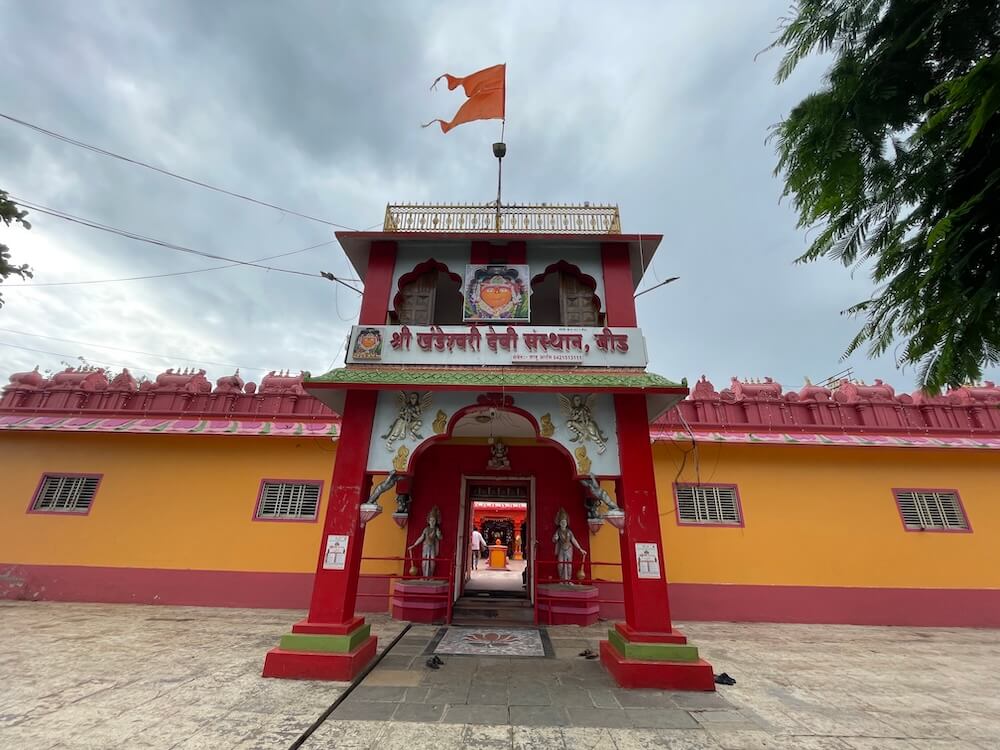
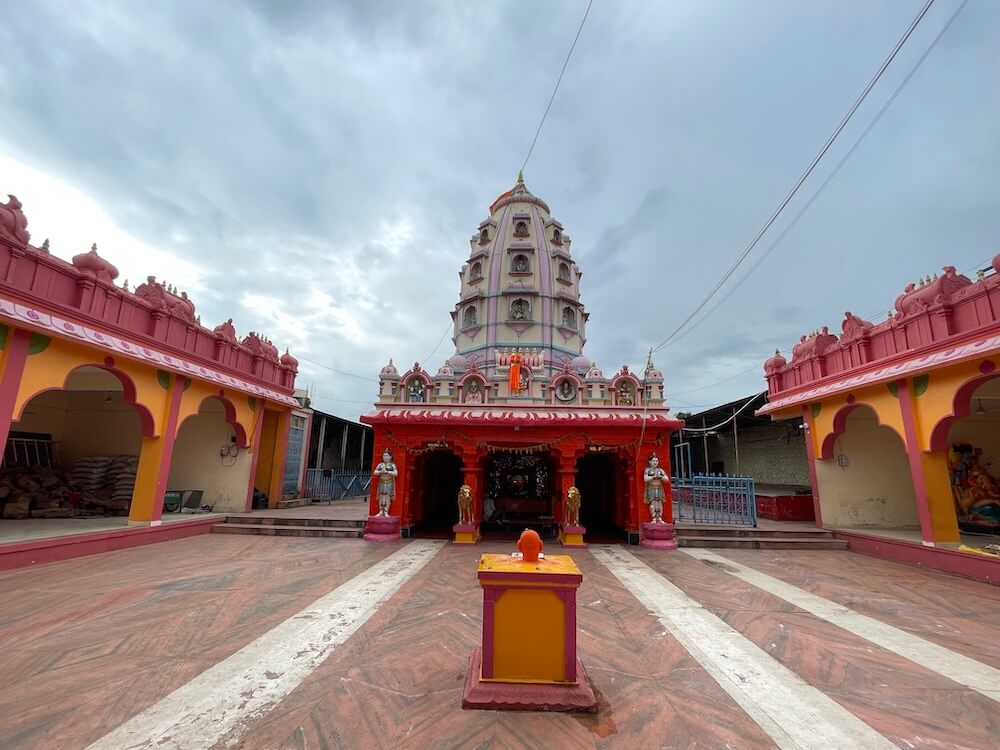
Navratri, Maha Shivratri, Annual Temple Jatra & Deepotsav
Compare and book flights, secure top-rated local hotels near the temple, hire reliable guides, and rent cars instantly.
Extend your pilgrimage by visiting other highly sacred temples located nearby.


Add ₹999 more to unlock FREE SHIPPING!
Your sacred cart is currently empty.
Shop Photo FramesFill in your delivery details below to place your order.
Add comment