
Add ₹999 more to unlock FREE SHIPPING!
Your sacred cart is currently empty.
Shop Photo FramesThe Palasiddhaswami Math, a place of deep reverence for followers of the Veerashaiva sect among the Shivopasak traditions, is located at Sakharkherda in the Sindkhed Raja taluka. This Math, situated in the village of Sakharkherda which holds significant mythological and historical importance, serves as a religious seat for the Veerashaiva tradition. Within this Math lies the temple and Samadhi shrine of Jagadguru Marulasiddha Shivacharya Mahaswami, the 60th Peethadhish of the Ujjayini Peetha, one of the five holy seats of the Veerashaiva tradition. Having attained Sanjeevan Samadhi under a Pala tree in the year 980 of the Shaka era (1058 AD), he is known as Palasiddha Mahaswami.
The five seats of the Veerashaiva tradition are Rambhapuri Peetha (Balehonnur, Karnataka), Ujjayini Peetha (Saddharma Simhasana), Shrishaila, Kashi Peetha, and Setu Peetha. Among these, Jagadguru Marulasiddha Shivacharya, the 60th Peethadhish of the Ujjayini Peetha, used to travel across India to propagate and promote the Veerashaiva tradition. Once, a severe drought struck the kingdom of King Jaysing in the Bidar region of Karnataka. To perform rituals for rain, the King summoned many sages and saints. However, when the rains did not come even after these rituals, he imprisoned the sages. Upon hearing this, Marulasiddha Shivacharya Mahaswami arrived, performed the rituals, and subsequently, rain fell, ending the drought.
Later, Marulasiddha Shivacharya Mahaswami established a Peetha at Ujjayini in Karnataka. Afterwards, he set out on another journey to propagate the Veerashaiva faith. During his travels, he arrived at a forest in ‘Khetakpur’. Sakharkherda was formerly known as ‘Khetakpur’. It was part of the Dandakaranya forest. The village was named after a demon named Khetakasura who resided there. It is said that in the mythological era, Sage Dhaumya lived here. He performed penance for many years in the forest here and resided in a cave. In his later years, as traveling for the propagation of the faith became difficult, he settled here permanently. He performed many divine miracles here, which have been compiled in his biography.
According to local legend, he lived in the Sankhedi area of the village. When the villagers requested him to come and live in the village, he replied, “Instead of me coming to the village, the village itself will come to me.” In the year 980 of the Shaka era, on the day of Shravan Vadya Tritiya, he attained Sanjeevan Samadhi in a cave under a Pala tree here. Before taking Samadhi, he planted the staff he was holding near the tree, which can still be seen today. A popular legend also states that in the past, a cow would appear daily at a specific spot near the Samadhi, and after being milked, it would vanish.
Because he attained Samadhi under a Pala tree, Marulasiddha Shivacharya Mahaswami came to be known as ‘Palasiddha Mahaswami’. In the Bidar region, he is known as ‘Mali (Rain-maker) Swami’. After Palasiddha Maharaja attained Samadhi, his chief disciple, Siddhalinga Shivacharya, closed the upper entrance of the cave and built his Samadhi. He then established a Math here and continued the work of Palasiddha Mahaswami. Due to recent expansion, this Samadhi site and the Math are now within the village limits. The saint-poet Lakshman drew inspiration from this very Math to compose a vast collection of Abhangas. Since its inception, about 30 Swamis have managed the affairs of this Math. Currently, the Math functions under the leadership of Mathadhipati Vedantacharya Shivacharya Maharaj. The state government has granted this Math the ‘B’ grade status of a pilgrimage site.
The village of Sakharkherda has a rich history. There is also an interesting legend regarding the naming of this village. The village, situated on the banks of the Bhogavati river—a tributary of the Painganga river—was named after a freshwater well. In the past, sugar merchants used to transport sugar through this village. During an attack on these merchants, they threw their sacks of sugar into this well, which is said to have made the water of the well sweet. In the year 1724, the battle that established the Nizam’s dominance over the Deccan took place here. In this battle between the founder of the Nizam’s state, Nizam-ul-Mulk Asaf Jah, and the Mughal Emperor’s representative, Mubariz Khan, the Nizam emerged victorious. To commemorate this victory, he renamed the village ‘Fatehkhelda’. Over time, it became ‘Fatehkherda’ (Village of Victory). This name remained until the British rule. Eventually, the village came to be known by its original name again.
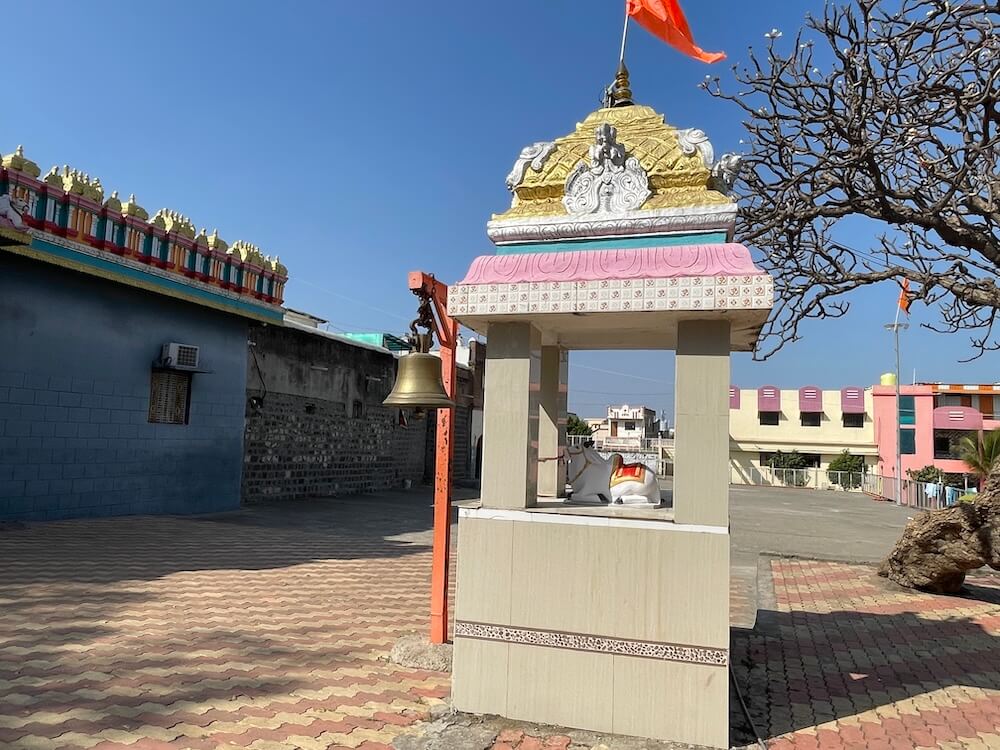
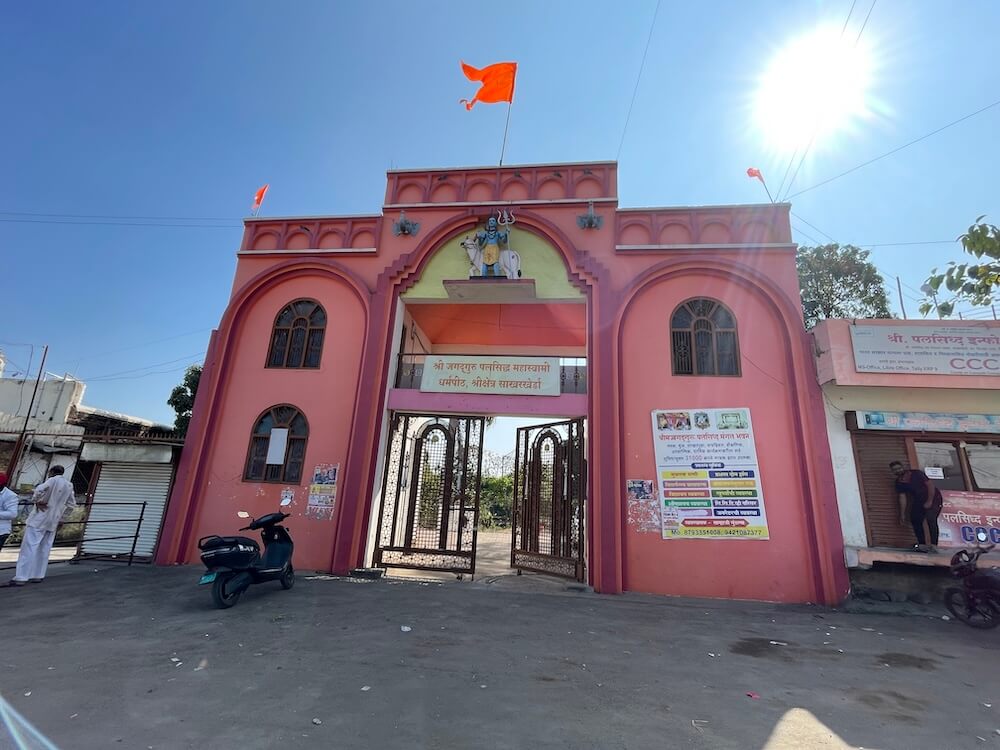
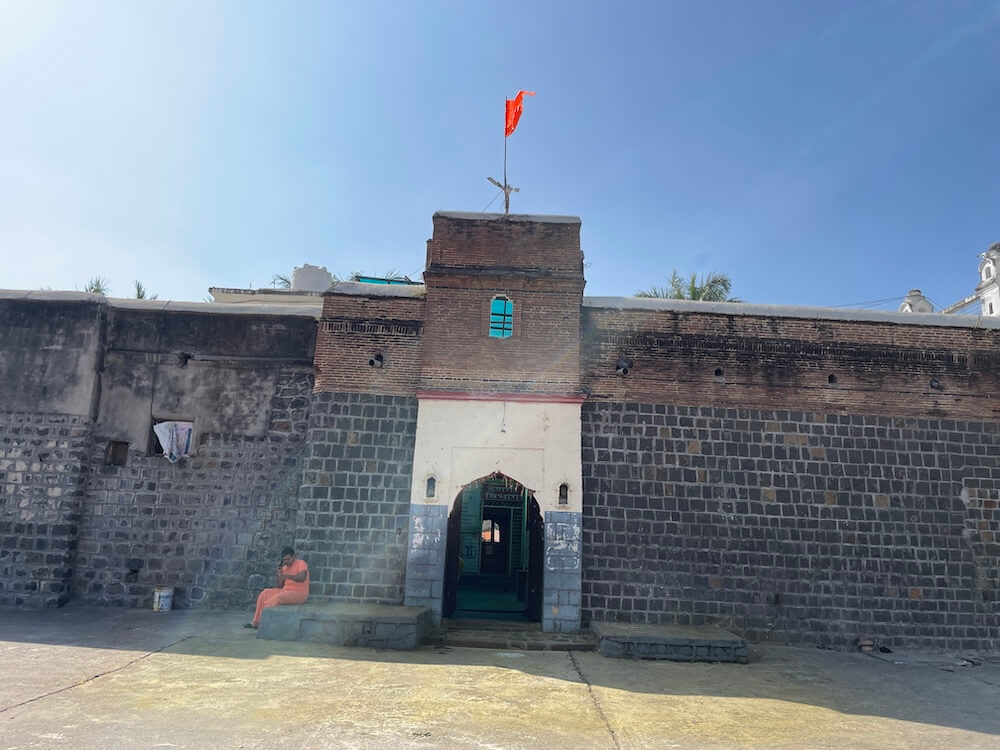
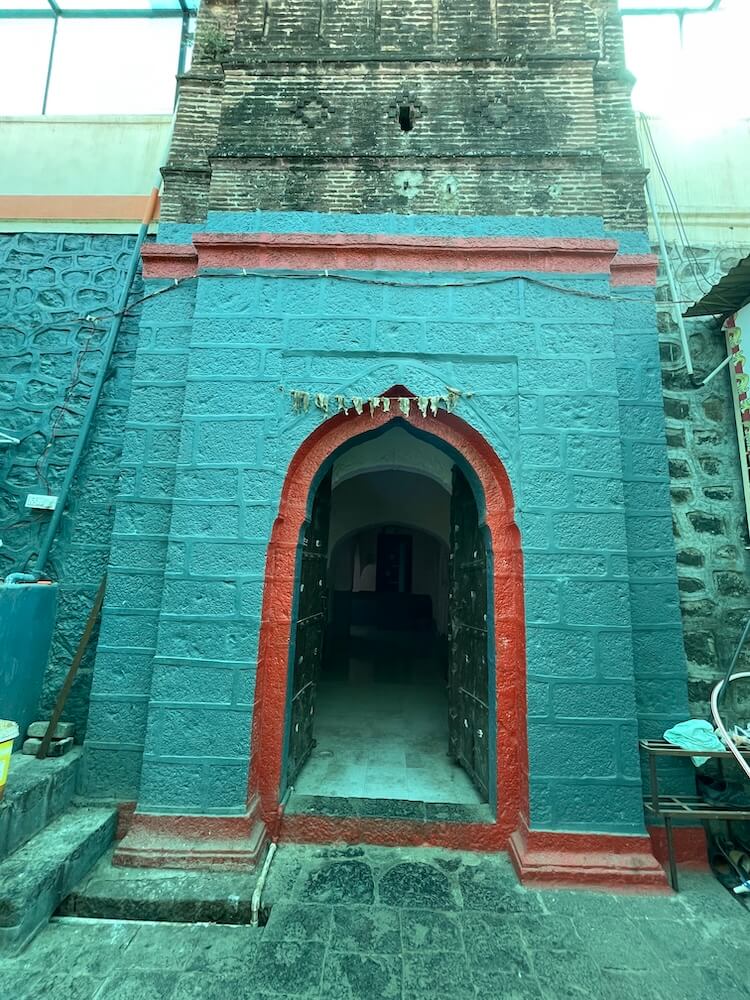
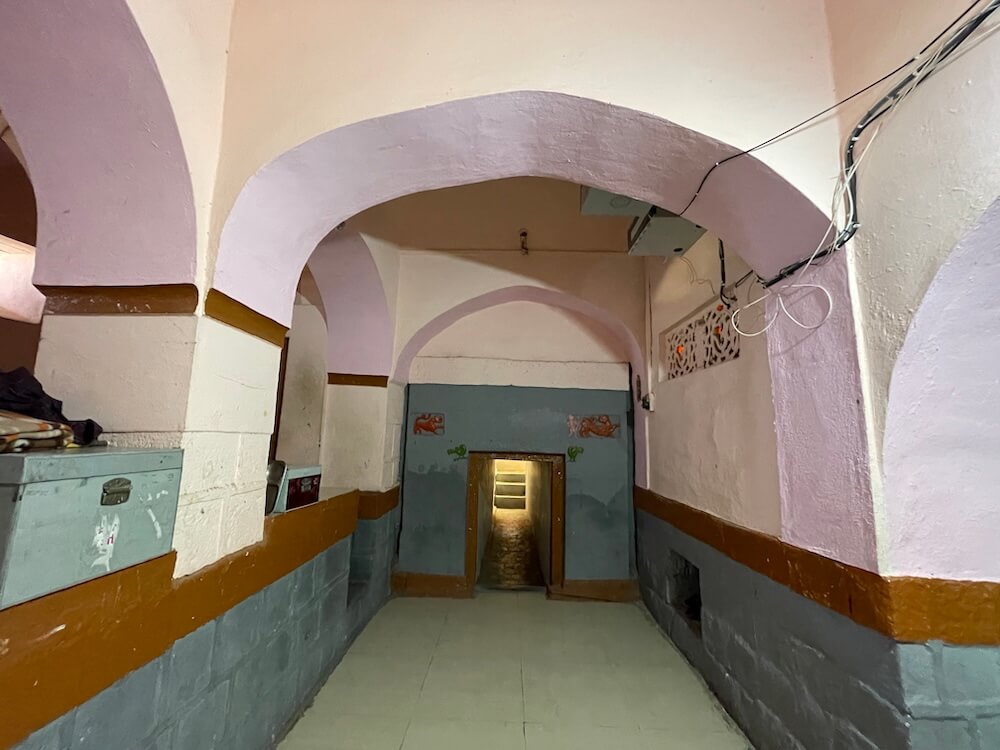
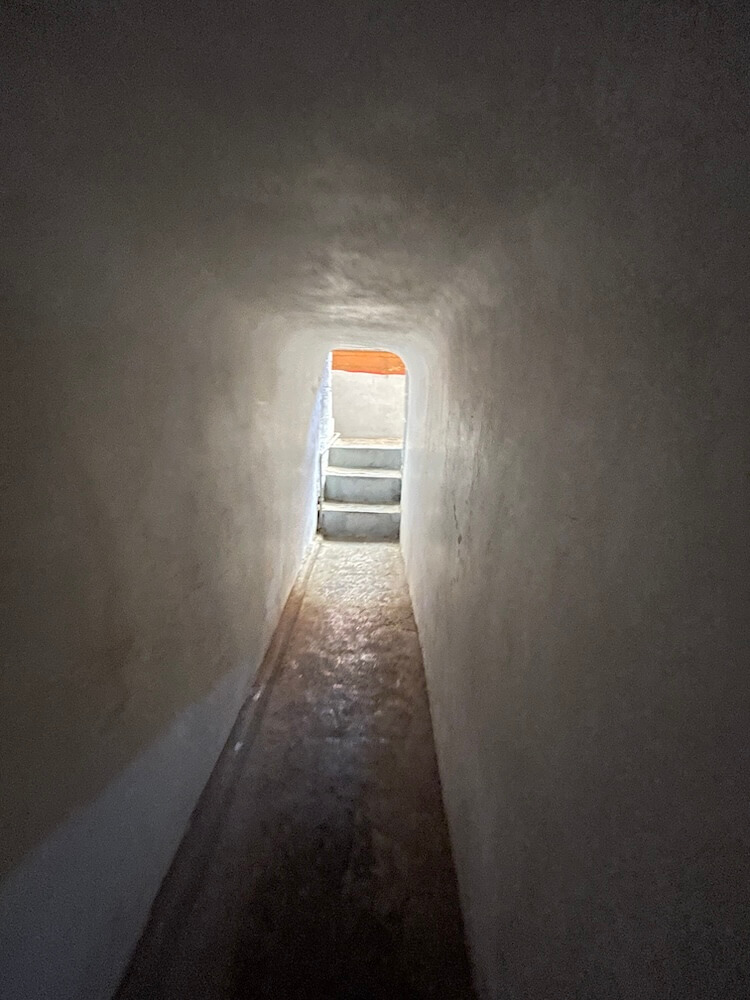
The temple has a beautiful entrance gate. In the upper central part of this entrance, there is a standing idol of Lord Shiva holding a trident, and behind this idol is a sculpture of Nandi. Upon entering through the gate, one reaches a large courtyard, which houses many trees. The temple located in the courtyard is surrounded by a fortification wall. After entering through the gate, which features a Nagarkhana (drum house), one reaches a stone-paved courtyard. The fortification wall has arched corridors on the inside. The original Math was built in such a way that it was impregnable and safe from wild animals. The construction of the Math has expanded in two phases. The entrance to the original Math is like a tunnel; coming through it, one sees the grand inner Math.
The frame of the main sanctum sanctorum entrance is adorned with silver plates featuring intricate carvings. The lintel of the doorway is also made of silver plate. The text ‘Shrimad Jagadguru Paramhansa Marulacharyavarya Shrimad Bhurudra Palasiddha Swamin Prasida Shriman Nripasha. Shaka 980’ is engraved on the silver plate of the door frame. Previously, this text was carved in stone. On both sides of this text, Kirtimukhas are carved. In the sanctum sanctorum, there is a marble idol of Palasiddha Mahaswami in a seated position. Previously, this idol was carved in stone. The marble idol was consecrated around the year 1971. Beneath this idol is a marble Shiva Linga. In a small shrine to the right outside the sanctum sanctorum, there is an idol of Ganesha. On the pedestal below it, traditional footwear (Padukas) is placed on a seat. It is on this seat that the coronation of the new Peethadhish of the seat takes place. Near this seat, an idol of Nandi has been installed as the Gotrapurusha. A few steps away is the seat of the late Peethadhish of the Math, Shivananda. In this area, there is a shrine dedicated to Darukacharya, the founder of the Ujjayini Peetha of the Veerashaiva tradition and one of the Panchacharyas of the sect. His marble idol is enshrined here. Beside the idol is an idol of Ganesha. The premises also contain the Samadhis of the six late Peethadhishas of the Math.
In the second part of the Math, there is a large assembly hall, as well as rooms for the students studying here for religious purposes to reside. Within the premises of the Math, there are Samadhis of some Peethadheeshs. Nearby, one can see large stone grinding mills and mortars that were used in the past. From this, one can surmise that many people must have resided in the Math in earlier times. There is also an ancient well in the vicinity. One can descend into this well through a path located nearby. Just a few steps from here is the Samadhi site of Palasiddha Mahaswami. This Samadhi site is situated under a Palas tree in the large assembly hall. At this place, there is a sculpture of the Kapila cow and a Shiva Linga. On the upper parts of the walls in this assembly hall, one can see illustrated descriptions of the miracles performed by Palasiddha Mahaswami. For the convenience of the devotees visiting here, a Bhaktanivas has also been built on the Math premises. Countless followers of the Veerashaiva sect from the states of Vidarbha, Marathwada, Western Maharashtra, as well as Madhya Pradesh and Karnataka, come here for Darshan. A grand three-day festival is held here on Shravan Vadya Tritiya. During this festival, many followers bow their heads in reverence before the Samadhi site of Palasiddha Mahaswami.
This sacred temple stands as a testament to deep spiritual devotion, ancient architectural grandeur, and rich local cultural traditions.
The sanctum sanctorum houses the divine idol consecrated according to ancient Vedic traditions, surrounded by serene courtyards and traditional temple architecture.
Navratri, Maha Shivratri, Annual Temple Jatra & Deepotsav
Compare and book flights, secure top-rated local hotels near the temple, hire reliable guides, and rent cars instantly.
Extend your pilgrimage by visiting other highly sacred temples located nearby.


Add ₹999 more to unlock FREE SHIPPING!
Your sacred cart is currently empty.
Shop Photo FramesFill in your delivery details below to place your order.
Add comment