
Add ₹999 more to unlock FREE SHIPPING!
Your sacred cart is currently empty.
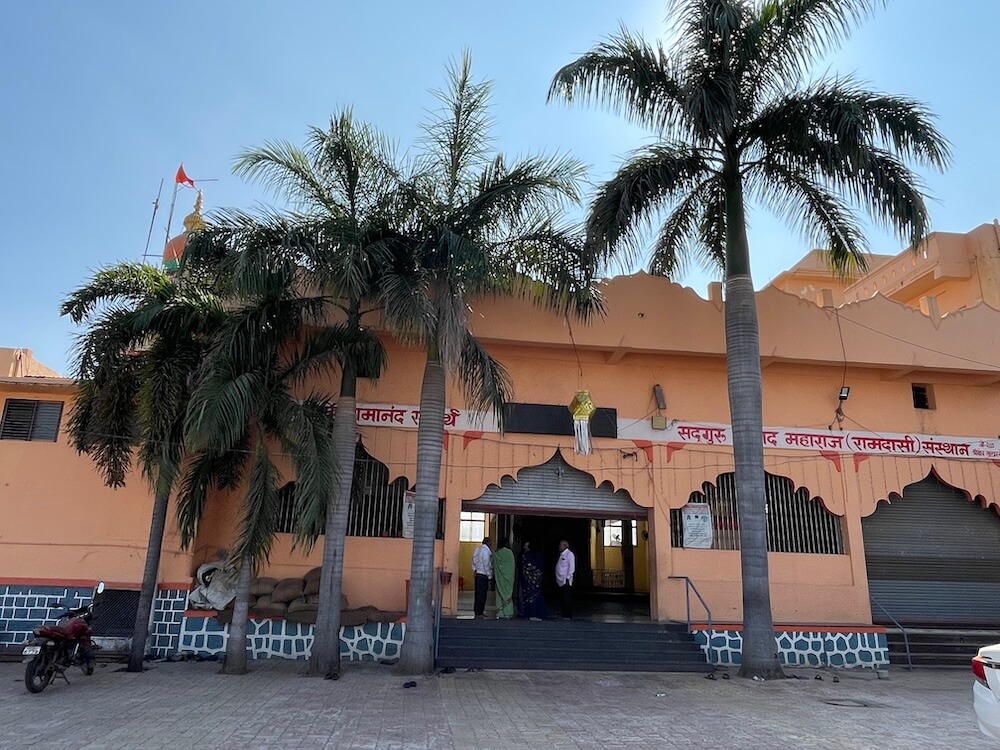
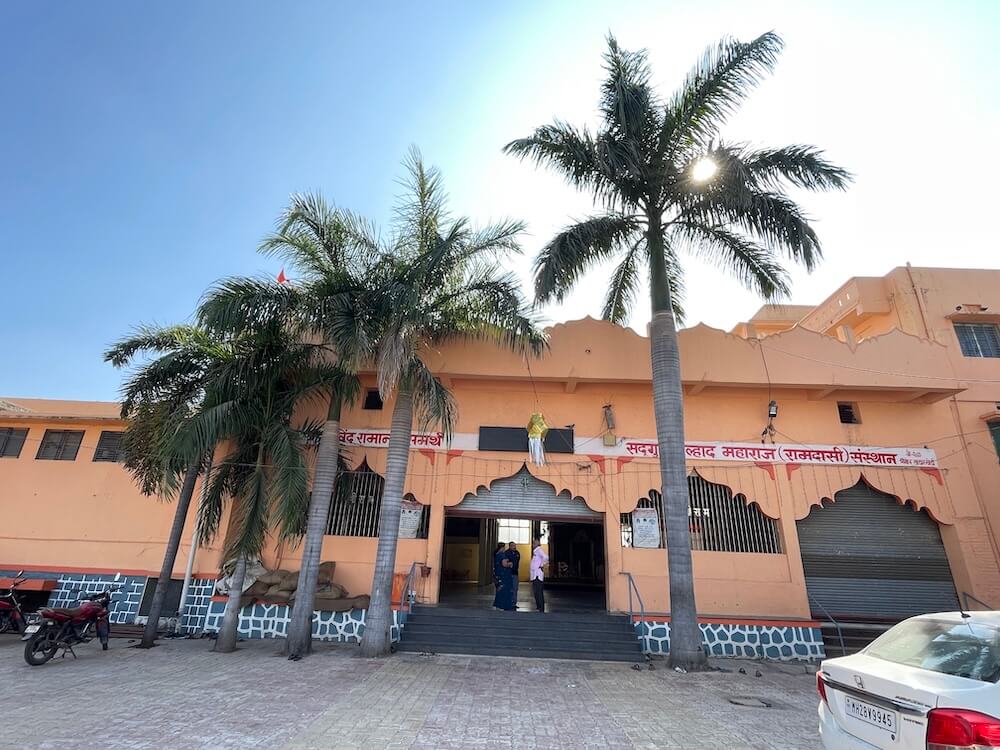
Shop Photo FramesThe village of Sakharkherda in the Sindkhed Raja taluka of Buldana district is situated on the banks of the Bhogavati River, a tributary of the Painganga. Known as a land of saints, this region has been the birthplace of many great souls. Among them, the name of Sadguru Shri Pralhad Maharaj (Ramdasi) is revered as a saint who blossomed the garden of devotion on the dry and rocky soil of Vidarbha. The Sant Pralhad Maharaj Sansthan in Sakharkherda is a place of deep faith for thousands of devotees and followers of the Maharaj.
Sant Pralhad Maharaj (Ramdasi) was born in 1893 on the day of Magh Amavasya in the small village of Veni in Mehkar taluka, to the couple Mukundshastri Kale and Gangabai. From childhood, Pralhad Maharaj’s temperament was extremely calm and introspective. His compassionate and non-violent nature was evident in his childhood when he opposed a campaign to kill insects at school, firmly declaring, “I will not kill living beings,” and subsequently left the school. Although his formal schooling only reached the fourth grade, he gained knowledge of the Vedas, Shastras, and Puranas from his father and elder brother.
He had a greater longing for self-realization than for worldly education. Sakharkherda was his ancestral village, and he resided here. In the prime of his youth, when young men are usually absorbed in worldly life, Pralhad Maharaj would spend hours in solitude, chanting the Lord’s name. This intense longing led him to seek a Sadguru, and at Kinhola in Chikhli taluka, he met Ramanand Maharaj, a disciple in the tradition of Samarth Ramdas Swami and a direct disciple of Gondavalekar Maharaj. He received initiation (Anugraha) at Sakharkherda on Hanuman Jayanti in 1910, and Pralhad Maharaj truly became a “Ramdasi.” The most extraordinary aspect of his life was his marriage. He married Krishnabai (Jijimay) at the age of 16, but this marriage was not for worldly life; it was for the pursuit of God through mutual cooperation. The vow of “lifelong celibacy” that both husband and wife took was faithfully observed throughout their lives. The detachment they maintained while living as householders is considered a marvel of the modern era.
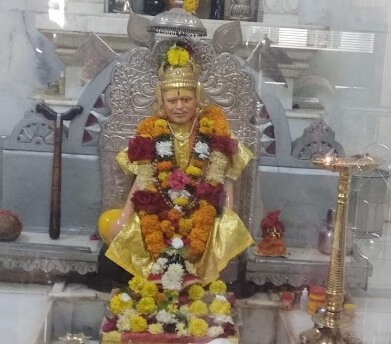
In 1920, following a suggestion from his Guru, he donated all his property and house to Brahmins and began living in the Ram Mandir, dedicating himself to public service and chanting the Lord’s name. The Maharaj had resolved to complete the chanting of the Ram-Nama 130 million times in his life, a task he completed with extreme discipline. “Chant the name of Ram, and Lord Ram will bless you”—this simple yet effective message guided the lives of thousands. He traveled through Vidarbha and Marathwada, promoting Samarth Ramdas Swami’s “Dasbodh,” and wove a web of devotion by establishing Shri Ram and Maruti temples in many places. The scope of the Maharaj’s devotion was so vast that everyone who came in contact with him was mesmerized. It is said that the chanting of Ram-Nama was so deeply ingrained in his inner being that the sound of “Ram-Ram” could be heard emanating from his pulse. Due to his simple living and high thinking, Sakharkherda became a center of devotion. After a lifetime of devotion to Shri Ram and the spiritual awakening of society, this great soul left his mortal body in 1979 on the day of Kartik Shuddha Chaturthi in Akola. His Samadhi is located in this temple of Pralhad Maharaj at Sakharkherda; hundreds of devotees come here for Darshan every day. The legacy of chanting and food donation (Annadan) started by the Maharaj continues here with the same faith today.
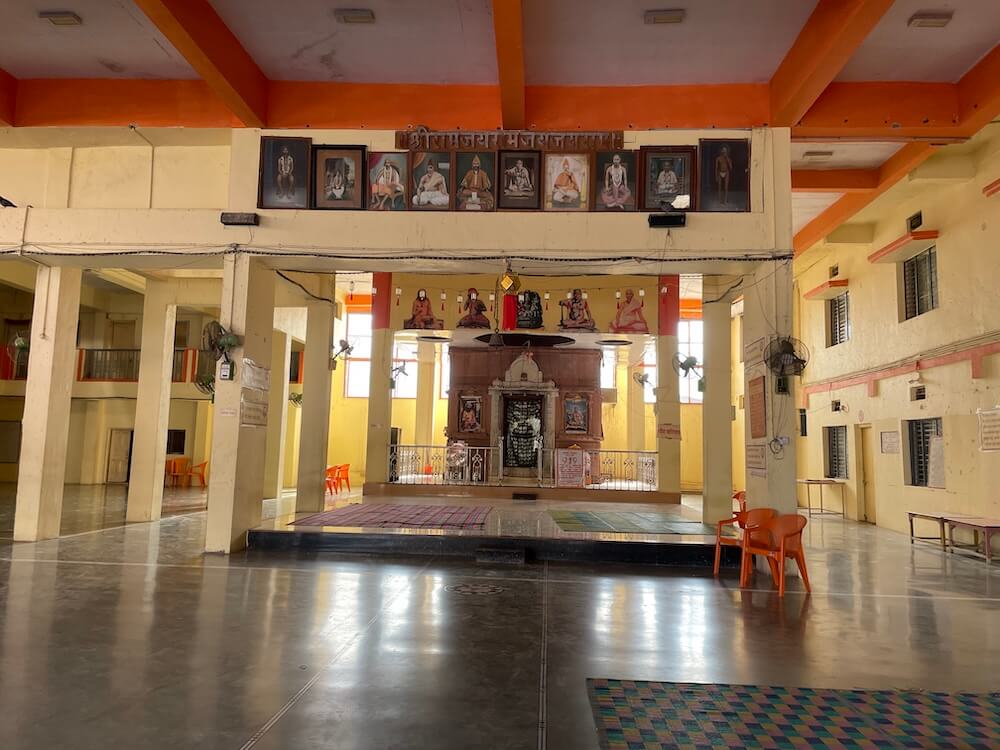
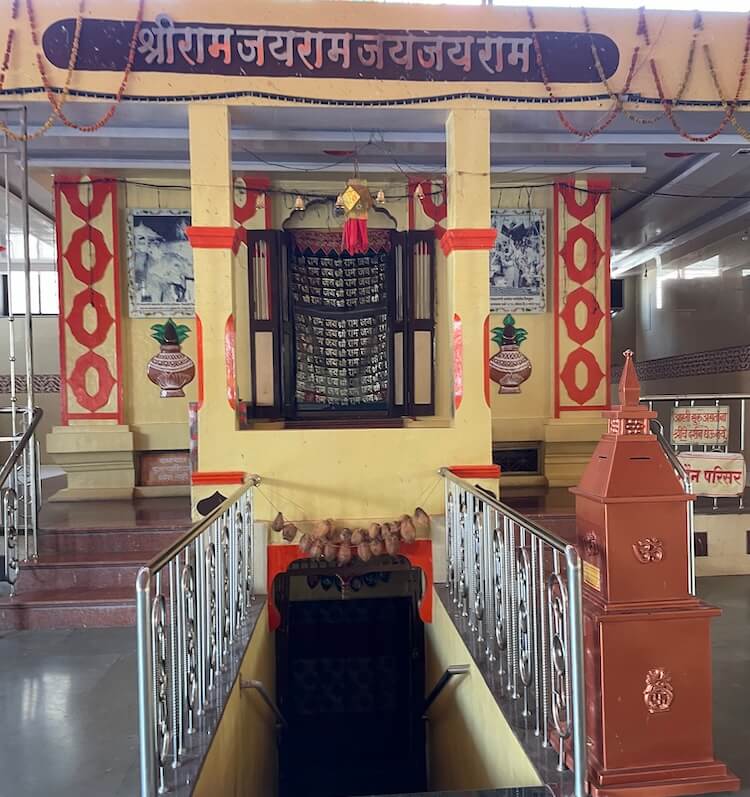
The story behind the construction of this temple, located in the heart of Sakharkherda village, is also unique. Instead of expecting large donations, a scheme called “Bhiksha – One Brick” was implemented for its construction. Just as the squirrel helped in building the bridge in the Ramayana, the poor people of the village and surrounding areas contributed by giving one brick each to build this temple. Therefore, it is said that this Sansthan truly belongs to the “common people.” There is a large courtyard in front of the temple. There are five steps to enter the assembly hall (Sabhamandap) of this temple, which stands on a high foundation. To the right in this hall is a small Maruti temple. In the center of the hall is an open space, followed by the sanctum sanctorum (Garbhagriha). On both sides of the entrance to the sanctum are images of Ramdas Swami and Brahmachaitanya Gondavalekar Maharaj. Inside the sanctum, on a diamond-shaped pedestal (Vajrapitha), is the idol of Shri Ram in a marble arch. Adjacent to this pedestal, on the lower side, is the idol of Shri Pralhad Maharaj (Ramdasi).To the left in the assembly hall is the Samadhi site of the Maharaj. One enters the Samadhi temple by descending about 15 steps from the assembly hall. Here, his idol is placed on the Samadhi site. Next to this Samadhi site is the Samadhi site of Jijimay.
Daily, the Bhupali Aarti takes place in the temple at 5:30 in the morning. The Maha-Naivedya and Aarti are held between 12:00 and 1:00 in the afternoon, and the reading of Dasbodh takes place from 8:00 to 9:00 in the evening. The Samadhi site remains closed for devotees from 1:00 to 3:00 in the afternoon. Many festivals and celebrations are organized in this Sansthan throughout the year.
These include Shri Ram Navami on Chaitra Shuddha Navami, Hanuman Jayanti on Chaitra Purnima, Jijimay Punyatithi on Vaishakh Vadh Dashami, Guru Purnima Mahotsav on Ashadh Purnima, Pralhad Maharaj’s Punyatithi on Kartik Shuddha Chaturthi, Gokulashtami, Dattachaitanya Maharaj Punyatithi on Margashirsha Vadh Dashami, Ramanand Maharaj Punyatithi on Margashirsha Vadh Dwadashi, Dasnavami Utsav on Magh Vadh Navami, Ramanand Maharaj Janmotsav on Magh Vadh Dwadashi, and Pralhad Maharaj’s Janmotsav on Magh Amavasya.
This sacred temple stands as a testament to deep spiritual devotion, ancient architectural grandeur, and rich local cultural traditions.
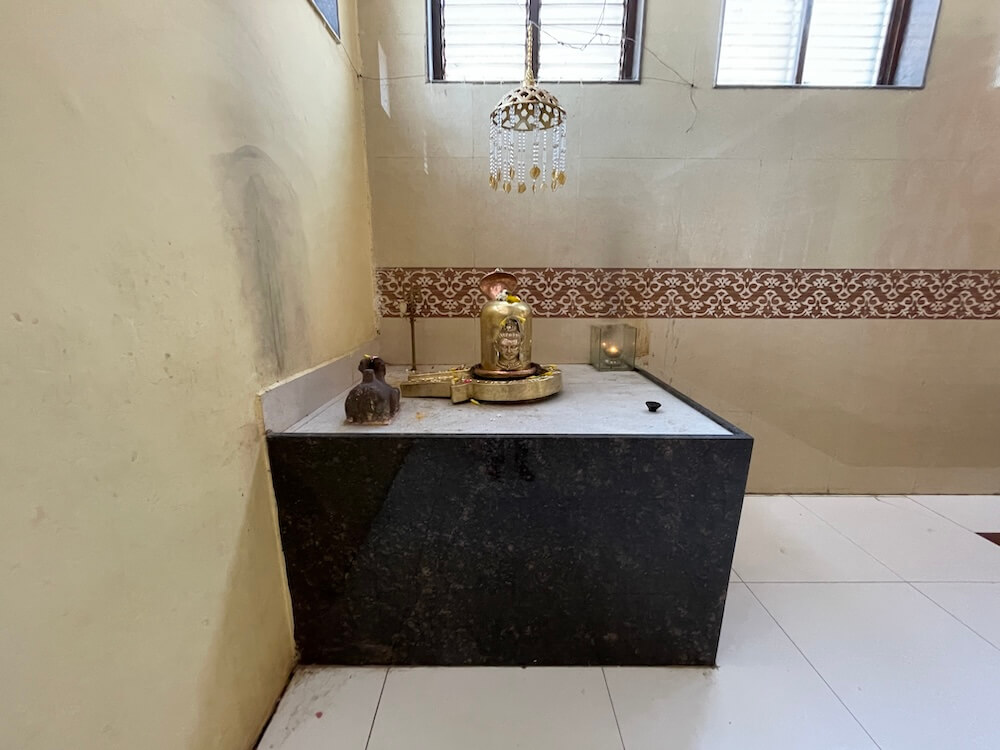
The sanctum sanctorum houses the divine idol consecrated according to ancient Vedic traditions, surrounded by serene courtyards and traditional temple architecture.
Navratri, Maha Shivratri, Annual Temple Jatra & Deepotsav
Compare and book flights, secure top-rated local hotels near the temple, hire reliable guides, and rent cars instantly.
Extend your pilgrimage by visiting other highly sacred temples located nearby.


Add ₹999 more to unlock FREE SHIPPING!
Your sacred cart is currently empty.
Shop Photo FramesFill in your delivery details below to place your order.
Add comment