
Add ₹999 more to unlock FREE SHIPPING!
Your sacred cart is currently empty.
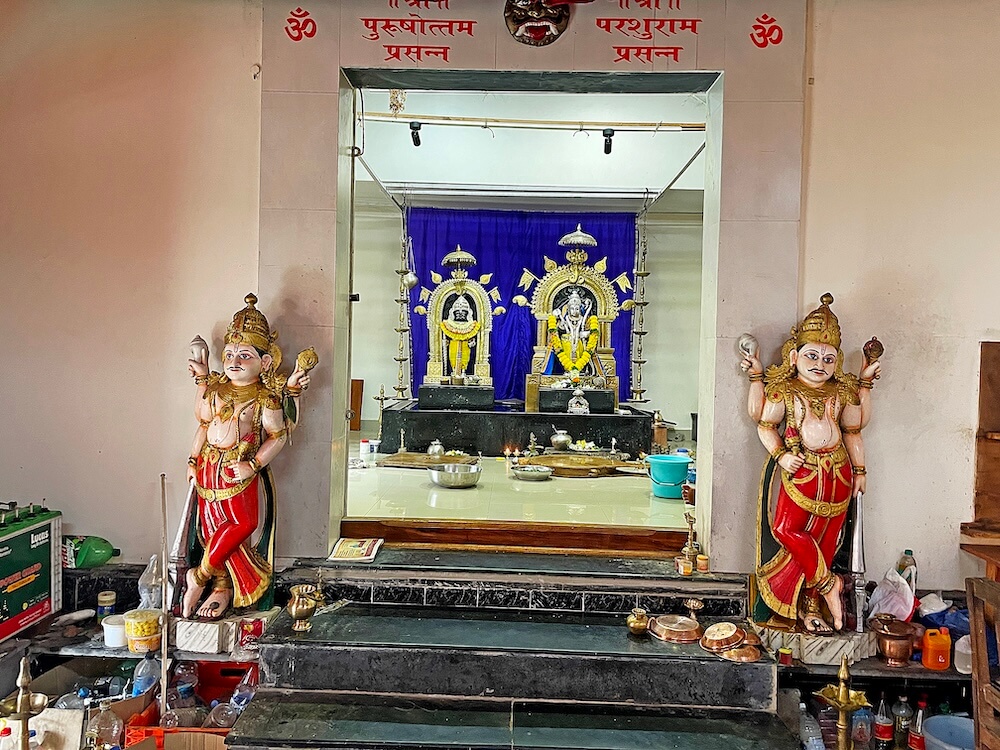
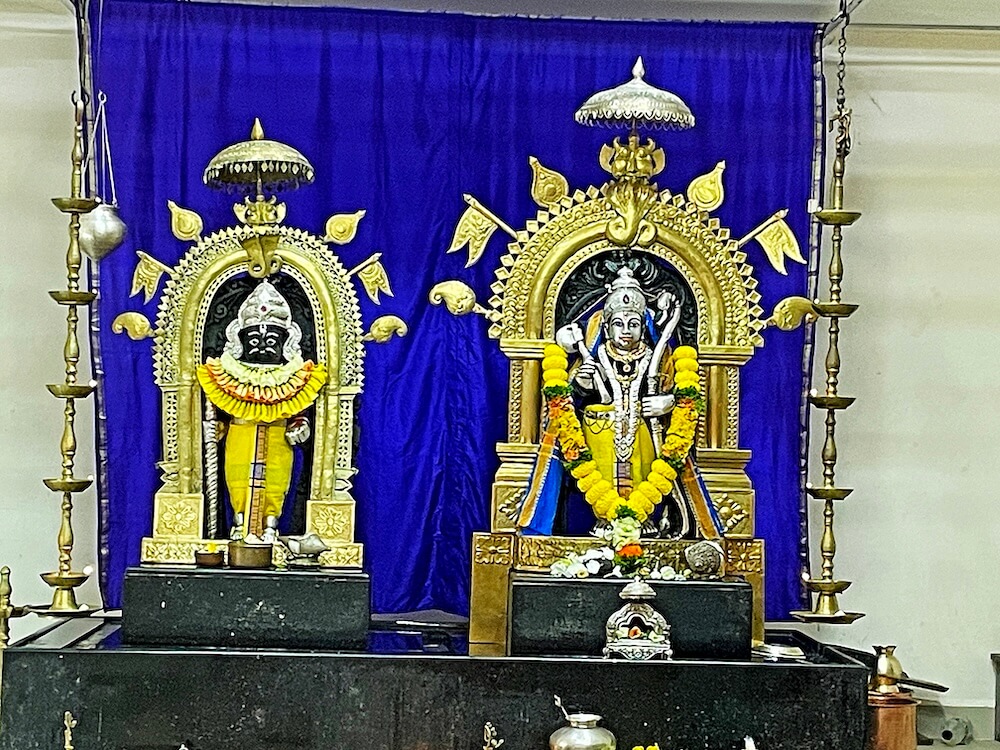
Shop Photo FramesThe only ancient temple of Parashurama in Gomantaka (Goa) is situated in Painguin, a place sanctified by the presence of the sage Paingi. Parashurama is considered the creator of the land stretching from Bhrigukachchha (Bharuch) to Kerala and is the sixth avatar of Lord Vishnu. This temple is counted among the three major Parashurama sites in the country. Previously, Parashurama was worshipped in this temple in the form of a stone chakra (disc). Now, an idol of Parashurama has been installed here for the darshan of devotees. Additionally, an idol of Purushottama is also enshrined here.
According to mythological history, the Bhrigu lineage (Bhargava) of Parashurama resided in Anarta, Gujarat. The Bhrigus were the priests of the Haihaya dynasty. Sahasrajit, the son of Yadu (son of Yayati), was the founder of the Haihaya dynasty. The capital of the Haihayas was the city of Mahishmati (modern Maheshwar) on the banks of the Narmada in Malwa. The Haihaya king Kritavirya gave immense wealth and riches to the Bhargavas. However, the sons of Kritavirya did not give any of it to the Bhargavas and instead persecuted them. Sage Jamadagni, a descendant of the Bhargavas, was the father of Parashurama. Once, the Haihaya king Kartavirya arrived at the hermitage of Jamadagni with his army in the absence of Parashurama and forcibly took away the divine Kamadhenu. This ignited the conflict between the Haihayas and the Bhargavas.
In that struggle, Parashurama killed Arjuna, the son of Kartavirya. Subsequently, the sons of Arjuna murdered Jamadagni. Enraged, Parashurama formed an alliance of the kingdoms of Vaishali, Videha, Kashi, Kanyakubja, and Ayodhya, launched a campaign against the Haihayas, and annihilated them. It is said that Parashurama fought twenty-one battles against royal powers or waged war against the Kshatriyas twenty-one times and conquered their kingdoms. Thereafter, to atone for the sin of these killings, he donated the land under his control to Sage Kashyapa. At the behest of Sage Kashyapa, Parashurama came to the south. He resided on the Mahendragiri mountain and created the land of Konkan, making it habitable.
Regarding this, the mythological legend states that while living on Mahendragiri, Parashurama requested the ocean to grant him a small piece of land. However, when the ocean refused, he became enraged and shot an arrow, forcing the sea to retreat from Kutch in the north to Kanyakumari. This created a landmass six yojanas wide and four hundred yojanas long, known as Saptakonkan. Their names are given in the Sahyadrikhanda (Uttarardha ६.४७-४८) as follows: ‘Keralashcha Tulangashcha tatha Saurashtravasinah. Konkanah Karahatashcha Karnatashcha Barbarah. Ityete sapta desha vai Konkanah parikirtitah.’ This means there are seven Konkans: Kerala, Tulanga, Saurashtra, Konkan, Karahata, Karnata, and Barbara.
Thereafter, Parashurama performed a yajna for his victory in Gomantaka, the land of Konkan. Requiring many learned Brahmins for the success of this ritual, Parashurama brought ascetic and scholarly Saraswat Brahmins from Trihotrapura in the north, including those of the Bharadwaja, Kaushika, Vatsa, Kaundinya, Kashyapa, Vashistha, Jamadagni, Vishwamitra, Gautama, and Atri lineages. According to the Marathi Vishwakosh, the land of Mithila had twelve names in total, one of which was Tairabhukti, which later corrupted into Tihotra. The region north of the Ganges in the present-day state of Bihar is called the Tirhut region. There were sixty-six clans of these Brahmin sages who arrived from here. These clans brought their family deities (Kuladevatas) with them, namely Mangeshi, Mahalaxmi, Mangirish Mahadeva, Shantadurga, Saptakoteshwar, and Mahalasa. This is described in the Uttararahasya of the Sahyadrikhanda. In his book ‘Parashurama Charitra va Panchamanava Hindusamaj’ written in १९३७, Shri M. Mate stated that the era of the original Parashurama was about seven thousand years ago. Meanwhile, the historian V. K. Rajwade, in an essay published in the proceedings of the second conference of the ‘Bharat Itihas Sanshodhak Mandal, Pune’ in १९१४, expressed the opinion that ‘the fourteen original ancestors of the Chitpavans settled in Konkan three thousand eighty-eight years ago (i.e., around ११७४ B.C.)’.
Among the three major Parashurama sites in the country, this temple in Painguin is included, along with the temple in the Parashurama Ghat of Konkan and the temple known as Thiruvallam Parashurama Swami near Thiruvananthapuram in Kerala. The exact history of when this temple was built is unknown. Some scholars suggest the period of this temple to be the thirteenth or fourteenth century A.D. It is said that originally there was a temple of Purushottama here. The stone chakra in this temple was considered a symbol of Parashurama, and thus the name of Parashurama became associated with the temple. The Goa Gazetteer also records that instead of an idol of Parashurama, a black circular stone is worshipped in this temple. In १८७२ A.D., the temple was renovated by the Gokarna Partagali Jivottam Math. At that time, the stone chakra, which was part of the Tulsi Vrindavan, was buried in the ground. Therefore, an idol of Parashurama was installed here for darshan.
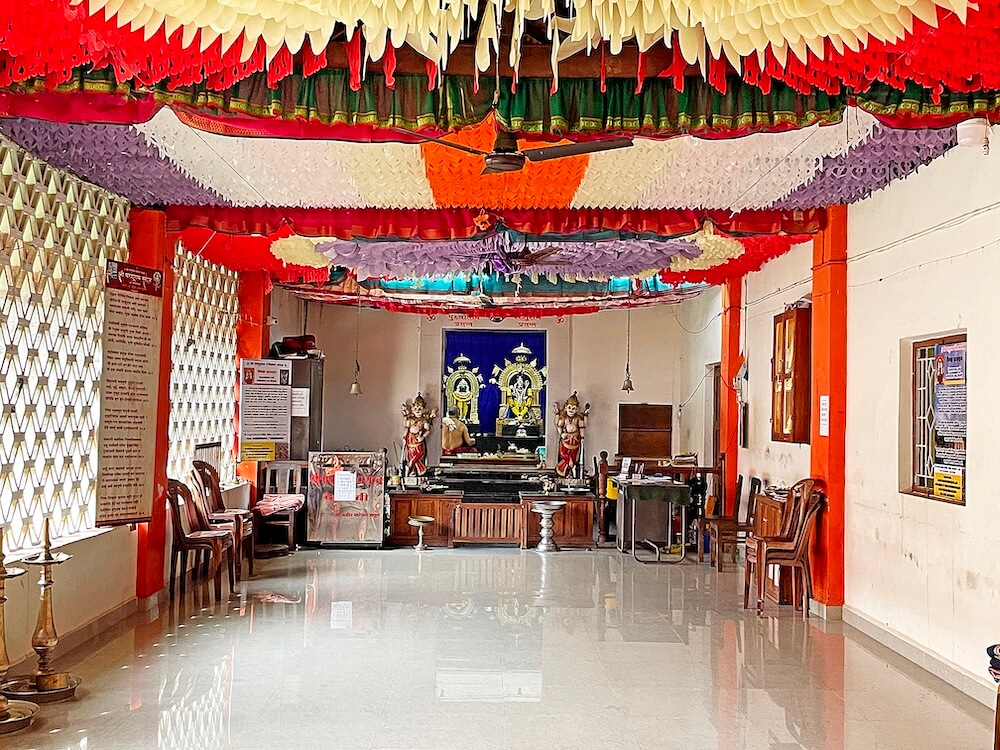
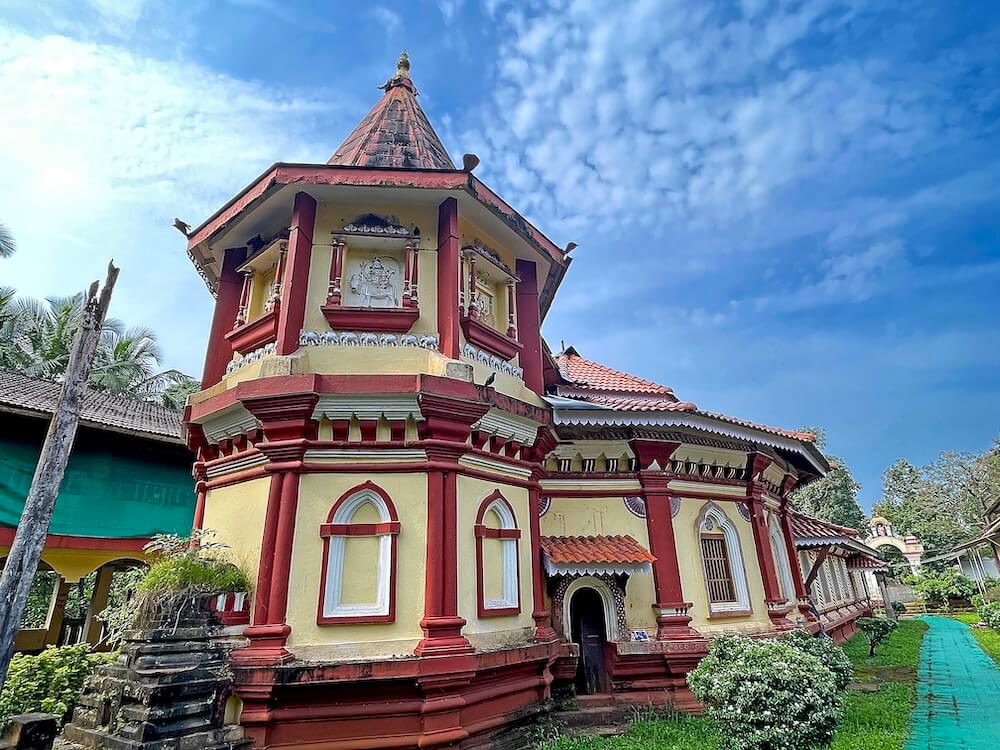
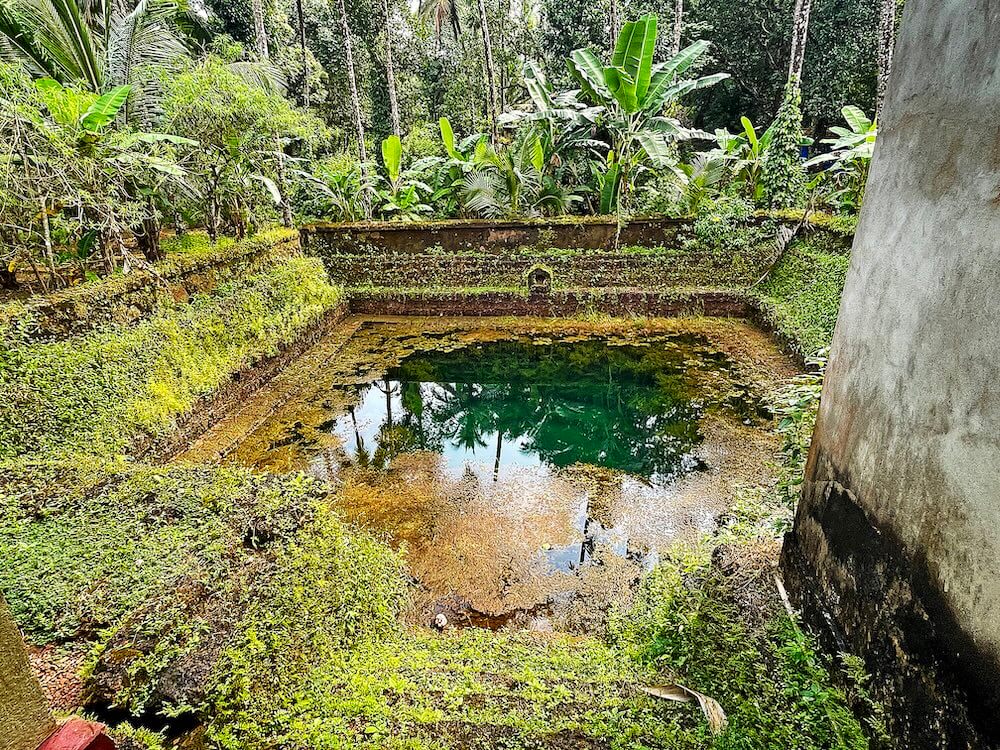
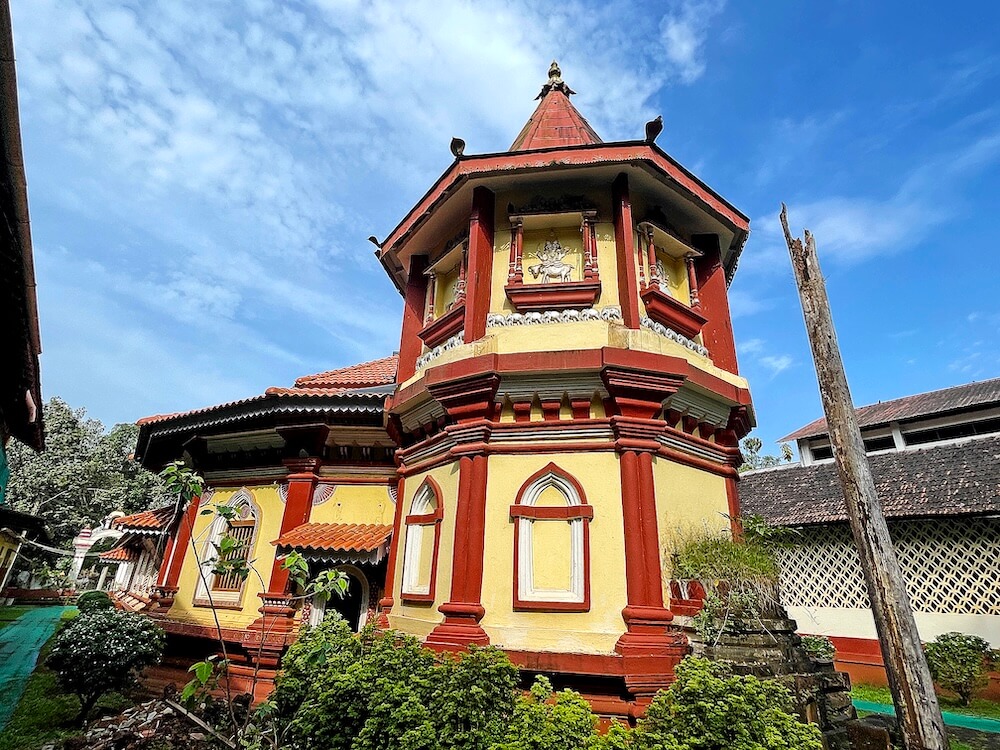
The temple is situated in a large courtyard in the nature-rich area of Painguin. The temple courtyard has two identical entrance arches. In the niches at the top of both arches, idols of Ganesha are enshrined. The architecture of the temple is in the traditional Gomantaki style. The assembly hall (Sabhamandapa) has six traditional carved wooden pillars, on which mythological stories are carved. The temple has two separate sanctums (Garbhagrihas). In the eastern sanctum is Purushottama, and in the western sanctum is the idol of Parashurama. The idol of Purushottama is carved from black stone and holds a staff in its hand. The idol of Parashurama is made of metal. In this Samapada (standing straight) idol, the left hand holds a bow, while the right hand holds a Parashu (axe). Behind the idol is a carved Prabhavali (halo). On its arch, at the Lalatabimba position, an image of a Naga is carved. Above it is a Kirtimukha, and above that is a silvery umbrella. The temple spire is tapered and triangular, with a Kalasha on top. There is a community hall in the temple premises.
Parashurama Jayanti is the main festival of this temple. It is celebrated with great enthusiasm on Vaishakha Shukla Tritiya. Thousands of devotees attend this festival. The festival begins in the morning with Abhisheka. In the afternoon, there is Mahaprasada and Kirtana, while in the evening, a Ratha Yatra and a grand Arati take place. The festivals of Ganesha Chaturthi and Navaratri are also celebrated on a grand scale at this temple. On Ganesha Chaturthi, a joint worship of Ganapati and Parashurama is performed here. Throughout the entire month of Shravana, Ranga Puja is conducted. The Shigmo fair is held on Phalguna Krishna Dwitiya. Divajotsava, which is the festival of lights, is also celebrated in the temple. In this temple, there is a tradition of seeking divine guidance, known as Kaul, by placing flowers on a specific wooden pillar.
This sacred temple stands as a testament to deep spiritual devotion, ancient architectural grandeur, and rich local cultural traditions.
The sanctum sanctorum houses the divine idol consecrated according to ancient Vedic traditions, surrounded by serene courtyards and traditional temple architecture.
Navratri, Maha Shivratri, Annual Temple Jatra & Deepotsav
Compare and book flights, secure top-rated local hotels near the temple, hire reliable guides, and rent cars instantly.
Extend your pilgrimage by visiting other highly sacred temples located nearby.

Add ₹999 more to unlock FREE SHIPPING!
Your sacred cart is currently empty.
Shop Photo FramesFill in your delivery details below to place your order.
Add comment