
Add ₹999 more to unlock FREE SHIPPING!
Your sacred cart is currently empty.
Shop Photo FramesAccording to mythological legends, it is believed that bathing in the Banganga Tank grants salvation to the soul. In this tank area at Walkeshwar, a short distance from the ancient Walkeshwar Temple, stands the Rameshwar Mahadev Temple, which is over one hundred and seventy-five years old. Rameshwar means the Lord of Prabhu Shriram. This temple holds special significance as it is situated near the Banganga Tirtha, which was established by Shriram himself. Even today, after having darshan of Walkeshwar, devotees visit this temple to seek the blessings of Rameshwar. An historic temple of Ganesha is located right in front of this temple.
Malabar Hill is one of the most ‘valuable’ residential areas in Mumbai. The Banganga Tank is situated in the religiously significant Walkeshwar area here. Although this tank is very close to the Arabian Sea, its water is sweet. This is considered a geological marvel. From the ninth century onwards, for four centuries, the Shilahar dynasty of North Konkan held power over the various islands of Thane and the present-day Mumbai region. Kings Chittaraja and Mummuni, who built the famous Shivalaya at Ambarnath in the year १०५०, belonged to this same Shilahar dynasty. During the reign of these Shiva-devotee Shilahar kings, in the first half of the twelfth century, the Banganga Tank was created. This pilgrimage site is also mentioned in the text ‘Mahikavatichi Bakhar’.
In the year ११४२, Pratap Bimb, the first king of Mumbai, sent his Chief Minister Balkrishnarao Somvanshi to conquer the islands of Mumbai. He conquered the region up to Walkeshwar. According to the mention in the Bakhar, “From Yesave to Juhu. Up to Vahinle. Seeing many kings, he went to Walkeshwar. He saw Banganga. He noticed the Hanuman idol. He stayed there for days.. ५..”. This makes it clear that in the twelfth century, Banganga was a famous pilgrimage site. Later, in the year १७१५, this tank area was renovated. About a hundred years after this, on १५ August १८०९, British travel writer Maria Graham (Lady Callcott) visited this area. She states, “About half a mile from that old temple (the original Walkeshwar Temple at Malabar Point), I saw a very beautiful village. It was inhabited entirely by Brahmins. In the center of the village is a large tank. On its banks are some beautiful trees and tall, pyramid-shaped pillars. On festive days, these pillars are illuminated. A wide road surrounding the tank separates it from the temples. The number of temples here is greater than the number of houses. These temples are primarily dedicated to Shiva under the name ‘Mahadev’ and his consort Parvati.” (‘Journal of a Residence in India’, second edition, १८१३, p. १०). Maria Graham also noted that the Brahmins in this village could speak and write English.
The creation of this tank is linked to the exile period of Prabhu Shriramchandra. According to a legend published in the newspaper ‘Dnyanodaya’ around १८६०-६१, Prabhu Shriram came to this place while on his way to Lanka with Lakshman. Here, he installed the Linga of Walkeshwar. At that time, as Shriram was thirsty, he shot an arrow into the earth and created water. According to another story, the Banganga Tank was created by Parashurama. Parashurama is considered the creator of the land from Bhrigukachchha, i.e., Bharuch, to Kerala, and the sixth avatar of Vishnu. While living on Mahendragiri, Parashurama had requested the sea to grant him a small piece of land. However, as the sea refused, Parashurama, in his anger, shot an arrow and pushed back the sea from Kutch in the north to Kanyakumari. One of the १४ arrows shot by Parashurama fell at the site of the present-day Walkeshwar hill. Thus, this holy pilgrimage site was created here. Because this pilgrimage site was created by Shriram or Parashurama by shooting an arrow, it is called Banganga. This rectangular tank is fifty feet deep. Stone steps have been built on all four sides in a specific manner. Devotees gather here for various religious rituals, Pitrupaksha ceremonies, and Shraddha.
This Rameshwar Temple is situated on the banks of this tank, which has been declared a ‘B’ grade tourist destination by the State Government. This temple was established during the British colonial period in the year १८४२ by Raghoba Jivaji Jaykar. He was a wealthy gentleman from the Prabhu community. Krishnarao Raghunathji Navalkar, also known as K. Raghunathji, visited this temple ५३ years after its establishment. He wrote a description of the temple as it was then in his book ‘The Hindu Temples of Bombay’ (१८९५). According to that description, this temple was built of dressed stone. Its sanctum sanctorum had a marble floor, and the floor of the assembly hall (Sabhamandap) was made of black, i.e., Shahabadi stone. At that time, the size of the sanctum sanctorum was १५ by १२ feet, and the size of the assembly hall was २३ by १२ feet. In the assembly hall, there was a stone Nandi, two and a quarter feet tall. Later, in December १९३४, a marble floor was installed in the assembly hall of the temple. Subsequently, in the year २००५, the ‘Indian Heritage Society, Mumbai’ renovated this temple with funds provided by the ‘Narotam Sekhsaria Foundation’.
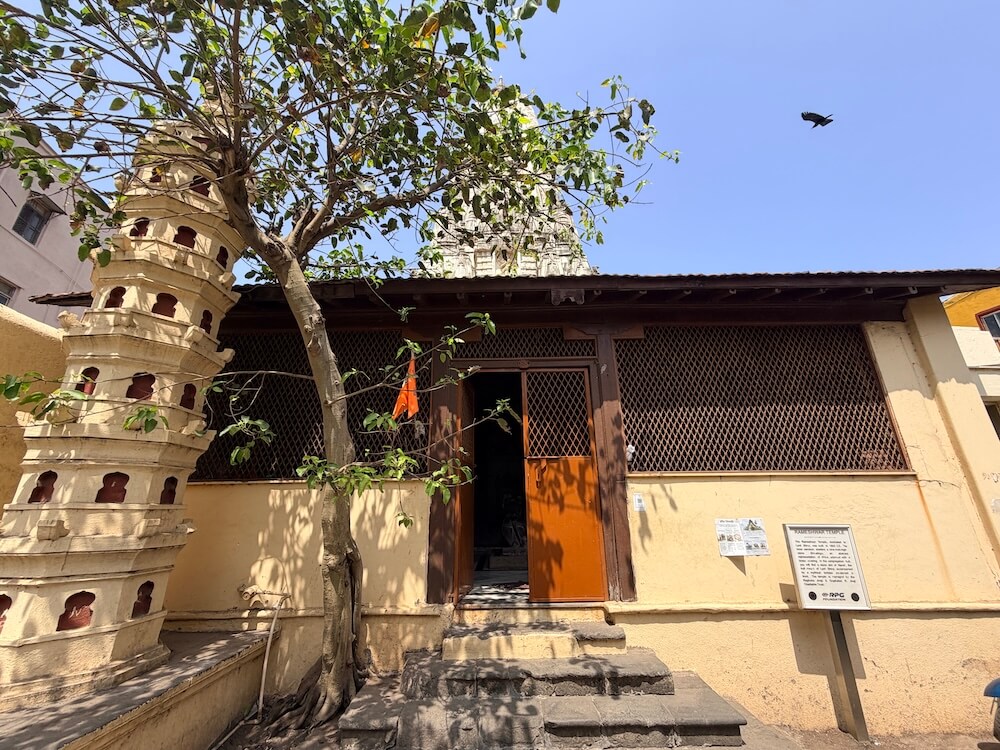
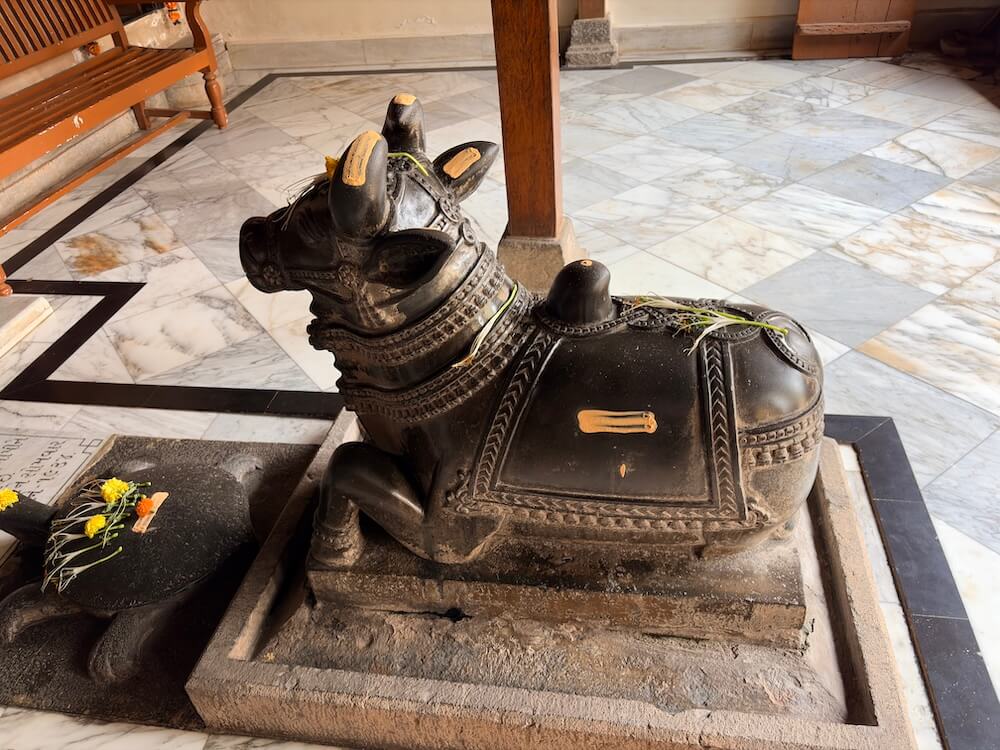
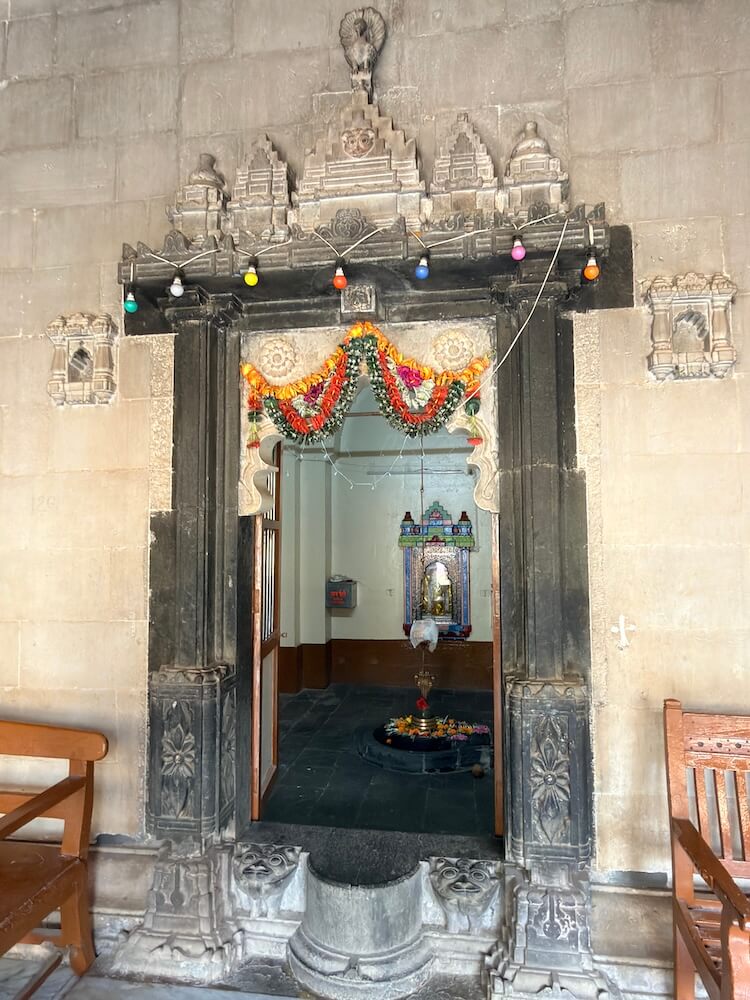
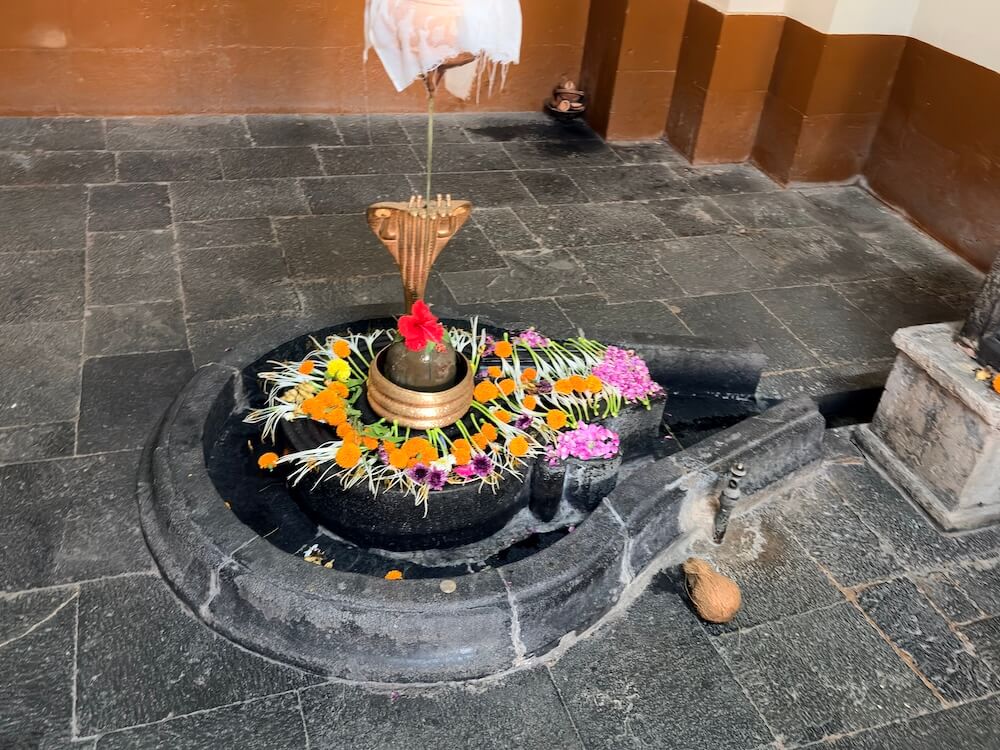
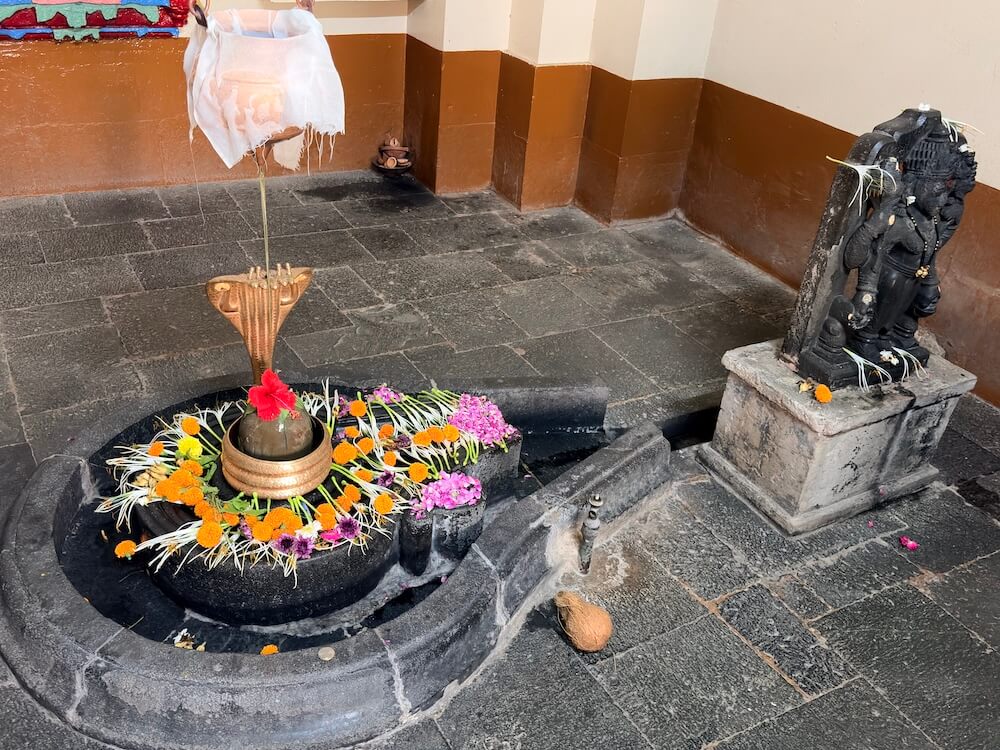
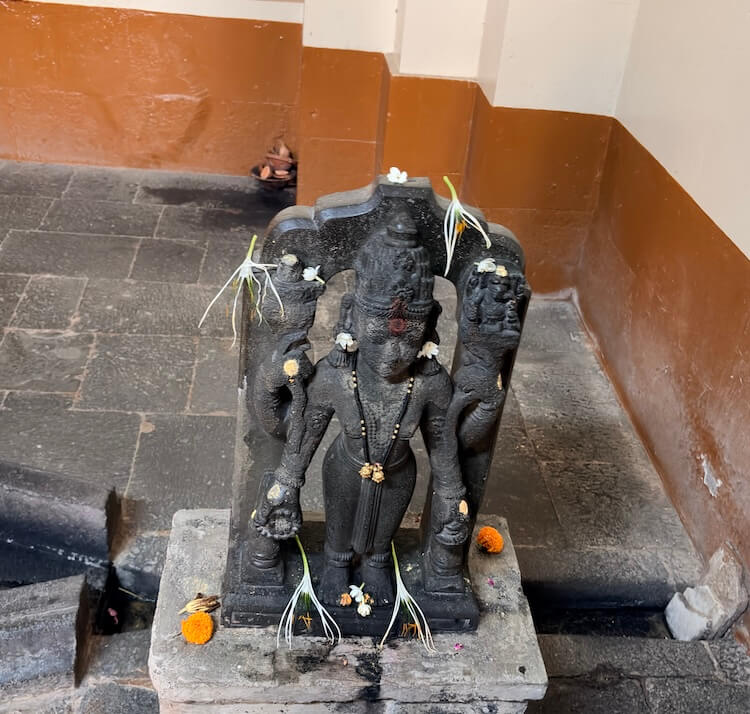
The original structure and beauty of this temple, which is a blend of nineteenth-century Maratha and Gujarati architectural styles, have been preserved even in this renovation. In the courtyard of this temple, built on a high plinth, stands a traditional lamp pillar (Deepstambh). The temple has five steps made of carved stone. The assembly hall has lattice walls and a sloping tiled roof. Above the sanctum sanctorum of the temple is a tall Shikhara in the Urushringa style, crafted in the Nagara architectural style. There are niches on all four sides. On the Shikhara, there is a circular Amalaka, and a Kalash is mounted on top of it. The assembly hall of the temple has a wooden entrance. Inside, there are teak pillars. In front of the sanctum sanctorum, on a stone pedestal, a beautiful stone Nandi idol is seated. In front of it is a Kurma (tortoise) sculpture. The sanctum sanctorum of the temple is of stone construction. The historical significance of the temple can be gauged from its entrance. The lower sections of the doorposts of this bifurcated stone entrance are adorned with beautiful floral carvings. The door frame features a tall lintel. In its center lies a crescent-shaped stone, flanked on both sides by Kirtimukhas. The entrance is crowned by a stone arched gateway. A sculpture of Lord Ganesha is carved at the center of the lintel. Above the door frame, three temple spires are carved. The central spire features a Kirtimukha, and its finial is adorned with a peacock sculpture. At the outermost edges are two pillar-like shrines, upon which duck sculptures are carved. It is noteworthy that even today, a large number of ducks are found in the Banganga Tank. On both sides of this entrance are two elegant stone shrines. In the center of the sanctum sanctorum, the Rameshwar Linga is consecrated on the floor. This Shiva Linga, fashioned from black stone, stands about zero point seven five feet tall. Near the drainage channel (the arrangement for the flow of consecrated water) of the Linga’s base, an idol of Goddess Parvati is seated on a pedestal. This ancient idol, carved from black stone, is approximately one point five feet tall. Here, Parvati is depicted in a standing posture with four arms. In her upper right hand, she holds a lotus flower upon which a Shiva Linga rests, while the flower in her left hand bears an idol of Ganesha. Her remaining two hands are lowered; the right hand holds a Rudraksha mala, and the left hand holds a Kamandalu. She is adorned with ornaments such as dangling earrings, a beaded necklace, bangles, and anklets. She wears a crown upon her head. A similar idol, though made of brass, is present near the Shiva Linga at the nearby Walkeshwar Temple. On the rear wall of the sanctum sanctorum, within a carved stone niche, is an idol of Parvati sculpted in marble and adorned with garments and jewelry. According to the conventions of ancient temples, the design of the niche in the sanctum sanctorum usually mirrors that of the sanctum’s entrance. The niche here follows the same tradition.
Opposite this temple, across a small road and adjacent to the stepped path leading to Banganga, is situated the Ganesha temple. Raghoba Jivaji Jaykar built the Rameshwar temple in the year 1842, and at the same time, he also established this Ganesha temple. The structure of this temple consists of a Sabha Mandap (assembly hall) and a Garbhagriha (sanctum sanctorum). The Sabha Mandap has a sloping tiled roof. The Garbhagriha is topped by a circular dome-shaped shikhara that bears the influence of Islamic architectural style, crowned with an amalaka and a kalasha. Built upon a high jagati (platform), this temple is accessed by five stone steps. Inside the Garbhagriha, a beautiful rosewood shrine erected on a high pedestal houses the marble idol of Lord Ganesha.
Devotees can have darshan at the Rameshwar Temple from 6 in the morning until 9 at night. Monday is considered the day of Lord Shivshankar. On this day, many devotees come here for the darshan of Rameshwar. A large crowd of devotees gathers at this temple on Shravani Mondays, Shravani Amavasya, and Mahashivratri. Mahashivratri is the most important festival here. On that day, the temple premises are decorated with lights. A grand festival is celebrated at the Ganesh Temple here on Vaishakh Shukla Trayodashi. The administration of both these temples is managed by the ‘Raghoba Jivaji and Gopikabai R. Jivaji Charitable Trust’.
This sacred temple stands as a testament to deep spiritual devotion, ancient architectural grandeur, and rich local cultural traditions.
The sanctum sanctorum houses the divine idol consecrated according to ancient Vedic traditions, surrounded by serene courtyards and traditional temple architecture.
Navratri, Maha Shivratri, Annual Temple Jatra & Deepotsav
Compare and book flights, secure top-rated local hotels near the temple, hire reliable guides, and rent cars instantly.
Extend your pilgrimage by visiting other highly sacred temples located nearby.


Add ₹999 more to unlock FREE SHIPPING!
Your sacred cart is currently empty.
Shop Photo FramesFill in your delivery details below to place your order.
Add comment