
Add ₹999 more to unlock FREE SHIPPING!
Your sacred cart is currently empty.
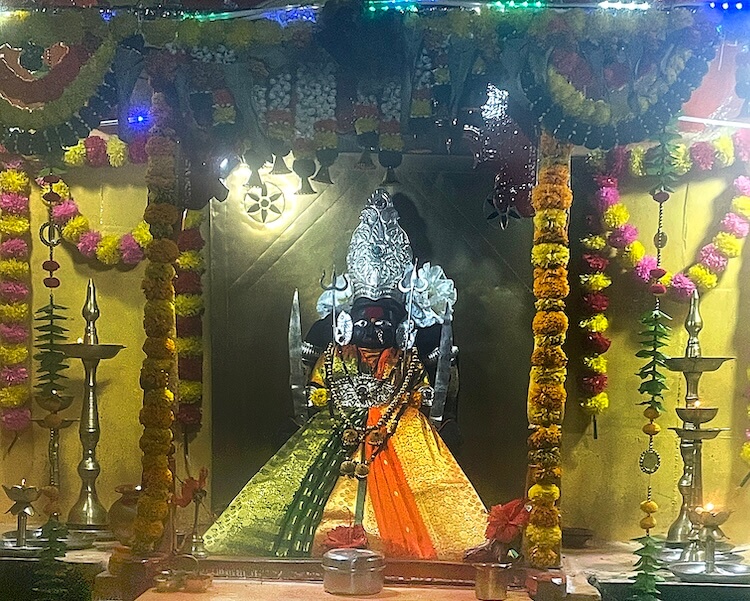
Shop Photo FramesThe Tuljadevi Temple located in the village of Ghota in Hingoli is famous as a sacred seat of the Goddess of Tuljapur. This temple is especially renowned as the family deity of the Deshmukhs of the Jamadagni Gotra from the Marathwada and Vidarbha regions. One hundred and fifty years ago, following a divine vision granted by the Goddess to a devotee, this idol was discovered in a well. It is said that even today, the Goddess goes to that well every day to bathe. In the morning, oil slicks are visible on the water of this well; devotees believe that these are due to the oil from the Goddess’s body.
The legend of the temple states that when Keshavrao, also known as Nanasaheb Deshmukh, was young, his relatives usurped his property. After completing his education, Nanasaheb went to the Nizam in Hyderabad and narrated the entire incident. After testing him, the Nizam granted him the Deshmukhi of the Kadoli and Ghota regions. He arrived at Ghota as a Deshmukh. He remained constantly absorbed in the devotion of Tulja Devi. He used to fast for the nine days of Navratri. Because of this, instead of living in a large mansion, he built a hut and started living there. One day, the Goddess appeared to him in a dream and told him that she was present in a well in a field in the Jira Patti area. Following the divine vision, Nanasaheb conducted a search and found the idol of the Goddess in the form of Mahishasurmardini in this well. He brought the idol and placed it in his hut.
Nanasaheb wanted to build a temple for this Goddess, but due to a lack of funds, it was not possible. During that time, a case regarding his land was ongoing with the Nizam. The hearing for this case took place on the next date, and the verdict was in favor of Nanasaheb. Due to this verdict, Nanasaheb regained his land and also received some money. With this money, Nanasaheb built this temple on his land. Since then, this place has been famous here.
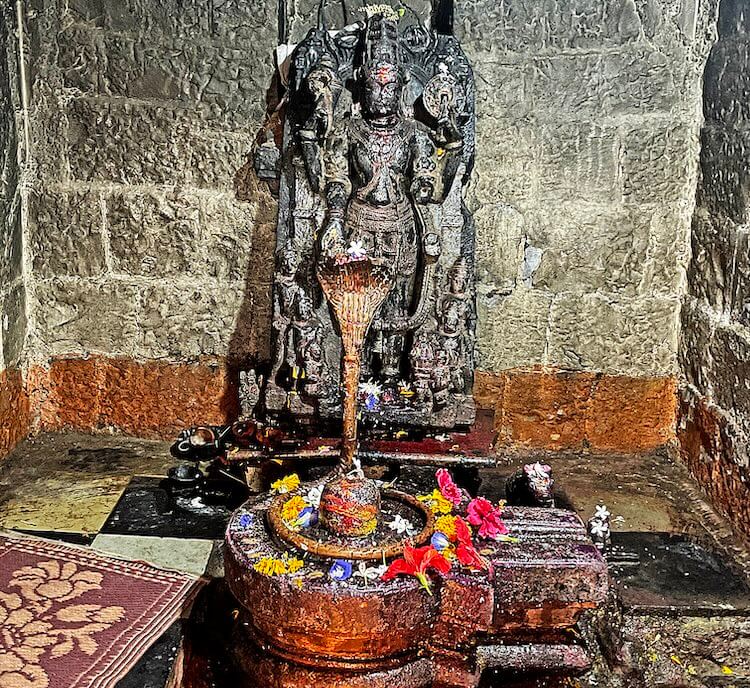
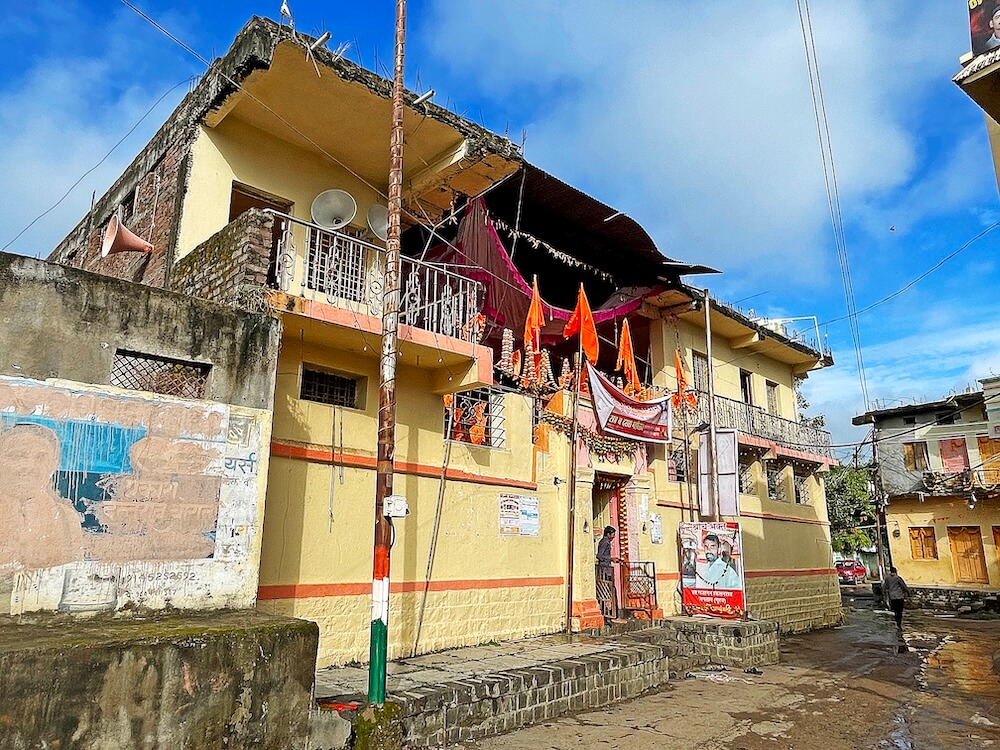
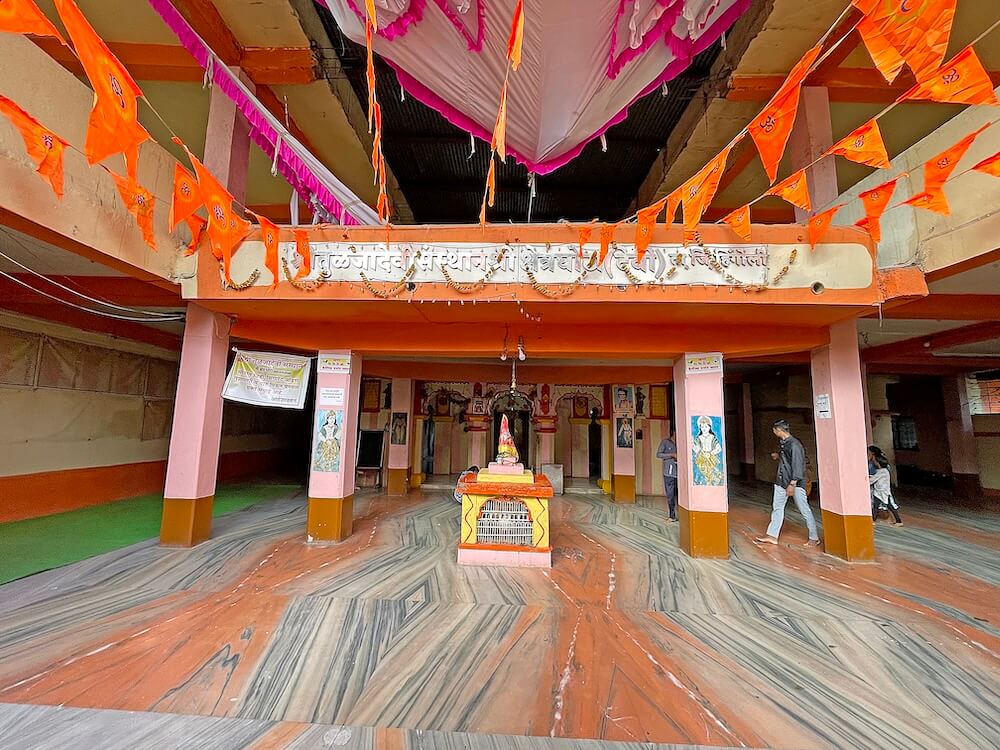
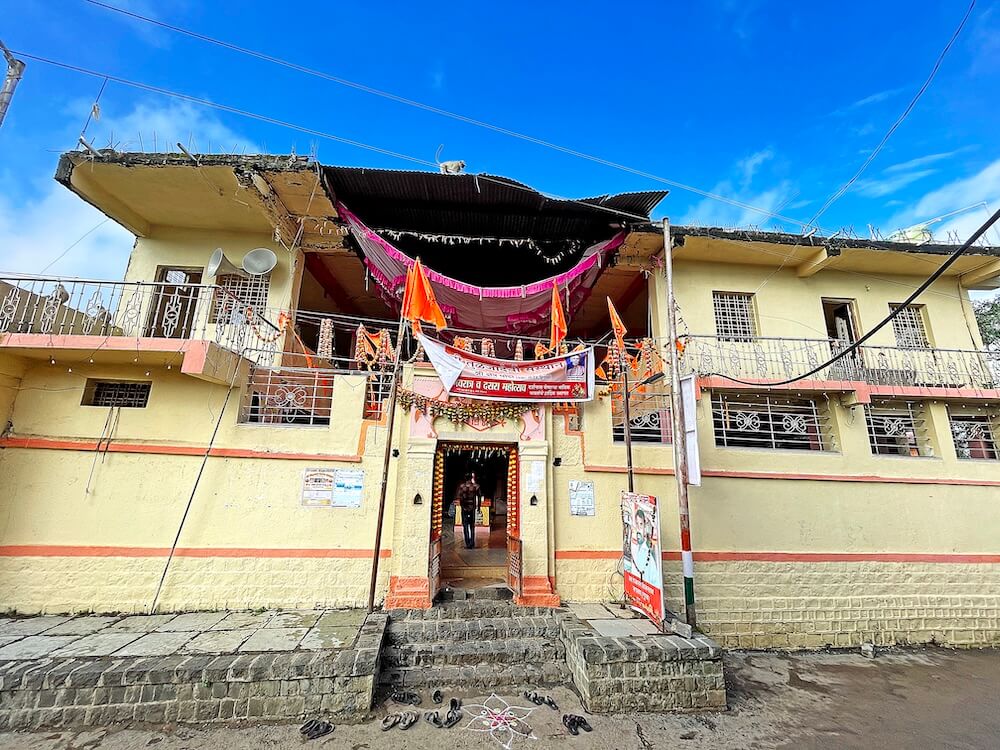
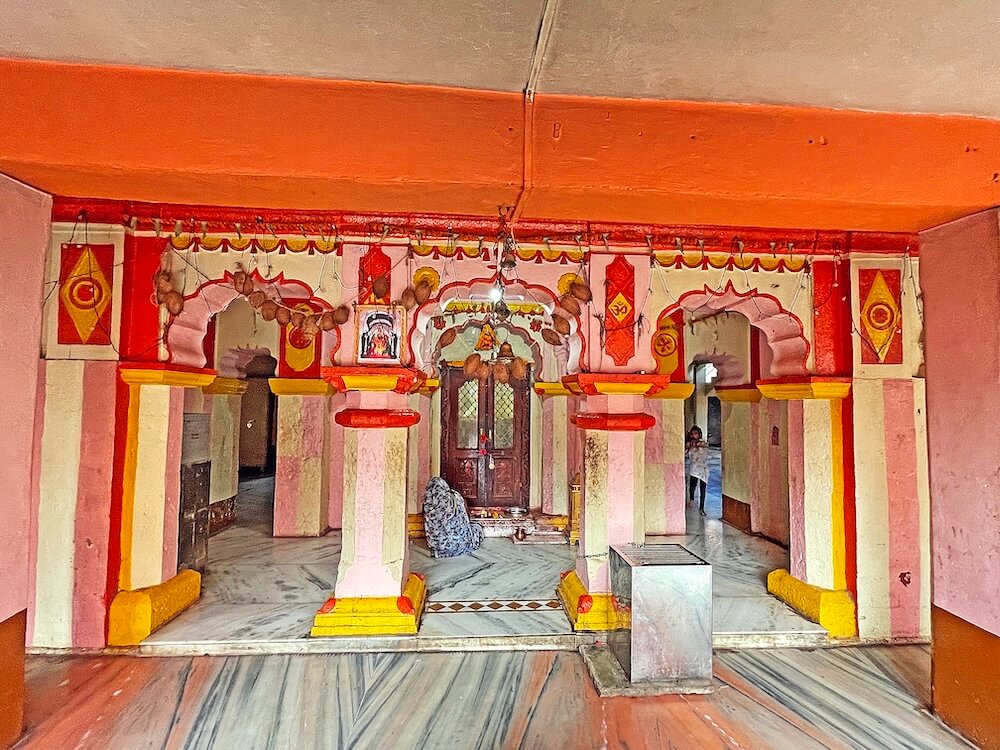
The Tulja Devi temple is located in the central part of the village of Ghota (Devi). One enters the large assembly hall through the main entrance after climbing five steps in front of this temple, which is situated on a high plinth. There are lamp niches on both pillar branches of this entrance. The two-story assembly hall has an antarala (vestibule) and a sanctum sanctorum in the center. In the assembly hall, in a niche facing the Goddess, there is an idol of Nanasaheb Deshmukh facing the Goddess. In the front part of the vestibule, four pillars are connected to each other with three arched, intricately carved designs. One enters the vestibule from there. Leaving space for circumambulation, the original stone sanctum is designed within the vestibule. In the sanctum, on a high pedestal, stands a beautiful idol of the Goddess made of black stone. The eyes of this idol, the fish-shaped earrings, the nose ring, and the crown are made of silver. Holding various weapons, this Goddess stands adorned with various garments and ornaments. Next to this sanctum, there is another inner chamber containing a Shiva Linga and an idol of Vishnu.
The Sharadiya Navratri festival is the biggest and most prominent festival in this temple. During this ten-day festival, daily grand worship and recitations of Durga Saptashati are performed. During the Navratri festival, a grand feast (Pangat) is organized for the devotees who arrive every day. On the day of Dussehra, a grand anointment and a palanquin procession are carried out. During this time, devotees from Maharashtra, Madhya Pradesh, Andhra Pradesh, and Telangana also come here for darshan. The birthday of the Goddess is celebrated on Shravan Vadya Panchami. Thousands of devotees are present at Ghota for the festival held at this time and to fulfill their vows. The Aarti of the Goddess is performed daily at 6 in the morning and 7 in the evening, and the Aarti of Nanasaheb Deshmukh’s idol is performed at 6:30 in the morning and 7:30 in the evening. Devotees can have darshan of the Goddess in this temple daily from 6 in the morning to 9 at night.
This sacred temple stands as a testament to deep spiritual devotion, ancient architectural grandeur, and rich local cultural traditions.
The sanctum sanctorum houses the divine idol consecrated according to ancient Vedic traditions, surrounded by serene courtyards and traditional temple architecture.
Navratri, Maha Shivratri, Annual Temple Jatra & Deepotsav
Compare and book flights, secure top-rated local hotels near the temple, hire reliable guides, and rent cars instantly.
Extend your pilgrimage by visiting other highly sacred temples located nearby.


Add ₹999 more to unlock FREE SHIPPING!
Your sacred cart is currently empty.
Shop Photo FramesFill in your delivery details below to place your order.
Add comment