
Add ₹999 more to unlock FREE SHIPPING!
Your sacred cart is currently empty.
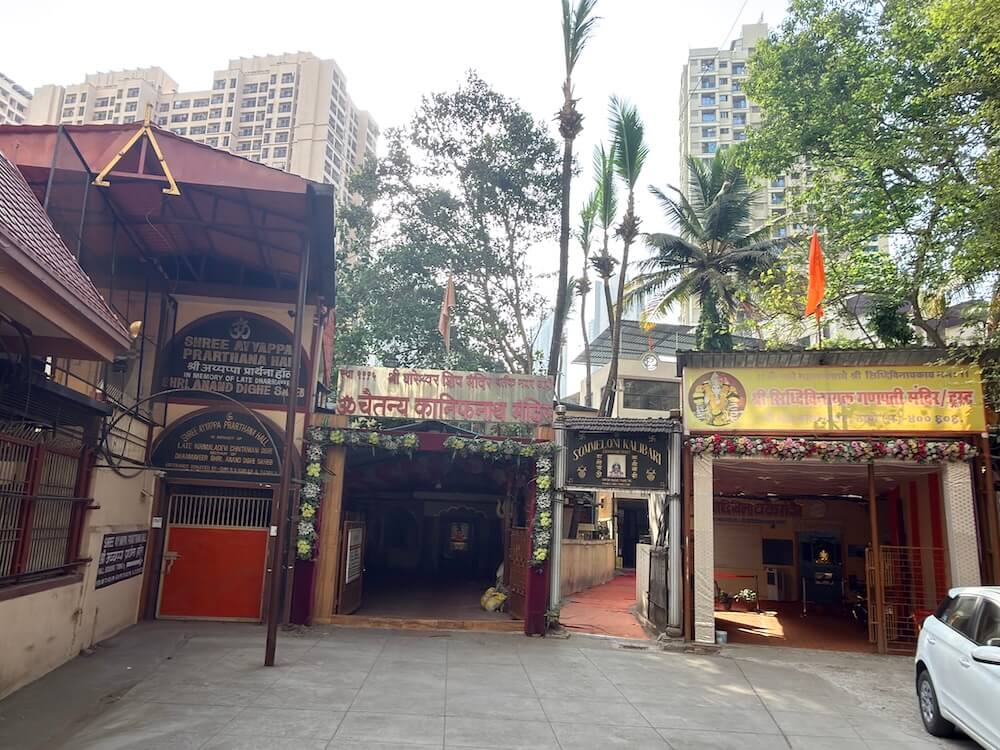
Shop Photo FramesThe Nath Sampradaya holds a unique and unparalleled position in the cultural and religious history of Maharashtra. According to tradition, this path reveres nine Naths and eighty-four Siddhas. As per the sacred text ‘Navnath Bhaktisar’, Kanifnath is one of these nine Naths. The temple of Kanifnath, also known as Kanhoba, who has a large following of devotees in Maharashtra, is located in Vartaknagar, Thane. This temple is known by the name Chaitanya Kanifnath. The traditions of both the Nath and Chaitanya sampradayas originate from Adinath. Adjacent to this temple, which proclaims the unity of these traditions, is the Dhareshwar Shiv Mandir of the Shaiva sampradaya.
The Nath Sampradaya, spread across the entire Bharatavarsha, is referred to by various names such as Siddha Panth, Avadhut Mat, Kanphata Sampradaya, and Gurumarg. According to religious history, Srisailam-Kadalivan (Kardalivan) in Andhra Pradesh is the birthplace of the Nath Sampradaya, while Andhra Pradesh, Karnataka, and Maharashtra are the primary ‘lila-sthali’ (places of divine play) of this tradition. The first historical figure of this sampradaya is Matsyendranath. There are various opinions regarding his original abode, and the esteemed researcher Ra. Chin. Dhere has proposed that his period was the latter half of the tenth century. Famous texts such as ‘Kaulajnananirnaya’, ‘Shri Kamakhya Guhyasiddhi’, ‘Akulagamantra’, ‘Kularnavatantra’, ‘Kaulopanishad’, and ‘Kaulavalinirnaya’ are attributed to Matsyendranath. ‘Navnath Bhaktisar’, a popular text in Maharashtra, provides information about this sampradaya.
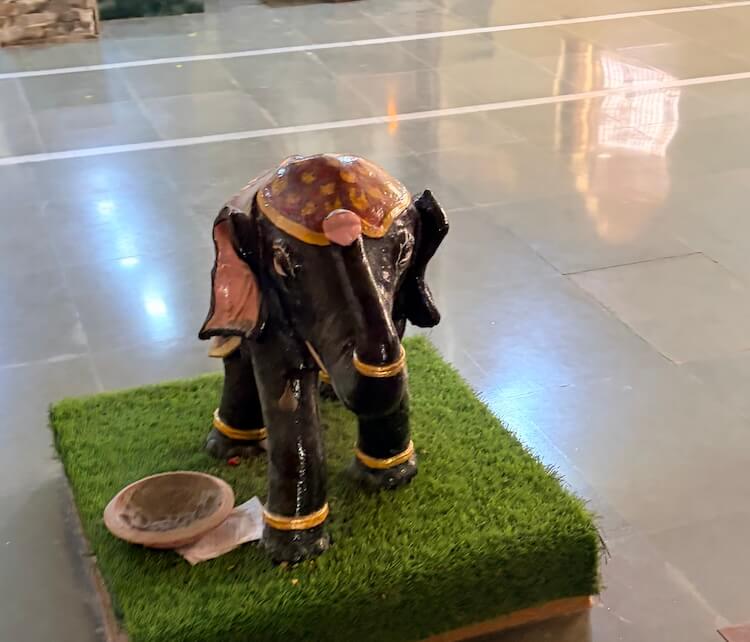
This sacred text was composed by Dhundisut Malu Narhari. According to the text, it was completed on Jyeshtha Shuddha Pournima in the year one thousand eight hundred and nineteen, one year after the end of the Peshwai and the hoisting of the British flag over Shaniwarwada. It contains forty chapters and seven thousand six hundred ovis (couplets). The glory of the Navnaths—Matsyendranath, Gorakshanath, Jalandharnath, Kanifnath, Charpatinath, Gahininath, Gopichandnath, Adbangnath, and Bhartarinath—is described in this text. In this text, the Navnaths are considered avatars of the Nav-Narayanas. Accordingly, Kanifnath is believed to be an avatar of Prabuddhanarayana. According to a mythological legend, Kanifnath was born in the Himalayas from a seed placed by Lord Brahma in the ear of a female elephant. Hence, he was named Kanifnath. Dhundisut Malu states in his text that Kanifa’s ‘Karnodaya’ (birth from the ear) occurred. In recent times, a narrative explaining his name suggests that he became known as Kanifnath because he wore large earrings in his ears.
Jalandharnath, considered an avatar of Antarikshanarayana, was the guru of Kanifnath. These two guru-shishyas performed penance at Badrikeshwari. There, they together composed forty crore twenty lakh poems, according to legend. Scholars like Ra. Chin. Dhere state that the period of Gorakshanath, the founder of the Nath Sampradaya and a disciple of Matsyendranath, was from one thousand and fifty to one thousand one hundred and fifty CE. Kanifnath’s period is two centuries after him. (According to Nath tradition, this period is said to be the twelfth century, and his birth date is Vaishakh Shuddha Trayodashi.) Kanifnath traveled across the country, spreading the Nath path. While performing this work, he came from the Himalayas to the south and took samadhi at the village of Madhi in Ahmednagar district on Falgun Vadya Panchami (Rangpanchami). The renowned anthropologist and sociologist Dr. J. J. Raiberman, in his book ‘Hindu-Muslim Syncretic Shrines and Communities’, states that Kanifnath’s samadhi period was one thousand three hundred and sixty CE. He took samadhi at Madhi on Falgun Vadya Panchami (Rangpanchami). Every year on this day, a grand yatra of Kanifnath is held here.
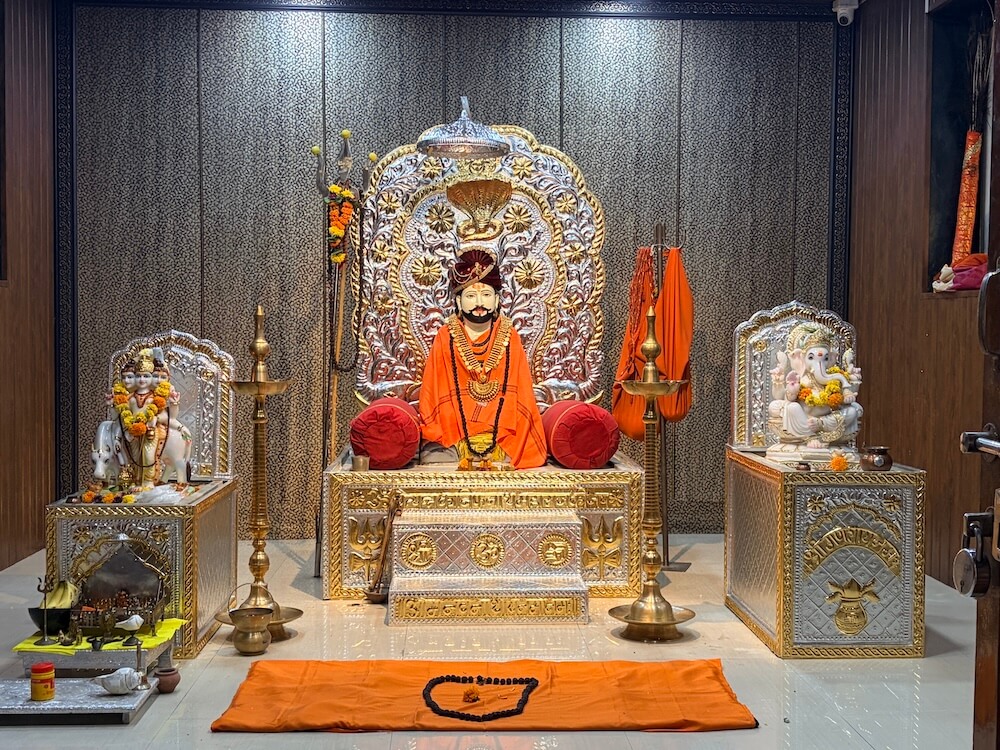
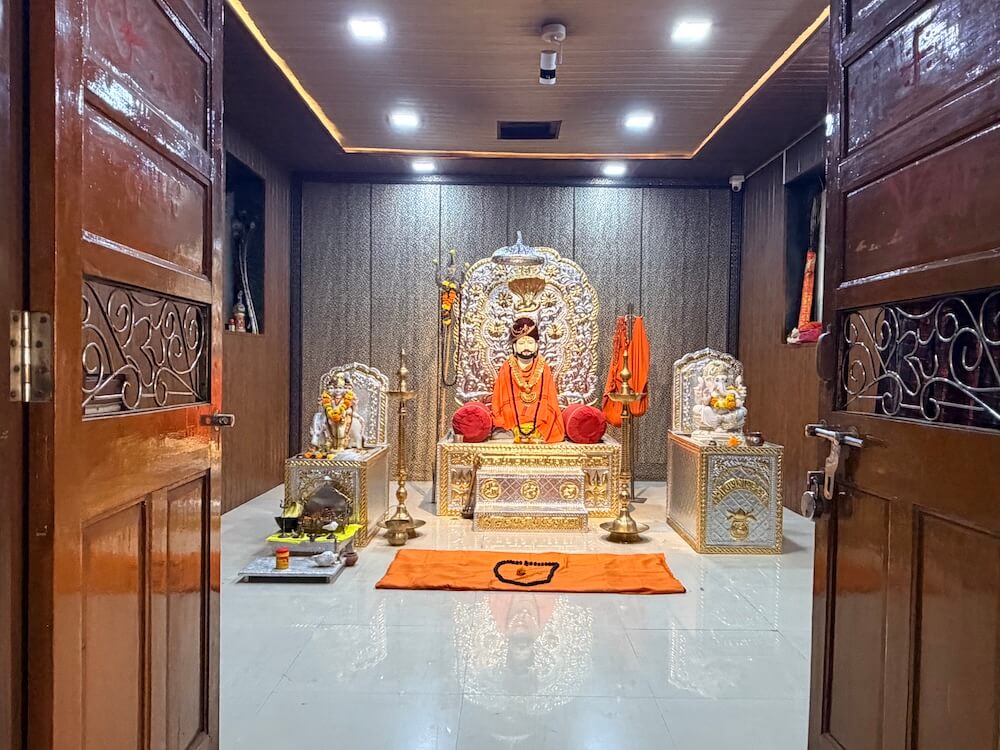
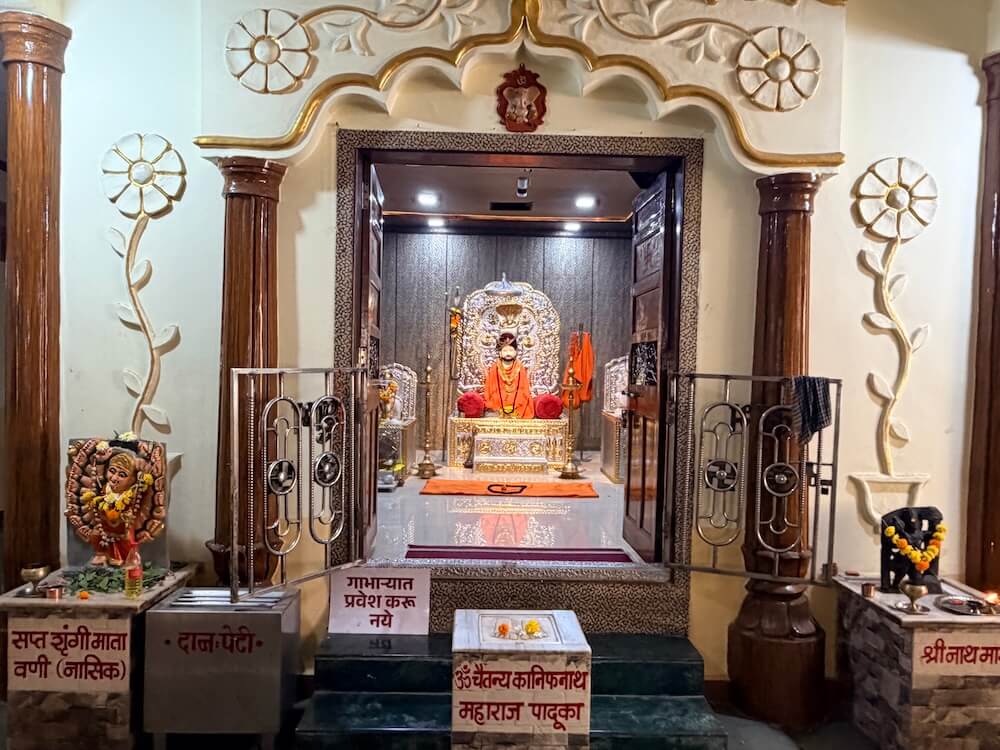
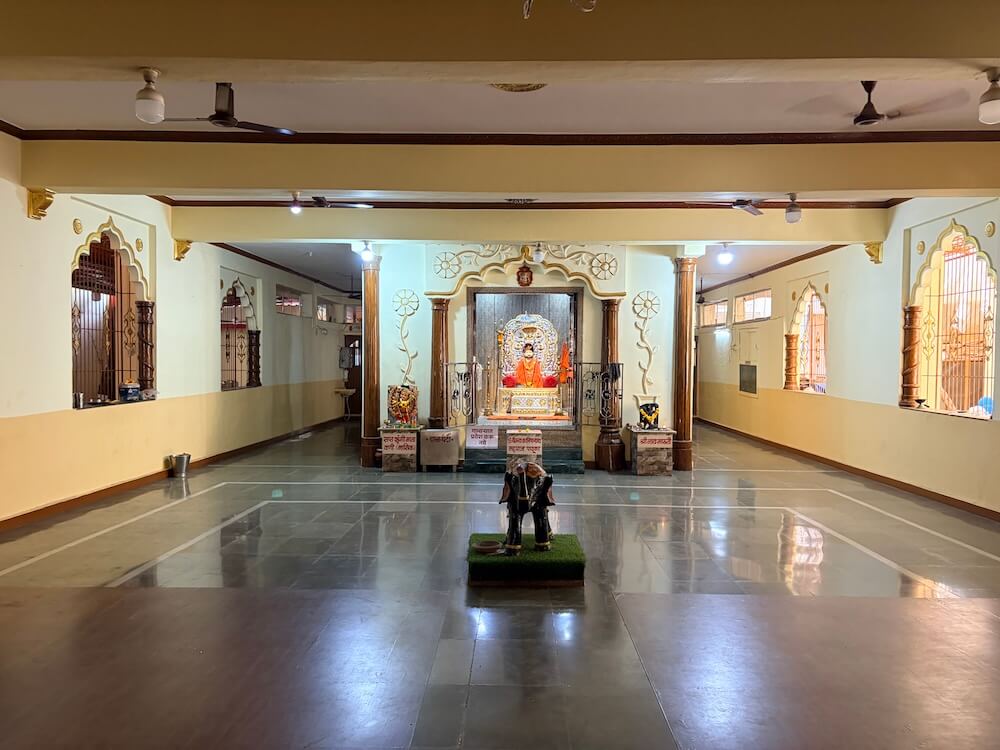
There are many temples of Kanifnath, also known as Kanhoba, in various places in Maharashtra. The temple in Vartaknagar is one such famous temple. In front of the temple, there is a large tin shed. To its left, there is a flagpole and a large trident. The temple is built in a modern architectural style. The structure of this temple includes a mukhamandapa (front hall), a sabhamandapa (assembly hall), and a garbhagriha (sanctum sanctorum). The sabhamandapa here has shiny tiled flooring and a flat roof. Inside, directly opposite the entrance, there is a Kurma-shilpa (tortoise sculpture). A few steps from there, facing the entrance, is an elephant idol. This idol preserves the memory of the story that Kanifnath was born from the ear of an elephant. Directly ahead is a square garbhagriha. There is a pradakshina-marga (circumambulatory path) around it. The garbhagriha has an arched entrance. Here, on the left side of the visible wall, there is a stone idol of Saptashringi Mata of Vani, while on the right side, an idol of Maruti carved in black stone is enshrined. In front of the entrance to the garbhagriha, on a marble platform, are the padukas (footprints) of Kanifnath. Inside, in the center, on a seat adorned with silver and golden sheets and an arched prabhavali (halo), the idol of Kanifnath is consecrated. This idol is adorned with saffron robes, rudraksha malas, and ornaments. On his head is a rich turban. The Nagraja carved on the prabhavali holds an umbrella over his head. To the left of this idol, on an ornate pedestal, is a marble idol of Trimukhi Dattatreya, while to the right, a Ganesha idol is enshrined.
From the door on the left side of the pradakshina-marga of the Kanifnath temple, one enters the courtyard of the Dhareshwar Swayambhu Shiv Mandir. This temple was established in one thousand nine hundred and ninety-five. Later, on the twenty-fourth of April, two thousand and twelve, this temple was renovated. This temple is also built in a modern architectural style. In front of its garbhagriha, an idol of Nandi is enshrined. Inside the garbhagriha, on the ground, there is a square marble shalunka (base for the Shivlinga). Within it is a traditionally carved stone Shivpind. The linga within the pind has serpentine carvings. Above the pind, there is a brass galantika (pot for dripping water). At the back of the garbhagriha, on a marble platform, there is an idol of Mata Parvati and a brass Naga-murti (serpent idol). During festivals and celebrations, this Naga-murti is placed on the pind. Adjacent to this temple is a large mandapa for various religious and cultural programs.
Devotees can avail of darshan at this temple from six in the morning to nine at night. Various festivals and celebrations are observed here according to Hindu dharma and Nath tradition. The Jayanti (birth anniversary) celebration of Kanifnath on Vaishakh Shuddha Trayodashi and the Punyatithi (death anniversary) celebration on Falgun Vadya Panchami are the major festivals of this temple. On these days, there is a large gathering of devotees at this temple. On Falgun Vadya Panchami, a grand yatra of Kanifnath is held at Madhi. Many devotees from this area go to this yatra every year.
This sacred temple stands as a testament to deep spiritual devotion, ancient architectural grandeur, and rich local cultural traditions.
The sanctum sanctorum houses the divine idol consecrated according to ancient Vedic traditions, surrounded by serene courtyards and traditional temple architecture.
Navratri, Maha Shivratri, Annual Temple Jatra & Deepotsav
Compare and book flights, secure top-rated local hotels near the temple, hire reliable guides, and rent cars instantly.
Extend your pilgrimage by visiting other highly sacred temples located nearby.


Add ₹999 more to unlock FREE SHIPPING!
Your sacred cart is currently empty.
Shop Photo FramesFill in your delivery details below to place your order.
Add comment