
Add ₹999 more to unlock FREE SHIPPING!
Your sacred cart is currently empty.
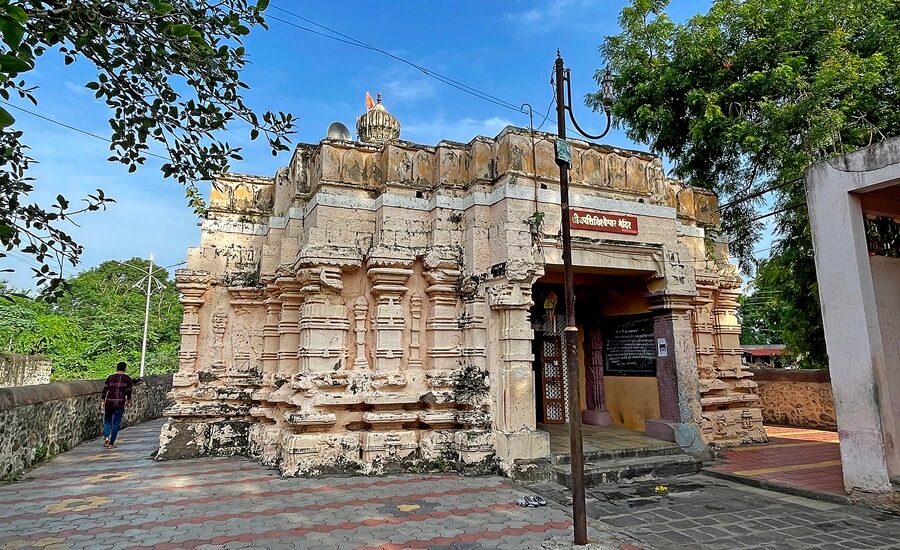
Shop Photo FramesMangalwedha, a taluka with a rich religious and historical heritage, is considered the land of saints in the Solapur district. Saint Damajipant, who opened the government grain stores for the poor during a famine, belonged to Mangalwedha. Along with him, this city, sanctified by the presence of Saint Chokhamela and Saint Kanhopatra, has another unique feature: the ancient temple of Kashi Vishwanath. It is said that this temple was built during the era of the Chalukyas (according to some, the Yadavas or the Kalachuris). The first renovation of this temple took place about 450 years ago, which highlights its antiquity.
In ancient times, Mangalwedha was known by the names Mahamandaleshwar and Mangalveshtaka. In the eleventh century, the Chalukyas of Kalyani held power here. During this period, Mangalwedhe was a chieftaincy under the suzerainty of the Chalukyas. This was the capital of Kalachuri Bijjala. Bijjala seized power from the Chalukyas by rebelling against the Chalukyan Emperor Tailapa III. The great rebel saint and founder of the Lingayat faith, Basaveshwara, who was born at the beginning of the twelfth century AD, served as the Chief Minister in Bijjala’s cabinet. Damajipant, a supreme devotee of Lord Vitthala, was also born in Mangalwedha. He served as the Kamavisdar (revenue officer) of Mangalwedha under the Bahmani Sultans. It is a popular legend that during the famine of 1460 AD, in the reign of Sultan Alauddin Shah Bahmani, he opened the grain stores under his authority for the benefit of the people.
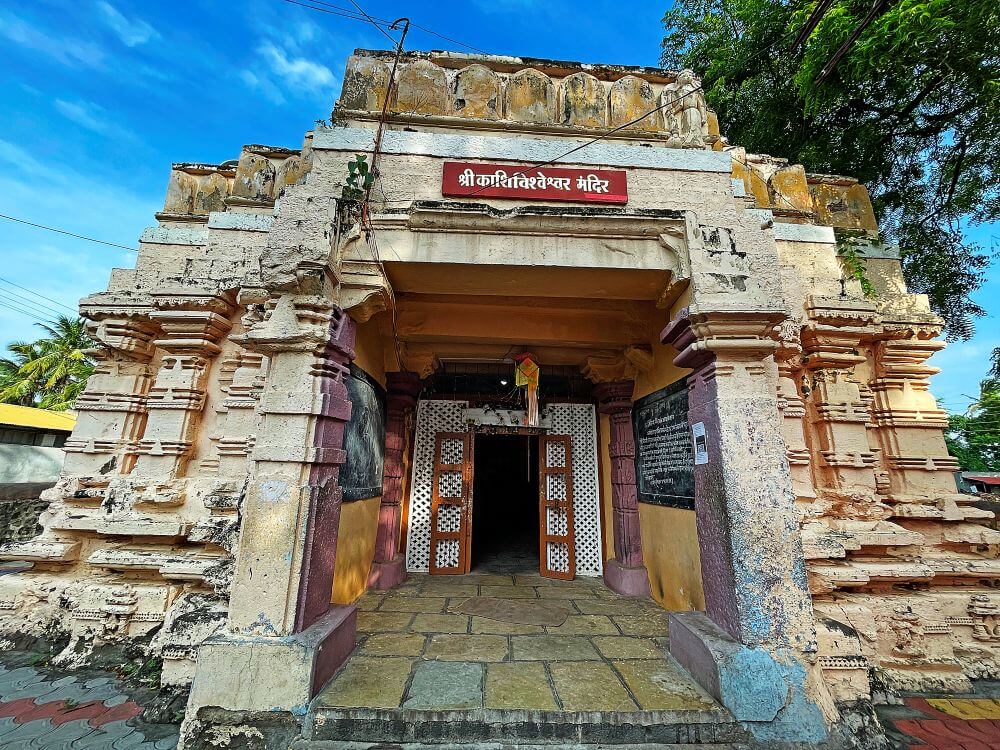
The Bhuikot Fort of Mangalwedha, where Chhatrapati Shivaji Maharaj stayed on 18 November 1665, along with the Mahadevachi Vihir (stepwell), the temples on Jyotiba Mala, and the Gaibisaheb Dargah, are among the many structures that bear witness to history. The Kashi Vishwanath Temple is one of them. Although there is a debate regarding exactly when this temple was built, during the reign of Ali Adil Shah I of Bijapur, Dhanaji of Hippargi Kulkarni renovated this temple in 1572 AD. This is mentioned in a 60-line inscription on the pillar to the left of the temple’s Rangashila. The temple attained its present form after the renovations carried out in recent times.
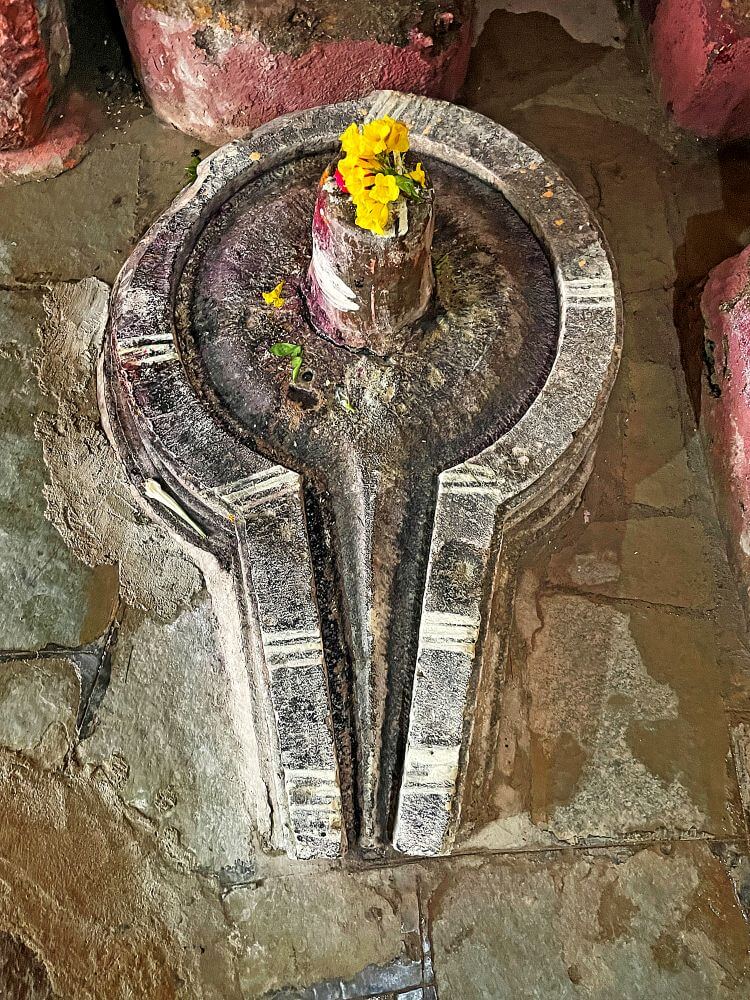
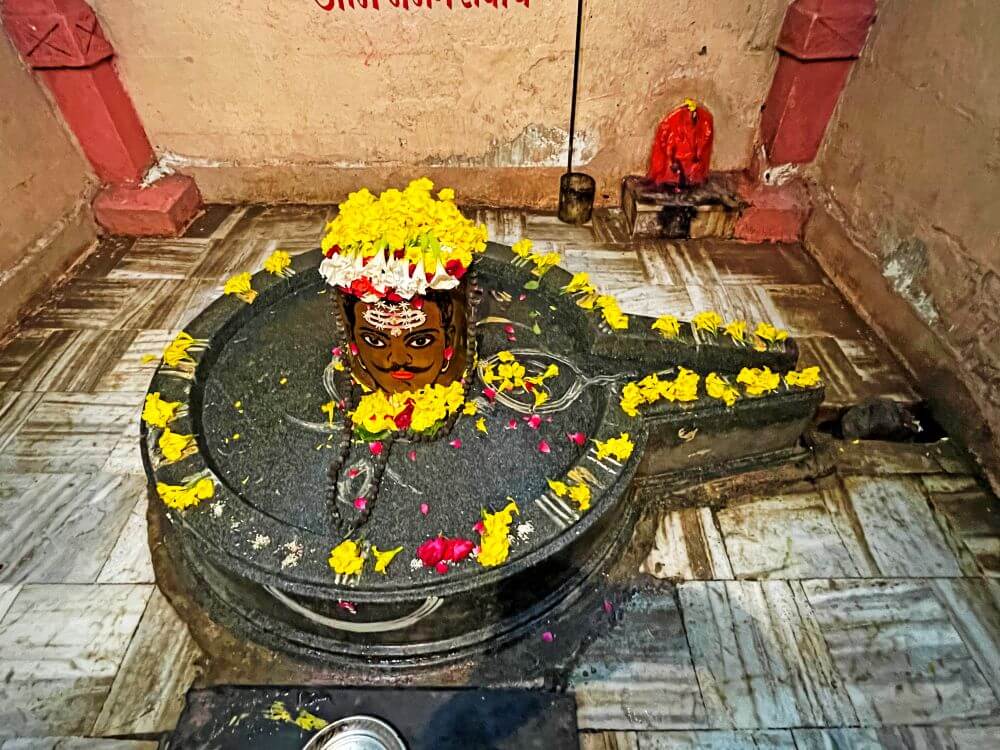
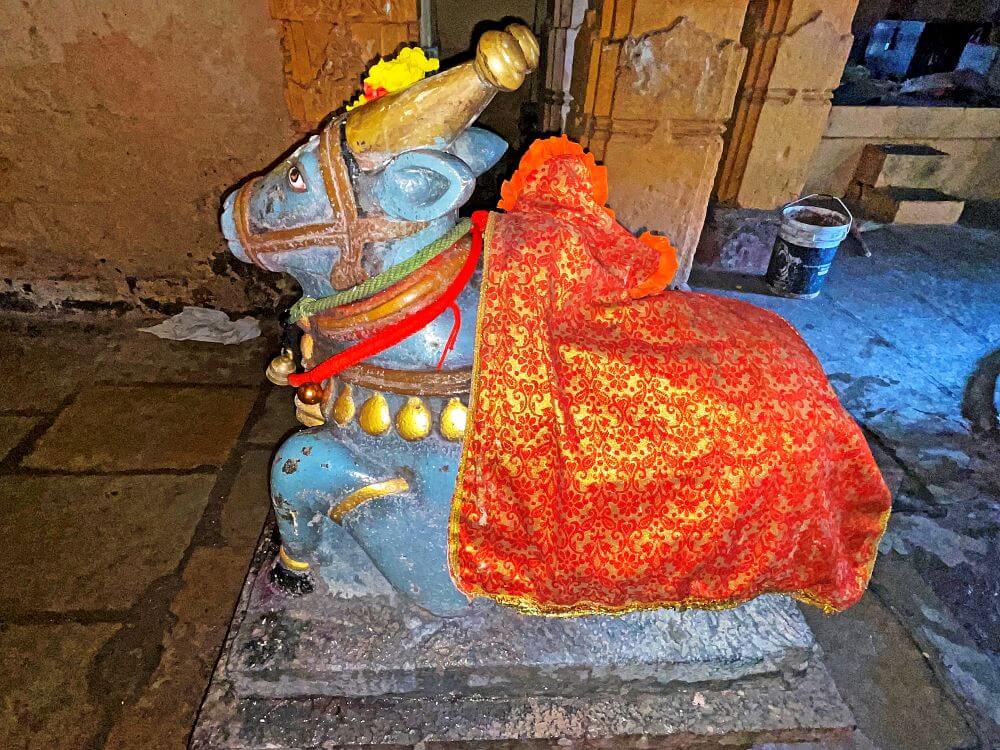
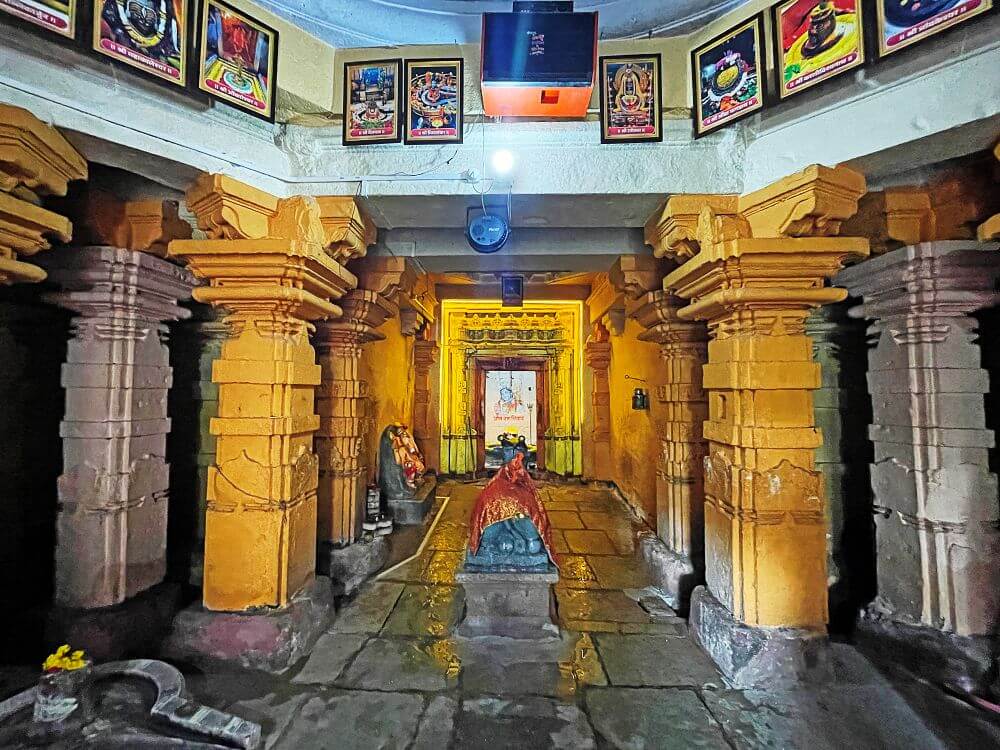
On the path from the Damajipant Temple to the Kanhopatra Temple in Mangalwedha, there is an ancient and famous temple of Kashi Vishwanath Mahadeva. The structure of this temple consists of a Mukhamandapa (entrance hall), Sabhamandapa (main assembly hall), Antarala (vestibule), and Garbhagriha (sanctum sanctorum). Built in the Hemadpanti architectural style, one enters the enclosed Sabhamandapa through the Mukhamandapa. In the center of this Sabhamandapa is a Rangashila (a circular raised platform). In ancient times, arts such as dance, singing, and instrumental music were performed for the Lord on this Rangashila. Next to this Rangashila, on the pillar to the left, is an ancient inscription consisting of 60 lines. Additionally, there is an ancient idol of Ganesha and a Shiva Linga in the Sabhamandapa. It is said that this Shiva Linga was the original one in the temple; however, because a part of it was damaged, A second Pindi has been placed in the Garbhagriha (sanctum sanctorum). In the Antarala (vestibule), there is a Nandi on a pedestal, and an ancient idol of Lord Ganesha near the entrance of the Garbhagriha. The entrance to the Garbhagriha features intricate carvings, with an idol of Lord Ganesha on the Lalatabimba (lintel). In the center of the Garbhagriha, there is a massive Shiva Pindi carved from a single monolithic stone.
The outer walls of the temple and its pillars are adorned with intricate carvings. Along the upper edge of all the walls, there is a decorative parapet (bashingi kathada). The main shikhara (spire) of the temple rises above the garbhagriha (sanctum sanctorum). In the devakoshthas (niches) on each tier of this shikhara, there are idols of various deities. At the apex of the shikhara are the amalaka and the kalasha. Surrounding the main amalaka are smaller amalakas and miniature shikharas. Many devotees from Mangalwedha and the surrounding areas attend the aarti held every Monday. During the month of Shravan, as well as on every Shivratri and Mahashivratri, the temple is crowded with devotees seeking darshan.
There is a built-in well within the temple premises. Upon descending a few steps into this well, one can see an idol of Lord Brahma. It is said that Mangalwedha was once the capital of the Kalachuris. The Kalachuris considered themselves worshippers of Brahma. It is believed that they must have built a temple dedicated to Lord Brahma at this site. Although a temple of Lord Brahma no longer exists in this area today, this unique idol can still be seen. Next to this idol, there is an underground passage leading from the well. It is said that this passage connects to the Gopal Krishna Temple located in the middle of the Krishna Lake in Mangalwedha. Descending further into this well, one can see some remnants of an ancient temple. An idol of Mahishasurmardini in a dilapidated state is also present here.
This sacred temple stands as a testament to deep spiritual devotion, ancient architectural grandeur, and rich local cultural traditions.
The sanctum sanctorum houses the divine idol consecrated according to ancient Vedic traditions, surrounded by serene courtyards and traditional temple architecture.
Navratri, Maha Shivratri, Annual Temple Jatra & Deepotsav
Compare and book flights, secure top-rated local hotels near the temple, hire reliable guides, and rent cars instantly.
Extend your pilgrimage by visiting other highly sacred temples located nearby.


Add ₹999 more to unlock FREE SHIPPING!
Your sacred cart is currently empty.
Shop Photo FramesFill in your delivery details below to place your order.
Add comment