
Add ₹999 more to unlock FREE SHIPPING!
Your sacred cart is currently empty.
Shop Photo FramesThe legend of this temple states that in ancient times, King Nala, who ruled this region, resided in the Naldurg Fort. His queen, Damayanti, was a devotee of Khandoba. Pleased by her devotion, the deity moved from the Adi-Mailar temple in Bidar (Karnataka) to a temple on the riverbank in Naldurg. However, as the sanctity of that temple was later lost, the deity moved to Andur. When the devotees pleaded with the deity not to leave Naldurg, the Lord promised to reside at the Naldurg site for one and three-quarter months every year, a tradition that continues to this day.
Khandoba is recognized as the family deity (Kuldaivat) of Maharashtra. There are over 600 large and small temples of Khandoba in Maharashtra and neighboring states. The Khandoba temples of Jejuri, Pali, and Mailarpur are among the most famous. One such renowned temple is located at Andur in the Tuljapur taluka. The Khandoba of this place travels to the temple at Naldurg for one and three-quarter months every year. A written agreement to this effect exists between the villagers of both villages. This tradition has been maintained for hundreds of years. Devotees believe that this living deity, who changes his abode, grants their prayers.
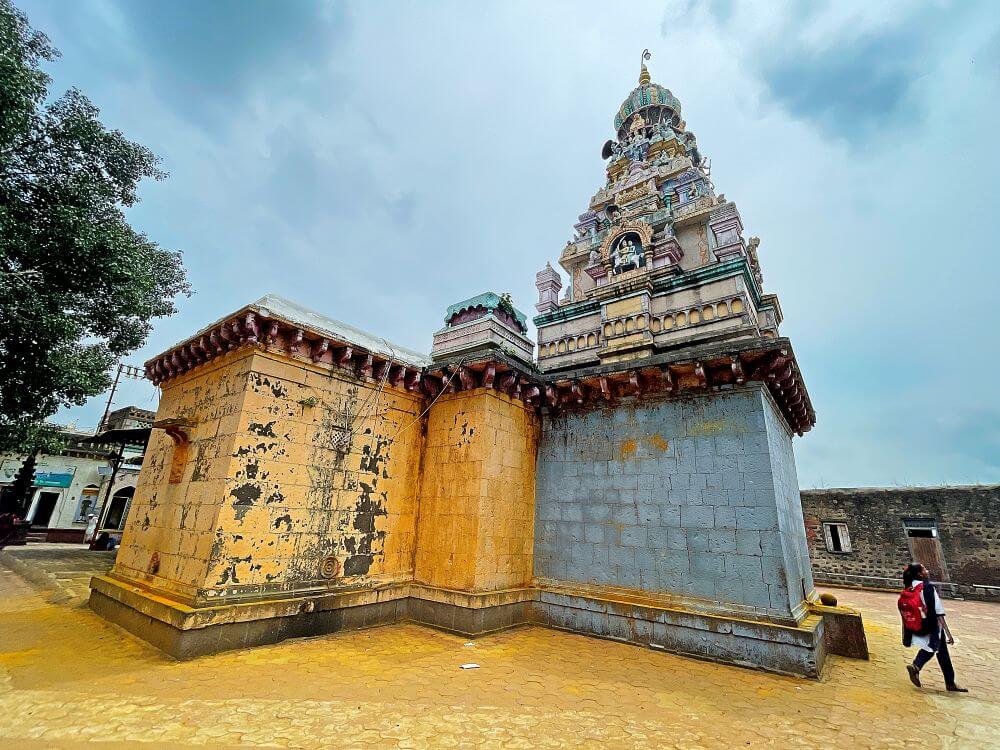
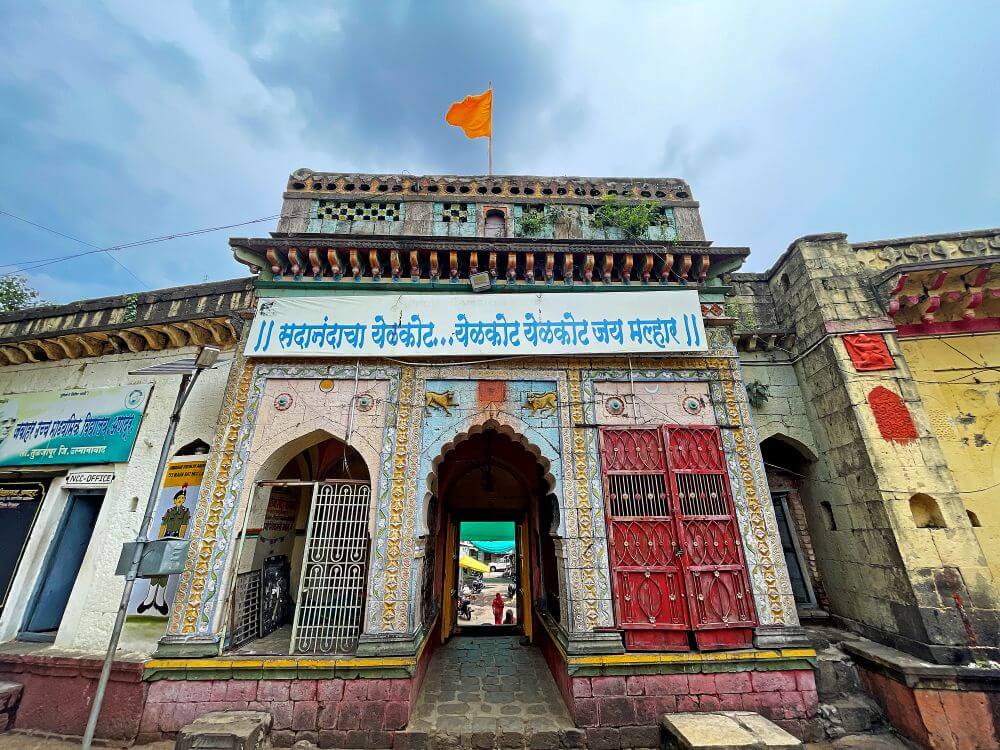
The stone construction of this temple in the Hemadpanti architectural style dates back to the sixteenth century, as evidenced by the inscriptions found here. It is said that Chhatrapati Shahu Maharaj had granted tax-free lands to this temple and its priests. This famous Khandoba temple is located in the heart of Andur village, two kilometers away from Naldurg village. On both sides of the road leading to the temple, there are shops selling offerings and worship materials. The temple is surrounded by a strong fortification. In this fortification, there are two large entrance gates: the Chhatrapati Shahu Maharaj Gate at the front and the Rajmata Jijamata Bhosale Gate at the rear. On both sides of the Shahu Maharaj Gate, there are guard seats, and the walls above them feature square panels with lotus flower carvings. On the upper walls of the entrance, there are sculptures of Garuda and Maruti on both sides. The parapet on the roof features various carvings on all four sides and small spires at the corners.
The door frames of the entrance are adorned with vine, leaf, and flower motifs, and there is an image of Lord Ganesha on the lalat-bimba (lintel). On the ornate architrave of the entrance, there are Kirtimukhas on both sides and a Chandrashila in the center. The torana above the lintel features umbrella carvings. On the back side of this entrance, there are two tiger sculptures with a yantra (mystical diagram) carved between them. It is said that if a person possessed by spirits stands under this yantra and water is poured over it, the affliction is removed. There are guard rooms on both sides of the entrance. To the right of the entrance is a temple of Maruti. A yantra is also carved on the front wall of this temple. Devotees believe that leaning one’s back against this wall dispels suffering.
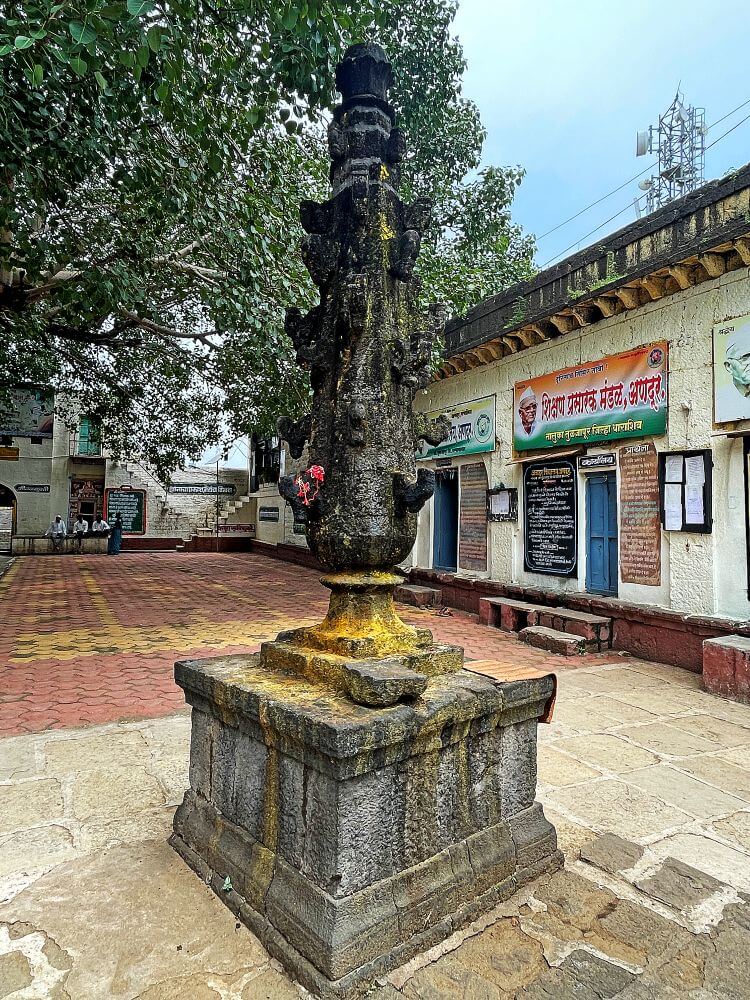
In the paved courtyard of the temple stands the Nandi Mandapa. The Nandi Mandapa consists of four pillars connected by arches on a platform about three feet high, topped by a roof. On the two front pillars of the Nandi Mandapa are sculptures of Garuda and Hanuman. Inside the Nandi Mandapa is a black stone idol of Nandi. The Nandi is carved with a decorative cloth (jhul) on its back and a garland of bells around its neck. There are five stone-built lamp towers (Deepmalas) in the courtyard.
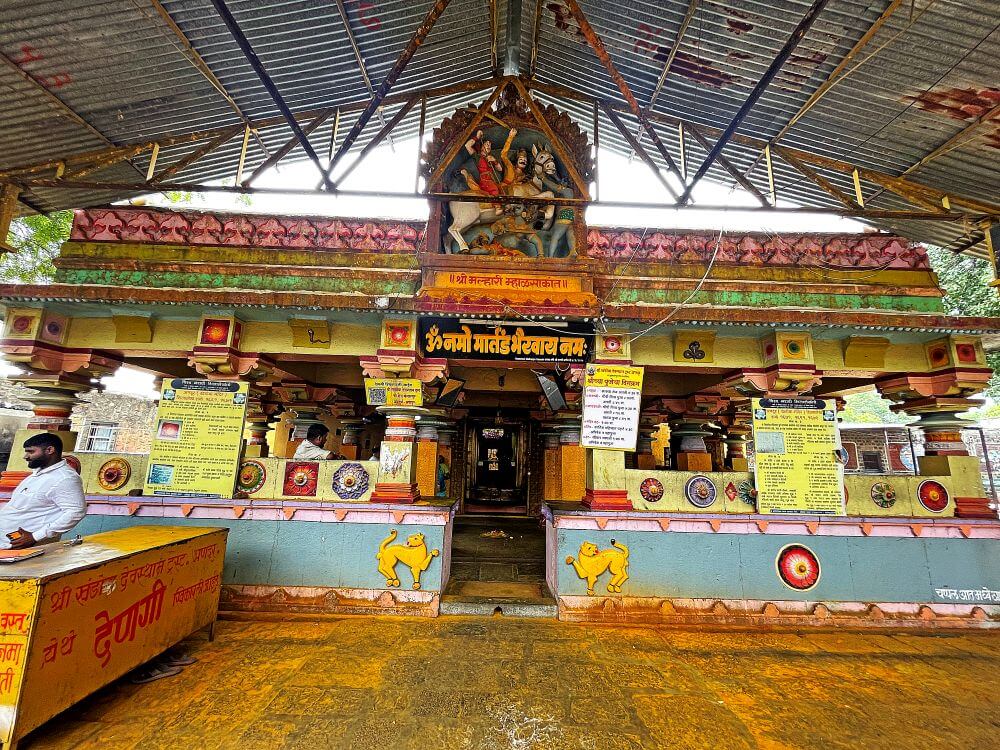
The main hall (Sabha Mandapa) of the temple is semi-open and has three entrances. On the parapets on both sides of the entrance, tiger sculptures are carved on the outer side. The entire parapet is decorated with lotus flower motifs of various sizes. On the beams above the entrance, snake sculptures of various sizes are carved. The Sabha Mandapa has seating areas for devotees. There are a total of 20 pillars in the Sabha Mandapa. All pillars stand on square bases. The lower part of the pillar shaft, about four feet high, is square and features various types of carvings. The upper part of the pillar shaft, about three feet high, features various geometric shapes such as hexagons, octagons, and circles. At the top of the pillars are square capitals, upon which are carved hands and serpent sculptures. Between every four pillars, the octagonal ceiling features lotus flower patterns of various sizes.
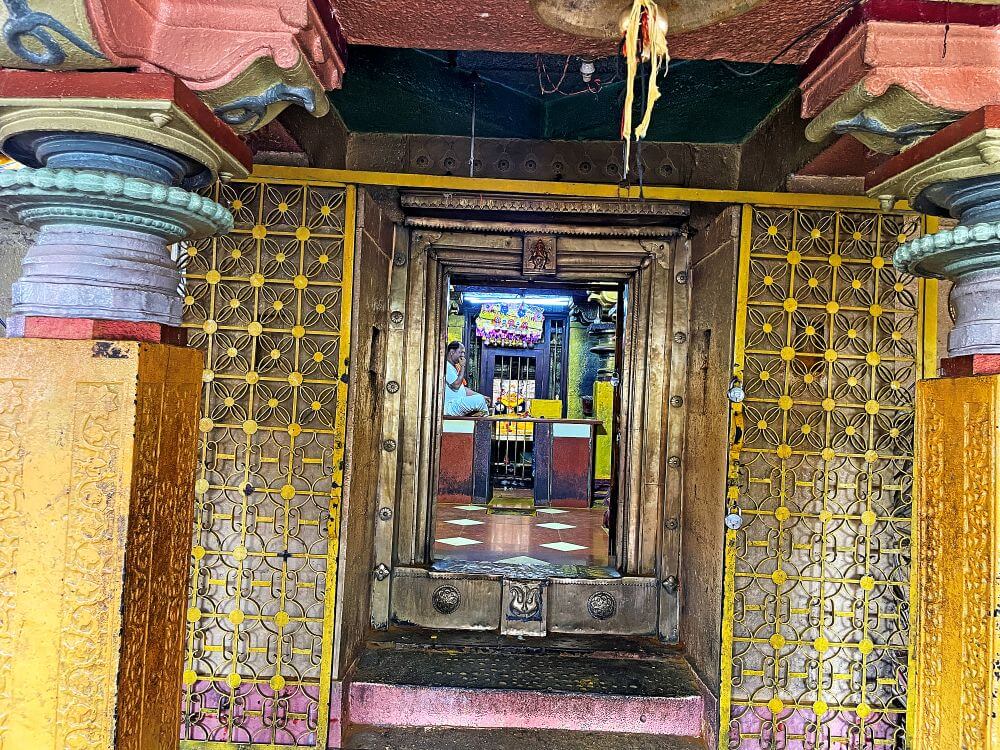
Further ahead is the entrance to the Antarala (vestibule). The door frames are adorned with vertical carvings, and an image of Lord Ganesha is carved on the Lalatabimba (lintel). At the base of the entrance lies a Chandrashila, topped with a Kirtimukha, and flanked by circular motifs on both sides. The entrance is covered with brass plating. In the center of the Antarala, there are four ornate pillars. The serpent carvings on the capitals of these pillars are crafted in such a way that it appears as if the entire weight of the ceiling is being supported by the hoods of the serpents. The octagonal ceiling of the Antarala features carved circular lotus flowers. To the right in the Antarala is the Palang Mahal, the deity’s sleeping chamber. Every night, a path is laid from the sanctum sanctorum to the Palang Mahal, and the deity is ceremonially taken to rest on the bed in the sleeping chamber. To the left in the Antarala is the Jamadarkhana room, where the deity’s garments and ornaments are kept.
Beyond this is the entrance to the Garbhagriha (sanctum sanctorum). Inside the sanctum is a silver Makhar (canopy). The Makhar consists of four silver pillars connected by ornate arched frames, topped by a dome-shaped spire. Within the Makhar, on a Vajrapitha (pedestal), is the Pindi, adorned with a silver mask of Lord Khandoba. In front of the deity stands a brass horse. On the silver Prabhavali (halo) behind the deity, there is a five-hooded serpent in the center and a Kirtimukha above. To the left of the Makhar, on a pedestal, stands a marble statue of Goddess Mhalasa. To the right of the deity stands a two-armed marble statue of the deity’s minister, wearing a crown on his head and holding a sword in his right hand.
The roof of the Sabha Mandapa (assembly hall) is surrounded by a parapet. Above the three entrances in the parapet are Devakoshtakas (niches for deities). The front niche features a sculpture of Lord Khandoba riding a horse, accompanied by Mhalasa, destroying demons. The niche on the right contains an idol of Lord Dattatreya. On the roof of the sanctum sanctorum, there are small spires at all four corners. In the center, there is a three-tiered square spire in the Bhumija style. All tiers of the spire have niches on all four sides, containing various sculptures of Lord Khandoba and other deities. At the top of the spire is the Amalaka, surmounted by a Kalash. This spire has been newly constructed. It is said that previously, there were four minarets on the roof of the sanctum. Adjacent to this temple is the Narasimha temple. Here, inside a stone canopy on a pedestal, is an ancient stone idol of Lord Narasimha slaying Hiranyakashipu. In the temple courtyard, there is a school building. To the right of the Rajmata Jijamata entrance, there is a temple of Lord Mahadeva.
Paush Purnima is the main annual festival celebrated here with great enthusiasm. On this day, a Chhabina (procession) is taken out to commemorate the wedding procession of Lord Khandoba and Goddess Mhalasa. On this day, two horses from the temple in Andur, accompanied by the beating of drums and the showering of Gulal, travel to Mailarpur along with the ceremonial staffs (Kathis). After circumambulating the old and new temples there, a new covenant is made, and the deity returns to Andur for the next ten and a quarter months. Devotees flock to the temple on Somvati Amavasya, all Purnimas, Amavasyas, Mondays, and Sundays.
This sacred temple stands as a testament to deep spiritual devotion, ancient architectural grandeur, and rich local cultural traditions.
The sanctum sanctorum houses the divine idol consecrated according to ancient Vedic traditions, surrounded by serene courtyards and traditional temple architecture.
Navratri, Maha Shivratri, Annual Temple Jatra & Deepotsav
Compare and book flights, secure top-rated local hotels near the temple, hire reliable guides, and rent cars instantly.
Extend your pilgrimage by visiting other highly sacred temples located nearby.


Add ₹999 more to unlock FREE SHIPPING!
Your sacred cart is currently empty.
Shop Photo FramesFill in your delivery details below to place your order.
Add comment