
Add ₹999 more to unlock FREE SHIPPING!
Your sacred cart is currently empty.
Shop Photo FramesDamodar, affectionately known as ‘Dambab’ by the people of Goa, is originally a name of Lord Shri Krishna. However, in the temple at Zambaulim, Damodar is enshrined in the form of Lord Shiva. Additionally, an idol of Lakshmi Narayan is also installed in this temple. For this reason, this temple is viewed as a symbol of harmony between the Shaiva and Vaishnava sects. It is said that the original seat of this Damodar was in Madgaon (Margao). It was relocated here in the sixteenth century. The people of Gomantak (Goa) have a firm faith that when one calls out to Damodar in times of distress, He rushes to their aid.
The etymology of the name Damodar is explained as ‘Balakrishna’, who was bound by a ‘Dama’ (rope) around His waist or abdomen. According to the legend, Mother Yashoda had tied the mischievous child Krishna with a rope around His waist, and from this story, Krishna is called Damodar. However, here, Damodar represents the serene form of Shiva. The history of this temple is such that the original name of Madgaon was Mathagram. It was the site of the first settlement of Aryans in Goa. The Aryans established their monasteries (Maths) here, which gave the place its name. It was also known as Mhadgram or Johargram. In the ‘Sasashti Mahima’ section of the ‘Kokanakhyan’ text, it is mentioned: “Sasashtadeshi mukhya sadar, Johargram maha thor, Tethe dev Damodar, Mahima apar tayacha” (The main headquarters of the Sasashti region is the great Johargram, where resides Lord Damodar, whose glory is infinite).
According to some scholars, the temple of Damodar existed in Madgaon since the Kadamba period, i.e., the twelfth century. Later, in the year १५१०, the Portuguese invaded Goa. Subsequently, in the year १५६५, Portuguese Captain Diogo Rodrigues, under the orders of Archbishop Dom Gaspar Leão Pereira, demolished this temple in Madgaon. However, the villagers had already hidden the original idol of the temple beforehand. In the year १५६७, it was relocated to the village of Zambaulim (Zambolim) in Quepem, and this temple was established here.
A legend regarding this temple states that there was a young man named Makhaji or Malkaji Damodar in a family that held the Deshmukhi or Desaipana of Madgaon. He was beloved by the common people due to his virtuous deeds. He was married to a girl from the village of Kelshi. While returning after the wedding, the bride and groom were murdered by hired assassins at the outskirts of Madgaon. Later, a temple was built at the very spot where the couple was murdered. It came to be known as the Damodar Temple. The locals began to offer their prayers and grievances at that temple. Gradually, the significance of this place grew, and Damodar attained divinity. When the fanatical Portuguese authorities turned their eyes toward this temple, the idols were moved. In this regard, a legend is told that for fear of desecration by Portuguese soldiers, the idols were secretly carried across the river in the darkness of the night to Zambaulim. At that time, a divine miracle occurred; the water in the river suddenly receded, and the river provided a path for the idols to be carried across.
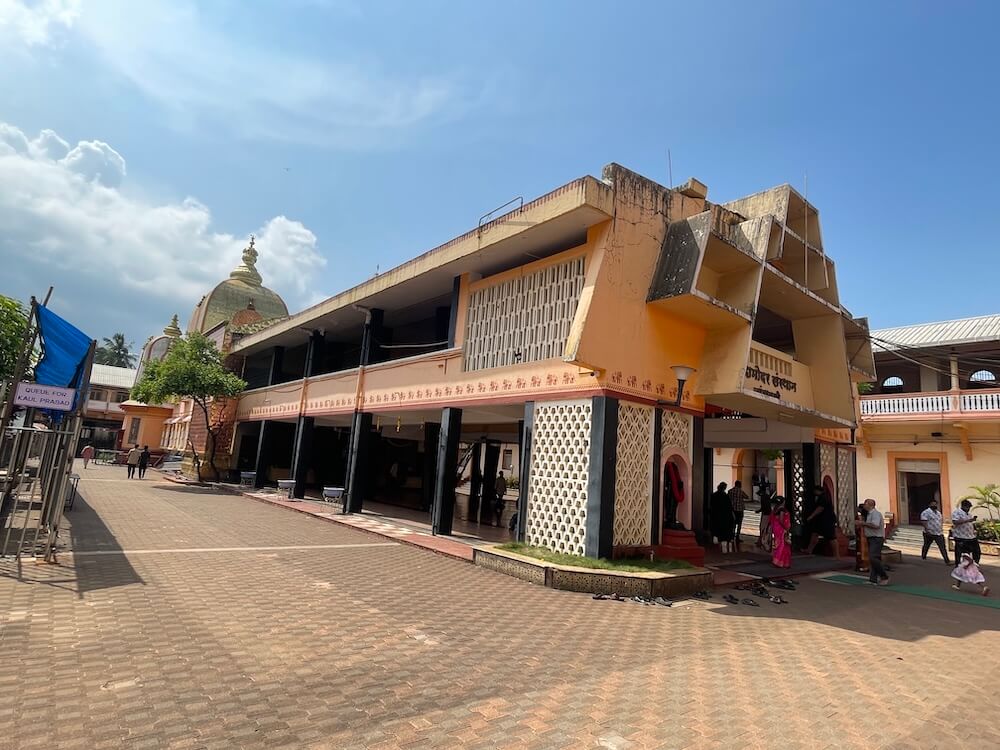
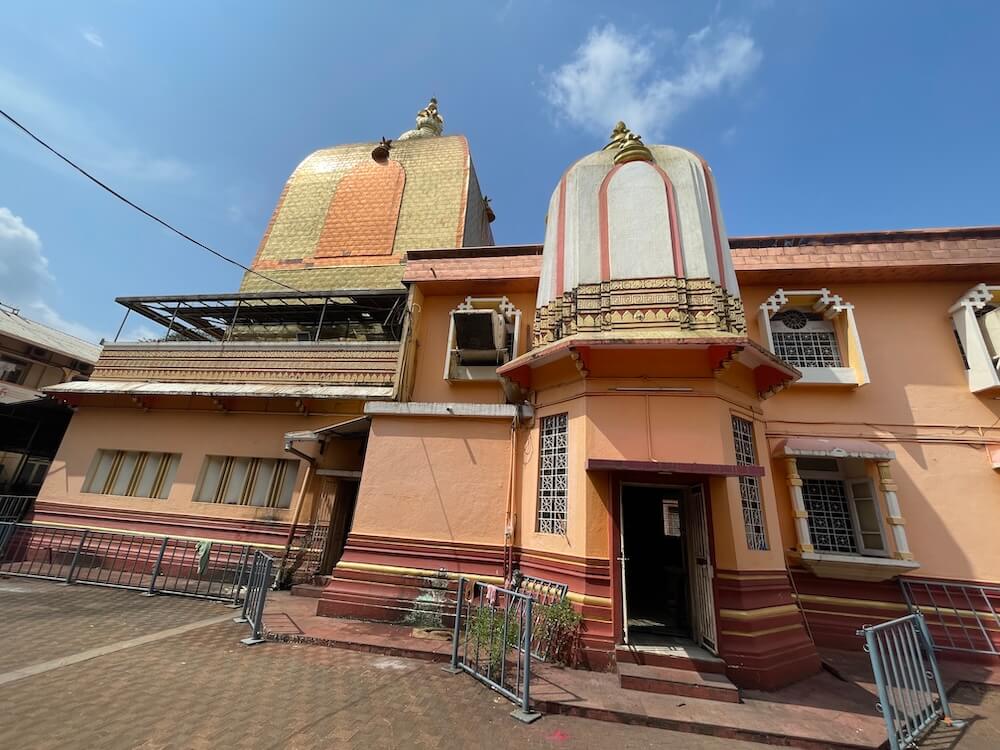
The temple at Zambaulim belongs to the Goud Saraswat Brahmin (GSB) community and is managed under the guidance of the Gokarn Partagali Jivottam Math. There is an ornate arch on the path to the temple. In the premises, there are Banyan and Peepal trees. There is also a stone-masonry well here. The water from this very well is used for the Abhishekam (ritual bathing) of Damodar. The temple’s architecture shows a blend of traditional Goan architecture and the Karnataka style. It is constructed of black stone, though it is now painted.
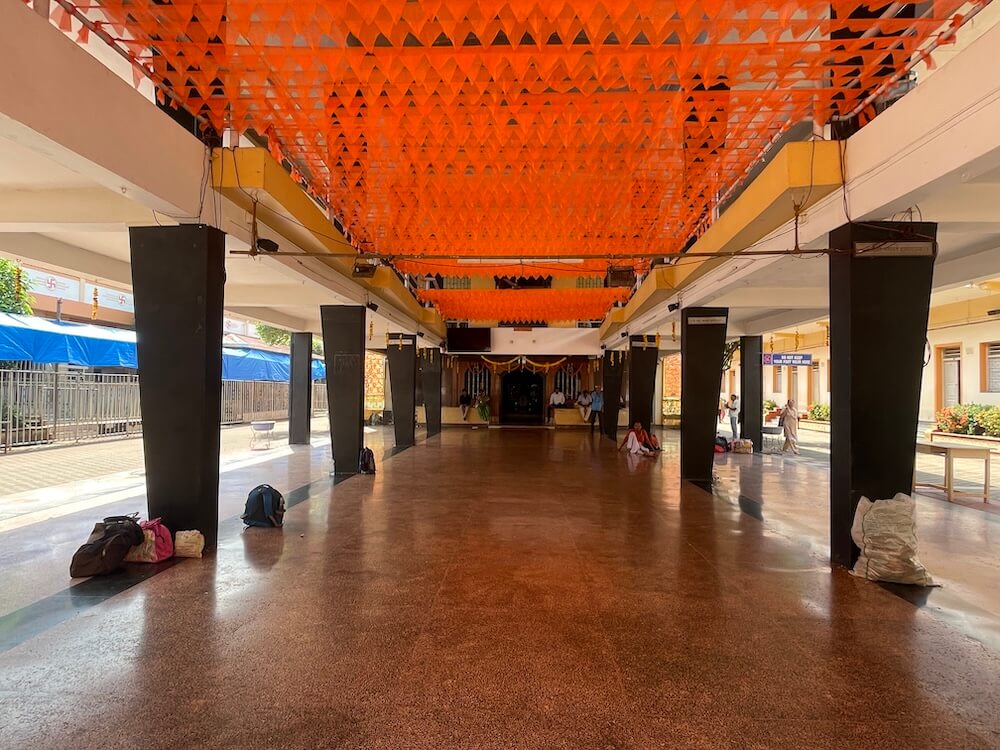
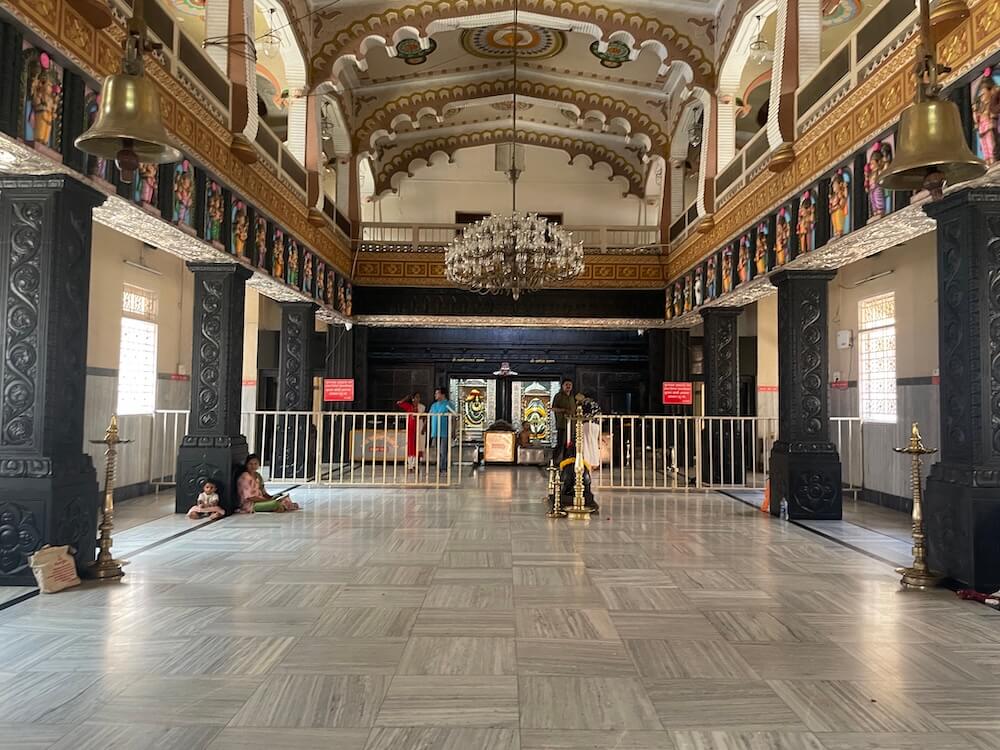
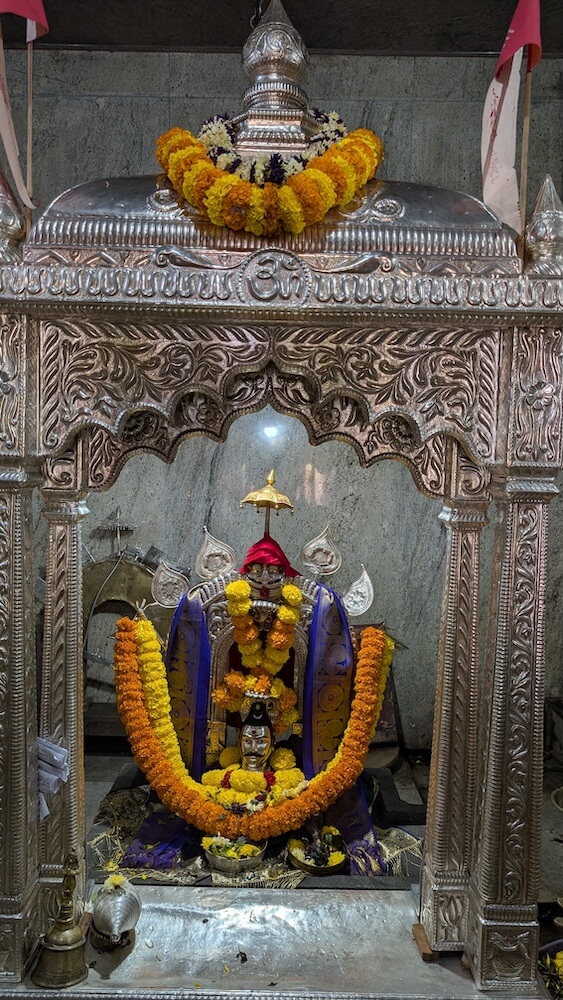
The temple is spacious. It is structured with a Sabha Mandap (assembly hall), an Antarala (vestibule), and a Garbhagriha (sanctum sanctorum). Above the main entrance is a relief sculpture of Shiva seated on a throne. Additionally, there is a carved Torana (archway) and figures of lions on the door. The ceiling and walls of the spacious Sabha Mandap feature exquisite carvings. The walls of the Sabha Mandap are inscribed with verses from the Bhagavad Gita, Ramayana, and Mahabharata, and there are many divine images near the ceiling. In the Sabha Mandap, there is a beautifully carved idol of Nandi made of monolithic black stone. In front of the Sabha Mandap, there are two separate sanctums. In the sanctum to the left, the idol of Lakshmi Narayan is installed, and in the sanctum to the right, the idol of Damodar is installed. Both these idols are in ornate silver shrines. There is a spacious circumambulation path around these sanctums.
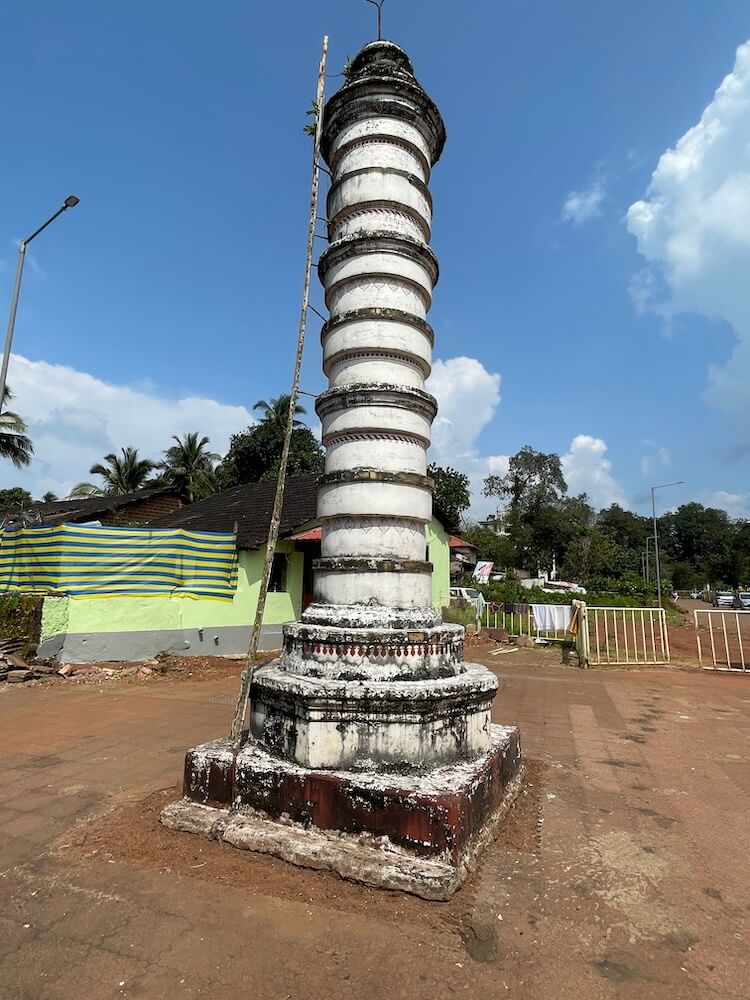
Apart from this, there are smaller temples of Ramnath, Mulvir, Chamundeshwari, and Mahesh in the temple complex. The idol of Mahakali is also worshipped here. It is said that the Kshetri and Raudri manifestations are also present here. In the temple premises, there is a Deepastambha (lamp pillar), a Tulsi Vrindavan, and a river ghat. Several buildings have been constructed in the area for the convenience of devotees, including a community hall and a Bhakta Niwas (pilgrim lodging).
Many festivals are celebrated throughout the year at the Damodar Temple. The main festival here is Shigmo (Shimga). Considered the spring festival of Goa, it is celebrated in the month of Phalguna. Folk dances are performed during this week-long festival, and a procession of the deity is taken out. Hindus and Christians alike participate in this festival with great enthusiasm. Mahashivratri is another major festival celebrated here, which includes Abhishekam, night vigils, and Bhajans. There is a special Puja and a community feast program during Diwali. In the Rathotsava (chariot festival) held in the month of July, the palanquin of Damodar is carried in a chariot. Durga Puja is performed during Navratri. Thousands of devotees participate in all these festivals. Devotees can have Darshan at this temple daily from ६:०० AM to ८:३० PM.
This sacred temple stands as a testament to deep spiritual devotion, ancient architectural grandeur, and rich local cultural traditions.
The sanctum sanctorum houses the divine idol consecrated according to ancient Vedic traditions, surrounded by serene courtyards and traditional temple architecture.
Navratri, Maha Shivratri, Annual Temple Jatra & Deepotsav
Compare and book flights, secure top-rated local hotels near the temple, hire reliable guides, and rent cars instantly.
Extend your pilgrimage by visiting other highly sacred temples located nearby.

Add ₹999 more to unlock FREE SHIPPING!
Your sacred cart is currently empty.
Shop Photo FramesFill in your delivery details below to place your order.
Add comment