
Add ₹999 more to unlock FREE SHIPPING!
Your sacred cart is currently empty.
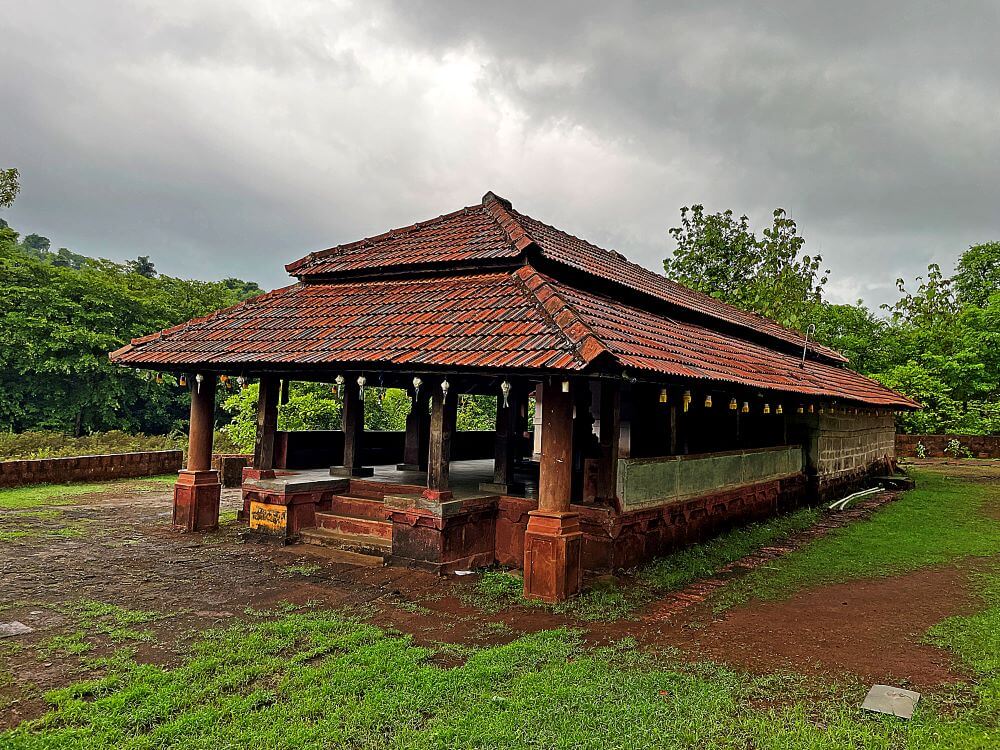
Shop Photo FramesThe ancient Sanganateshwar Temple is situated on the banks of the Arjuna River in Sangnarwadi, Raypatan, in the Rajapur taluka. This temple is unique among the hundreds of Shiva temples in the Konkan region because, once the abhisheka vessel placed over the Shiva Linga in the sanctum sanctorum is filled and the ritual begins, a distinct “gum-gum” sound resonates until the water in the vessel is exhausted. This miracle of nature is known as the “Simhanada” (the roar of a lion). Among the thousands of Shiva temples across the entire state, this phenomenon occurs in only a handful of temples, and Sanganateshwar is one of them.
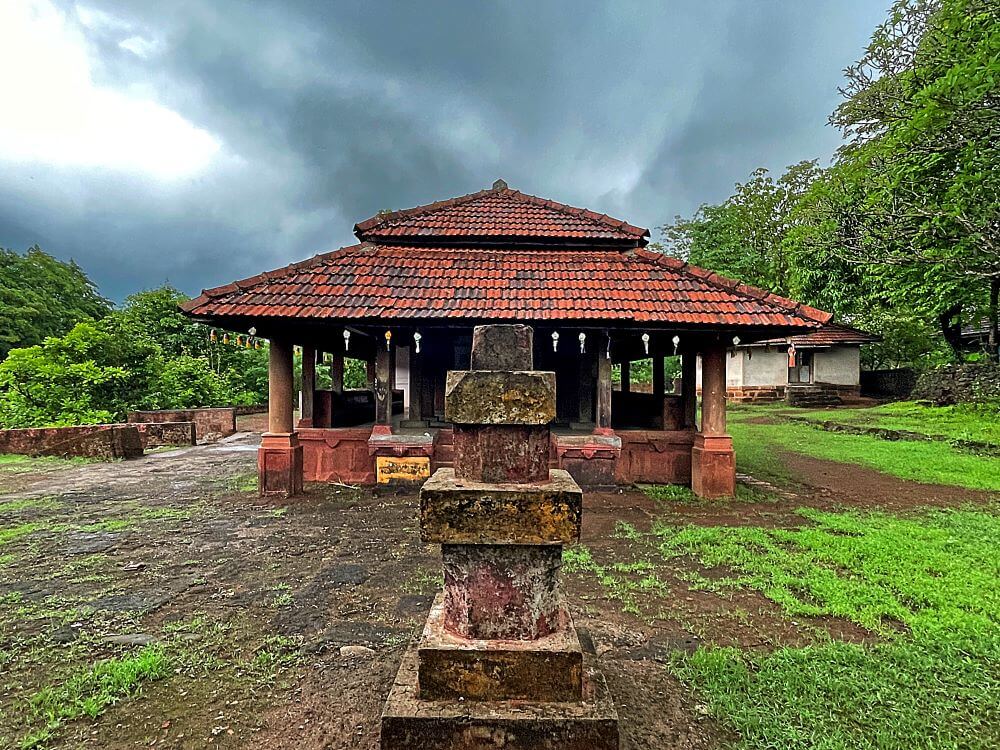
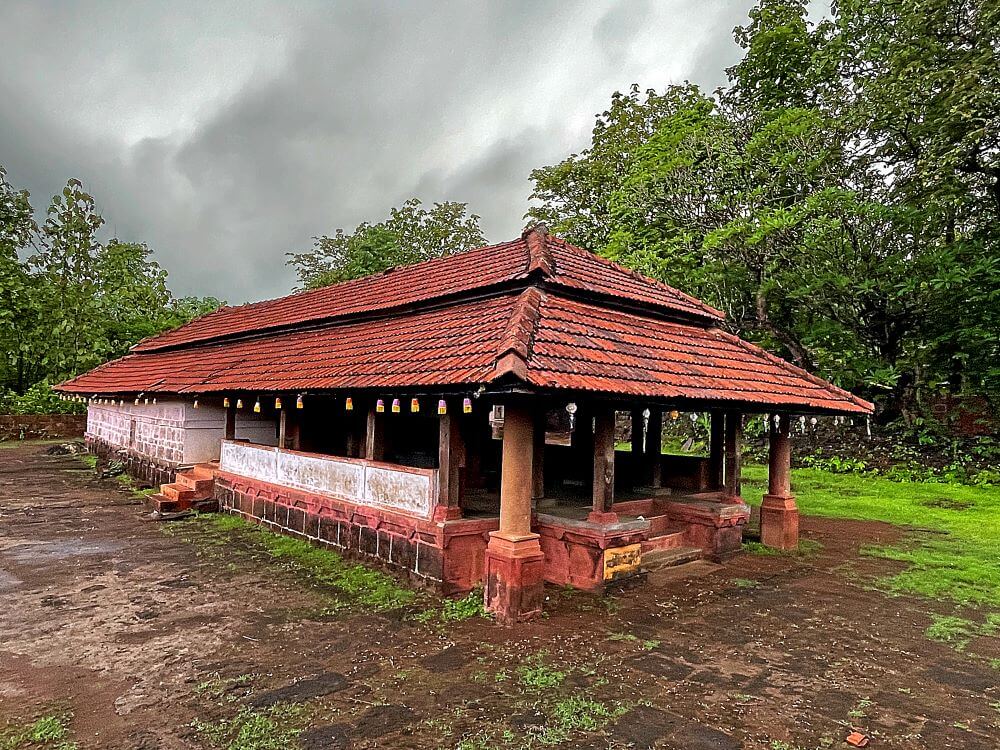
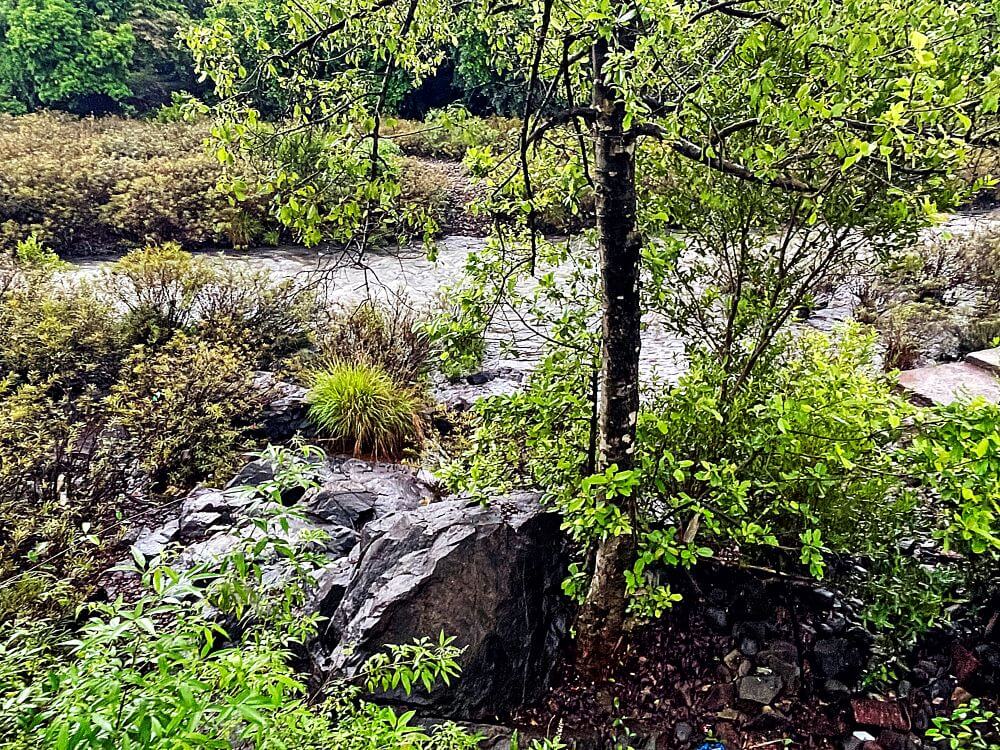
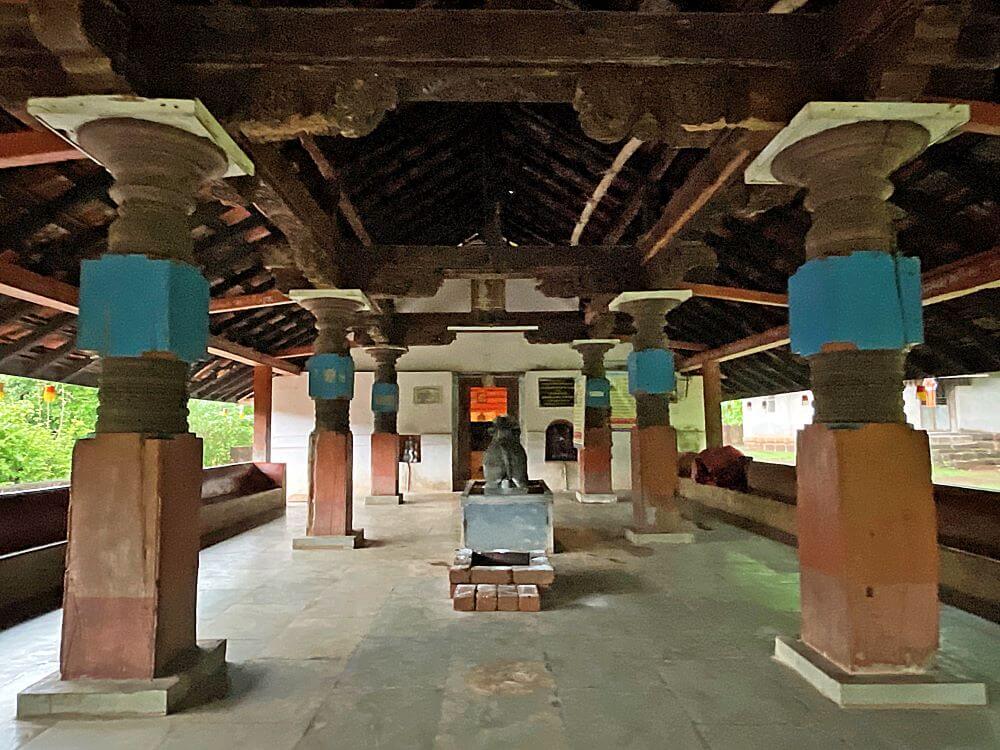
On the Mumbai-Goa highway, between Lanja and Rajapur, lies the village of Oni. From this village, there is a road leading towards Pachal. Two kilometers before Pachal is Raipatan. An inscription near the Sanganateshwar (Sanghanatheshwar) temple records that the temple, dating back to the thirteenth or fourteenth century, was renovated on Magh Shuddha 15, Shake 1664, which corresponds to the year 1742 CE. Where the stream flowing from Pachal meets the Arjuna River, This temple is situated at that confluence. Facing the east, this temple has a tiled roof. In front of the temple stands a small lamp pillar, and the structure of the temple consists of a Darshan Mandap, Sabha Mandap, Antaral, and Garbhagriha. There are stone benches in the Darshan Mandap and Sabha Mandap here.
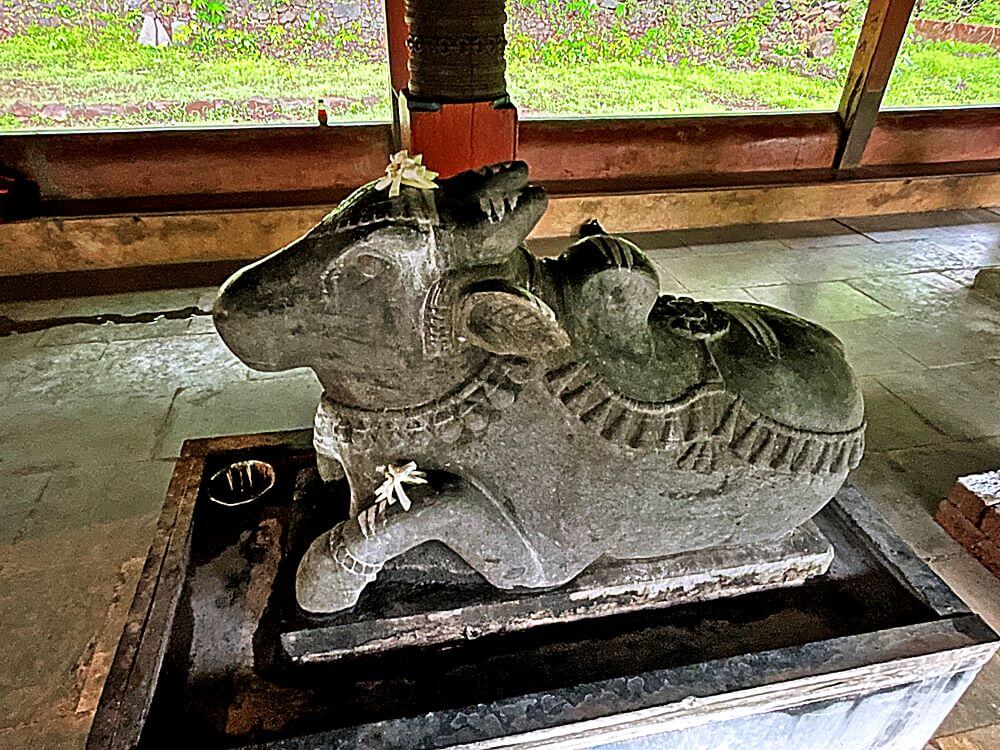
The temple’s assembly hall is in the form of a semi-hall, featuring large, intricately carved stone pillars. Figures of serpents are carved onto the wooden beams resting atop these pillars. Near the entrance of the sanctum sanctorum, on a raised platform within the assembly hall, stands an idol of Nandi carved from a single piece of black stone. Various ornaments are seen carved upon this Nandi. In the niches on both sides of the door frame of the antarala, there is an idol of a serpent on the right and a stone idol of Shiva-Parvati with two hands on the left.
In the devadi on the right side of the doorframe of the sanctum sanctorum and on the doorframe There are idols of Lord Ganapati on the lintel. The sanctum sanctorum here is three feet below the antarala (antechamber). The sanctum has a dome-shaped ceiling topped by a square-style shikhara. The Shiva Linga here is somewhat rugged and made of black stone. After bathing in the bed of the nearby Arjuna River and bringing water from there in a kalasha (pot), when it is poured into the abhisheka vessel placed over the Shiva Linga, the abhisheka begins through its five holes. While this abhisheka is in progress, a humming sound—”gum-gum”—emanates within the sanctum until the water in the vessel is exhausted. Furthermore, a unique feature here is that this sound is produced even if the abhisheka vessel is held over a rock on the riverbank.
Behind this temple, there is a stone slab. It is believed that this slab is a part of the Shiva Linga situated in the sanctum sanctorum. The legend associated with this is that in ancient times, a cow used to come here and release her milk, due to which she would not yield any milk at home. Upon investigating, the cowherd saw her releasing milk onto this stone. Enraged, he struck the stone with an axe. The stone then split into two parts; one part formed the Shiva Pindi, while the other part of the stone remains at the back of the temple.
Adjacent to this temple are the Rameshwara temple and the Revansiddha Math. In this monastery, there are the samadhis of Revansiddha, the deity of the Lingayat community; Mahadaiya, the disciple of Revansiddha; and Chalamakshu and Chalamaldi, the disciples of Mahadaiya. On one of these samadhis, the inscription ‘Shri Guru Chanabasappa Swami Samadhi 1824 Shaka’ is carved. This is the samadhi of Chanabasappa Swami from the lineage of the monastery’s heads, who attained samadhi here in the year 1902. Just as there are two Shiva Lingas in Kashi, representing the right and left veins, there are two Shiva Lingas here as well. The Rayapatan seat is the main center of this monastery, with branches located in Oni, Lanja, Chiplun, and Pargaon (Chikodi).
This sacred temple stands as a testament to deep spiritual devotion, ancient architectural grandeur, and rich local cultural traditions.
The sanctum sanctorum houses the divine idol consecrated according to ancient Vedic traditions, surrounded by serene courtyards and traditional temple architecture.
Navratri, Maha Shivratri, Annual Temple Jatra & Deepotsav
Compare and book flights, secure top-rated local hotels near the temple, hire reliable guides, and rent cars instantly.
Extend your pilgrimage by visiting other highly sacred temples located nearby.


Add ₹999 more to unlock FREE SHIPPING!
Your sacred cart is currently empty.
Shop Photo FramesFill in your delivery details below to place your order.
Add comment