
Add ₹999 more to unlock FREE SHIPPING!
Your sacred cart is currently empty.
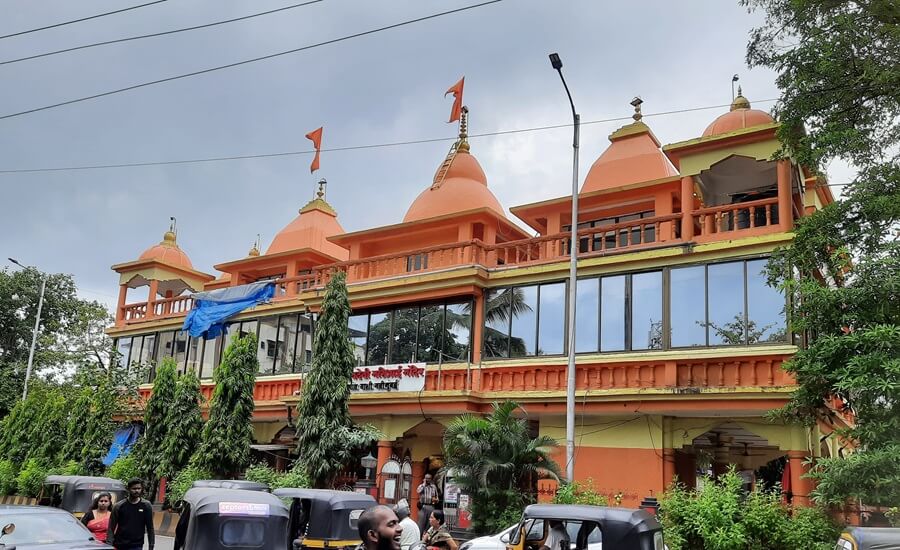
Shop Photo FramesLocated at the entrance of Juhugaon on the Vashi-Koparkhairane road in Navi Mumbai, right in the middle of the main thoroughfare, stands the famous and spiritually awakened shrine of Mariaai. Renowned for fulfilling the vows of devotees and responding to their earnest calls, the temple attracts pilgrims from Mumbai, Thane, and Raigad districts. A unique feature of this temple is that all its affairs are managed by women, and the temple committee consists entirely of female members. The annual fair held here on Chaitra Shuddha Shashthi is considered one of the major festivals in Navi Mumbai.
Juhugaon, near Vashi, was once an island situated in the creek, surrounded by farmland and rich in natural beauty. It was home to the ancient shrine of Gavdevi Mariaai. With the development of the city, the surrounding creek was reclaimed, and the village now lies in the heart of the Vashi suburb. The Gavdevi Mariaai Temple remains a sacred place of faith for the people of Juhugaon and the surrounding areas. Located two kilometers from the Vashi bus station, the temple is said to be over 500 years old. Originally a tiled structure, the temple faced the threat of demolition during the city’s development. Attempts to remove it were unsuccessful, and eventually, the road was constructed on both sides of the temple. It is a firm belief that because Mariaai is a living deity, she preserved her sacred space.
According to the Marathi Vishwakosh, Mariaai is originally a deity of fierce nature. ‘Mari’ refers to epidemics like cholera or smallpox. Historically, these deadly diseases were personified as a goddess, and she is worshipped under the name Mariaai across Maharashtra and South India. She is known by various names such as ‘Mariamman’, ‘Mari’, ‘Marimayi’, and ‘Maribhavani’ depending on the region. Similarly, the goddess of fever epidemics is called Jariaai. These ‘Jari-Mari’ shrines are typically located in a corner of the village or under a tree outside the village boundaries. Their priest is known as a Potraj or Poturaja, who carries the deity’s shrine on his head while traveling from village to village. In Maharashtra and South India, neem leaves hold special significance in the worship of Mariaai. It is a common belief that the Potraj, as a devotee or bhagat of Mariaai, can appease her. To ward off epidemics in a village, the Potraj is required to lead the Mariaai chariot to the village border; in some places, he is called Kadaklakshmi. There is a folk belief that by satisfying Mariaai, the village is spared from the crisis of disease. Driven by this faith, countless devotees from Juhugaon come to seek the blessings of Gavdevi Mariaai.
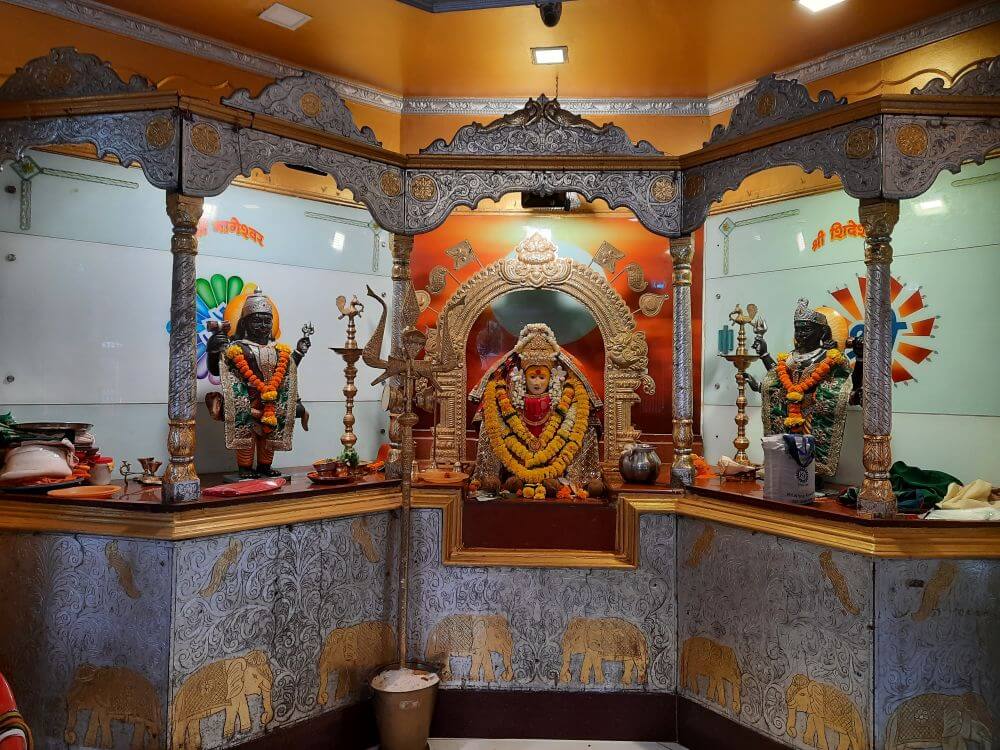
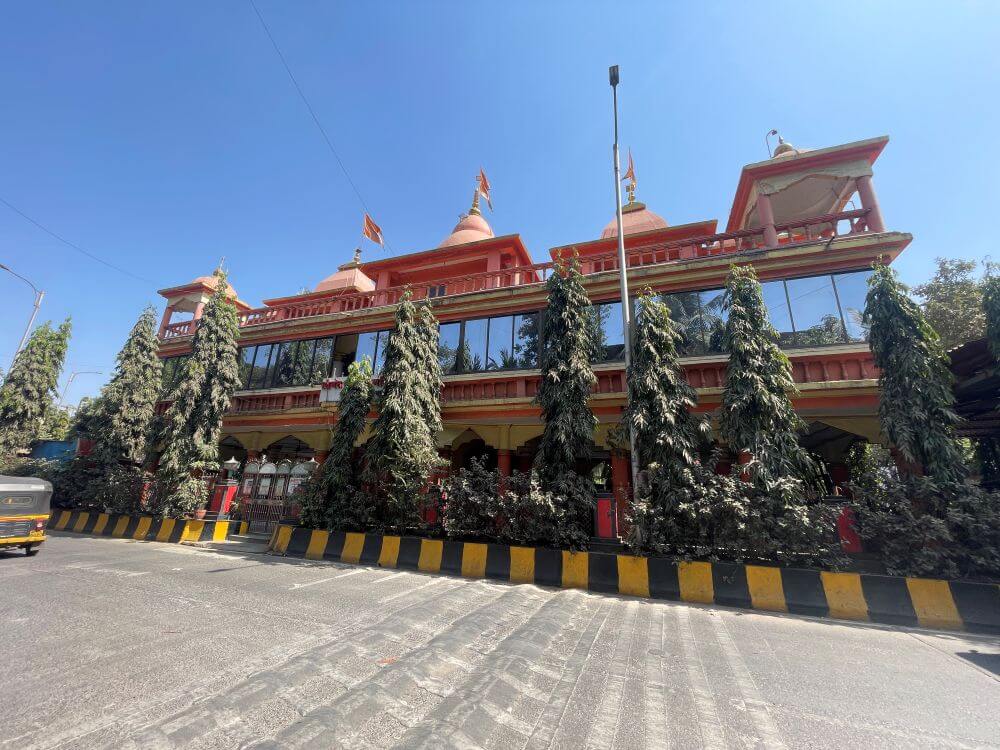
The original simple structure of the Mariaai temple was renovated some years ago, giving it its current attractive appearance. The two-story temple houses the sanctum sanctorum on the ground floor, where the idol of the Goddess is seated on a tall and wide Vajrapitha (diamond pedestal). The lower part of the pedestal is carved with a row of elephant figures. The Goddess’s mask bears a pleasant and serene expression. Adorned with garments, jewelry, and garlands, the Goddess wears an intricately carved crown. Behind the idol is a decorative golden arch (makhar), topped with metal flags and fish-shaped emblems. In front of the Goddess stands a large, ornate metal trident. To the right of the idol is Nageshwar, and to the left is Siddheshwar. Both these idols are carved from black stone and are four-armed and weapon-bearing. A serpent motif is clearly visible behind the Nageshwar idol.
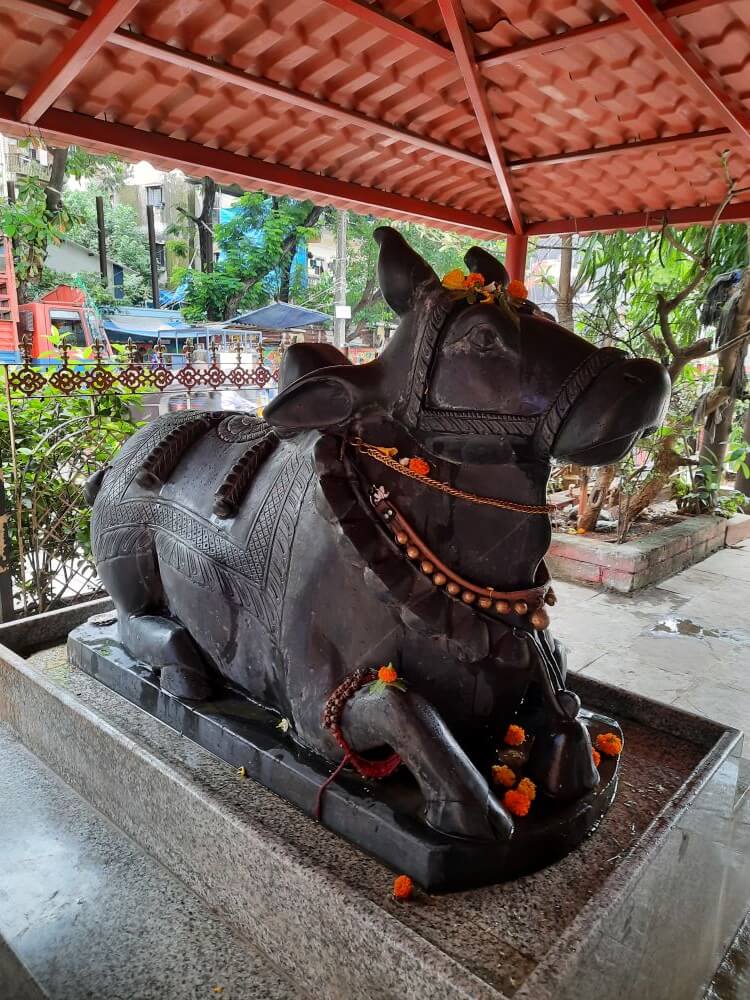
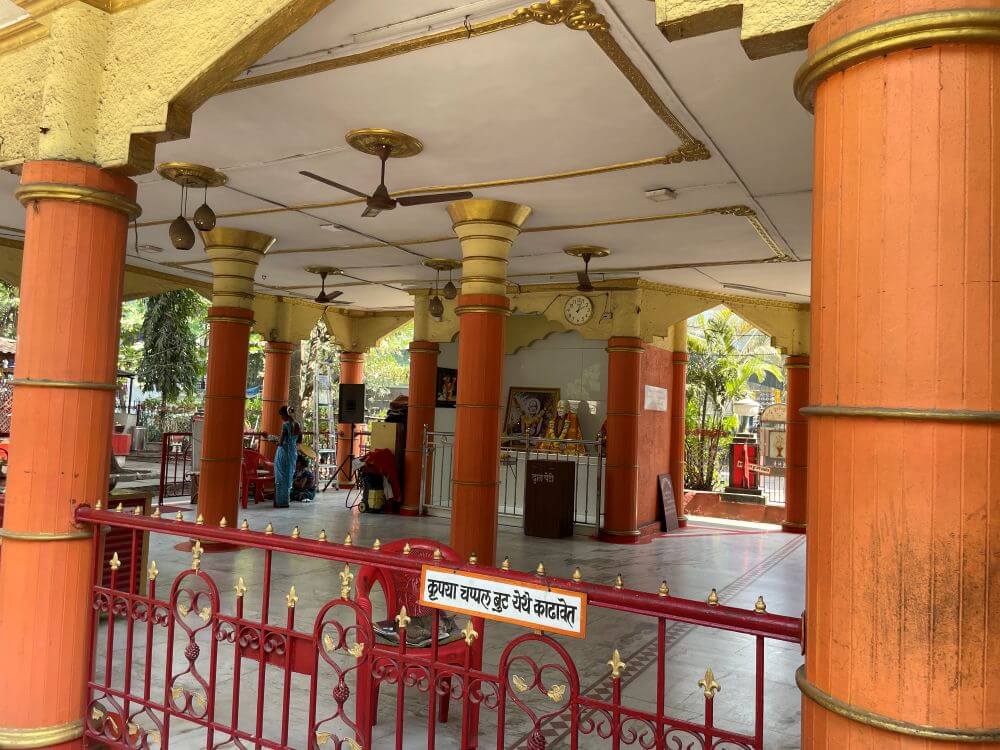
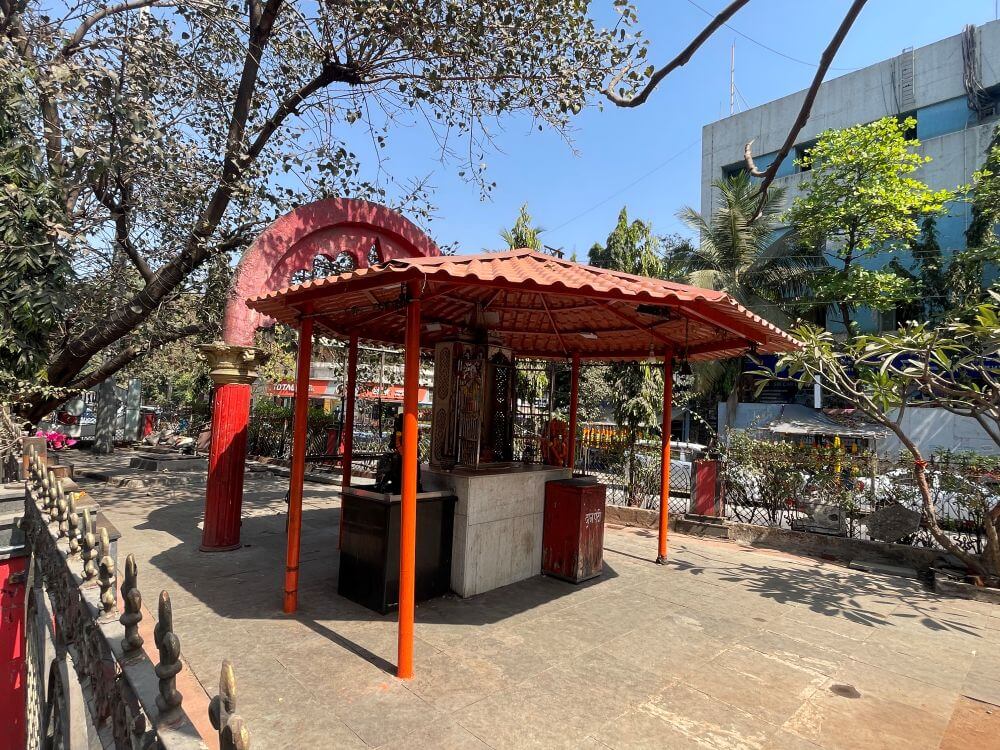
The first floor of the temple houses an assembly hall, while the second floor features a dome. The space in front of the sanctum is used for satsangs and religious activities. In the temple courtyard, there is a Shiva temple, outside of which a large Nandi is installed on a platform. The temple contains a massive Shiva Linga; the base (shalunka) is made of black marble, and the Linga itself is about two and a half feet tall. It is crafted from stone found in the Gandaki River, which originates in the Himalayas of Nepal. It is dark brown in color with gray patches. Stones from the Gandaki River are of the ammonite fossil type and are also worshipped as Shaligrams. Additionally, there is a vermilion-smeared idol of Ganesha on the Vajrapitha. Adjacent to the temple, a smaller shrine houses the idols of Shri Ram, Lakshman, and Sita. There are also several smaller shrines dedicated to local deities.
The grand fair of Mariaai takes place on Chaitra Shuddha Shashthi. On the preceding day, Chaitra Shuddha Panchami, the ‘Jagran’ (night vigil) of Mariaai is observed. Two long bamboo poles, decorated with flower garlands, flags, and colorful cloths, are brought to the temple with music and fanfare. They are then carried around the temple in a procession and placed in front of the shrine to honor the Goddess. On this day, the palanquin of Mariaai is taken out through the village, and villagers perform ‘Aarti’ from their homes. Children suffering from chickenpox or other eruptive diseases are brought to the temple for the Goddess’s darshan, as devotees believe this brings relief from the illness. On the second day of the fair, a long queue of devotees forms from four in the morning. Thousands of pilgrims participate in the fair.
Navratri is also celebrated with great enthusiasm. Other rituals such as Homa-Havan, recitation of hymns, and Navchandi Homa are performed here. A unique aspect is that all these religious rituals are performed by women rather than a priest. Women manage the temple committee and handle all the temple’s operations. Additionally, the temple organizes various programs such as saree distribution for tribal women, health camps for women, and the Shravan Mahotsav.
Over the years, prominent figures such as Gagangiri Maharaj, Sant Nirankari Maharaj, Dr. Veerendra Heggade, Vamanrao Pai, Didi (the spiritual daughter of Pandurang Shastri Athavale), and Balayogi Sadanand Maharaj have visited the temple to seek the blessings of Mariaai. The daily Aarti is performed at 7:00 AM and 7:00 PM. Devotees can have darshan of Gavdevi Mariaai from 7:00 AM to 1:00 PM and from 4:00 PM to 10:00 PM.
This sacred temple stands as a testament to deep spiritual devotion, ancient architectural grandeur, and rich local cultural traditions.
The sanctum sanctorum houses the divine idol consecrated according to ancient Vedic traditions, surrounded by serene courtyards and traditional temple architecture.
Navratri, Maha Shivratri, Annual Temple Jatra & Deepotsav
Compare and book flights, secure top-rated local hotels near the temple, hire reliable guides, and rent cars instantly.
Extend your pilgrimage by visiting other highly sacred temples located nearby.


Add ₹999 more to unlock FREE SHIPPING!
Your sacred cart is currently empty.
Shop Photo FramesFill in your delivery details below to place your order.
Add comment