
Add ₹999 more to unlock FREE SHIPPING!
Your sacred cart is currently empty.
Shop Photo FramesSanpada, located adjacent to Vashi on the Sion-Panvel Highway, is currently famous for the Mumbai Agricultural Produce Market Committee; however, this village has been known since ancient times for its ancient Dattaguru Paduka Temple. This Datta temple has long been a sacred place of devotion for devotees from Sanpada and the surrounding region. A unique feature here is that for hundreds of years, the tradition of a village-wide fast is observed to this day. Non-vegetarian food is strictly prohibited in this village every Thursday. The villagers have preserved this tradition of fasting together on a single day to this day.
Sanpada was once a small settlement (*pada*) in the historically famous Belapur region. In the 4th century BCE, it was a tiny village under the Mauryan Empire. Presumably due to its small size, it was called Sanpada, meaning a small settlement. This village witnessed the reign of many powers such as the Satavahanas, Chalukyas, Silharas, Yadavas, Kadambas, Bahmanis, Siddis, Shivashahi (rule of Chhatrapati Shivaji Maharaj), and the Peshwas. In the past, the village was situated in a naturally rich environment, surrounded by salt pans on three sides and a forest on the fourth. It was self-sufficient since ancient times. A unique feature of this village was that it was previously inhabited 100 percent by the Agri community. The routine of the local villagers since early times was to sell salt from the salt pans in the Panvel-Thane markets and earn their livelihood through farming and fishing. Historian V. K. Rajwade has noted in ‘Mahikavatichi Bakhar’ that the historical tradition of this community traces back to King Bimba, who ruled in Mungi-Paithan six hundred years ago.
The Agri community originally belongs to the Shaiva sect, and the Agri community of Sanpada has immense faith in Buddheshwar Mahadev here. Similarly, there is a large number of Dattaguru devotees here. The Palkhi (palanquin procession) taken out on Datta Jayanti was considered the largest festival across Sanpada and nearby villages. Devout villagers who have faith in Lord Datta would begin any auspicious work only after taking the darshan of Datta. Even today, this tradition continues to be observed.
The legend of this temple states that many years ago, a Siddha Yogi saint performed penance under an Audumbar tree here. Beholding his radiant form, many devotees would come for his darshan. No matter how many devotees gathered, the saint always appeared taller than everyone else. Once, a holy spring suddenly began to flow from the roots of that Audumbar tree. Since then, the glory of this sacred place kept growing. Devotees believed that the saint was none other than Lord Dattaguru Himself, and thus this holy temple was established.
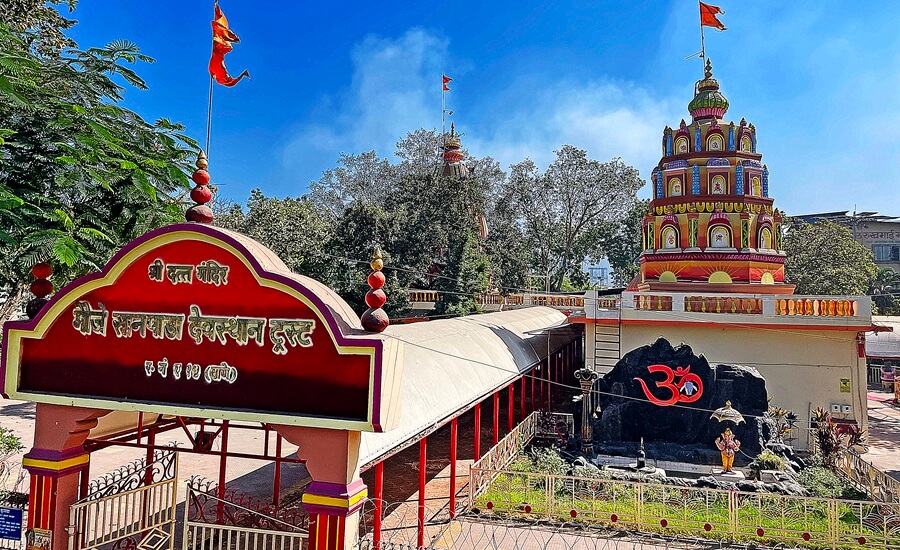
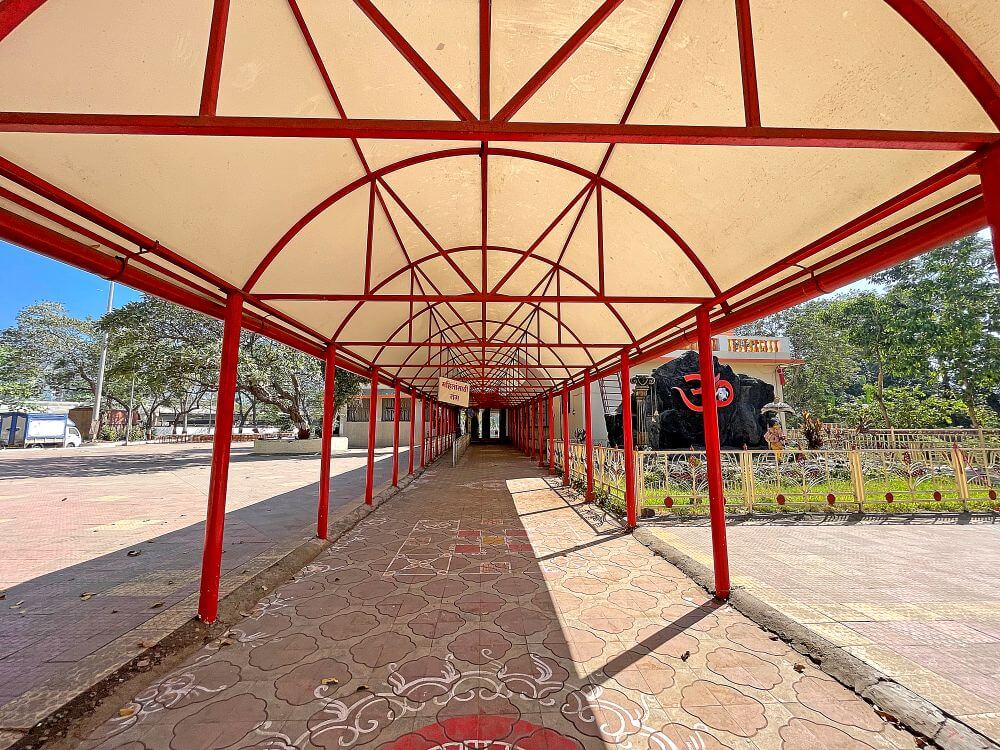
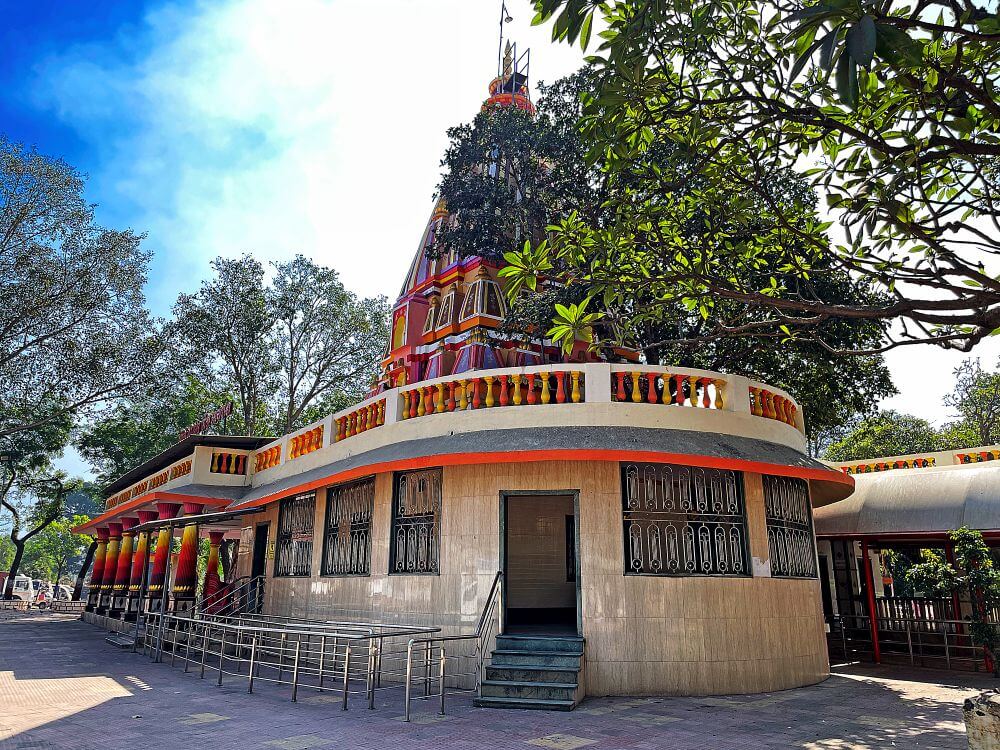
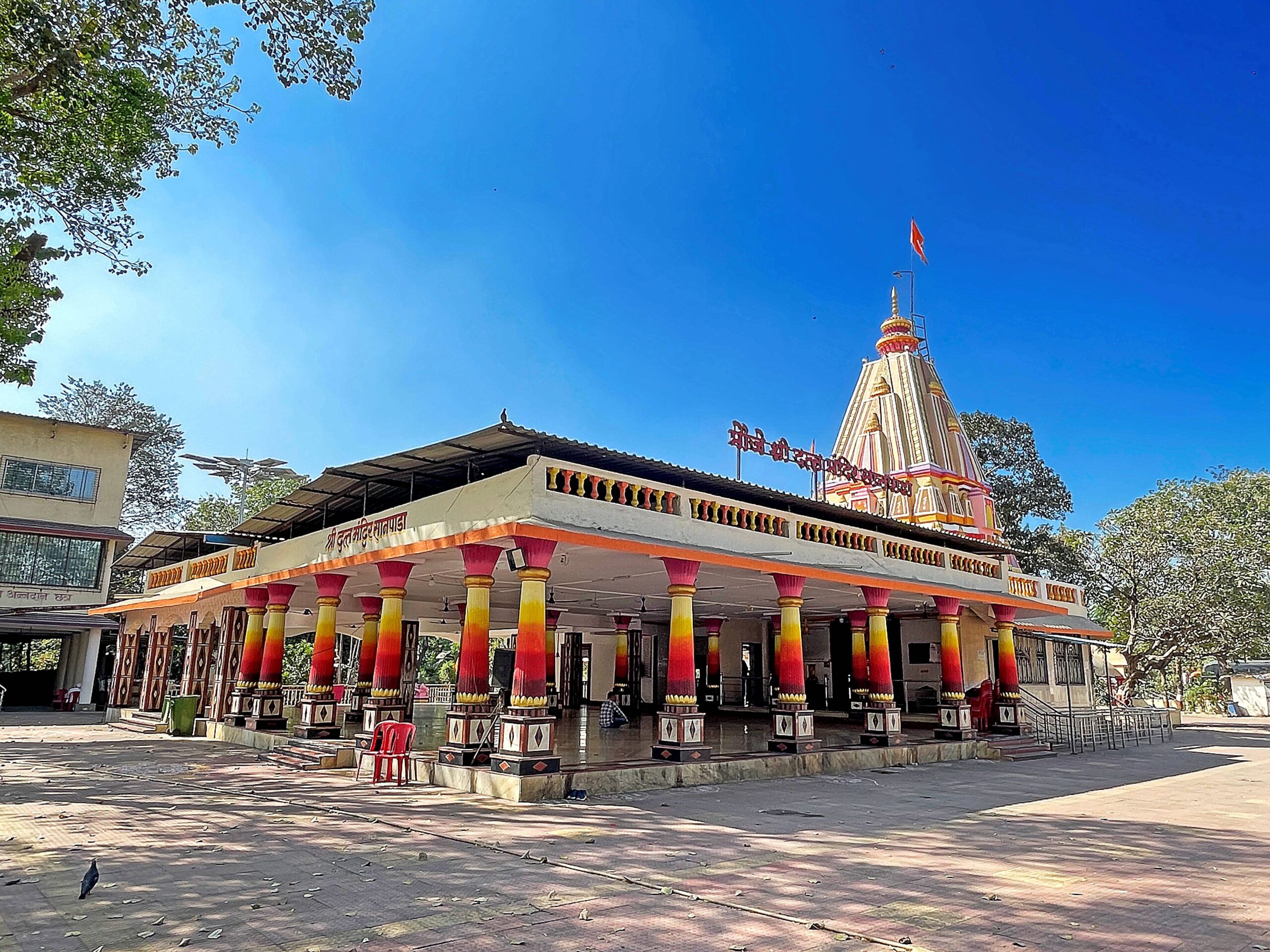
Shri Datta Temple is situated in Sanpada village, centrally located between the Mumbai-Panvel Highway and the Vashi-Panvel Harbor Railway line of Central Railway. Situated in a spacious courtyard of about two and a half acres, this temple is one of the ancient temples of Navi Mumbai. Facing east, the temple is approached from the west. One enters the temple courtyard through an arched gateway in the boundary wall. Along the path from the entrance gate to the Garbhagriha (sanctum sanctorum) of the Datta Temple, an arrangement for the darshan queue has been made, covered with a shed for the convenience of devotees. Beside this queue line, a small garden has been developed, which features a large stone slab. Near this stone slab are an idol of Lord Ganesha and a Shivling. Water and light effects are artificially focused on them, enhancing the charm of the surrounding area.
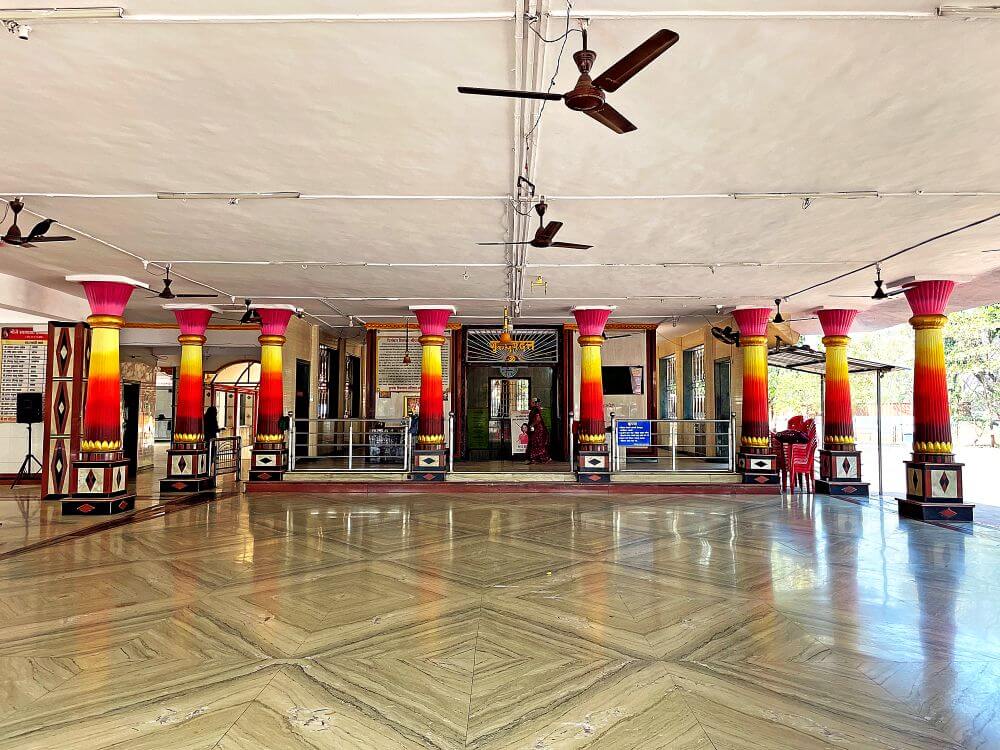
The temple structure consists of an open Sabhamandap (assembly hall) and the Garbhagriha (sanctum sanctorum). In front of the Sabhamandap, leaving space for a Pradakshina (circumambulation) path, lies the Garbhagriha. At the center of this Garbhagriha rest the sacred Padukas of Shri Datta. On the Pradakshina path behind the Garbhagriha stands an ancient Audumbar tree. During the recent renovation of the temple, that sacred tree was incorporated within the temple structure. When viewed from the outside behind the sanctum, the tree can be seen emerging through the wall alongside the spire (Shikhara). While circumambulating the Garbhagriha, devotees also seek the darshan of this sacred tree. Entry into this Garbhagriha is restricted for women; however, a clear darshan of the sacred Padukas can be obtained from the entrance of the Garbhagriha.
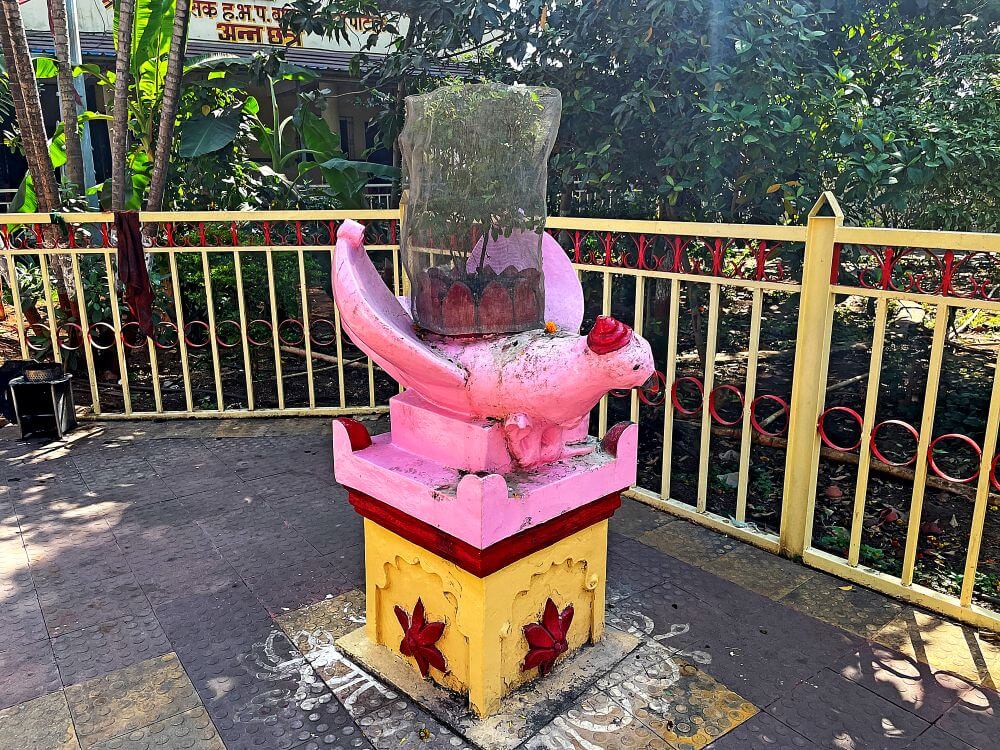
To the right of the main Garbhagriha of the temple is the temple of Vishweshwar Mahadev. On a platform in front of the Garbhagriha of Vishweshwar Mahadev are Nandi and Kurma (turtle). Inside the Garbhagriha is the Shivling of Vishweshwar Mahadev. Beside the Vishweshwar Temple are the Hanuman Temple and the Balkrishna Maharaj Temple. Behind the Vishweshwar Temple, there are three more temples, including the Vitthal-Rakhumai Temple, Ganesh Temple, and Sai Baba Temple. Apart from this, there is a temple dedicated to Shanidev in the courtyard.
At the Datta Temple here, Mahaprasad is served to devotees every Thursday afternoon. Remarkably, to sponsor or offer this Mahaprasad, one has to register at least one to two years in advance. In addition, the festival of Hanuman Jayanti is also celebrated here on a grand scale.
This sacred temple stands as a testament to deep spiritual devotion, ancient architectural grandeur, and rich local cultural traditions.
The sanctum sanctorum houses the divine idol consecrated according to ancient Vedic traditions, surrounded by serene courtyards and traditional temple architecture.
Navratri, Maha Shivratri, Annual Temple Jatra & Deepotsav
Compare and book flights, secure top-rated local hotels near the temple, hire reliable guides, and rent cars instantly.
Extend your pilgrimage by visiting other highly sacred temples located nearby.


Add ₹999 more to unlock FREE SHIPPING!
Your sacred cart is currently empty.
Shop Photo FramesFill in your delivery details below to place your order.
Add comment