
Add ₹999 more to unlock FREE SHIPPING!
Your sacred cart is currently empty.
Shop Photo FramesIn the entirely residential suburb of Sanpada, very close to Palm Beach Road, known as the ‘Necklace’ of Navi Mumbai, stands the ancient Buddheshwar Mandir. Here, not only is there the ancient Shiva Lingam of Buddheshwar, revered by thousands of devotees from Vashi-Sanpada and the surrounding areas, but this is also a temple complex. It houses temples dedicated to various deities. Their unique feature is that all the idols in these temples are grand, exquisitely crafted, and awaken a sense of devotion in the hearts of pilgrims. This temple is considered an important religious and cultural centre in the Sanpada suburb.
Sanpada was formerly a small hamlet of Vashi village. This is how it acquired the name Sanpada. Previously, this entire area was like a cluster of small islands, surrounded by a creek. There was a creek extending from Vashi to Kopri village, known as Kālkhadi, due to the strong currents within it. A unique feature of Sanpada was that it was formerly inhabited entirely by the Agri community. Rice farming, salt pans, and fishing were their primary occupations. A significant trade in salt was conducted from here. Over time, the creeks and marshy areas here were reclaimed. In १९७२, Navi Mumbai was established as a planned city by the then government, and Vashi, Sanpada, and neighbouring Juinagar, among other areas, were all connected.
The legend of the Buddheshwar Mandir states that the area where this Shiva temple now stands was formerly part of Vashi village. Near this temple, there was a Ranjani tree. Beneath it, some villagers discovered two stone Shiva Lingams. The Agri community, being originally Kshatriyas and followers of the Shaiva tradition, had immense faith in Lord Shivshankar, and thus began worshipping these Shiva Lingams. They came to be known as Buddheshwar. Shivram Gopal Bhagat, a resident of Vashi village, was a great devotee of Shiva. He would regularly travel from Vashi by boat to worship Buddheshwar. In due course, a small temple for Buddheshwar was constructed here. Another legend associated with this temple recounts that during the height of the ‘Quit India’ movement in १९४२, many people from the Agri community in Vashi, Sanpada, and the surrounding areas actively participated in the protests against the British. During this period, some miscreants stole one of the Shiva Lingams from the Buddheshwar Mandir. This was an attempt to wound the religious sentiments of the Agri community. However, after stealing the Lingam, these miscreants faced numerous misfortunes and began to experience ill omens. Eventually, one day, they secretly returned the Shiva Lingam to the temple.
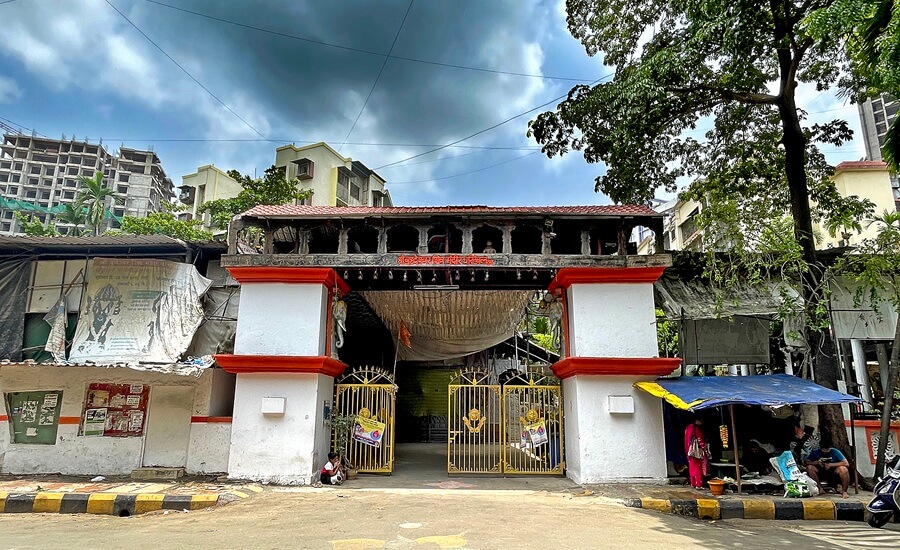
This temple, a place of profound faith for countless people, has been renovated periodically. Shivram Bhagat’s grandson, Nakhwa Kashinath Bhagat, undertook a renovation some years ago, giving the temple its current form. This Buddheshwar temple complex is situated on a large plot of land adjacent to the flyover built to access Sanpada from Palm Beach Road. The temple has a grand entrance arch and a spacious courtyard within. Various religious festivals and cultural programmes are continuously celebrated here.
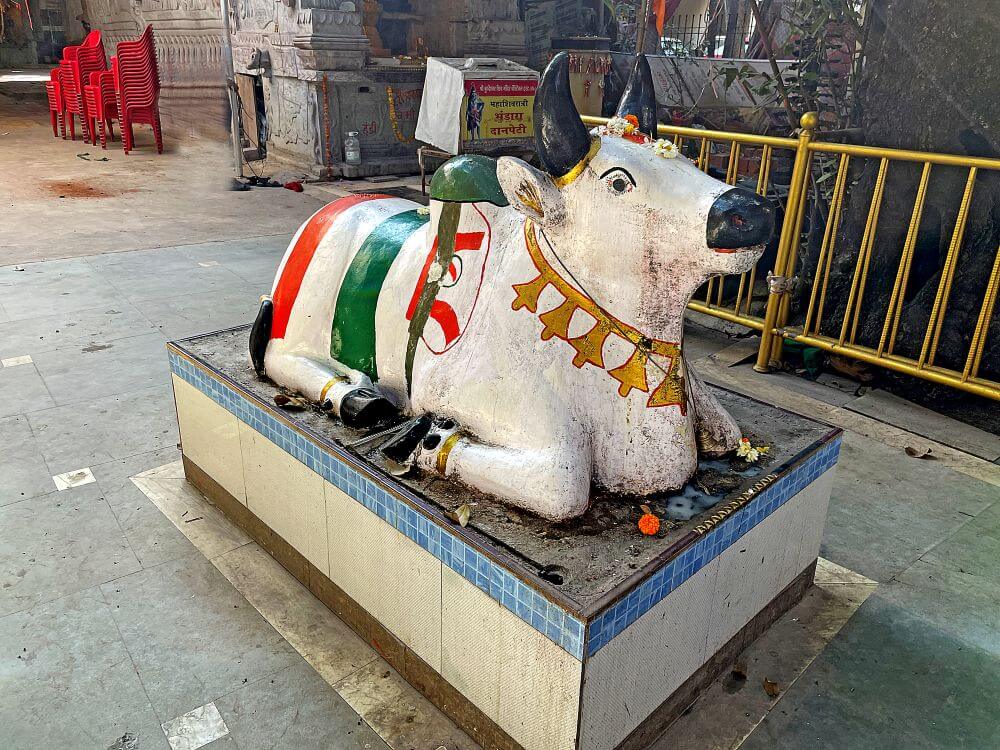
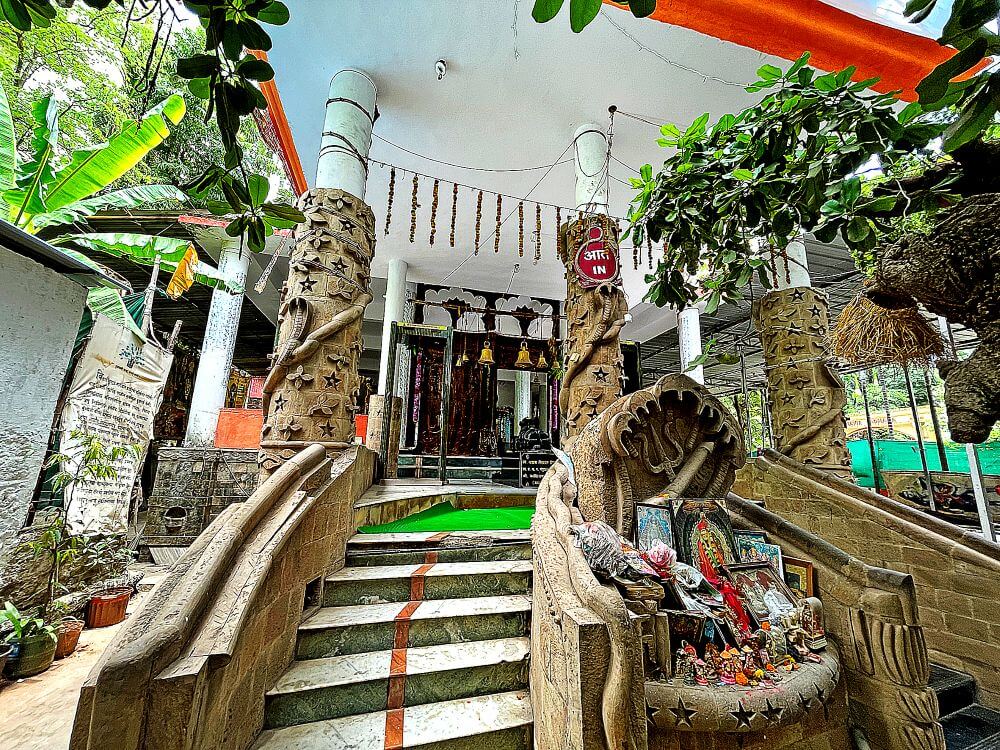
Upon entering through the archway, the main Buddheshwar Mandir is located to the left, facing forward. In front of this temple, a large idol of Nandi is enshrined on a marble platform. Beside it, beneath a tree, are stone Pādukās (footprints). The design of the platform for these Pādukās is distinctive. Large Nāga (serpent) images are carved on all four sides of this circular platform. Overall, Nāga images are found throughout this temple at various spots. Not only this, but there is also an idol of Lord Vishnu in the form of Sheshashayi (reclining on the serpent Shesha). Navi Mumbai is part of the Konkan region, and in ancient times, a large number of Nāgavanshi (serpent-descended) people resided in Konkan. In ancient times, it was believed that the Nāga people lived in Pātāla or Rasātala. Mahītala was a part of this. Historian V. K. Rajwade, in his miscellaneous essay ‘Konkan and Nāga People’ (Rajwade Lekhsangraha, Part २, pp. २२९-२३५), states that the region of Mahītala, or a part of it, later came to be known as Aparāntaka. There were various clans of Nāgas, some of which were Vāsuki, Takshaka, Karkotaka, Kāliya, and Kukuṇa. From these Sanskrit names of clans, Marathi surnames later emerged. The name Konkan is said to have originated from a valiant person belonging to the Kukuṇa Nāga clan. Ancient traces of the Nāga dynasty still exist today. As the Agri community originally belongs to the Shaiva tradition, the Nāga is worshipped as a sacred deity within this community. There is also a large idol of a Nāga couple in the Buddheshwar Mandir courtyard.
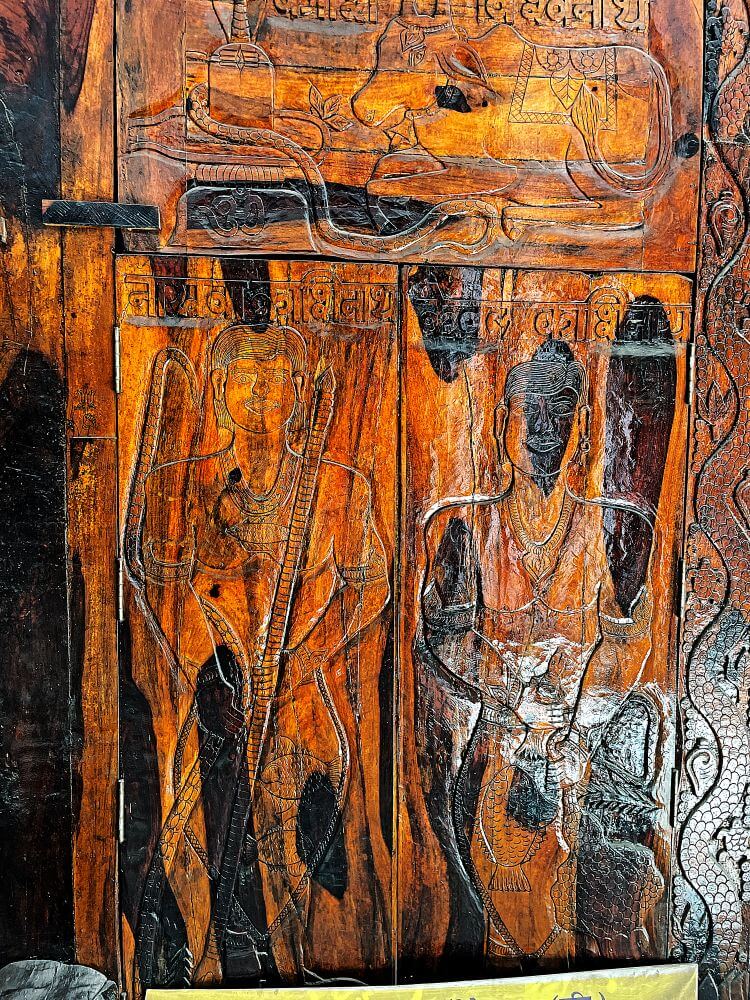
The main Buddheshwar Mandir is built on a high plinth. Ascending a few steps, one enters the Mukhamandapa (front hall) of the temple. The Mukhamandapa has circular pillars adorned with star patterns and large Nāga images carved upon them. In the Mukhamandapa, on a platform, sits Nandi, with a tortoise in front of him. Both of these ancient idols are carved in stone. From here, two steps lead into the Sabhamandapa (assembly hall). Nāga images can also be seen at the base of the doorposts of the Sabhamandapa. The entrance here is named Samudra Manthan Mahadwar (Great Gateway of the Churning of the Ocean). Accordingly, attractive wooden doors are carved with sculptures depicting the Samudra Manthan, including idols of Brahmā, Vishnu, and Mahesh.
The Sabhamandapa is of modern construction, semi-open, and extremely spacious. Its renovation using white marble has made it even more attractive. Upon entering the Sabhamandapa, to the left, one sees a beautiful palanquin-like swing, which holds an idol of Krishna. To the front left, an idol of Ganesha is enshrined. Small idols of Brahmā-Vishnu-Mahesh are seated on the ceiling of the shrine above the idol’s high pedestal. In the shrine to the right, there is an idol of Vitthal-Rukmini.
The entrance to the Garbhagriha (sanctum sanctorum) is wide and wooden. Large Nāga images are also carved on these doors. Upon entering the Garbhagriha, a distinctive arch is immediately visible. The pillars of this arch, which appear to be formed by joining two tree trunks, are carved with images of various animals and deities. Above it is a wheel resembling a bullock cart wheel, which is considered a symbol of the wheel of time (Kālachakra). In the centre of this Garbhagriha is a circular and somewhat deep pit, built of marble. There are five steps leading down into it. At the bottom, on the ground level, is the ancient Shiva Lingam of Buddheshwar. This Lingam is small and of the Mānushalinga type. A Mānushalinga has three parts: the lower Brahmā-bhāga, the middle Vishnu-bhāga, and the upper Shiva-bhāga. The Shiva-bhāga has an Urdhvapāshāna (upright stone). A Nāgaphana (serpent hood) crowns the Lingam, and a copper Galantikā (abhisheka vessel) is suspended above it. This Lingam is surrounded by a small marble railing of the same shape as the Lingam.
In this temple, there is a greater throng of devotees every Monday, and especially on the Mondays of Shravan. During Mahashivratri, devotees from all over Navi Mumbai come here for Darshan. Consequently, a long queue of devotees forms here from four o’clock in the morning until midnight.
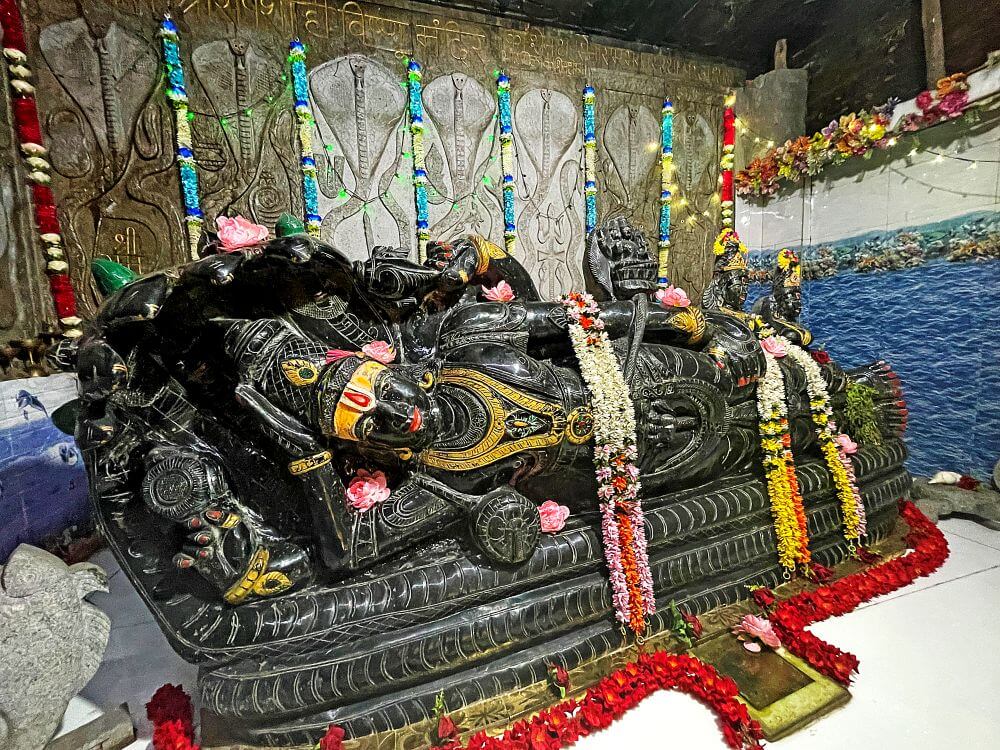
Within the Garbhagriha itself, on the right side, there is an exit door. Adjacent to it is a large shrine dedicated to Lord Vishnu. This shrine houses a magnificent Sheshashayi Murti of Lord Vishnu, approximately ten feet in length and five feet in height. Next to it is a shrine for Kartikeya Swami. This shrine is curtained. In the adjacent shrine, there is a sacred abode for Goddess Durga, along with Lakshmi, Parvati, and Saraswati. In the shrine next to it, a large stone Murti of Bhairavnath is enshrined. Here, there is also a grand slab dedicated to the Naga Devata. The upper part features raised sculptures of Naga couples, and the central part has two masks of Naga Purushas.
Outside, adjacent to the Sabhamandapa of the main Buddheshwar temple, on a high platform, a grand statue of Nakhwa Kashinath Bhagat has been erected. This statue, depicting him standing in a boat, holds a large oar in his hands. The names of various fish are carved on the slabs beneath the statue.
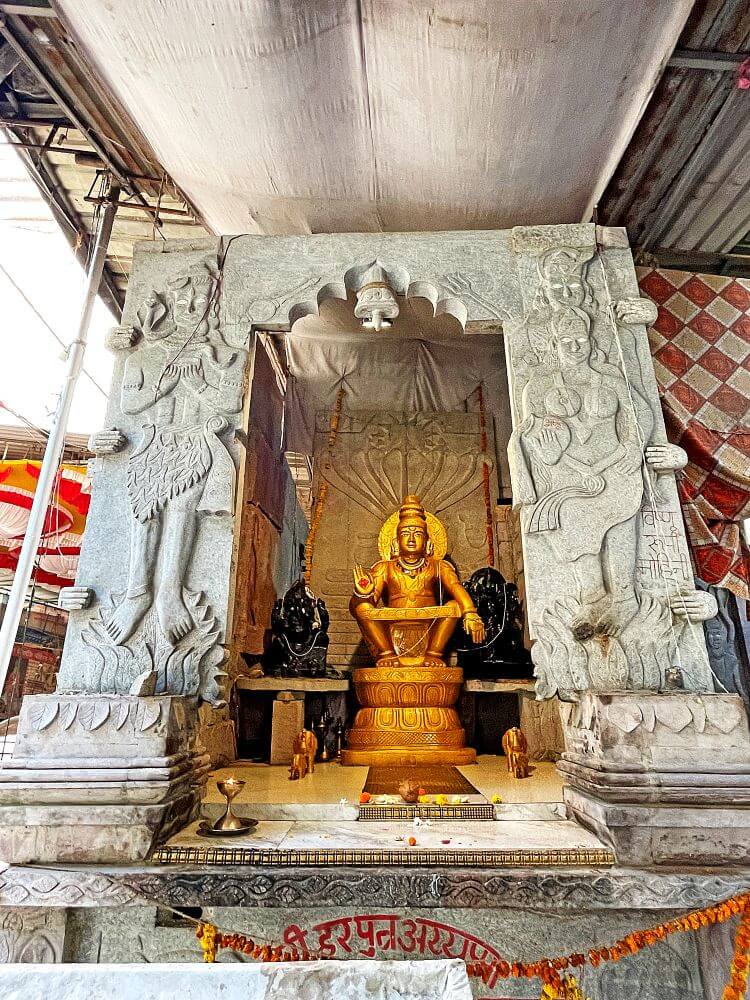
The temple complex houses shrines of many deities, and its unique feature is that all these Murtis are well-defined, exquisitely carved, and grand. Directly in front of the main Buddheshwar temple, at some distance, beneath the open sky, there is a colourful Murti of Hanuman holding a blue-hued Murti of Lord Rama. To its right is the temple of Ayyappa Swami. Adjacent to this temple, at the back, is a large Sai Baba temple. In the high niches on the outer side of this temple, Lord Balaji is enshrined on the left, and the three-faced Murti of Dattatreya is enshrined on the right. Through the entrance located between these niches, one ascends five steps to enter the Sai temple. Inside, on a high platform, a seated Murti of Sai Baba is consecrated on a throne, and on the wall behind the Murti, there is a five-headed Naga hood. Within this temple, on the right wall, there is a stone Murti of Vishwakarma. On the outer wall of the Sai Baba temple, there is a magnificent marble-carved relief sculpture depicting the Dashavatara. Many Abhishekams and rituals are performed in this temple.
Additionally, in this courtyard, there are also abodes for Kali Mata, Panchmukhi Hanuman, Suryaputra Shani, and the Navagrahas. All these Murtis are grand. The Murti of Kali Mata is ten feet tall, the Murti of Shani is five feet tall, and the Murti of Panchmukhi Hanuman is eighteen feet tall. It is noteworthy that there are two Murtis of Panchmukhi Hanuman here. One of them is comparatively smaller. It is said to be the earlier, ancient Murti. During renovation, a larger replica of the same Murti was consecrated here.
Just like the Buddheshwar शिवलिंगम्, the presence of temples dedicated to various deities ensures a continuous flow of devotees in this temple complex. The temple trust grandly celebrates various festivals and programs here, such as Shravan Utsav, Shivratri, Harinam Saptah, and Navratri. Devotees can have Darshan in these temples from five o’clock in the morning to one-thirty in the afternoon, and from three-fifteen in the afternoon to eleven o’clock at night.
This sacred temple stands as a testament to deep spiritual devotion, ancient architectural grandeur, and rich local cultural traditions.
The sanctum sanctorum houses the divine idol consecrated according to ancient Vedic traditions, surrounded by serene courtyards and traditional temple architecture.
Navratri, Maha Shivratri, Annual Temple Jatra & Deepotsav
Compare and book flights, secure top-rated local hotels near the temple, hire reliable guides, and rent cars instantly.
Extend your pilgrimage by visiting other highly sacred temples located nearby.


Add ₹999 more to unlock FREE SHIPPING!
Your sacred cart is currently empty.
Shop Photo FramesFill in your delivery details below to place your order.
Add comment