
Add ₹999 more to unlock FREE SHIPPING!
Your sacred cart is currently empty.
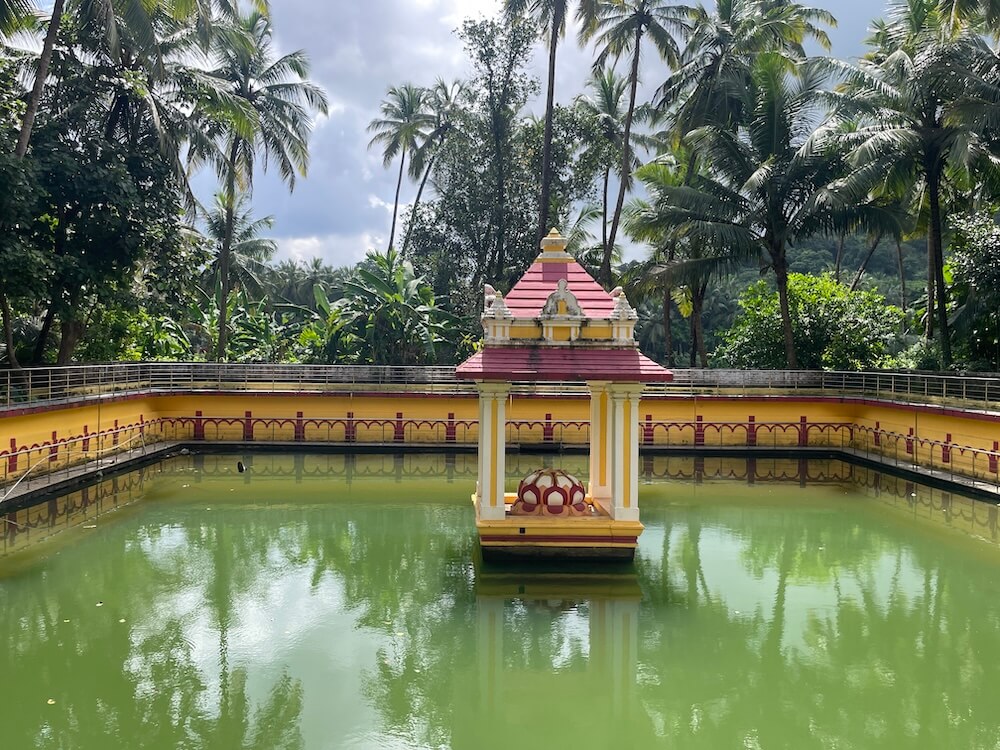
Shop Photo FramesMahalakshmi, who assumes various names such as Durga, Mahishasuramardini, and Jagadamba, represents the primordial nature and Adi Maya. As a Shakthipeetha deity, Mahalakshmi is also revered as the goddess of prosperity. Much like the Kadamba royal dynasty that ruled Gomantak, she was also the Kuladevata of the Shilahara dynasty. It is said that this Mahalakshmi temple at Bandoda (Bandivade) was established during the rule of these very Shilaharas. The magnificent temple of the Goddess is situated on the banks of a pond in Bandoda, which was known in ancient times as the village of Bandwad. During the annual festival, hundreds of devotees gather to witness the boat ride in this pond.
In the ‘Durgasaptashati’, Mahalakshmi is described as holding a rosary, axe, mace, arrow, thunderbolt, lotus, bow, water pot, staff, power (shakti), sword, shield, conch, bell, vessel of nectar (sudhapatra), trident, noose, and Sudarshan Chakra. It states that this Mahalakshmi has a blissful countenance, is seated on a lotus, and is Mahishasuramardini. According to another mythological legend associated with her, she destroyed a demon named Kolasura and freed the people from distress. Pandit Mahadevshastri Joshi has noted in the ‘Bharatiya Samskriti Kosha’ that Kolasura refers to a wild boar, which destroys agriculture. By destroying him, the Goddess protected farming, and hence Mahalakshmi is considered the goddess of prosperity. At Kolhapur lies the Shakthipeetha of Mahalakshmi, also known as Ambabai, which is considered the original seat (moola peetha) of the Goddess. The form of Mahalakshmi in the temple at Bandoda bears a striking resemblance to the idol of Mahalakshmi in the Kolhapur temple.
The Kadamba royal dynasty of Goa had immense devotion to Mahalakshmi. In a copper plate dated Saka 932 (1010 CE) of the Kadamba King Shashthadeva II, it is described thus: “Shrikollapuramatya yena cha Shrimahalakshmi Samaradhita”. The Mahalakshmi temple at Kolhapur was expanded by the Shilahara King Marsimha (1055-1070), while his son Gandaraditya placed the pinnacle (kalasha) on the temple. After this Gandaraditya’s grandson Bhoja II came to power, he made donations to the Mahalakshmi temple in Kolhapur. Some scholars are of the opinion that Mahalakshmi was established at Bandode during the period of these Shilaharas.
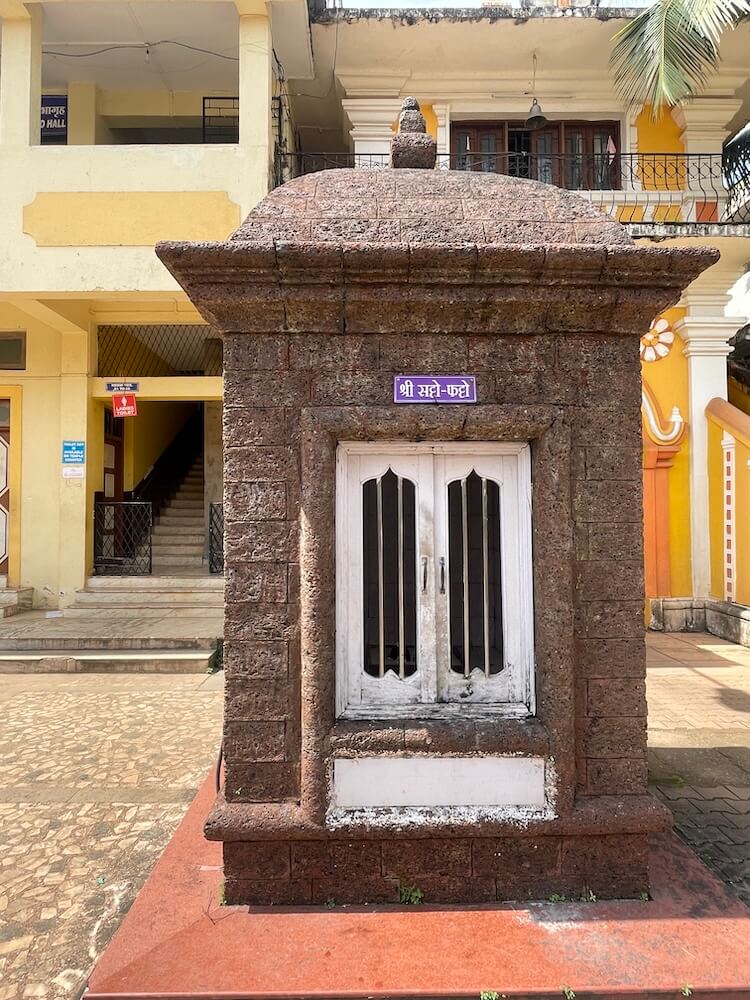
Historians and researchers hold differing views regarding the early history of this temple. According to records in the ‘Goa Gazetteer’, the original temple of the Goddess here was located at Kolhve. However, due to religious persecutions by the Portuguese, it was migrated from there to Bandoda. This event is said to have occurred in the latter half of the sixteenth century. Nevertheless, an inscription in the Nagesh Devasthan at Bandivade has clarified that this temple originally belonged to Bandoda itself. This inscription, engraved in Sanskrit and Marathi, dates back to the reign of King Veer Pratapa Devaraya Maharaya of the Vijayanagara Empire. It bears the date “Shri Shalivahana Saka 1335, Pausha Bahula 30” (24 December 1413). This inscription mentions that in this year, while “Nanjan Gosavi was the representative (pratihast) in Gomantak, Mine Shenvi Vagle donated lands namely the ancestral grove (kulagar) of Veda Khandika, Nagzhari malo field, and Ruvo kulagar in Golti wada to the deities Shri Nagesh and Shri Mahalakshmi at Bandivade.” Nanjan Gosavi is referred to in this as “versed in matters of dharma and adharma” (dharadharmavicharpatu). He was a feudatory of Devaraya during his reign and was ruling over the throne of Goa. This makes it clear that the shrine of Mahalakshmi here existed in the fifteenth century, many years before the arrival of the Portuguese in Gomantak. Even so, before the Portuguese destroyed the Mahalakshmi temple at Kolhve, the idol of the Goddess from there was brought to the temple in Bandoda. At that time, this idol was placed alongside the original idol of Mahalakshmi. To this day, there are two idols of Mahalakshmi in this shrine. Along with the Goddess, deities like Narayanadeva, Ravalnath, and Baleshwara also migrated here. Their small shrines are also located within the temple courtyard. It is said that the brass idol of Mahalakshmi from Kolhve was brought across the Zuvi River with great skill by two devotees of the Goddess surnamed Sawant and Fadte from the village of Durbhat, first taken to Talawali in Ponda, and from there brought here. They are addressed by the names Satto and Fatto. In gratitude towards them, memorial platforms (devli) dedicated to these Satto and Fatto have been erected in front of the temple.
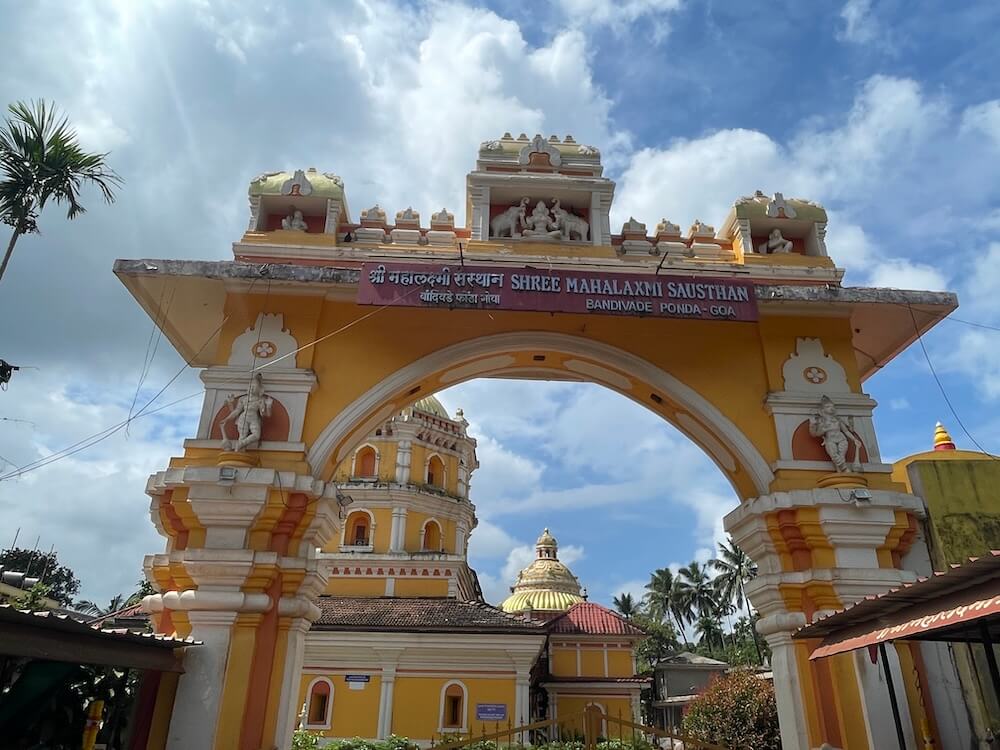
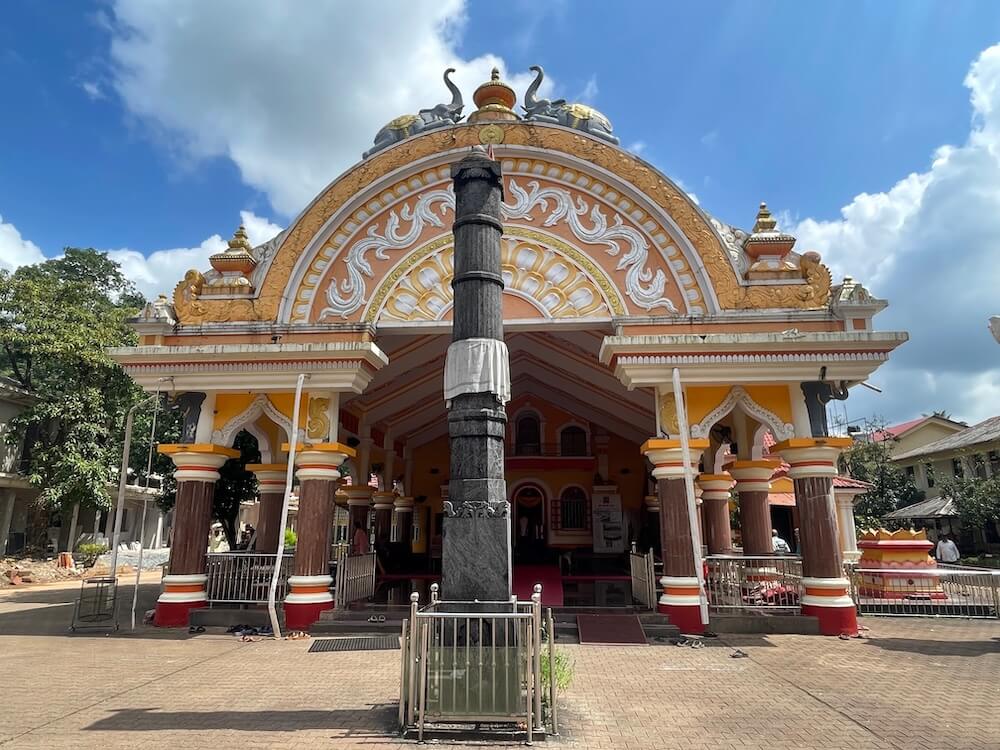
This Mahalakshmi temple is regarded as a fine specimen of Goan temple architecture. The temple is situated in a spacious courtyard. The temple courtyard has three entrances. On the upper part of the door pillars of the grand main gateway at the rear are sculptures of Vaishnavite doorkeepers (dwrapalas). In the central niche near the ceiling, the idol of Mahalakshmi is enshrined, flanked by elephant sculptures (gajashilpa) on both sides. In both corners of the ceiling are sculptures of female celestial attendants (devsevikas). To the left of the temple entrance, on a raised platform, stands an eight-tiered lamp pillar (deepastambha), accompanied by a large Tulsi Vrindavan nearby. In front of the entrance stands a tall stone-built Garuda pillar.
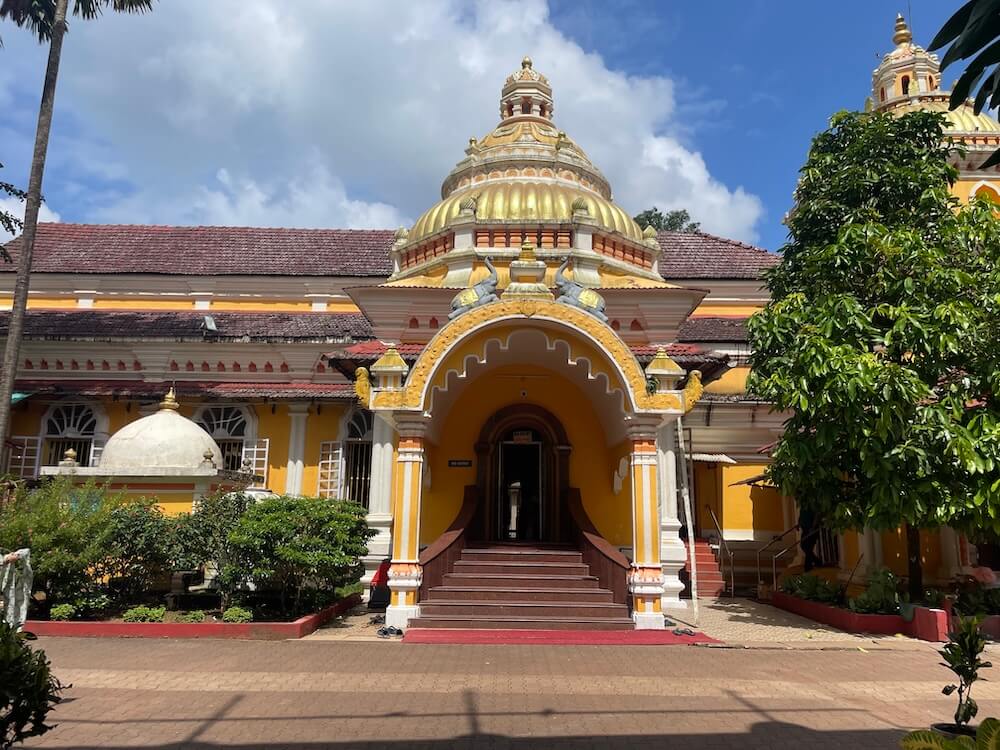
Entering through the ardhamandapa leads into the mahamandapa. The architectural layout of the temple consists of a sabhamandapa, ardhamandapa, mahamandapa, antarala, and garbhagriha. Above the entrance of the assembly hall, on the ceiling portion, is a large arch-shaped wall adorned with exquisite craftsmanship. At its apex, between two elephant sculptures, rests a kalasha (sacred pot). The sabhamandapa is open in style with sloping roofs on both sides. It features bench-like seating (kakshasana) for the pilgrims to rest. A few feet higher from here is the ardhamandapa. Its facade wall features an arch-shaped entrance with two windows on either side. On the adjacent pillars, in the middle section, are two vyala (mythological beast) sculptures. Above the entrance is a balcony-like structure where the idol of Mahalakshmi is enshrined in the center.
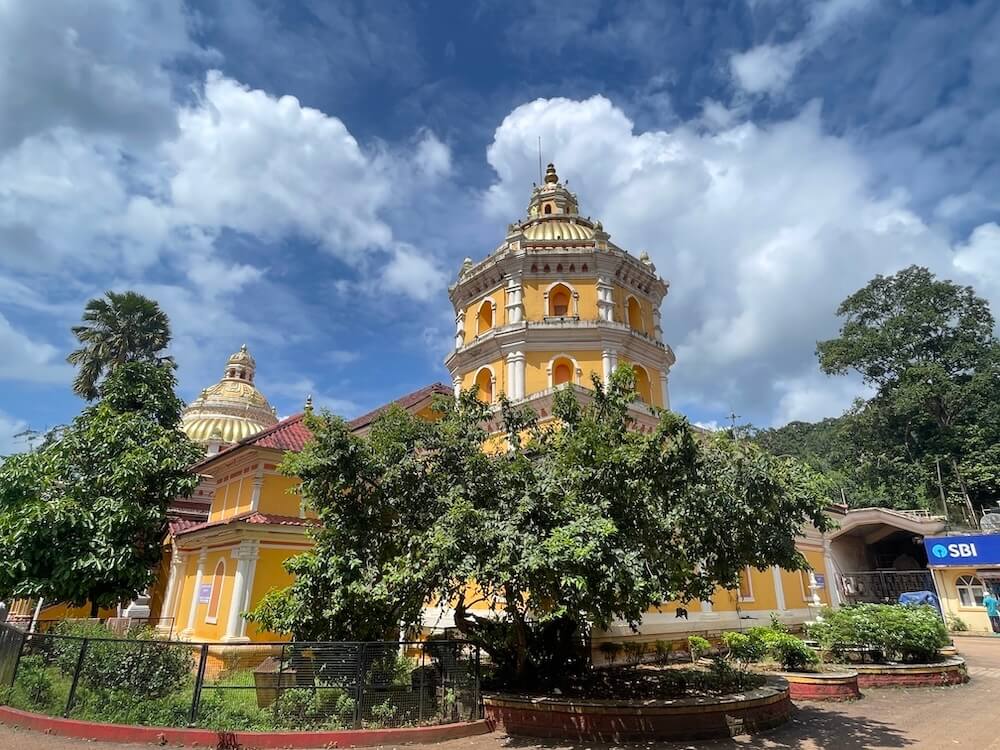
The ardhamandapa leads into the mahamandapa. Here, on both sides of the arched entrance, are sculptures of doorkeepers (dwarapalas). Inside the entrance, facing the sanctum sanctorum within the mahamandapa, are images of Garuda and Hanuman. The walls of the mahamandapa depict various forms of the Goddess. Inside the mahamandapa, along both interior sides, are rows of circular pillars connected to one another by large arches, supporting a balcony structure above. Many glass chandeliers and a large central chandelier hang from the ceiling here. Traditional standing lamps (samai) are placed in the center of the mahamandapa. The decoration of this mahamandapa was carried out in the year 1920. The facade of the antarala is arched in shape. This facade wall is covered with intricately embossed silver plating. In the upper center of the door frame, a large silver image of the Goddess is engraved, flanked by eight circular medallions depicting the eight forms of the Goddess. Thus, there are the Navadurga here. Kirtimukha is carved in the central part. On both sides of this entrance are sculptures of doorkeepers (dvarapalas). In the sanctum sanctorum (garbhagriha), a large idol of the Goddess, adorned with garments, ornaments, and flower garlands, is seated inside a large, intricately carved silver shrine (makhara). On the silver halo (prabhavali) behind the Goddess is Kirtimukha. Near the feet of the Goddess are two large silver serpents. Along with this idol, a brass idol of Mahalakshmi brought from Kolve and a brass idol of Ganesha are also enshrined here. Above the sanctum sanctorum of the temple is a shikhara structure featuring an octagonal tower—a hallmark of Goan temple architecture—topped by a dome. On this shikhara is a small canopy (meghadambari) surmounted by a kalasha.
Navaratrotsava and Ramashtami (Ramanavami) are the grandest festivals celebrated in this temple. Various programmes are organised for five consecutive days on the occasion of Ramanavami. Mahaprasada is also arranged for the devotees during this time. Throughout the nine days of Navaratri, the entire temple complex buzzes with crowds of devotees. The main attraction of the Navaratri festival is the makhara aarti held every night at ten o’clock. A heavily decorated makhara is prepared specially for this festival, in which the processional idol of the Goddess is placed. During the aarti, to the rhythm of musical instruments, the Goddess’s makhara is gently swung. During the festival, on the eighth day (Ashtami), the procession of the Goddess is taken out in a golden palanquin (suvarna shibika). Besides this, Varalakshmi Vrata is celebrated here on the second Friday of the month of Shravana, with many women participating in it. During Diwali, on the day of Dhanatrayodashi, a grand festival of lights (deepotsava) is celebrated here. During this period, the temple is bathed in the glow of lamps for fourteen days. Similarly, every Friday at half-past eight in the evening, the palanquin procession (palkhi) of the Goddess is taken out, followed by the maha aarti at nine o’clock at night. Halls have been built in the temple courtyard for various religious and cultural programmes. Additionally, lodging facilities (agrashala) have been constructed here for the mahajanas (trustees) and kulavis (patrons/family members) of the temple.
This sacred temple stands as a testament to deep spiritual devotion, ancient architectural grandeur, and rich local cultural traditions.
The sanctum sanctorum houses the divine idol consecrated according to ancient Vedic traditions, surrounded by serene courtyards and traditional temple architecture.
Navratri, Maha Shivratri, Annual Temple Jatra & Deepotsav
Compare and book flights, secure top-rated local hotels near the temple, hire reliable guides, and rent cars instantly.
Extend your pilgrimage by visiting other highly sacred temples located nearby.


Add ₹999 more to unlock FREE SHIPPING!
Your sacred cart is currently empty.
Shop Photo FramesFill in your delivery details below to place your order.
Add comment