
Add ₹999 more to unlock FREE SHIPPING!
Your sacred cart is currently empty.
Shop Photo FramesThe picturesque area of Farmagudi in Bandora is situated in front of the Mardangad fort in Ponda, which was conquered by Chhatrapati Shivaji Maharaj from the Adil Shah. An ancient temple of Gopal Ganpati is nestled on a hill here. This historic temple, renovated by Goa’s first Chief Minister, Bhausaheb alias Dayanand Bandodkar, is a center of attraction for tourists from both India and abroad. Devotees believe that this shrine of Ganpati is ‘Jagrut’ (awakened) and that the Vighnaharta (remover of obstacles) here fulfills their prayers. Because of this, there is a constant flow of devotees.
There is a 15th-century epigraphic record stating that Bandewadi, known in ancient times as Bandivatika and Bandwada, was founded by a king named Shripal. Similarly, a Sanskrit inscription from the reign of the Maurya king Anirjitavarman was found in Bandivade. Based on the ‘Petikashirshaka’ script, it dates back to the 6th or 7th century. It mentions that donors named Nagpadda, Malladatta, and Achal donated land, a site for a house, an orchard, and a pond or tank to a Harita Gotra Brahmin named Hastarya. This clarifies the antiquity of Bandivade. This village also has a close connection with the history of the Marathas. On May 8, 1675, Chhatrapati Shivaji Maharaj conquered the Ponda fort, located near the Gopal temple hill, from the Adil Shah.
At this time, Maharaj named this fort ‘Mardangad’. Due to this victory, the Adilshahi regions of Tiswadi, Chandramahal, Kepem, Balli, and Canacona were integrated into Swarajya. This fort remained under Maratha control during the time of Chhatrapati Sambhaji Maharaj as well. In 1683, Sambhaji Maharaj camped here and launched an expedition against Goa. The local Sardesai Dulbaji Naik Prataprao betrayed the Marathas and joined the Portuguese. The Portuguese then attempted to conquer Ponda. However, Krishnaji Kank, the son of Yesaji Kank, fought with immense valor and defended the fort, forcing the Viceroy, Count of Alvor, to retreat in shameful defeat on November 11, 1683. To commemorate the success of Sambhaji Maharaj’s Goa campaign, a ‘Gudhi’ was hoisted in August 1683 on this hill of Farmagudi near the Ponda fort. This victory Gudhi was hoisted under the direct orders of Sambhaji Maharaj himself. In memory of this, even today, on the day of Anant Chaturdashi, a Vijay-Gudhi is hoisted on the pedestal in front of the temple and on the banyan tree at Gudyetem.
The legend regarding the Gopal Ganpati temple here states that there used to be a dense forest on this hill of Farmagudi. Some cowherds (Gopals) used to bring their cattle here for grazing. One day, one of the cowherds saw an idol of Ganpati in a bush. After he informed the villagers, the village elders built a temple of palm leaves (zhawlya) at this spot and consecrated the Ganesh idol. The cowherds who found the idol began serving the deity. Because of this, this Ganesh came to be known as Gopal Ganpati. It is said that the original temple of palm leaves stood exactly where the Tulsi Vrindavan of the temple is today. The fame of this Ganpati reached the ears of Dayanand alias Bhausaheb Bandodkar, the popular leader of the Maharashtrawadi Gomantak Party and the first Chief Minister of the Union Territory of Goa, Daman, and Diu. Following this, he visited Farmagudi and had the darshan of the Ganesh in the palm-leaf temple. He returned some time later. He told the temple attendants that the wish he had made had been fulfilled by the blessings of this Ganesh and expressed his desire to build a large temple here. Accordingly, a large temple was constructed. According to records in the ‘Goa Gazetteer’, a metal idol of Gopal Ganesh was crafted, and its consecration (Pranpratishtha) took place in the temple on April 24, 1966.
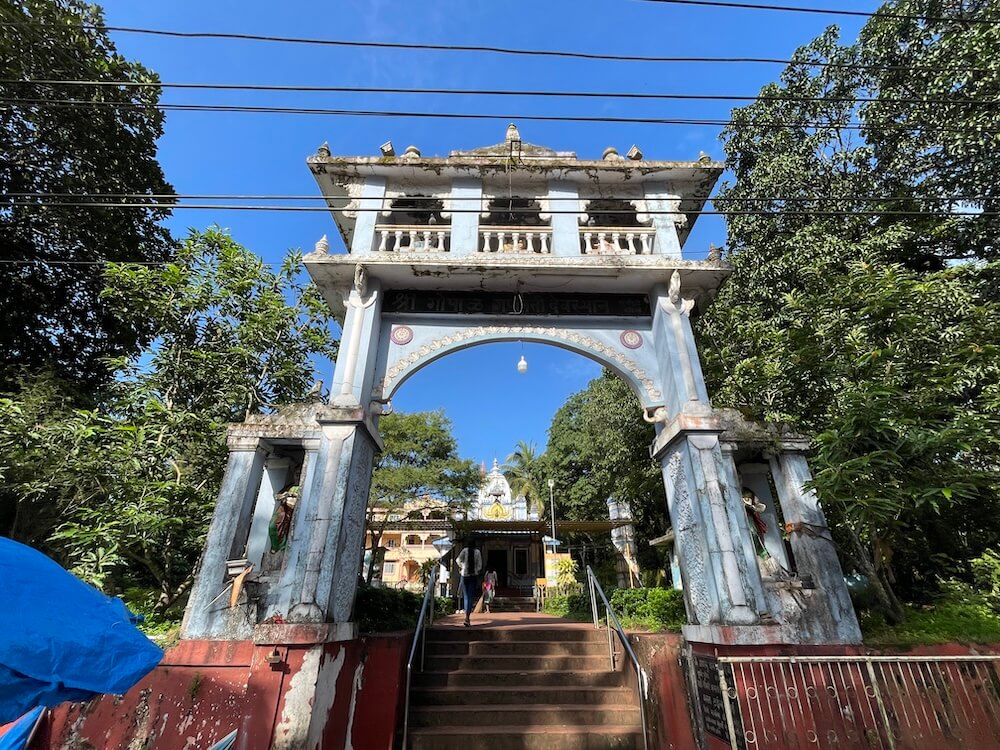
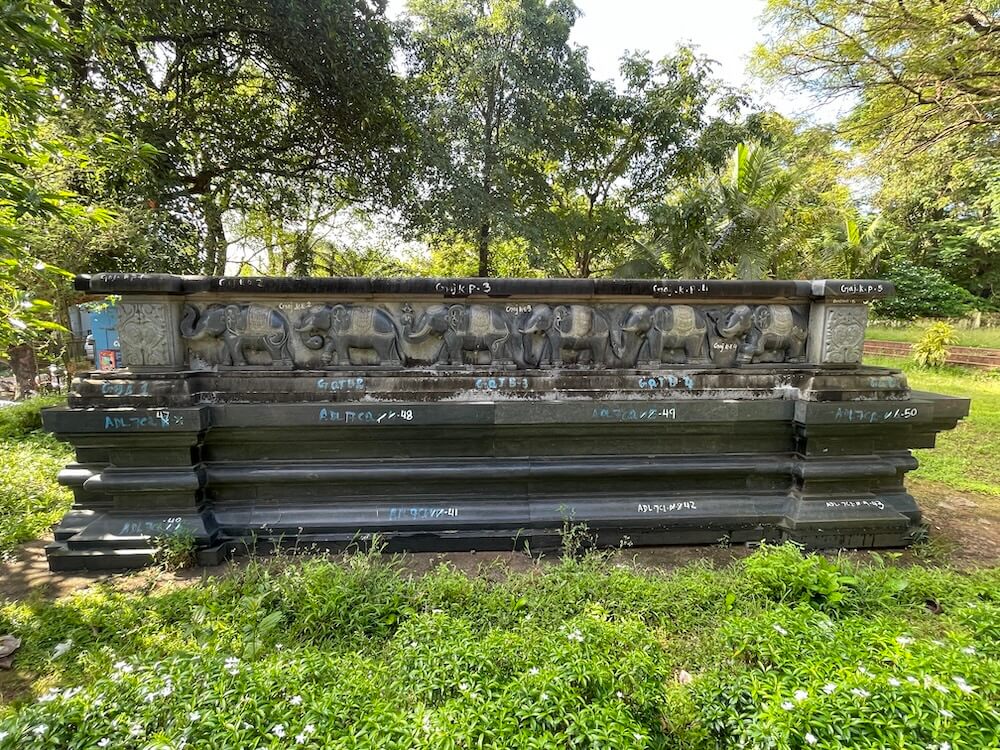
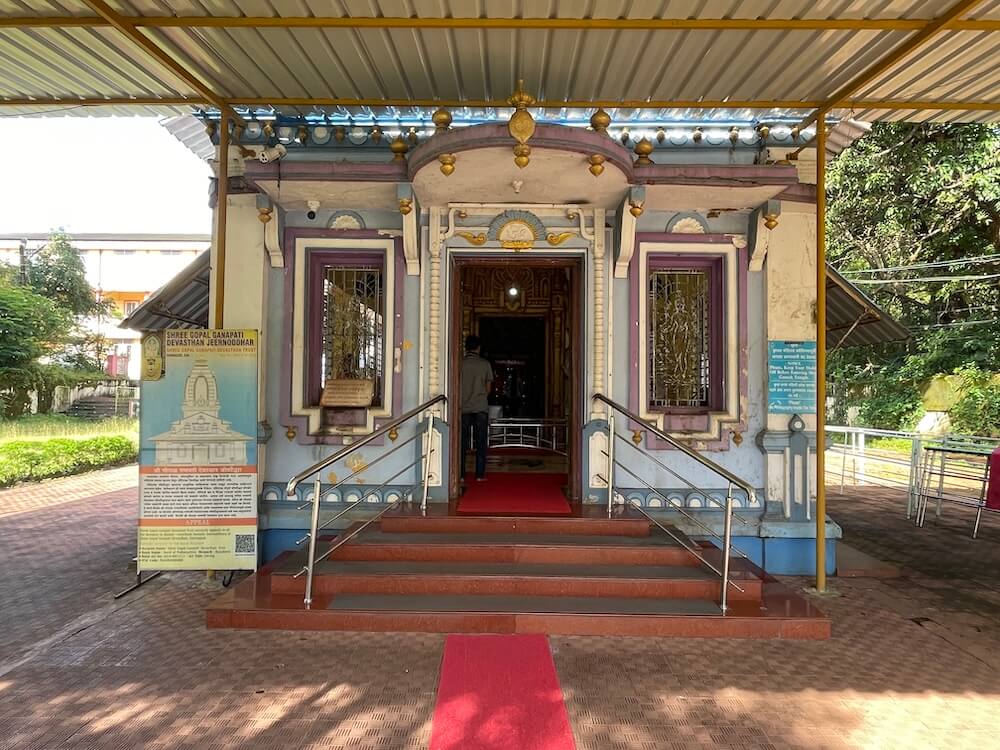
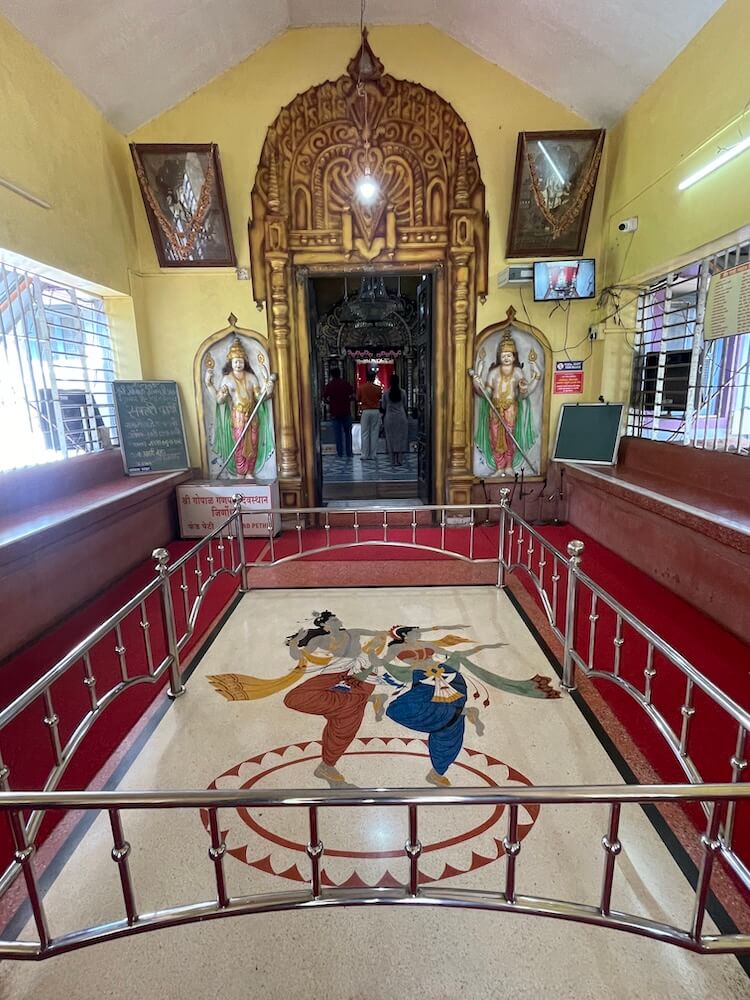
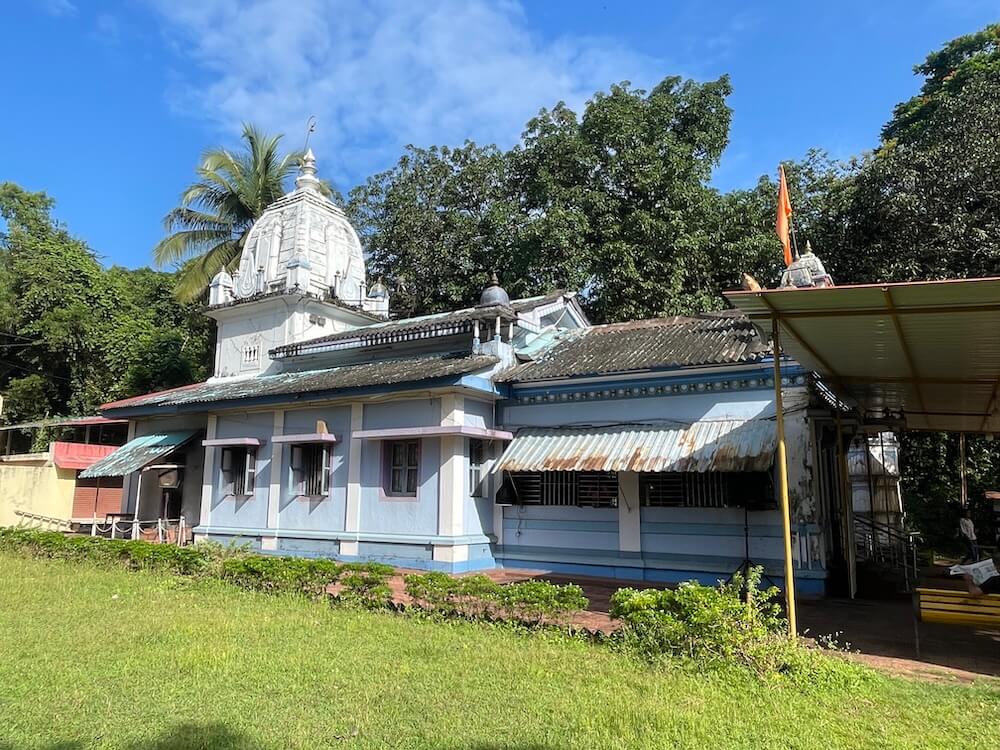
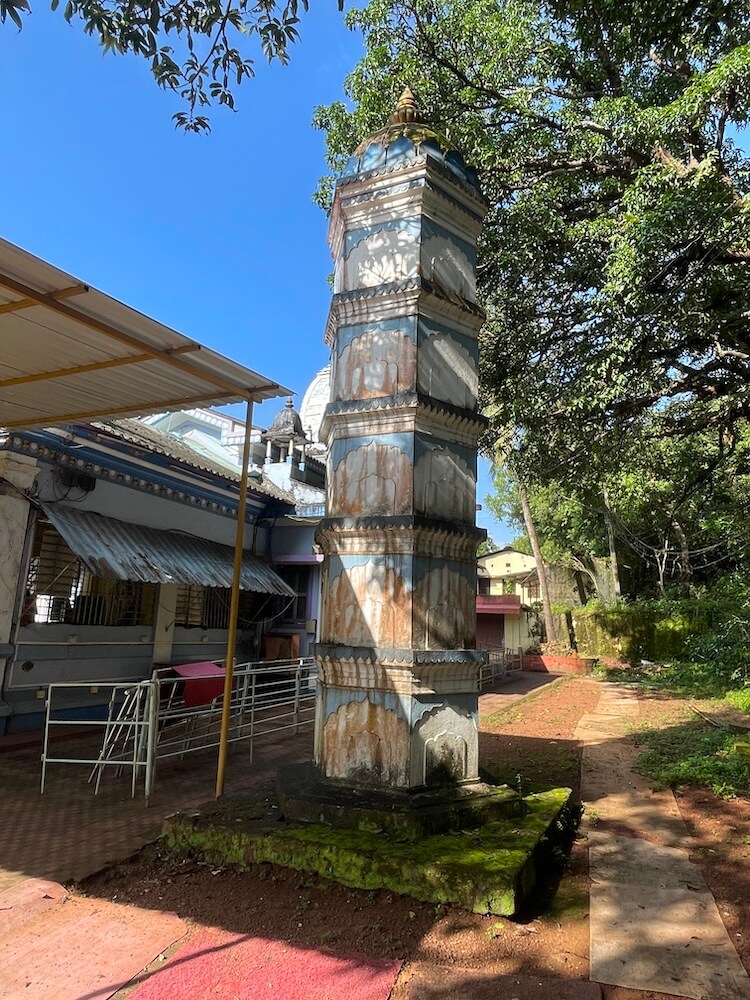
Situated on high ground from the main road, one has to climb a few steps to reach the temple courtyard. There is a tall entrance gate at the beginning of the steps. In the small, upright pavilions built along both its pillars are images of female gatekeepers (Dwar-sevikas). An idol of Ganesh is seated on the roof of the entrance. After climbing the steps, on the left, on the greenery, a large stone wall section is visible, appearing as a remnant of the old temple. This is part of the temple’s base (Jagati), which features a carved elephant frieze (Gajathar). A short distance away, the temple structure stands on a high plinth. There is a tin-roofed pavilion on the porch in front of the temple. On the right side, there is a six-tiered square lamp pillar (Deepstambha). The temple is built in the Goan architectural style. It consists of a small Sabha Mandap, a Maha Mandap, and a Garbhagriha (sanctum sanctorum). The Sabha Mandap and Maha Mandap have sloping tiled roofs. The Garbhagriha has a spire (Shikhara) created through a synthesis of Goan and Nagara architectural styles. The lower part of this spire is square, and above it is a Nagara-style Urushringa spire that tapers on all four sides. It is topped with an Amalaka and a Kalasha. The walls of the Sabha Mandap have large windows. There are stone benches (Kakshasanas) on both sides. In the center, in a large rectangular area with a steel railing, a large painting of Radha and Krishna dancing is depicted on marble tiles. It is said that since Krishna is the friend of the Gopals, his image is appropriate in the Gopal Ganesh temple.
The Maha Mandap of the temple has an ornate entrance. An ‘Omkar’ is carved on its lintel (Lalatbimba). On both sides of the entrance are two beautifully carved statues of Vaishnava Dwarapalas (gatekeepers). Above them are black and white images of Ganesh. The pillars in the Maha Mandap are also decorated with intricate carvings. Statues of gods, goddesses, Yakshas, and Yakshinis are carved on these pillars. A brass bell and a crystal chandelier are hung from the ceiling. The entrance to the Garbhagriha is also decorated with carvings. Inside, on a high pedestal, the silver idol of Gopal Ganesh is seated. Tall oil lamps (Samai) are placed on both sides in front of the idol.
In this temple, devotees can have darshan of the Lord from 6:00 AM to 9:00 PM. Various Hindu festivals and ceremonies are celebrated here with great enthusiasm. A large number of devotees gather here on the occasion of Ganesh Jayanti in the month of Magh, as well as on Sankashti and Vinayaki Chaturthi. On these days, Mahaprasad is distributed to the devotees. Every year, the Ganesh Utsav in the month of Bhadrapada is celebrated with great pomp and in an equally religious atmosphere. Numerous devotees from Bandora and Farmagudi participate with deep devotion in this festival, as well as in the temple anniversary celebration held on Vinayaka Chaturthi in the month of May. During the anniversary ceremony, rituals such as Ganapati Pujan, Sthalashuddhi, Atharvashirsha recitation, Shat-Kalashabhishek, and Maha-Aarti are performed. Following this, a grand procession of Lord Ganesha on his Mushak Vahana (mouse mount) is taken out in the evening.
This sacred temple stands as a testament to deep spiritual devotion, ancient architectural grandeur, and rich local cultural traditions.
The sanctum sanctorum houses the divine idol consecrated according to ancient Vedic traditions, surrounded by serene courtyards and traditional temple architecture.
Navratri, Maha Shivratri, Annual Temple Jatra & Deepotsav
Compare and book flights, secure top-rated local hotels near the temple, hire reliable guides, and rent cars instantly.
Extend your pilgrimage by visiting other highly sacred temples located nearby.


Add ₹999 more to unlock FREE SHIPPING!
Your sacred cart is currently empty.
Shop Photo FramesFill in your delivery details below to place your order.
Add comment