
Add ₹999 more to unlock FREE SHIPPING!
Your sacred cart is currently empty.
Shop Photo FramesIn Hinduism, the Datta Sampradaya holds extraordinary significance. The tradition of the Guru-Shishya parampara in the Datta Sampradaya continues to this day. Shripad Vallabha was the second incarnation of Dattaguru, followed by Narasimha Saraswati of Ganagapur as the third incarnation. Since Swami Samarth manifested at Akkalkot, he is revered as the fourth and complete incarnation of Lord Dattatreya. Cholappa was an ardent devotee of Swami Samarth. After arriving in Akkalkot, Swami resided in Cholappa’s wada (residence) for many years. Devotees firmly believe that Swami’s divine presence is felt here even today, as many articles used by him are preserved at this site.
The Cholappa Temple is originally his residence, estimated to have been constructed in the first half of the nineteenth century. Swami Samarth arrived at this wada in the year 1857. Upon arriving in Akkalkot, Samarth stayed at the Khandoba Temple for the first three days. When local police officials stopped him and asked where he was heading, Swami uttered the words, “Mera chola mujhe lene aayega” (“My Chola will come to receive me”). The following day, Cholappa brought Swami to his home. The disciple recognized his eternal Guru from past lives. Thereafter, he dedicated his entire life to the service of Swami. In the year 1878, Swami took Samadhi in this very wada. Today, this residence has taken the form of a revered temple. Every day, thousands of devotees visit to seek darshan of Swami’s Samadhi and to view the relics used by him.
Cholappa’s wada is located close to the Akkalkot Bus Stand. Following restoration, the Samadhi Temple within the wada has acquired a modern architectural form. The compound wall surrounding the temple features an entrance designed in the Gopuram style. Sculptures of Dwarapalas adorn both sides of the entrance, with guard chambers on the inner side. Above the entrance roof is a square Shikhara in the Dravidian style. This Shikhara is decorated with sculptures of various gods and goddesses, topped with a Stupika and a Kalasha. Beyond the entrance lies a courtyard and the Samadhi Temple.
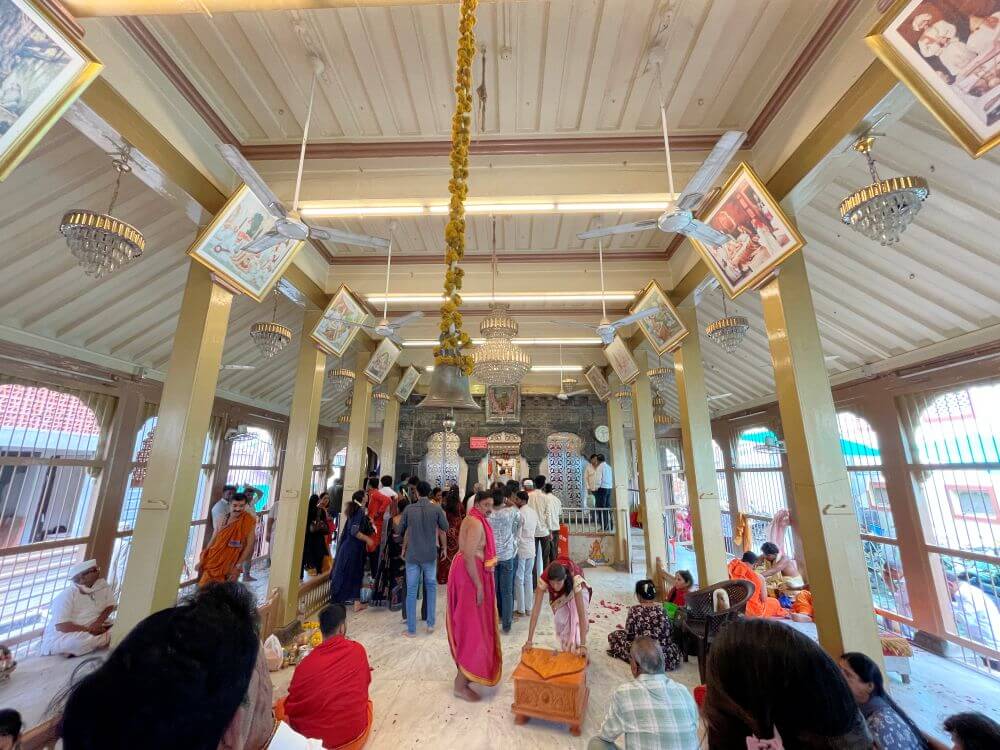
The temple structure comprises a Sabhamandapa, an Antarala, and a Garbhagriha. Five steps lead up to the entrance of the elevated Sabhamandapa, which stands higher than the courtyard. The doorframes of the entrance feature vertical fluted carvings, and the Lalatabimba bears a sculpture of Cholappa. The open Sabhamandapa contains four rows of five square wooden pillars each. All the outer pillars are interconnected by elegant arched cusps. A large chandelier and brass bells hang from the ceiling. On the front wall of the Antarala in the Sabhamandapa, there is a large portrait of Cholappa Maharaj. Additionally, there are depictions of various episodes from the life of Shri Swami Samarth. Further ahead is the entrance to the Antarala. On either side of the doorway are two carved pillars topped with a decorative archway (Torana). Inside the Antarala, on the left side, stands a brass idol of Cholappa Maharaj housed in a wooden shrine (Makhar). Further ahead, the doorframes of the silver-plated entrance to the Garbhagriha display floral motifs, with an idol of Lord Ganesha on the Lalatabimba. The archway (Torana) above the doorway features a sculpture of a seven-hooded serpent in the center, flanked by portraits of Lord Dattatreya, Shripad Vallabha, Narasimha Saraswati, and Swami Samarth. Beneath the Torana lies a Nagathara.
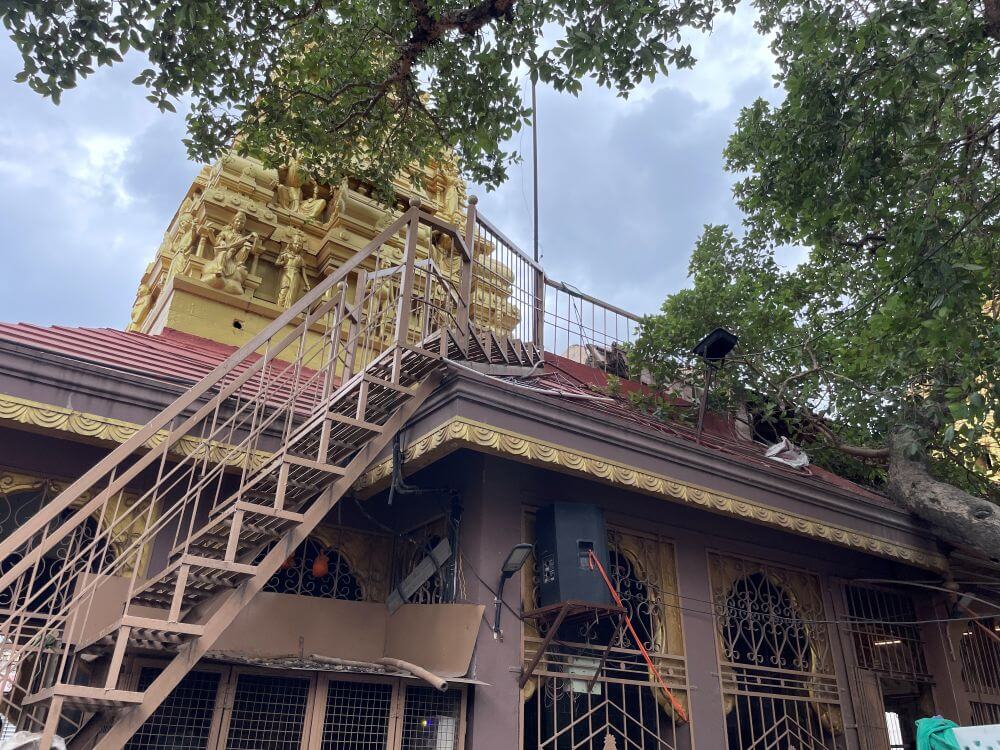
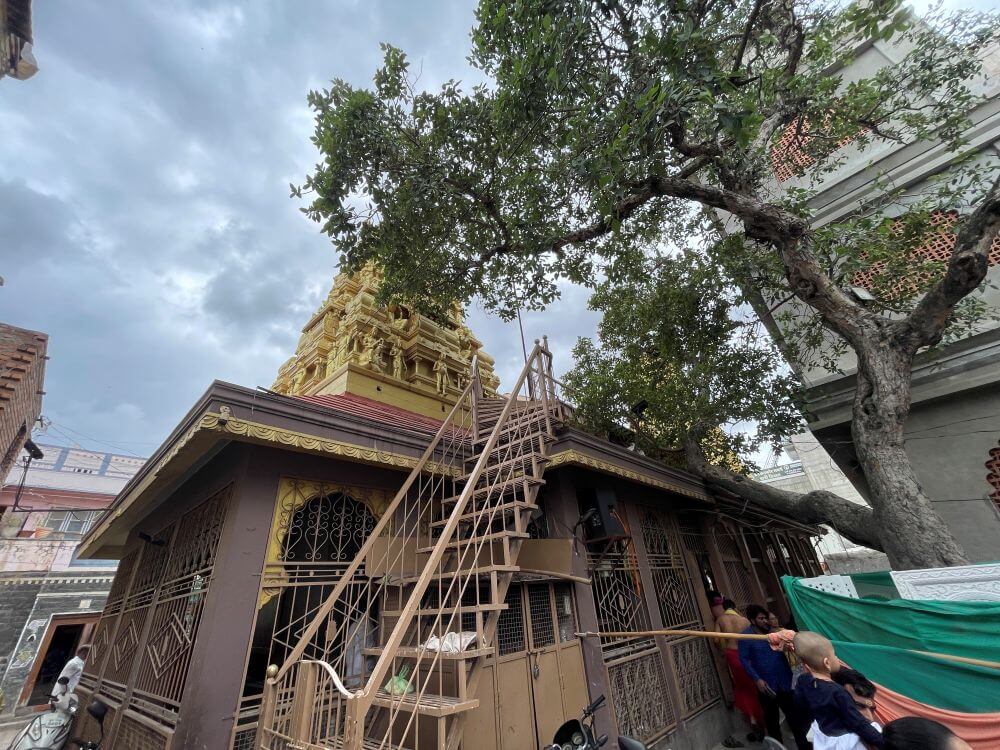
In the center of the Garbhagriha, on the floor, is a pyramid-shaped stone platform of Swami Samarth’s Samadhi. The platform is covered with silver plating, surmounted by a silver mask of Swami Samarth. Swami is adorned with fish-shaped earrings (Makara Kundala) and a silver crown on his head. The Samadhi and the mask are adorned with various sacred vestments and ornaments. Along the rear wall of the sanctum, Samarth’s sacred Padukas rest on a Vajrapitha, with masks placed in the wall niches. Above the roof of the Garbhagriha is a square Dravidian-style Shikhara. The Shikhara features idols of various deities. At the apex of the Shikhara is a Stupika, crowned with a Kalasha.
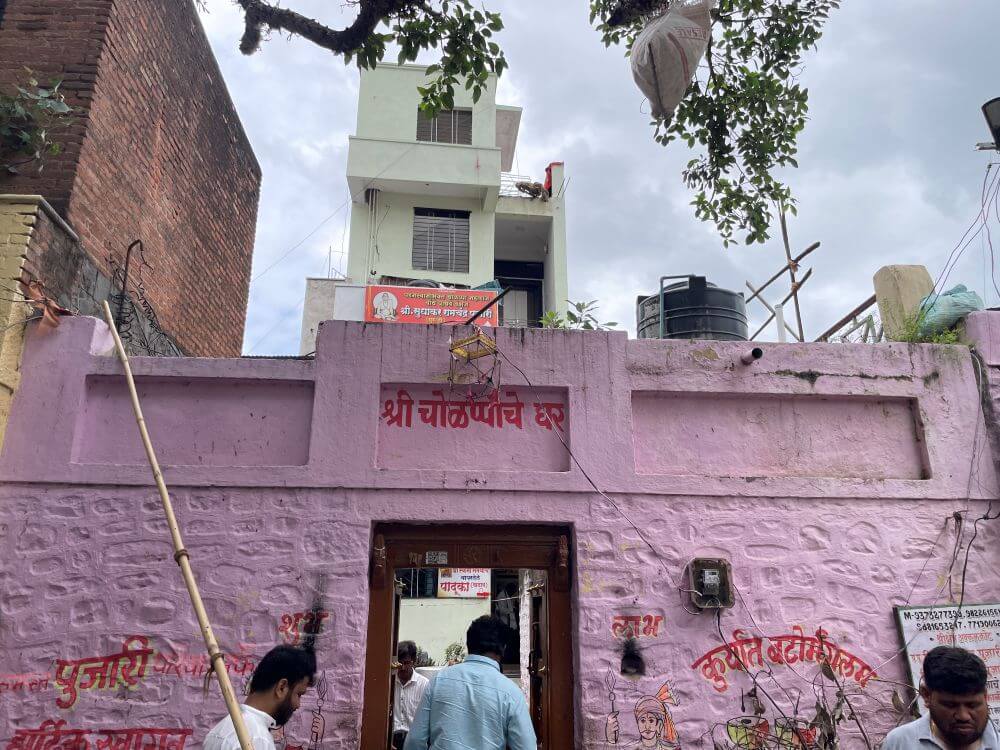
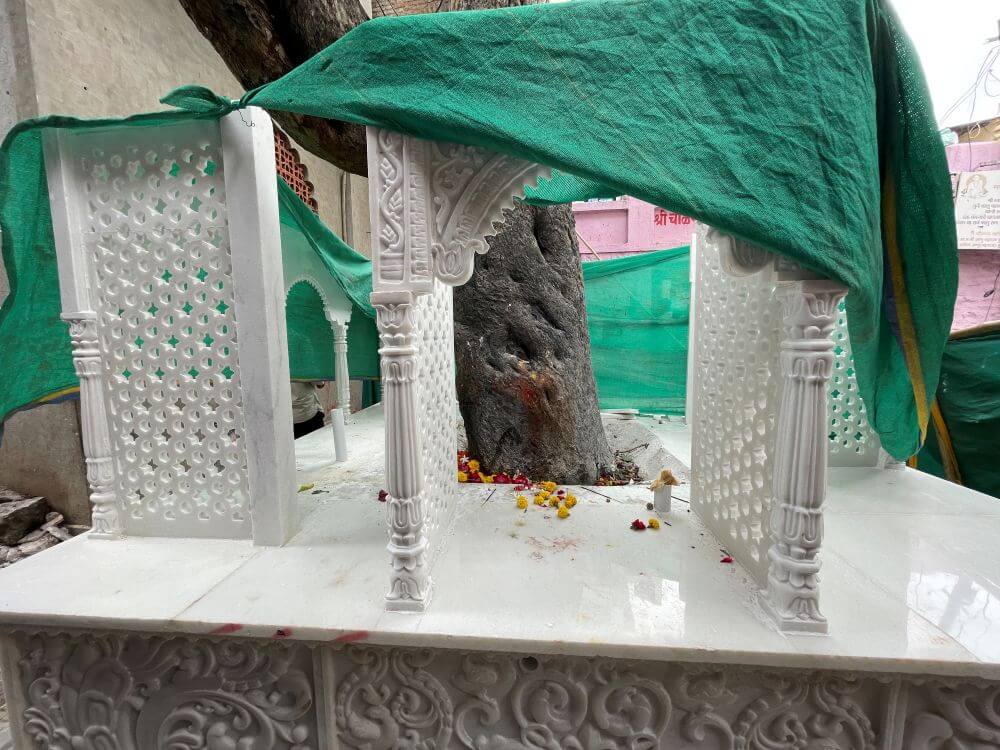
Beside the Samadhi Temple, near an Audumbar tree, are the Datta Padukas installed by Swami himself. Within the premises are shrines dedicated to Lord Datta, Lord Shani, and Lord Vitthal-Rakhumai. Adjacent to this is the entrance to Cholappa Maharaj’s wada. Painted depictions of Dwarapalas adorn both sides of the gateway. The doorframes feature vertical fluted carvings, and an idol of Lord Ganesha rests on the Lalatabimba. The entrance has carved wooden doors and a flight of stairs leading up to the ramparts.
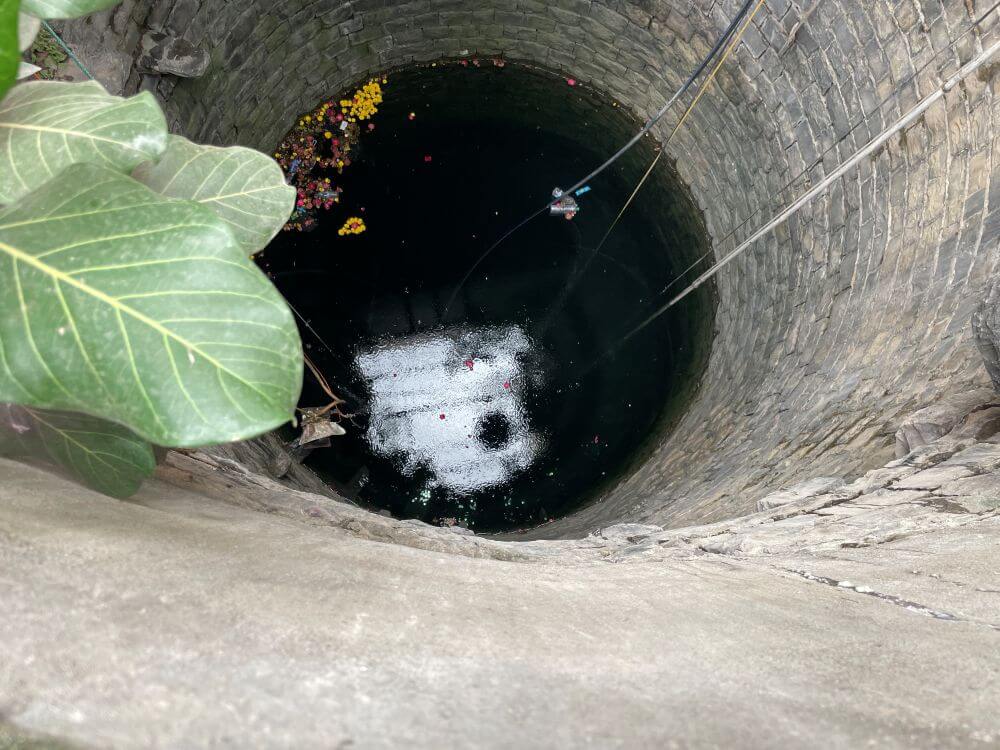
On the left side of the quadrangle house (Chausopi Wada), an idol of Mandar Ganesha is enshrined in a Makhar. According to legend, this area was originally Swami’s bathhouse. On the twenty-first day after Swami Samarth took Samadhi, a Mandar tree sprouted here and grew rapidly. Twenty-one years later, in 1966, an idol of Lord Ganesha naturally manifested in the trunk of that tree. This self-manifested deity is known as Mandar Ganesha. Preserved here is also a silver royal scepter (Rajdanda). This scepter was presented to Swami by Maharaja Sayajirao Gaekwad of Baroda. In the adjoining room is a large brass water vessel (Handa), which Swami used for his bath. Next to this chamber is Samarth’s Bhandarkhana (kitchen/storehouse), where Mahaprasada is prepared for the devotees. Beside the Bhandarkhana is the Samadhi of Swami’s sacred Kapila cow. Nearby lies the Samadhi of Nanasaheb Deshpande, a devoted follower of Swami from Beed. Within the wada is a sacred well named Kushavarta Tirtha. It is said that due to a scarcity of water, Cholappa had dug this well himself; however, no water was struck. Seeing Cholappa’s grief, Swami urinated into the well, whereupon natural springs burst forth, filling it to the brim with water. Since the beginning, water from this very well has been used for the ritual worship of the Samadhi. In one of the rooms are preserved the Kafni (robe) and Rudraksha rosaries presented to Maharaj by his Muslim devotee, Mahamad Rasul. Also kept here are the red sandalwood Padukas that Swami used daily. Adjacent to this room is Samarth’s Shejghar (bedchamber). In the Shejghar are the cot and mattress used by Swami, upon which his other personal articles are kept. Beside them rests Swami’s Chilim.
Swami Samarth Prakat Din (manifestation day) is celebrated at the Samadhi Math on Chaitra Shuddha Dwitiya. Swami’s Punyatithi is observed on Chaitra Vadya Trayodashi. Guru Purnima on Ashadha Purnima and Datta Jayanti on Margashirsha Purnima are celebrated in the Math with great fervor. On these occasions, lakhs of Swami devotees arrive in the city of Akkalkot to seek Swami’s divine blessings. Devotional programs such as Bhajans, Kirtans, holy scripture recitations, spiritual discourses, and Mahaprasada distribution are organized at the Math.
This sacred temple stands as a testament to deep spiritual devotion, ancient architectural grandeur, and rich local cultural traditions.
The sanctum sanctorum houses the divine idol consecrated according to ancient Vedic traditions, surrounded by serene courtyards and traditional temple architecture.
Navratri, Maha Shivratri, Annual Temple Jatra & Deepotsav
Compare and book flights, secure top-rated local hotels near the temple, hire reliable guides, and rent cars instantly.
Extend your pilgrimage by visiting other highly sacred temples located nearby.


Add ₹999 more to unlock FREE SHIPPING!
Your sacred cart is currently empty.
Shop Photo FramesFill in your delivery details below to place your order.
Add comment