
Add ₹999 more to unlock FREE SHIPPING!
Your sacred cart is currently empty.
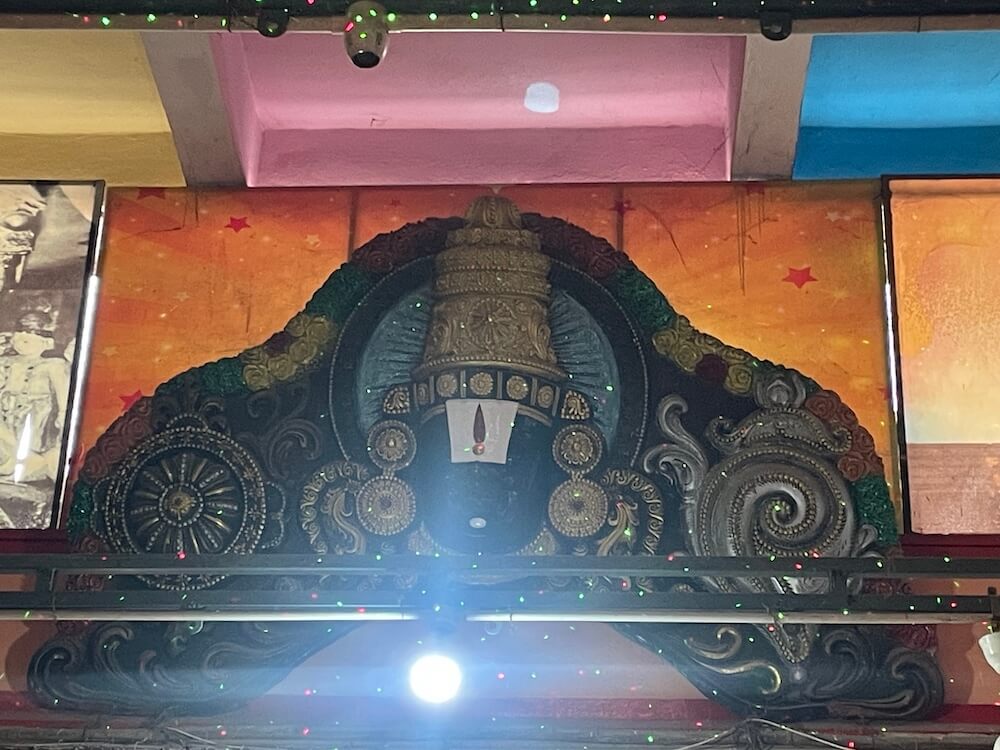
Shop Photo FramesThe city of Nanded, named after the fort of Nandgiri or Nandigram, is home to the Samadhi and Gurudwara of the tenth Sikh Guru, Guru Gobind Singh. This city, which is the birthplace of the pioneering Marathi poets Raghunath Pandit and Vaman Pandit, houses many ancient temples. The Balaji Temple, blessed with an ancient and historical heritage, is one of the most revered places of faith for devotees. A very beautiful, radiant, and serene idol of Lord Venkateswara, also known as Balaji, is consecrated in the temple. This temple is considered a symbol not only of religious significance but also of the city’s cultural glory.
It is said that this temple, located within a privately owned mansion, was established in the year 1670 during the Nizam era. The idol of Balaji here was installed by Harinath Baba Bairagi. King Durjan Singh granted a royal decree (Sanad) to this temple in 1770, while another decree was granted by Sardar Rajgopal in 1772. The tradition of Mahants has been maintained in this temple from its inception to the present day. Currently, the thirteenth Mahant is serving at the temple.
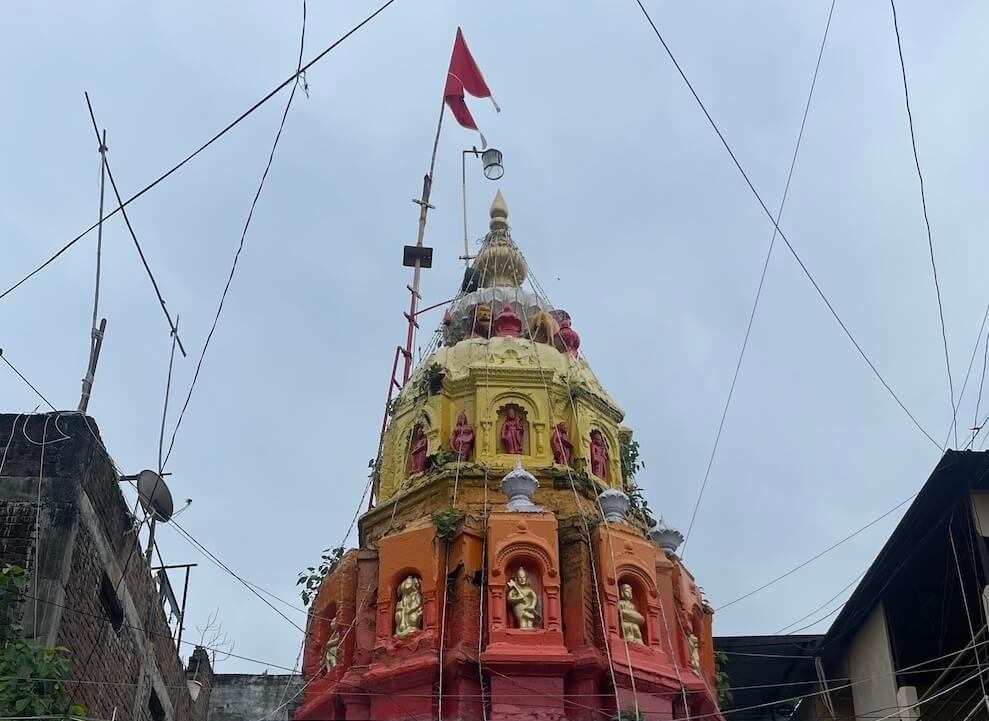
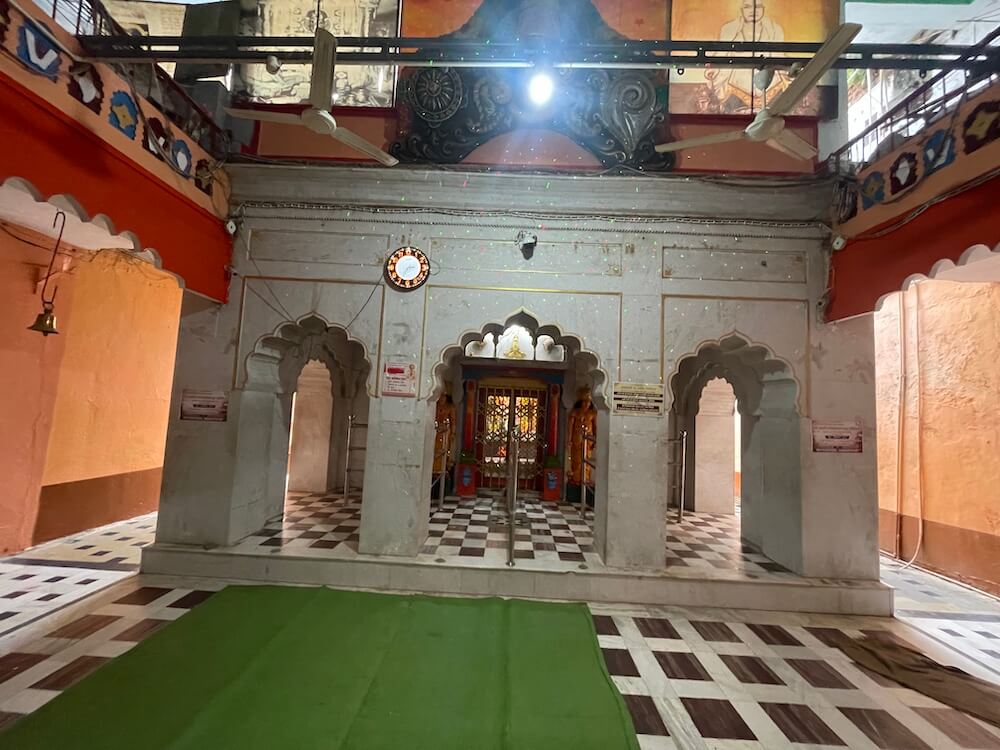
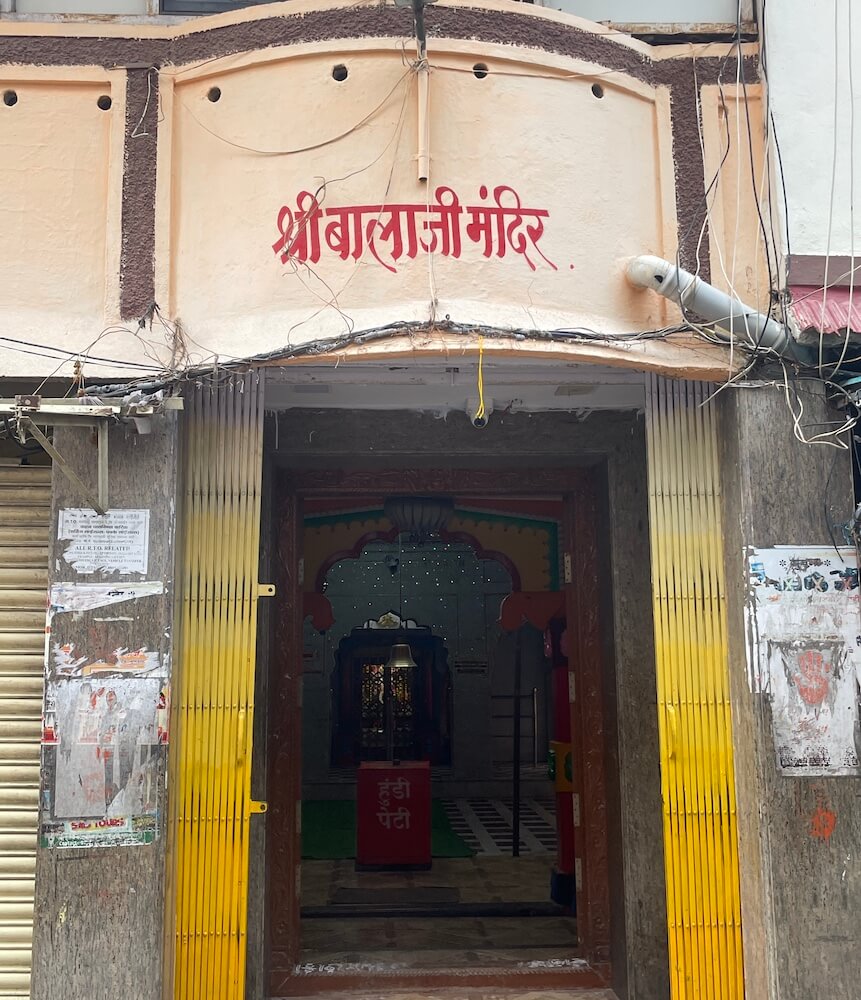
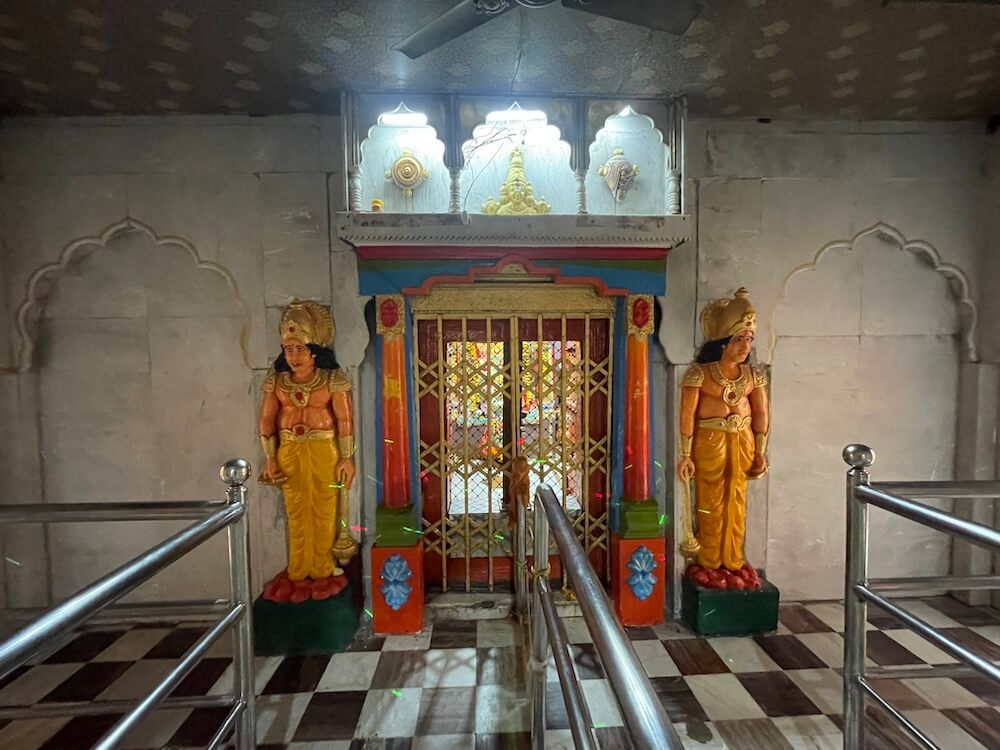
Situated along the road in the central part of the city, the temple resembles an ancient mansion. The temple structure consists of a Sabhamandap (assembly hall), Antarala (vestibule), and Garbhagriha (sanctum sanctorum). The entrance to the Sabhamandap is simple. The wooden door frames of the entrance are adorned with floral and leaf carvings. The ceiling of the Sabhamandap rests on the walls, and brass bells along with a glass chandelier are hung from it. The ceiling features circular patterns. Ahead, the Antarala is slightly elevated above the Sabhamandap. In the Antarala, three entrances have been created through a structure of four pillars. These four pillars are connected to each other by arched gateways. Stainless steel railings have been installed in the Antarala to manage the queues.
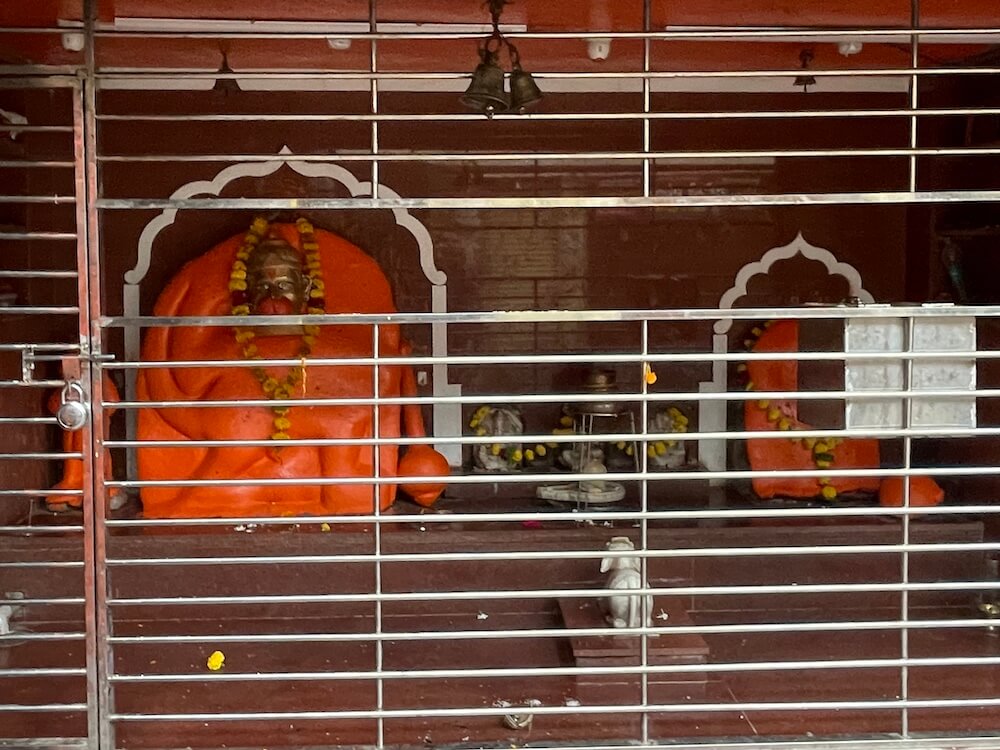
On both sides of the entrance to the sanctum sanctorum, there are sculptures of gatekeepers. The door frames of the sanctum are adorned with floral carvings, and the pillar branches feature a decorative arch. Inside the sanctum, the four-armed black stone idol of Balaji is enshrined within a throne set upon a Vajrapitha. In the deity’s upper right hand is the Sudarshana Chakra, and the lower right hand is in the Abhaya Mudra. In the upper left hand, the deity holds the Shankha, and the lower left hand rests upon the waist. The idol is adorned with a silver crown, and a sculpture of Garuda is placed near the deity’s feet. Since this idol is depicted with Garuda, there is no separate Garuda Dhwaja or Garuda pillar here, unlike in other Balaji temples. Behind the idol is an ornate silver halo. On both sides of the throne are two intricately carved pillars topped with an elephant-motif arch. In the center of the arch, at the top, is a Kirtimukha. On either side of the main throne are smaller wooden shrines containing brass idols of other deities. The roof of the sanctum features a Dravidian-style Urushringi-type spire. At the pinnacle of the spire are the Amalaka and the Kalasha.
The Sharadiya Navratri festival is the main annual celebration here, observed with great enthusiasm. The festival begins on the first day of the bright fortnight of Ashwin with a grand ritual bathing of the deity. For ten days, programs such as devotional singing, discourses, music, dance, and plays are organized in the temple. On the day of Dussehra, the deity’s chariot procession is celebrated. During this time, the processional idol of Balaji is seated in a chariot and taken for five circumambulations around the temple. Afterward, the chariot is taken to the Maruti temple in Wazirabad. The priests of the Maruti temple perform the honorary worship of the deity. Following this, the deity returns to the sanctum. More than twenty thousand devotees gather to pull the deity’s chariot during the procession.
Gokulashtami, or the celebration of Lord Krishna’s birth, is the second most important festival here. On this occasion, the idol of the Lord is placed in a cradle, and devotees sing cradle songs, bhajans, and hymns. Following the birth of the Lord, the Dahi Handi ceremony is performed, after which a Mahaprasad is organized. Other festivals and celebrations throughout the year, such as Chaitra Padwa, Ram Navami, Diwali, Shravan Maas, Purushottam Maas, Kojagiri Purnima, and Kartik Purnima, are celebrated in the temple. Religious programs are organized in the temple during all these festivals. A large number of devotees visit the temple for darshan on Mondays, Thursdays, Ekadashi, Purnima, and other auspicious days.
This sacred temple stands as a testament to deep spiritual devotion, ancient architectural grandeur, and rich local cultural traditions.
The sanctum sanctorum houses the divine idol consecrated according to ancient Vedic traditions, surrounded by serene courtyards and traditional temple architecture.
Navratri, Maha Shivratri, Annual Temple Jatra & Deepotsav
Compare and book flights, secure top-rated local hotels near the temple, hire reliable guides, and rent cars instantly.
Extend your pilgrimage by visiting other highly sacred temples located nearby.


Add ₹999 more to unlock FREE SHIPPING!
Your sacred cart is currently empty.
Shop Photo FramesFill in your delivery details below to place your order.
Add comment