
Add ₹999 more to unlock FREE SHIPPING!
Your sacred cart is currently empty.
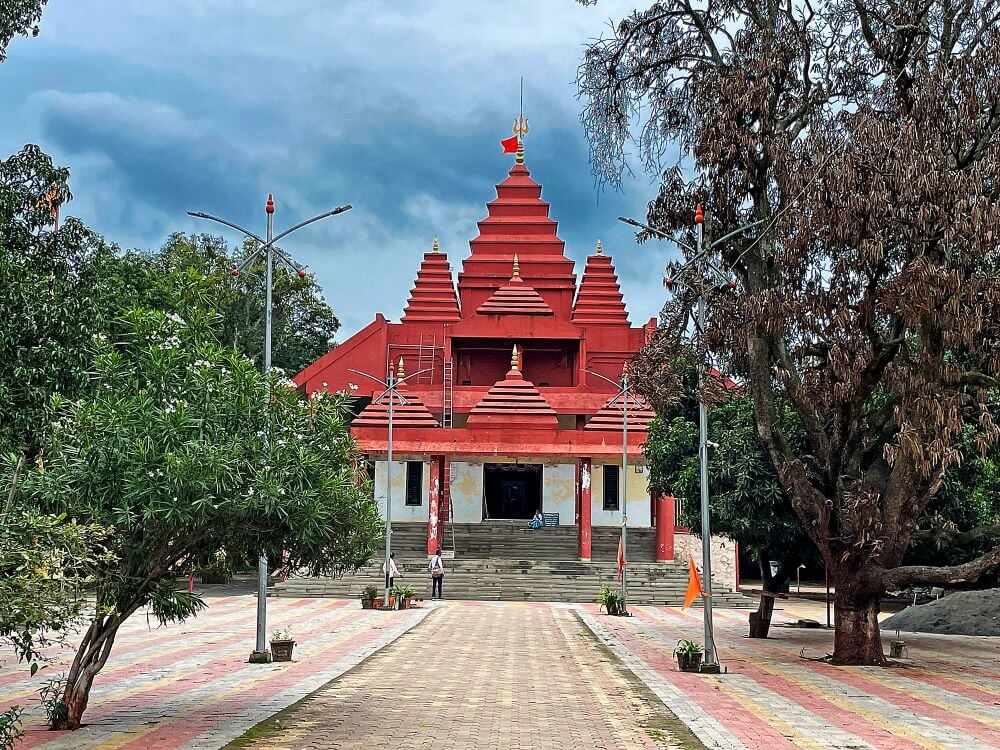
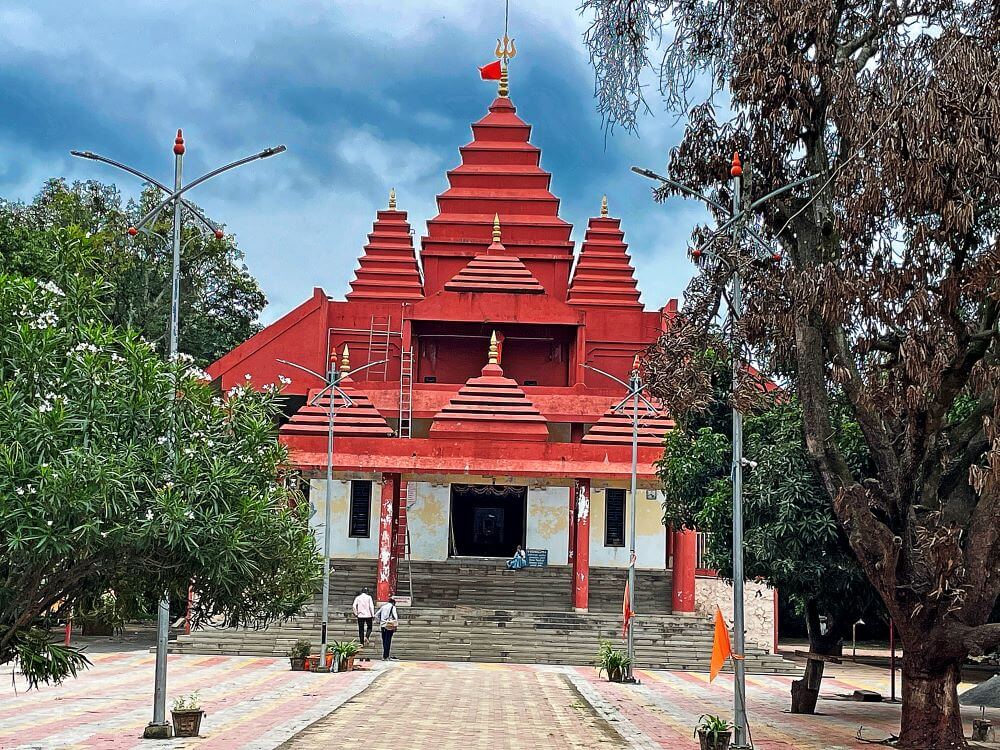
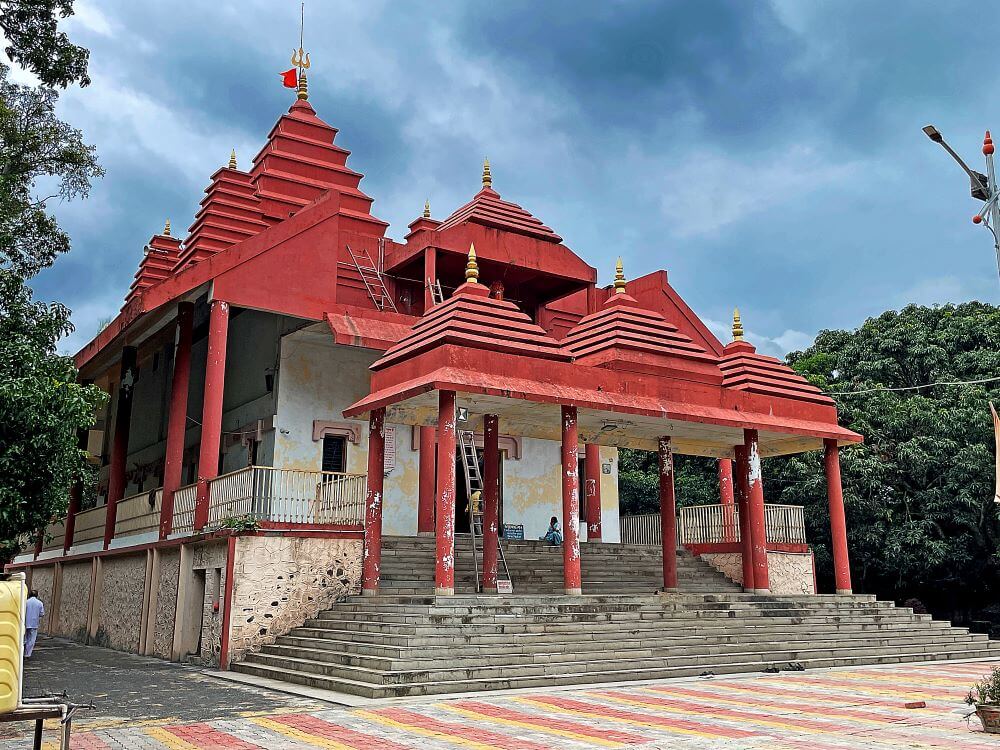
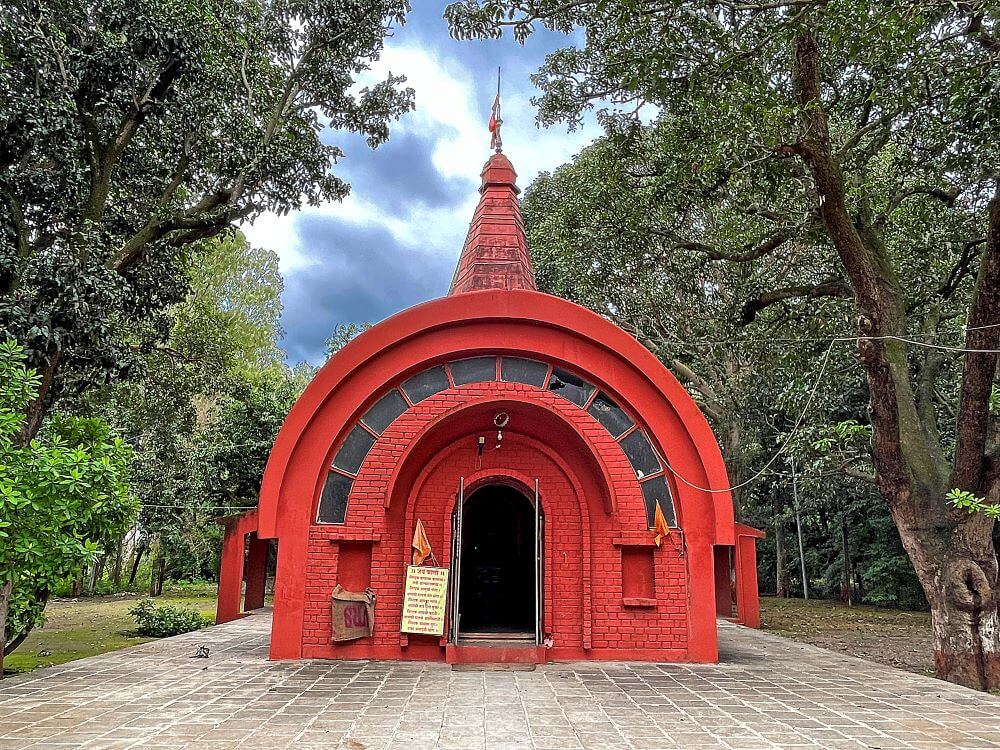
Shop Photo FramesThe temple of Kalika Mata, the village deity, is located at Upla on the Kannad-Chalisgaon road in Chhatrapati Sambhajinagar. This temple is also known as ‘Kalimath’. There are only three temples in India where Kalika Mata is depicted standing on the body of a sleeping Lord Shiva. This temple, one of those three, was established by Swami Pranavananda Saraswati Maharaj on April 10, 1988. This meticulously planned temple is a beautiful example of modern architecture. A unique feature of this temple is that every aspect of its construction is based on multiples of nine.
In the temple, Kalika Mata is depicted holding the severed head of the demon Raktabija in her hand. The legend associated with this is that the demon Raktabija had performed severe penance and pleased Lord Shiva. He had sought a boon that wherever his blood fell on the ground, a demon as powerful as himself would be born from it. After receiving this boon, the arrogant Raktabija wreaked havoc across the three worlds. Many gods and goddesses tried to defeat him, but due to the boon from Lord Shiva, it was not possible. The demon even defeated Lord Indra. Helpless before his actions, all the gods and goddesses sought refuge in Durga Mata to end him.
At the request of all the gods, Durga Devi fought the demon Raktabija. However, after she struck him with her weapons, more demons like him were born from the blood that fell on the ground. After fighting for many days without success, Durga Devi sought help from Parvati. Durga Devi said to Parvati, “When I strike the demon Raktabija, you must drink his blood in such a way that not a single drop falls on the earth. This is the only way to end him.” Following Durga Devi’s instructions, Parvati took the avatar of Kalika Mata and set out for the battlefield with her. As soon as Durga Mata struck the demon Raktabija, Kalika Mata began to drink the blood that flowed out. Consequently, Raktabija gradually began to weaken. Seizing this opportunity, Durga Mata beheaded him. Afterward, Durga Devi dedicated his head to Kalika Mata.
Even after the slaying of the demon Raktabija, Kalika Mata could not be calmed. She wanted to destroy more demons and consume their blood. Many attempts to pacify her failed. Worried, the gods went to Lord Mahadeva. Mahadeva went to calm the Goddess’s anger, but his efforts also failed. Her eyes were red with rage. She was killing every demon she saw on her path and drinking their blood. Finally, to calm her down, Mahadeva lay down on the path she was taking. At that moment, the Goddess’s foot fell upon his body. Seeing Lord Mahadeva himself under her feet, her tongue protruded in shock. That is why in this temple, she holds the head of the demon Raktabija in her hand, and the sleeping Mahadeva is beneath her feet.
A story is told about Swami Pranavananda Saraswati Maharaj, who built this temple of the Goddess in Upla village. Born on October 2, 1941, in Kolkata, Swami Pranavananda’s father was a freedom fighter. Due to his involvement in the movement, he was often away from home. Swami lost his mother when he was three months old. After that, his aunt raised him. However, he would always ask his father where his mother was. Finally, one day, his father took him to a Kalika Mata temple and said, “This is your mother.” From then on, Swami developed a deep devotion to Durga Puja. Even while studying, he regularly served the Goddess. Later, he became an engineer. He was an avid reader from childhood and was deeply influenced by the thoughts of Ramakrishna Paramahansa, whose many books he had read.
One day, a sannyasi came to Swami’s house. After hearing his conduct, thoughts, and words, Swami felt he too should take sannyas. Because of this thought, his mind could no longer find joy in his job. Finally, he left his job in 1966 and met Vishuddhananda Swami. Vishuddhananda Swami guided him on how to attain spirituality through yoga. However, as Swami’s desire to take sannyas remained, Vishuddhananda Swami told him to go to Ganeshpuri in the Bhiwandi taluka of Thane district and meet Muktananda Swami. Accordingly, after arriving at Ganeshpuri, he took sannyas on September 10, 1967, under the guidance of Muktananda Swami. In 1968, he came to Patnadevi. He worshipped the Goddess at Patnadevi for about 19 years. In 1980, he suffered a heart attack. At that time, Kalika Mata appeared to him and said, “Build my temple within 11 years. I will reside there in a conscious state.” From then on, he started looking for a place for the Goddess’s temple. Finally, he liked this site in Upla. He bought this 13-acre, 18-guntha land and began building the temple. The villagers also contributed by performing physical labor. The Goddess was consecrated in the temple on April 10, 1988.
The number nine holds great significance in Hinduism. Therefore, every part of this temple’s construction is based on multiples of nine. The temple is 81 feet tall and has nine spires (kalash). One has to climb stairs to enter the temple. There are nine steps in the first stage. The distance from there to the second stage of stairs is nine feet. After climbing nine steps from there, the distance to the threshold is nine feet. The temple has 54 pillars. The temple’s balcony (sajja) is 18 feet wide. The main hall (sabhamandap) is 54 by 54 in size, and the sanctum sanctorum (garbhagriha) is 27 by 27. Another unique feature of this temple is that the distance from Kannad to Kalimath is also nine kilometers. After the consecration of the Goddess in this temple, Swami Pranavananda Saraswati took Samadhi on February 15, 1991.
The temple is situated in a nature-rich area with a peaceful atmosphere. Behind the temple is the confluence of the Ambadi and Shivna rivers. As soon as one enters through the gate, there is a large courtyard. There is a mango orchard and many other trees in the temple premises. Behind the temple is the Samadhi temple of Swami Pranavananda Saraswati. Behind that is the residence built for the Swami. In the courtyard, there is a Bhakta Niwas (pilgrim guest house) built by Swami Pranavananda for devotees. There are stone benches in the temple courtyard for devotees to sit. There is also a Yajnashala here for performing homa-havan.
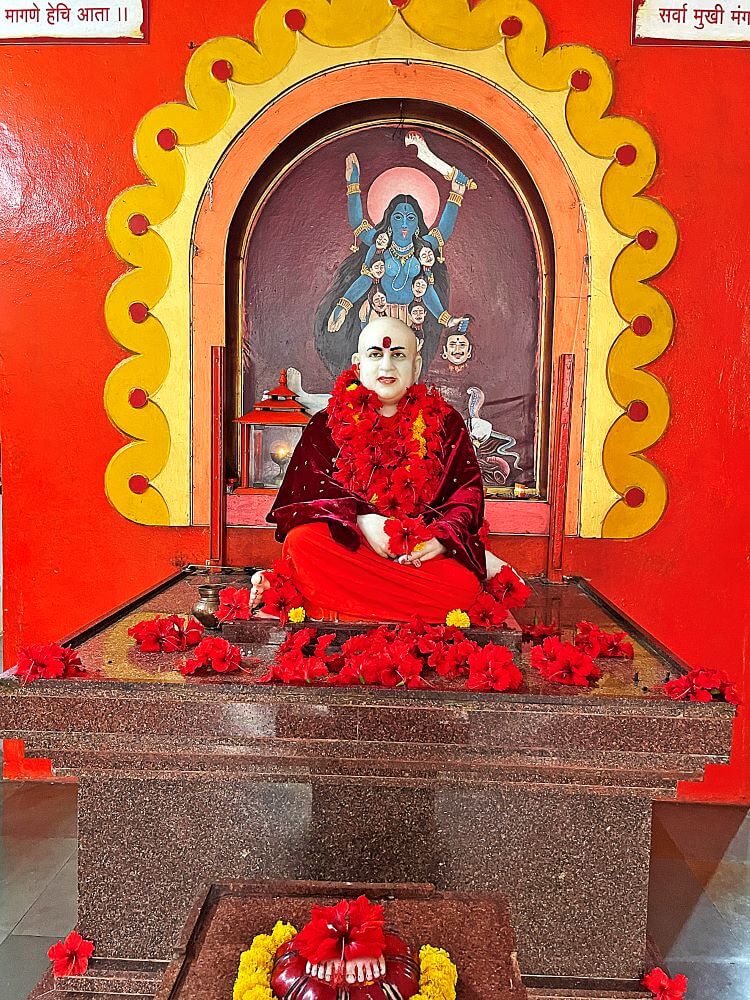
The temple complex consists of a Sabhamandapa (assembly hall), a Garbhagriha (sanctum sanctorum), and a Pradakshina Marg (circumambulation path). The Sabhamandapa features plaques displaying the Aartis of various deities. In front of the Garbhagriha, on a raised platform, are the metal icons (Taak) and Padukas (footprints) of Lord Ganesha and the Goddess. Inside the Garbhagriha stands a six-foot-tall idol of the Goddess, carved from black marble. In her upper right hand, the Goddess is in the Varadayini Mudra (bestowing blessings), while her upper left hand holds a sword. Her lower right hand is in a benevolent posture, and her lower left hand holds the severed head of the demon Raktabija. Beneath the Goddess’s feet lies Lord Mahadeva in a reclining posture. There are tridents on both sides of the idol. To the right of the idol is the statue of Swami Pranavananda, and to the left is the idol of Lord Vitthal.
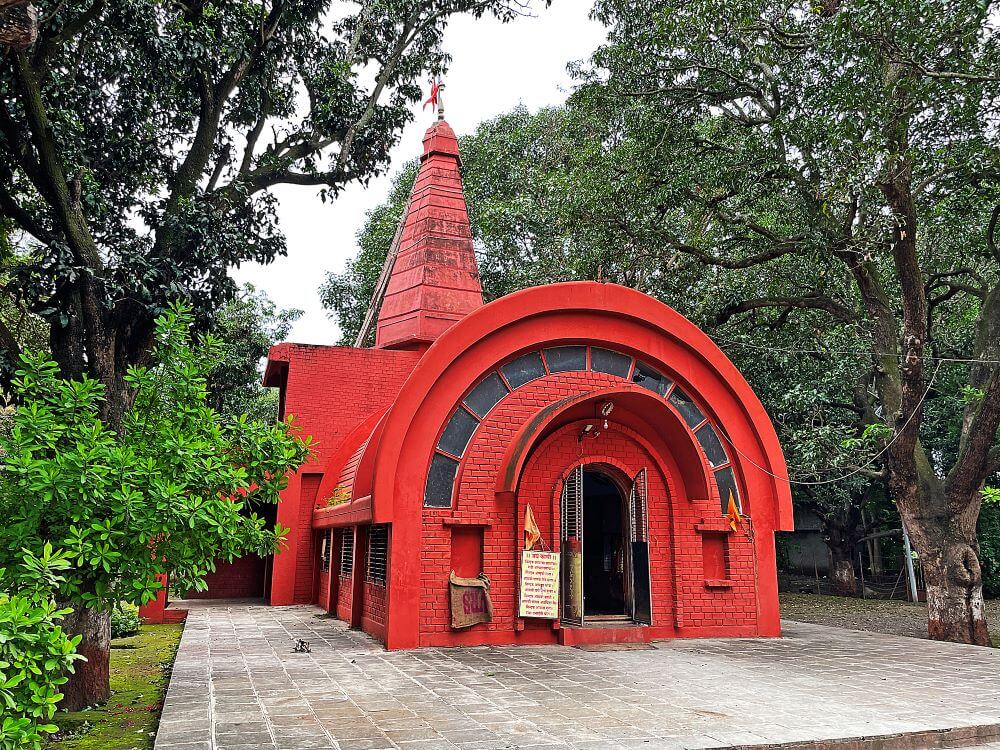
In the Sabhamandapa of the Samadhi temple of Swami Pranavananda, located behind this temple, there are images of deities, portraits of Swami Pranavananda and Swami Nityananda, as well as plaques inscribed with hymns of praise to the Goddess and Aartis. On a platform in front, there is a white marble statue of the Swami, with a picture of the Goddess behind it. The underground chamber beneath the platform where Swami Pranavananda’s statue is placed is where he attained Samadhi.
Known as a Goddess who fulfills the vows of her devotees, Kalika Mata attracts pilgrims from various parts of the state, including Chhatrapati Sambhajinagar, Jalgaon, and Nashik. Daily rituals, including Abhishekam, Puja, and Aarti, are performed at 5:30 AM. Maha Aarti is conducted at 12:00 PM and at sunset. Devotees are permitted to enter the Garbhagriha only on Purnima (full moon) and Amavasya (new moon). Grand celebrations are held here during Guru Purnima, Mahashivratri, and Navratri. The temple trust has established the Swami Pranavananda Saraswati High School near the temple. Every year, the trust adopts poor and meritorious students and distributes school supplies to them. On Guru Purnima, sarees are distributed to underprivileged women. A medical diagnostic camp is organized on the temple premises on the death anniversary of Swami Pranavananda Maharaj (February 15th).
This sacred temple stands as a testament to deep spiritual devotion, ancient architectural grandeur, and rich local cultural traditions.
The sanctum sanctorum houses the divine idol consecrated according to ancient Vedic traditions, surrounded by serene courtyards and traditional temple architecture.
Navratri, Maha Shivratri, Annual Temple Jatra & Deepotsav
Compare and book flights, secure top-rated local hotels near the temple, hire reliable guides, and rent cars instantly.
Extend your pilgrimage by visiting other highly sacred temples located nearby.


Add ₹999 more to unlock FREE SHIPPING!
Your sacred cart is currently empty.
Shop Photo FramesFill in your delivery details below to place your order.
Add comment