
Add ₹999 more to unlock FREE SHIPPING!
Your sacred cart is currently empty.
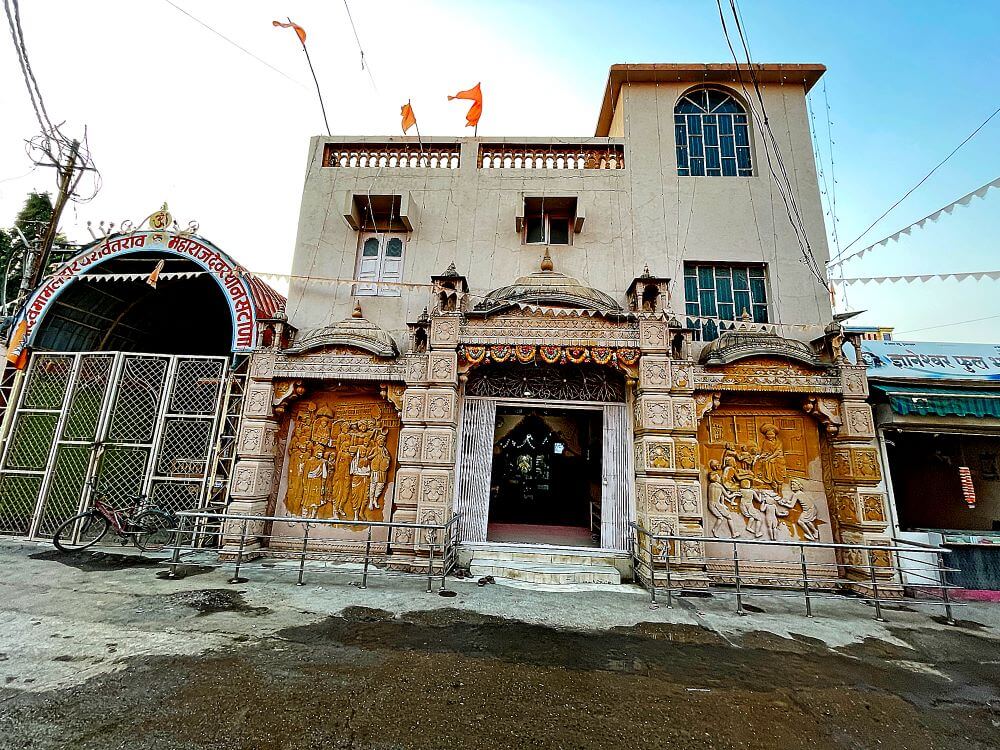
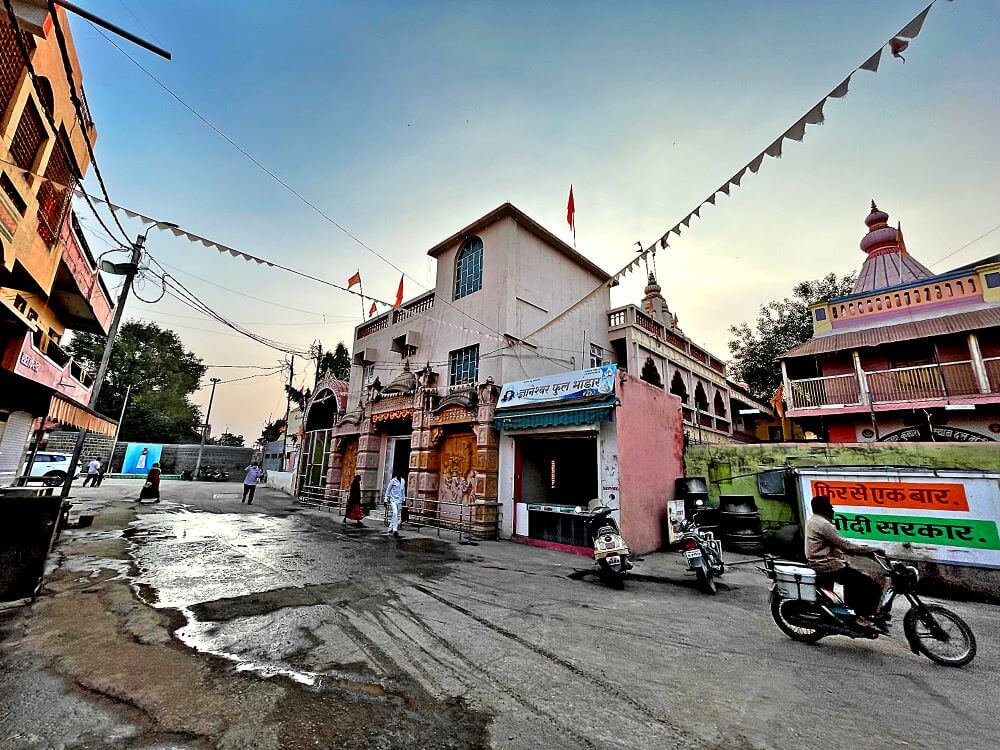
Shop Photo FramesIn Kali Yuga, there lived a government official whom the people elevated to the status of a deity and built a temple for him. The temple of this revered deity is situated in Satana town of Baglan taluka in Nashik district, and it is known as the ‘Dev Mamledar Yashwant Maharaj Temple.’
Dev Mamledar’s original name was Yashwant Mahadev Bhosekar. He was born on 13 September 1815 in Bhose village of Pandharpur taluka in Solapur district. While still pursuing his primary education, he was married at the age of 12. For further education, he came to Nashik to stay with his maternal uncle. Through an acquaintance with the then Nashik Collector, he joined the Yeola Revenue Department as an officiating clerk at the age of 14. Later, he was transferred to Parner. It was here that his family life and selfless service truly began. At this place, Swami Samarth appeared to him in a divine vision. He handed a Shaligram to Yashwantrao and commanded him to come and meet Him in Mangalwedha. When Yashwantrao went to Mangalwedha, Swami gave him initiation (diksha) and foretold that people would regard him as a god due to his divine deeds. In time, this came true.
After returning from Swami, Yashwantrao’s vow of selfless service gathered immense momentum. While doing so, he never neglected his official duties. Impressed by his integrity at work, he received successive promotions and was appointed as a Mamledar (Revenue Officer) in Chalisgaon in 1853. His attire consisted of a red turban (pagdi) on his head, a white kurta (sadra), and a white dhoti. His daily routine involved working throughout the day and engaging in Bhajans and Kirtans at night. In this, he was supported by his devoted wife, Rukminibai. Yashwantrao was blessed with four children. However, none of the children survived beyond three months. Unshaken by this personal grief, he dedicated himself completely to the service of humanity. Yashwantrao personally bore the expenses for performing the final rites of unclaimed bodies and organizing marriages and sacred thread ceremonies (munj) for poor children.
Finding that his government job was causing hindrances to his service, Yashwantrao tendered his resignation. Upon learning this, the public pleaded with him to withdraw his resignation, but his resolve was firm. After resigning, he embarked on his social service activities with renewed vigor. During this period, he visited the temple of Sakharam Maharaj in Amalner. There, he received a divine vision in which Sakharam Maharaj was requesting Swami Samarth that Yashwantrao should withdraw his resignation. He was telling Swami that Yashwantrao could serve the people even better while holding the post of Mamledar. Following this divine vision, Yashwantrao decided to withdraw his resignation and was accordingly reinstated as Mamledar.
This time, he was posted to Shahada. After several transfers to various places, he was transferred to Satana in 1869. During his tenure, a severe famine struck in 1870, leaving people in utter starvation. As the glory of Yashwantrao’s benevolence reached the masses, crowds of needy people started flocking to him. To feed these destitute people, Yashwantrao spent his entire salary, his wife’s mangalsutra, and household belongings. Yet, the queues of hungry people did not diminish. Unable to bear the agony of the famine-stricken people, he wrote letters to local moneylenders and took loans from them. Even then, the suffering did not abate. Finally, Yashwantrao took the bold decision to open the government treasury. He dispatched a letter seeking permission from the government, but received no response. Ultimately, on his own responsibility, he unlocked the official treasury and distributed Rs 1,27,000 (One lakh twenty-seven thousand) among the suffering public.
News of the government treasury being distributed to the public reached the authorities. Government officials arrived for an investigation. As Yashwantrao was being interrogated, word spread like wildfire among the people. Slowly, a large crowd gathered outside the administrative office (kacheri). When the officials opened the treasury and counted the money, they found the entire amount intact, exactly as it should be. Not a single pie was missing. This miraculous event spread far and wide, and from that memorable day, people reverently began calling him ‘Dev Mamledar’.
On Sunday, 11 December 1887 (Margashirsha Vadya Ekadashi), Yashwantrao took Samadhi on the banks of the sacred Godavari River in Nashik. A Samadhi temple of ‘Dev Mamledar’ has been built at this site. Following his Samadhi, devotees in Satana decided to consecrate his charan padukas (sacred sandals). Subsequently, construction of a wooden temple commenced on the banks of the Aarav River, adjacent to the old administrative office. The temple construction was completed by 1900, and the first annual festival was celebrated in the same year.
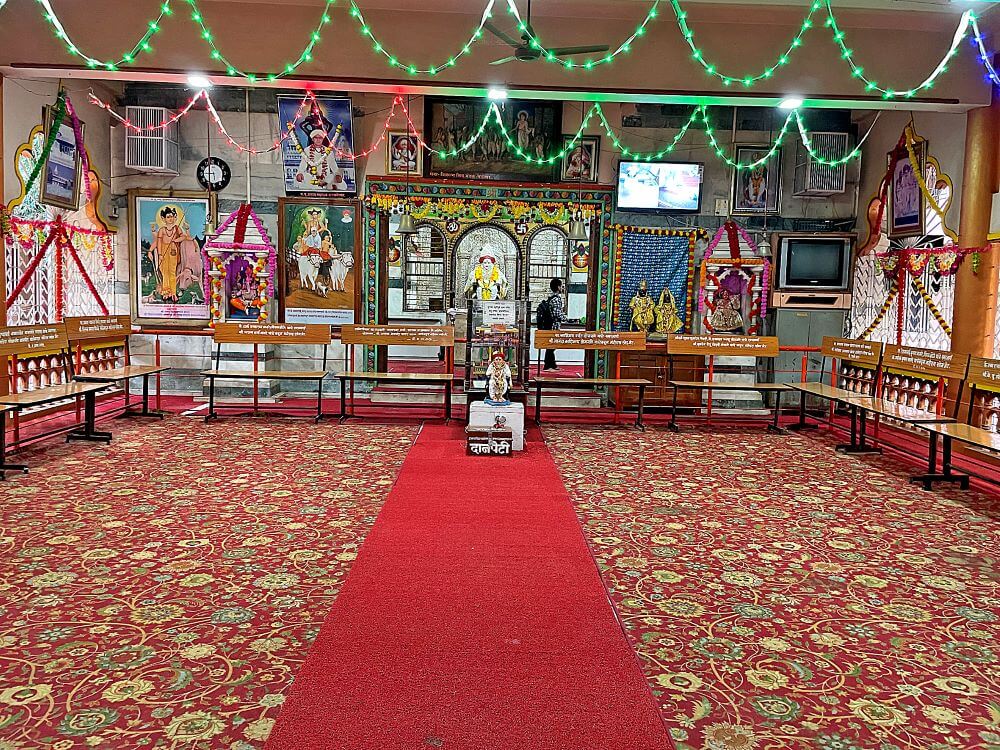
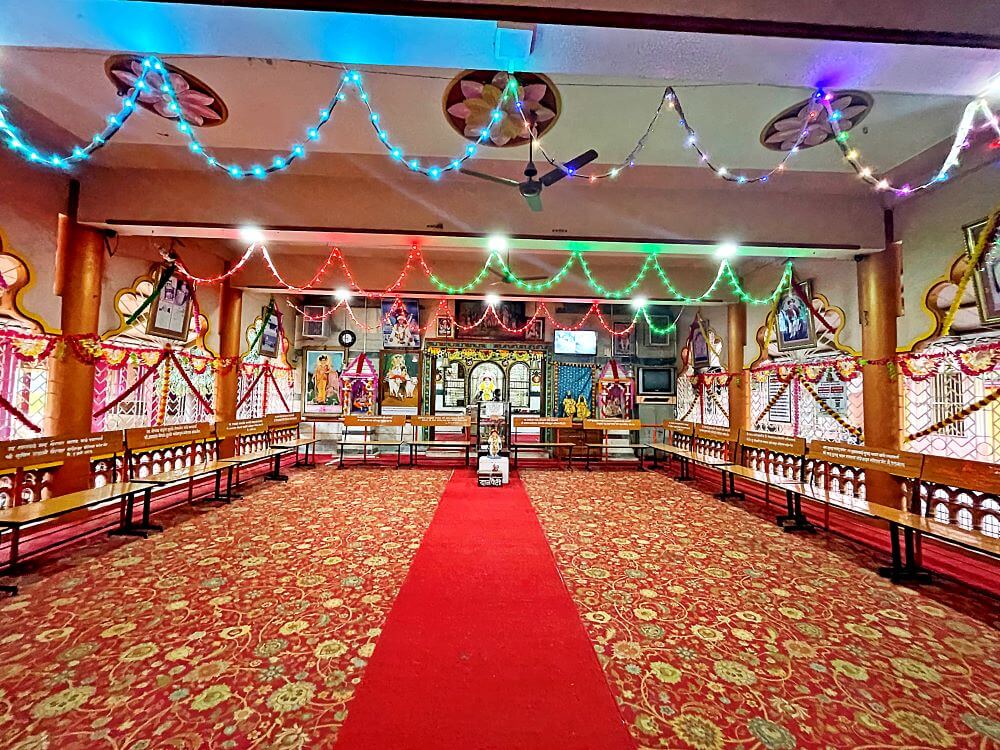
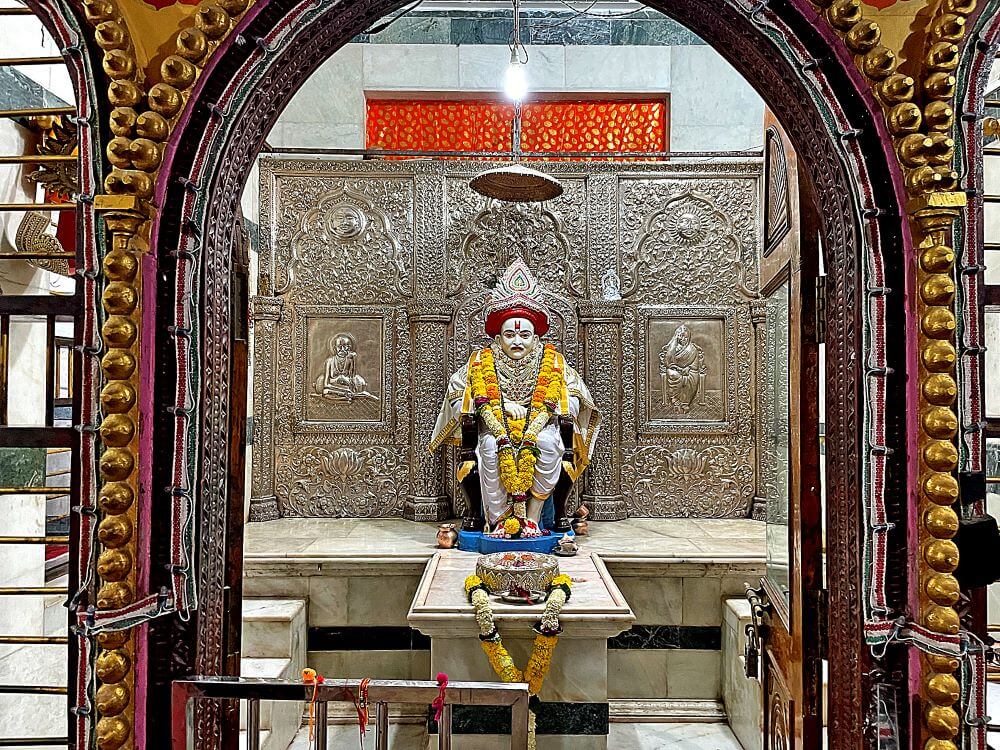
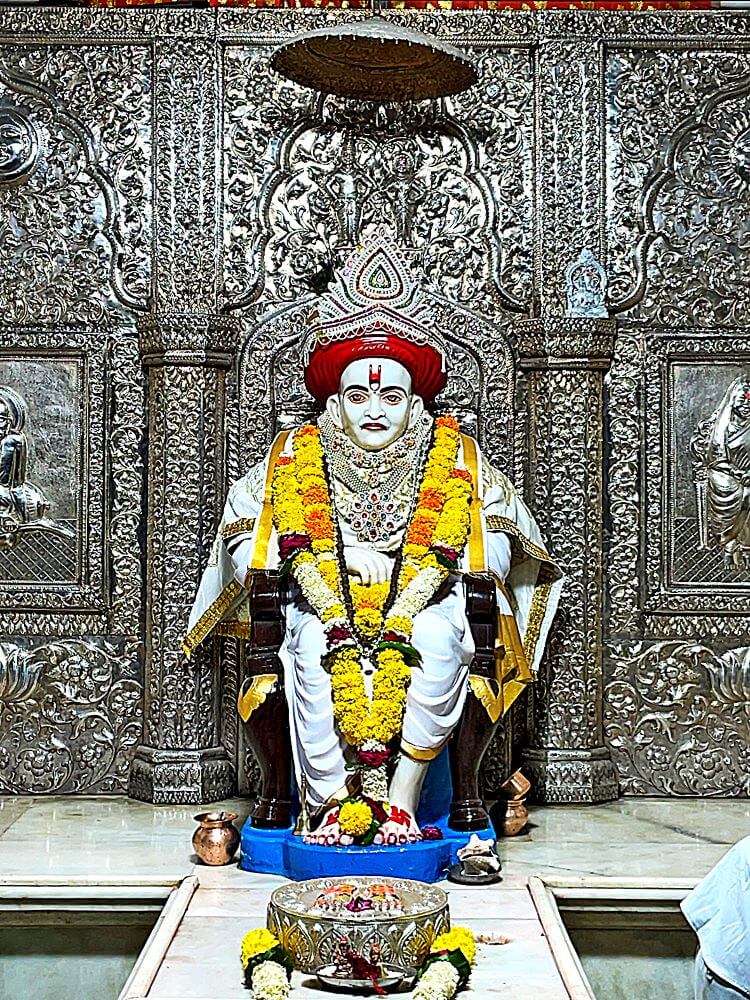
The temple structure comprises an assembly hall (Sabhamandap) and a sanctum sanctorum (Garbhagriha). Inside the Garbhagriha, there is a marble idol of ‘Dev Mamledar Yashwantrao Maharaj’ seated on a chair, adorned in a red turban, white kurta, and white dhoti. Depictions of key events from Maharaj’s life are displayed on the temple walls. Before entering the sanctum, a marble idol of Lord Ganesha is visible on the left side. Idols of Lord Vitthal and Goddess Rukmini are also enshrined here.
Every year, on Margashirsha Vadya Ekadashi (Saphala Ekadashi), the Punyatithi (death anniversary) of Yashwantrao Maharaj is observed. On this day, an early morning milk consecration (Dugdhabhisheka) is performed on his idol. The day’s first ritual worship (puja) is performed by the incumbent Tehsildar of the place. In the evening, a grand procession of a 17 kg silver idol of ‘Dev Mamledar’ is taken out on a temple chariot (Deul Rath – a chariot shaped like a temple on wheels). This fair and festival continues for about 15 days starting from ‘Saphala Ekadashi’.
At the temple, Kakad Aarti is performed early in the morning, followed by Aarti at 7:30 AM. Dev Mamledar has become the presiding deity (Gramdaivat) of Satana town, and devotees firmly believe that the people of Satana are prospering through his divine blessings.
This sacred temple stands as a testament to deep spiritual devotion, ancient architectural grandeur, and rich local cultural traditions.
The sanctum sanctorum houses the divine idol consecrated according to ancient Vedic traditions, surrounded by serene courtyards and traditional temple architecture.
Navratri, Maha Shivratri, Annual Temple Jatra & Deepotsav
Compare and book flights, secure top-rated local hotels near the temple, hire reliable guides, and rent cars instantly.
Extend your pilgrimage by visiting other highly sacred temples located nearby.


Add ₹999 more to unlock FREE SHIPPING!
Your sacred cart is currently empty.
Shop Photo FramesFill in your delivery details below to place your order.
Add comment