
Add ₹999 more to unlock FREE SHIPPING!
Your sacred cart is currently empty.
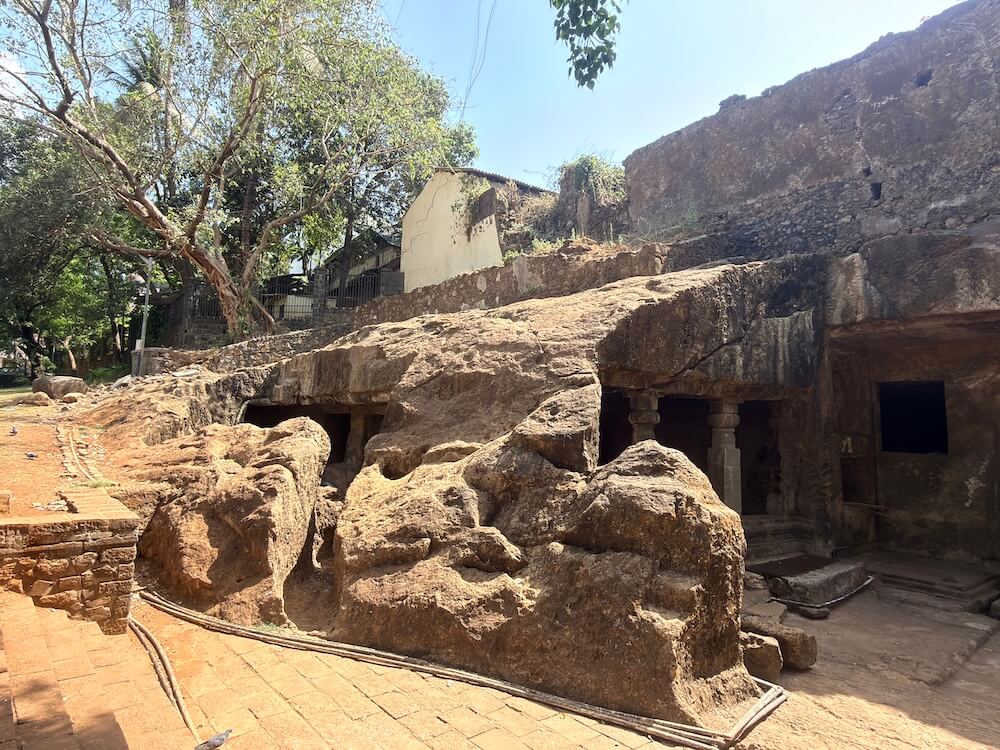
Shop Photo FramesThe Mandapeshwar Cave Temple in Borivali (West) is considered one of the most unique and historically significant sites in Mumbai. Located at the foothills of Mount Poinsur near the Dahisar River, this sixth-century cave is primarily associated with the Shaiva tradition. A large Shiva Linga of Mandapeshwara, the Lord of the Mandapa, is enshrined here. A fragmented sculpture of Nataraja in one of the halls bears witness to the ancient sculptural splendor of this cave. These caves are included in the list of protected monuments by the Archaeological Survey of India.
About 1,500 years ago, the Traikutaka kings held power over Aparanta, which includes the regions of Thane, Raigad, and the islands of Mumbai. These kings were originally from the Nashik region. In the sixth century, the Kalachuris made them their vassals. The Kalachuris were an important dynasty of ancient India. Krishnaraja (550 to 570 CE), the progenitor of the Kalachuri dynasty that emerged after the Vakatakas, had his capital at Mahishmati (Maheshwar in Madhya Pradesh). The silver coins of this Krishnaraja were known as ‘Krishnaraja-Rupaka’. Some of these coins were found in the Kalbadevi-Thakurdwar area of Mumbai, which indicates their rule over these islands. The Kalachuris were Pashupata Shaivas. It was during their time that the ‘Shiva-Srishti’ (creation of Shiva) consisting of five caves on the island of Gharapuri (Elephanta) near Mumbai was created. During the same period in the sixth century, when the caves at Gharapuri and Jogeshwari were being built, the two caves at Mandapeshwar were also constructed.
According to some researchers, Buddhist viharas existed here initially. Due to the proximity of trade routes on the west coast, Buddhist monks had created many rock-cut dwellings in this region. Later, this site was transformed into a Shaiva center, and various episodes from the Shiva Purana were carved here. In the book ‘Cultural Heritage of Mumbai’, Dr. Madhukar Keshav Dhavalikar has asserted that this was originally a Shiva temple. This cave bears a striking resemblance to the Rameshwar Cave (No. 21) at Ellora. Not only the layout of the cave but also the themes of the sculptures are similar. In the Kanheri cave complex, also located in Borivali, a new type of vihara had been introduced since the third century. Dr. Dhavalikar is of the opinion that this served as the origin for the layout of the Mandapeshwar caves.
Along with the Shiva temple, there was a large monastery of Shaivas in this cave. In the book ‘Rock Cut Temples Around Bombay’ (1932) by Kanhaiyalal H. Vakil, it is evident that there was a large Shiva monastery here in the 15th-16th centuries, supported by the revenue generated from the Shiva temple. Based on the sculpture of Lakulisha in the cave, this monastery belonged to the Pashupata sect. The Pashupata sect, which was widespread throughout India in ancient times, is a Shaiva sect that considers Pashupati or Shiva as the presiding deity. It is believed to have spread from the lands of Gujarat and Rajasthan. Lakulisha is considered the founder of this sect. Acharya Lakulisha was born in the late 1st century BCE or the 2nd century CE in the village of Kayavarohan (Taluka Dabhoi, District Vadodara, Gujarat), known as ‘Ichhapuri’ in the Satya Yuga, ‘Mayapuri’ in the Treta Yuga, and ‘Meghavati’ in the Dvapara Yuga. He is considered the final, 28th incarnation of Lord Shiva. Lakulisha systematically organized the Shaiva tradition, which had an ancient lineage dating back to the Vedic period. This is also known as the ‘Agamanta Sampradaya’. In this sect, the idol of the Shiva-incarnate Lakulisha is worshipped. The iconography of Lakulisha depicts him seated in Padmasana, with an erect phallus (urdhvalinga), holding a citron fruit in his right hand and a staff (danda) in his left, while Pashupatinath is worshipped in the form of a Shiva Linga. According to the Marathi Vishwakosh, ash (bhasma) holds special importance in the religious practices of the Pashupatas. In this sect, bathing in ash is considered the true sacrifice (yajna). Five mantras are prescribed in this sect: Sadyojata, Vamadeva, Aghora, Tatpurusha, and Ishana. In the worship of the Lord, no other ritual is required besides the recitation of the Sadyojata mantra. Even yajnas and shraddha ceremonies are forbidden. The simple and easy teachings and practices of this sect later faded, leading to the emergence of the Aghori and Kapalika sects.
The Pashupata Shaiva worship that continued in the Mandapeshwar caves until the 16th century was disrupted by the Portuguese. In 1510 CE, the Portuguese commander Afonso de Albuquerque conquered Goa from Adil Shah. From 1533 CE, Portuguese dominance was established over the regions of Vasai, Kalyan, Thane, Mumbai, and Revdanda. The missionaries of various Christian orders who arrived with them for proselytization unleashed a reign of religious intolerance. Many were converted. Many temples were destroyed. The Mandapeshwar temple also suffered this fate. According to available historical records, in 1538 CE (some researchers suggest 1547 CE), the Franciscan missionary Antonio do Porto and his associates built a church in the Mandapeshwar cave, initially named ‘Nossa Senhora de Piedade’ (Our Lady of Piety). Later, it was renamed ‘Our Lady of Immaculate Conception’. While doing so, they vandalized the idols and sculptures in the cave. Some parts were covered with layers of lime and plaster, while in other places, walls were built to hide the idols. The front part of this cave was closed off with stone and brick masonry. It featured only an entrance in the center and two windows on either side. At the southern end of this structure, a stone platform was built, and an idol of Mother Mary was installed upon it. Even today, a cross symbol can be seen carved in one place in this cave, replacing the original sculpture. The church built in the Mandapeshwar area later became part of a large religious complex. It included a church, a monastery, a religious education center (Royal College of Mandapeshwar, established in 1549), and later a ‘Sacro Monte’ type religious hill-complex.
Information about this fanatical Portuguese misconduct is found in the ‘Da Ásia, Década 7’ by the 16th-century Portuguese historian Diogo do Couto. According to the information he provided, the control of the Kanheri and Mandapeshwar caves passed to the Franciscan friars in 1538, and they drove away the yogis residing there. At that time, they made every possible attempt to destroy the sculptures located there. About forty years later (1603 AD), Couto wrote: On the island of Salsette, there was another temple (pagoda) named Manjaper (Mandapeshwar). It was carved out of a single monolithic rock. A very famous yogi named Ratemanar lived there along with 50 other yogis. The residents of the surrounding villages used to take care of them. As soon as Father Frei António de Porto learned about this, he went to him. The yogis on that island were so terrified of him that they left the temple as soon as they saw the Father and departed from there. The friars entered the caves and converted them into a church dedicated to ‘Our Lady of Piety’.
According to the report-book ‘Progress Report of the Archaeological Survey of India Western Circle (1918-19)’ of the British government, when officials from the Archaeological Department visited these caves, they observed that the ancient church on the upper part of the caves had been renovated. An orphanage had been built near a watchtower on a hill adjacent to it, and local Christian priests were using these caves as a horse stable and a warehouse. From this center, Franciscan missionaries propagated their religion in other parts of Salsette island. In some Portuguese documents, Mandapeshwar is mentioned as ‘Manpeser’ or ‘Manjaper’. Later, this name evolved into the name Mount Poinsur. (However, some historians believe that the name Mount Poinsur was formed directly from the corruption of the word Mandapeshwar.)
In 1739 AD, the Marathas defeated the Portuguese in the Vasai campaign. After that, Portuguese religious control over Mandapeshwar ended. After the missionaries retreated from here, this site remained partially desolate for at least the next 50-60 years. During the British era and subsequent archaeological surveys, the importance of the Mandapeshwar caves was re-emphasized. The British declared these caves as protected monuments. Over time, Shiva worship began here once again. A Shiva Linga was consecrated in the cave. However, this Shiva worship began in the popular Shaiva tradition rather than the Pashupata sect’s method of worship. Recently, in 2024, the Mandapeshwar caves were beautified. As part of this, on 8 March 2024, an 18 kg silver Shiva Linga was consecrated here as a ‘chalit’ (movable) deity. This means this Shiva Linga is installed here only during special festivals.
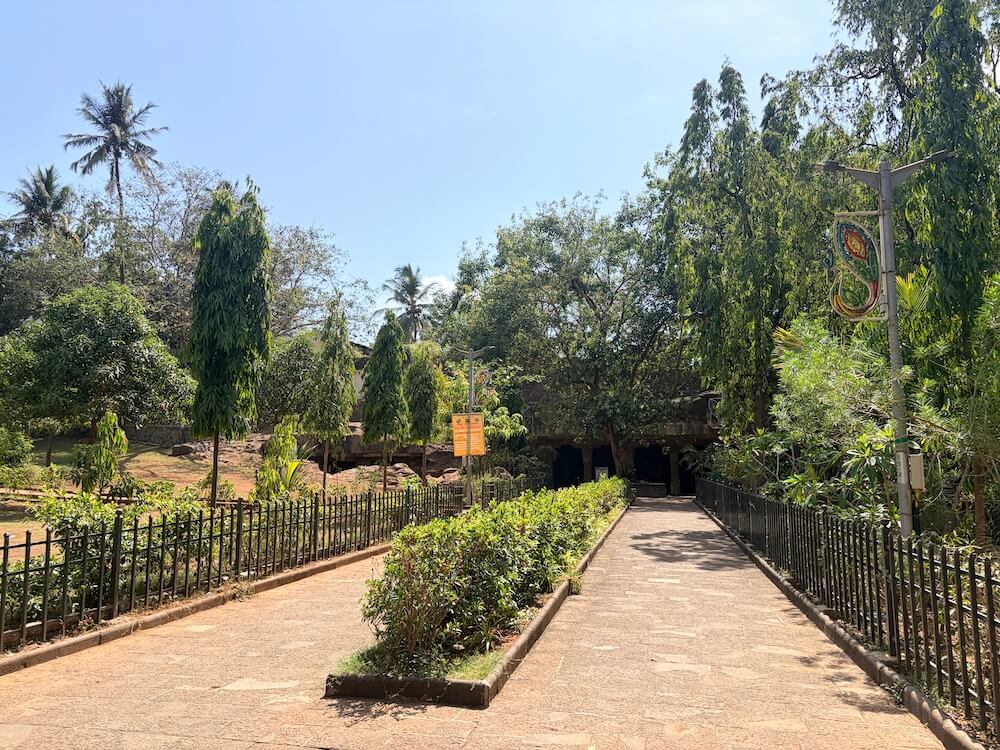
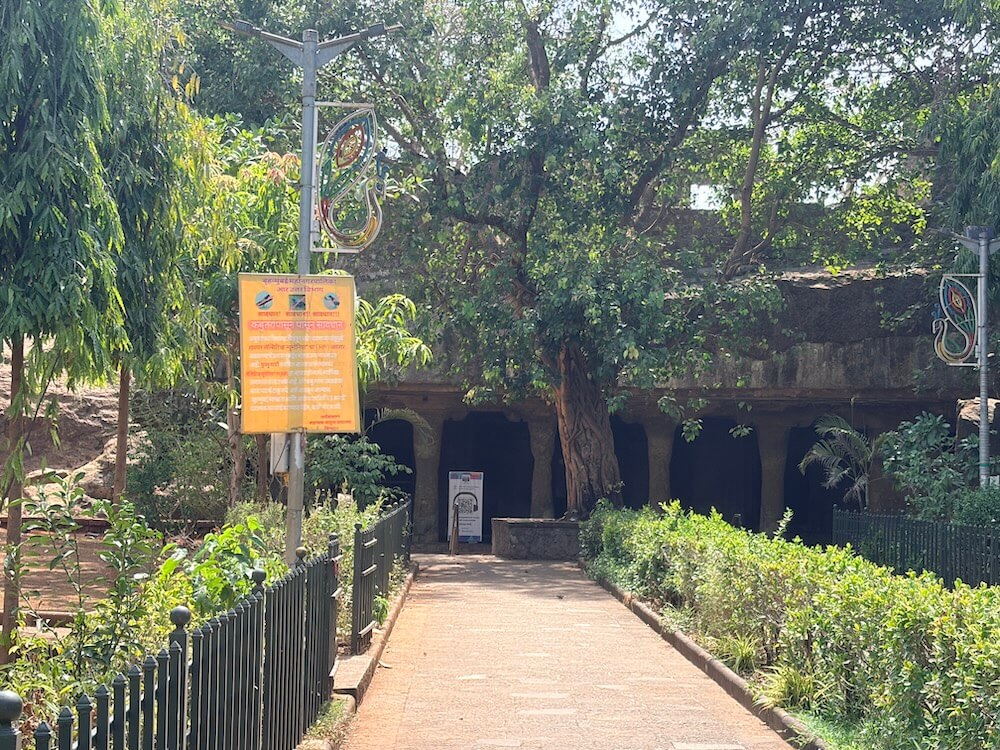
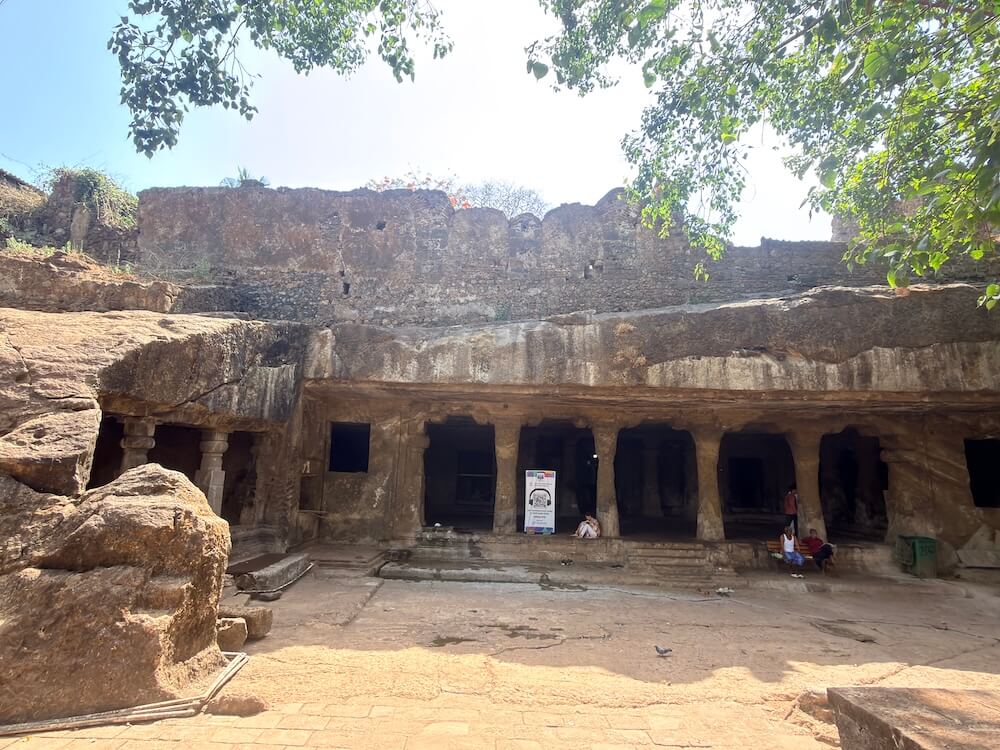
There is a large open space in front of this temple. It contains a garden and greenery. A stone-paved path leads from there. After walking some distance from here, one reaches the main cave of the Mandapeshwar temple. The layout of this cave consists of a pillared porch (sabhamandapa) followed by a square chamber. One enters this porch by climbing six steps. There must have been lion or tiger sculptures on both sides of these steps. Now, only the partial shape of their paws is visible there. A short distance to the left of the steps is an underground water tank. It appears that the sculptures on one of the walls there were scraped off and a cross symbol was carved in their place.
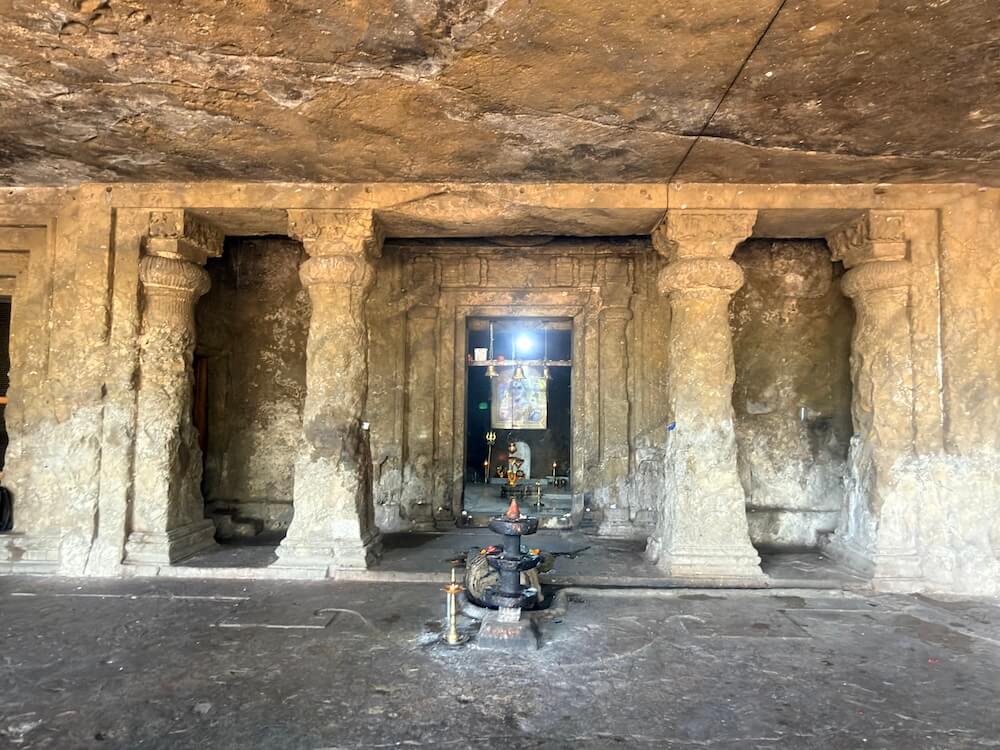
The porch of this cave-temple is spacious, measuring about 51 × 21 feet. Directly in front is the inner sanctum area of the temple. Here, there is a large stone lamp resembling a ‘samai’ and a statue of Nandi. The sanctum of the temple is square-shaped. It has a triple-recessed door frame. There must have been sculptures of ‘dvarapalas’ (gatekeepers) at the bottom of the door frame. They have been literally scraped away and erased. There is an indistinct inscription on this door frame. Its language is Marathi and the script is Devanagari. It has a total of 11 lines. This inscription is about a donation given to the temple. It mentions that this donation was given by a person named Govinda. The first two lines record the year ‘Samvat 1911’. From this, it is evident that this inscription dates back to 1854-55 AD. The sanctum has stone flooring. In the center, on the floor, is a stone Shiva Linga. The Linga consists of a high ‘shalunka’ (base) and a cylindrical linga within it. A brass serpent idol is seated upon it. Above that is a brass ‘abhishek’ vessel. On a marble pedestal against the back wall of the sanctum, another Shiva Linga is also seated. A brass serpent king holds a canopy over this Shiva Linga. A large image of Shiva is placed on this wall.
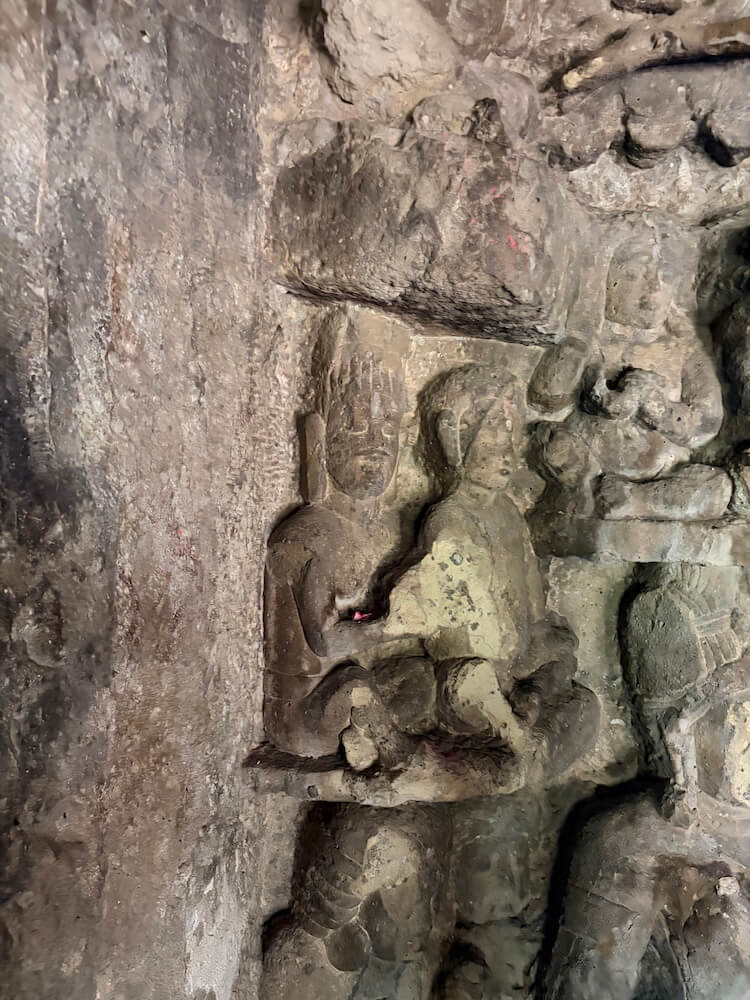
Large chambers are carved to the left and right of the temple porch. These chambers are at a higher level than the floor of the porch. Their pillars bear broken traces of previously carved designs and sculptures. These sculptures include idols of Shiva-Parvati and Ganesha. There are sub-chambers in the back of both these chambers. On the wall of the left chamber, the ‘Shiva Tandava’ is carved. Although it has been largely destroyed, the original beauty can be perceived from the remains of the sculpture. In this relief panel, Shiva is in the center in a Tandava pose. His arms and the part below the waist are destroyed. To the lower right of Shiva are sculptures of three women. Scholars believe that the one in the middle is Parvati and the other two are her attendants. To the lower left of Shiva are sculptures of Bhringi, as well as a mridangam player and cymbal players. Nearby is Ganesha. In the upper left corner is an idol of Lord Brahma. He holds a rosary in his hand. In the upper right corner is Vishnu. Similarly, Gandharvas and Vidyadharas are shown roaming in the sky. A small sculpture of Lakulisha is also carved in this relief panel. A similar sculpture is also found in the Elephanta caves. According to Dr. Dhavalikar, since the Elephanta and Mandapeshwar caves are almost contemporary, it is possible that the sculptures here were crafted by the same artist or sculptors from the same sect.
Regular worship is performed in this Mandapeshwar cave temple. Mahashivratri is the main festival celebrated here. During the month of Shravan, special abhishek, Rudrapath, and Shiva worship programs are organized here. During the Deepotsav held on Diwali, thousands of earthen lamps are lit to illuminate the temple premises. Apart from this, various Shaiva religious rituals such as Shravani Somvar and Tryambak Pujan are organized here. The Mandapeshwar cave temple is open for devotees to visit daily from 6 AM to 6 PM.
This sacred temple stands as a testament to deep spiritual devotion, ancient architectural grandeur, and rich local cultural traditions.
The sanctum sanctorum houses the divine idol consecrated according to ancient Vedic traditions, surrounded by serene courtyards and traditional temple architecture.
Navratri, Maha Shivratri, Annual Temple Jatra & Deepotsav
Compare and book flights, secure top-rated local hotels near the temple, hire reliable guides, and rent cars instantly.
Extend your pilgrimage by visiting other highly sacred temples located nearby.


Add ₹999 more to unlock FREE SHIPPING!
Your sacred cart is currently empty.
Shop Photo FramesFill in your delivery details below to place your order.
Add comment