
Add ₹999 more to unlock FREE SHIPPING!
Your sacred cart is currently empty.
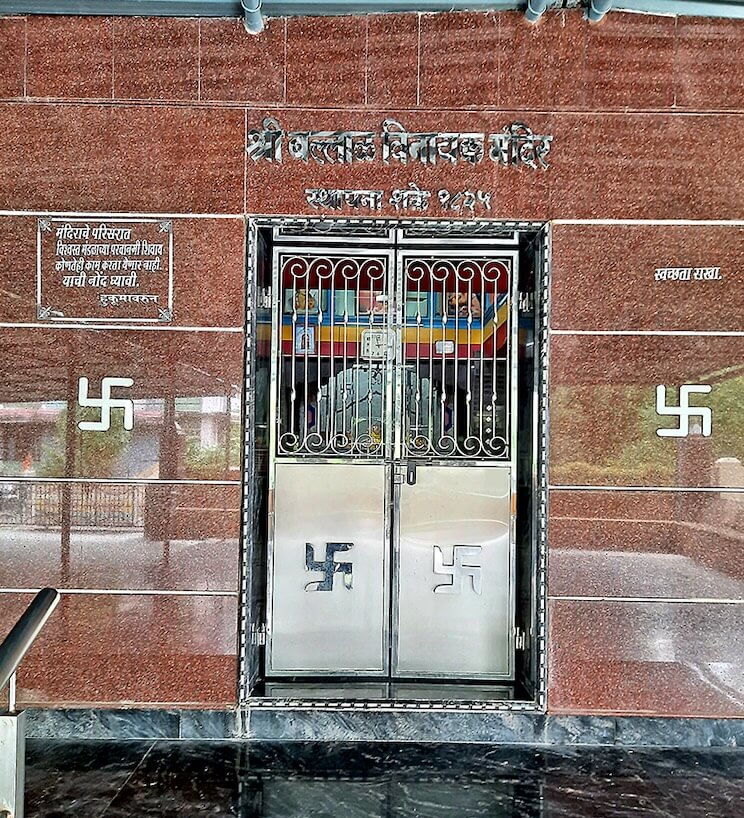
Shop Photo FramesThe Raigad district, nestled on the Konkan coastline of Maharashtra, has been renowned since ancient times for its various caves, forts, and temples. On the western coast of this district lies the historic town of Murud, home to the world-famous Janjira Fort. In this very town of Murud stands the Shri Ballal Vinayak Temple, a site of great spiritual and historical significance. This temple is considered historical evidence of a significant migration within Maharashtra’s Ganesh tradition.
The history of Shri Ballal Vinayak Temple in Murud is directly linked to Shri Ballaleshwar Temple in Pali, one of the Ashtavinayakas. According to historical references and local accounts, the original location of the Ballaleshwar we see today in Pali, Sudhagad Taluka, was indeed Murud. During the medieval period, the Konkan coastline witnessed various political upheavals. Particularly, due to the growing influence of the Siddhis of Janjira and the prevailing political situation, the security of Hindu temples became a concern. To safeguard the idol and preserve its religious sanctity, the Ganesh devotees and priests of Murud decided to move the original Ganesh idol to a safe location. It is believed that this ancient idol was secretly transported from Murud to Pali. This migration is why the Mangalashtaka of the Pali Ganapati mentions ‘Murudeshwar Ballal Vinayak’. Subsequently, in nineteen hundred and three, Ganesh devotees in Murud installed a stone idol and named it ‘Shri Ballal Vinayak’. Later, in nineteen hundred and nine, the temple underwent renovation, and a marble idol of Ganapati was installed there. This temple is also known as ‘Anand Bhuvan Ganesh Temple’.
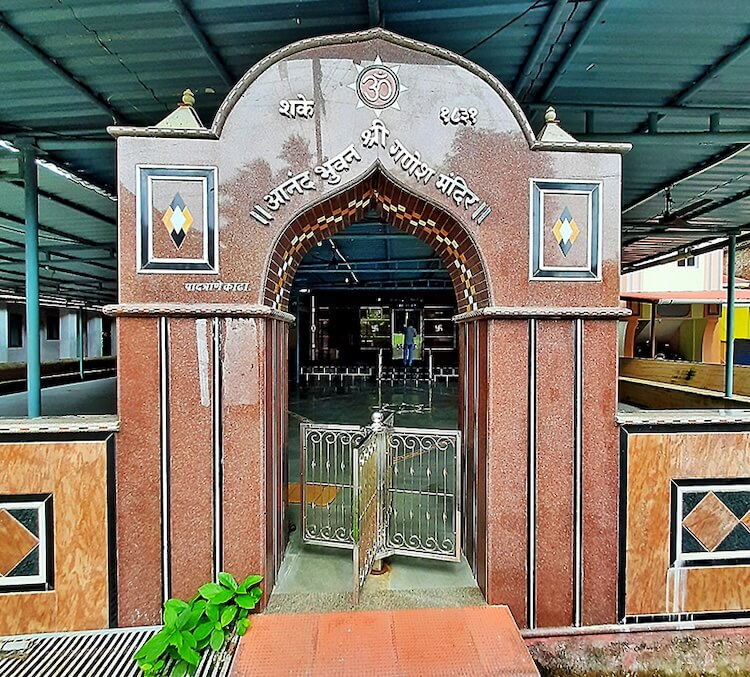
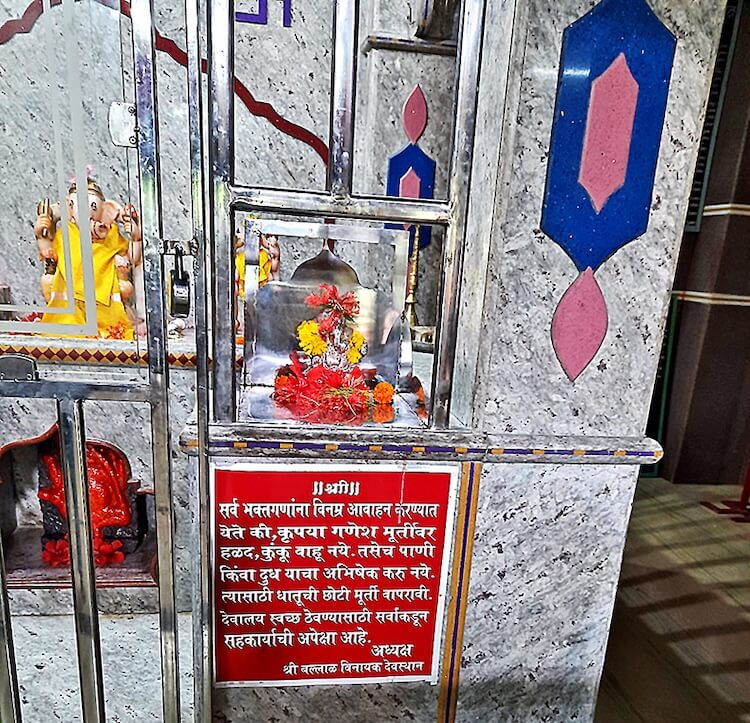
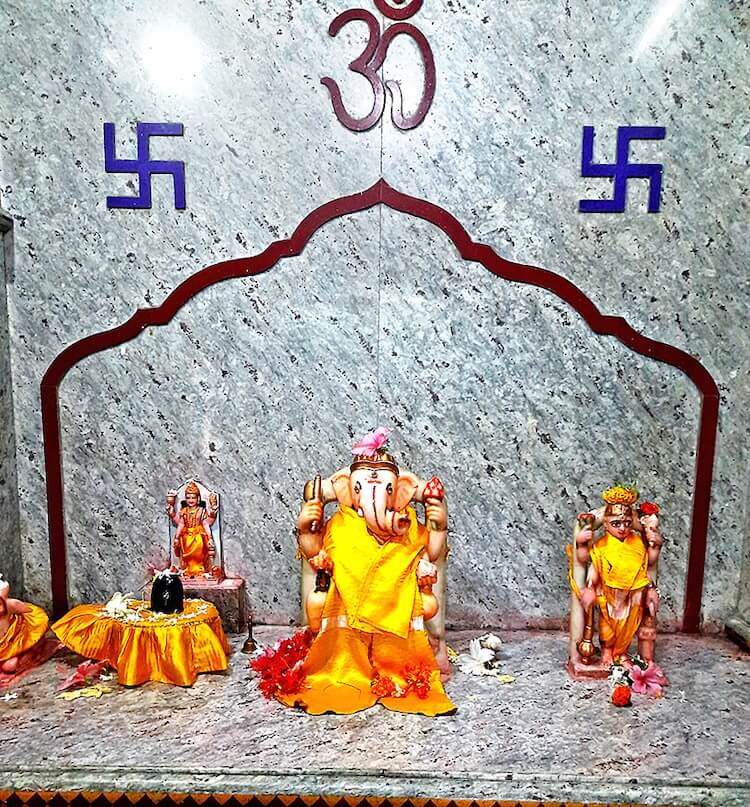
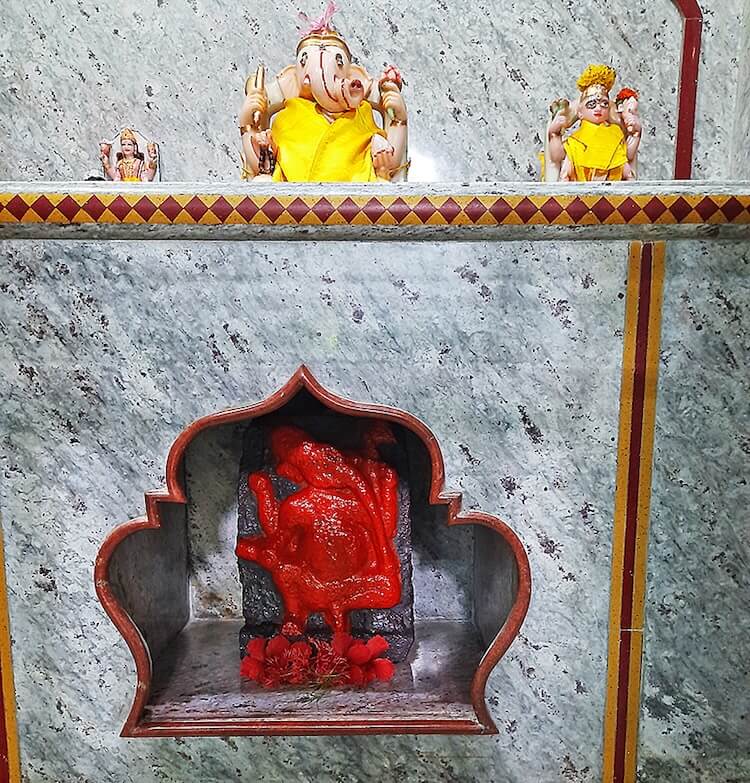
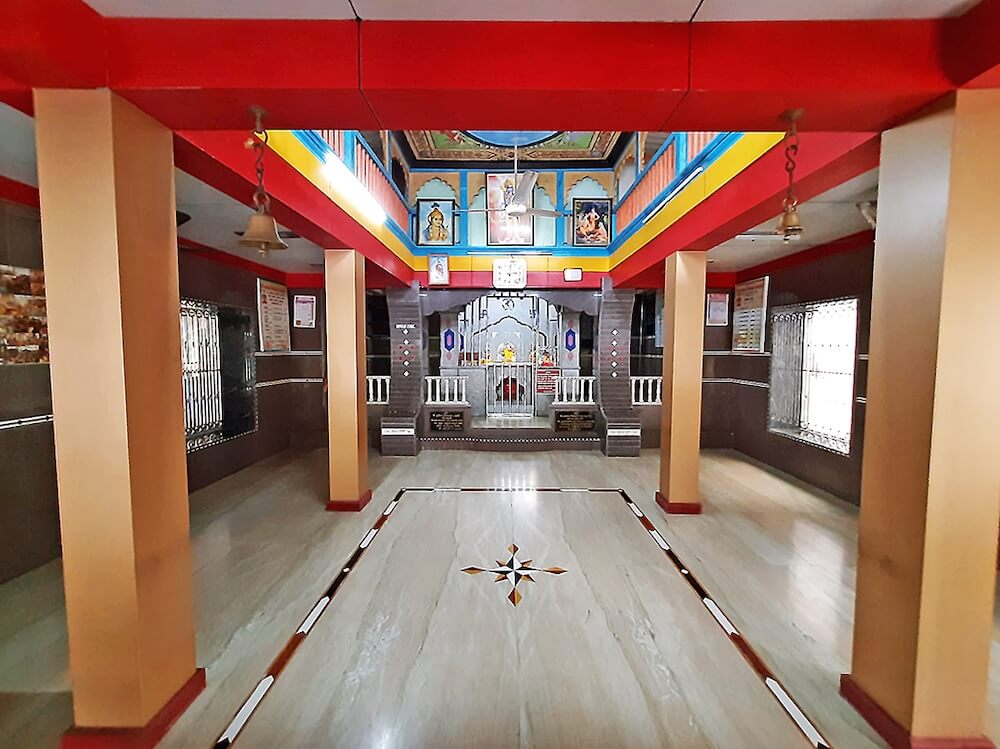
The architecture of this temple in Murud is modern. The temple’s compound wall and entrance, located alongside the road, are covered with marble tiles. The corners of the compound wall feature square pillars topped with small spires. The main entrance of the temple has an arch, with small spires on the pillars on either side. Upon entering, one finds a large, paved courtyard. A tin shed has been erected in this courtyard for the convenience of devotees. From this courtyard, one ascends three steps to enter the temple’s assembly hall, which is situated on a raised platform. This assembly hall is enclosed. The assembly hall has two rows of square pillars supporting the balcony of the upper floor. During annual festivals, female devotees can participate in the programs from there. The walls of the assembly hall are adorned with various paintings. Beyond the assembly hall is the antechamber, followed by the main sanctum sanctorum. The sanctum sanctorum here is two-storied and is considered unique. Here, on a vajra-peetha, there is a two-tiered marble makhar. The lower tier houses the original stone idol of Ballal Vinayak, and the upper tier features a marble idol seated on a lotus. Idols of Riddhi and Siddhi flank Ganapati on both sides. The lower part of the square, tapering spire of the sanctum sanctorum features a lotus petal design. The walls on all four sides of the spire have small spires and half-amalakas. Above the main spire are two amalakas, topped by a kalasha. Two snakes are carved on this kalasha.
The temple celebrates the Pushthipati Vinayak Jayanti festival on Vaishakh Pournima. During this five-day festival, abhishek, puja, and bhajan programs are organized from early morning. On the day of Pournima, Ganapati’s birth anniversary is celebrated. Along with homa-havan and religious ceremonies, health camps are also organized during the festival. Devotees visit in large numbers for darshan at this time. Devotees offer modaks and pedhas as naivedya to the deity. There is a mythological story associated with this festival. Mother Parvati was distressed by the torment of a demon named Durmati. Following the advice of Narad Muni, she bathed in the sea daily and worshipped Ganesha from Chaitra Pournima to Vaishakh Pournima. After Parvati’s rigorous penance, Ganesha appeared in living form and slew the demon. That day is known as Pushthipati Vinayak Jayanti. Sahasravartanas are performed in the temple on Angaraki Chaturthi. Additionally, the Bhadrapada and Maghi Ganesh Utsavs are celebrated here. The temple sees a crowd of devotees every Tuesday, Sunday, and Sankashti Chaturthi. Special religious rituals are performed in the temple, especially on Magh Sankashti and Angaraki Chaturthi. On this day, there is a tradition of performing Sahasravartanas in the temple. Aarti is performed daily in the temple in the morning and evening. The Mangalashtakas sung during the aarti describe the glory of Ballal Vinayak. Devotees can have darshan of Ballal Vinayak here daily from seven o’clock in the morning to one o’clock in the afternoon and from four o’clock in the evening to nine o’clock at night.
This sacred temple stands as a testament to deep spiritual devotion, ancient architectural grandeur, and rich local cultural traditions.
The sanctum sanctorum houses the divine idol consecrated according to ancient Vedic traditions, surrounded by serene courtyards and traditional temple architecture.
Navratri, Maha Shivratri, Annual Temple Jatra & Deepotsav
Compare and book flights, secure top-rated local hotels near the temple, hire reliable guides, and rent cars instantly.
Extend your pilgrimage by visiting other highly sacred temples located nearby.


Add ₹999 more to unlock FREE SHIPPING!
Your sacred cart is currently empty.
Shop Photo FramesFill in your delivery details below to place your order.
Add comment