
Add ₹999 more to unlock FREE SHIPPING!
Your sacred cart is currently empty.
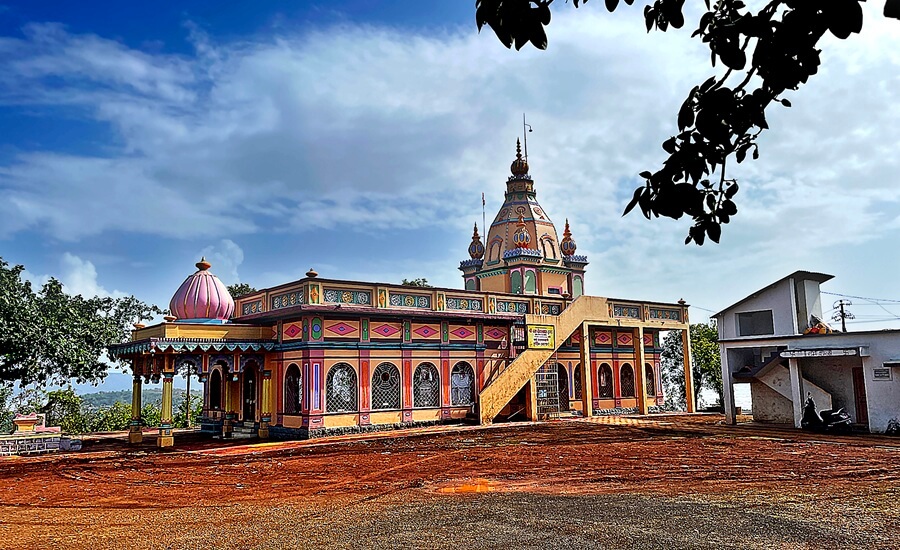
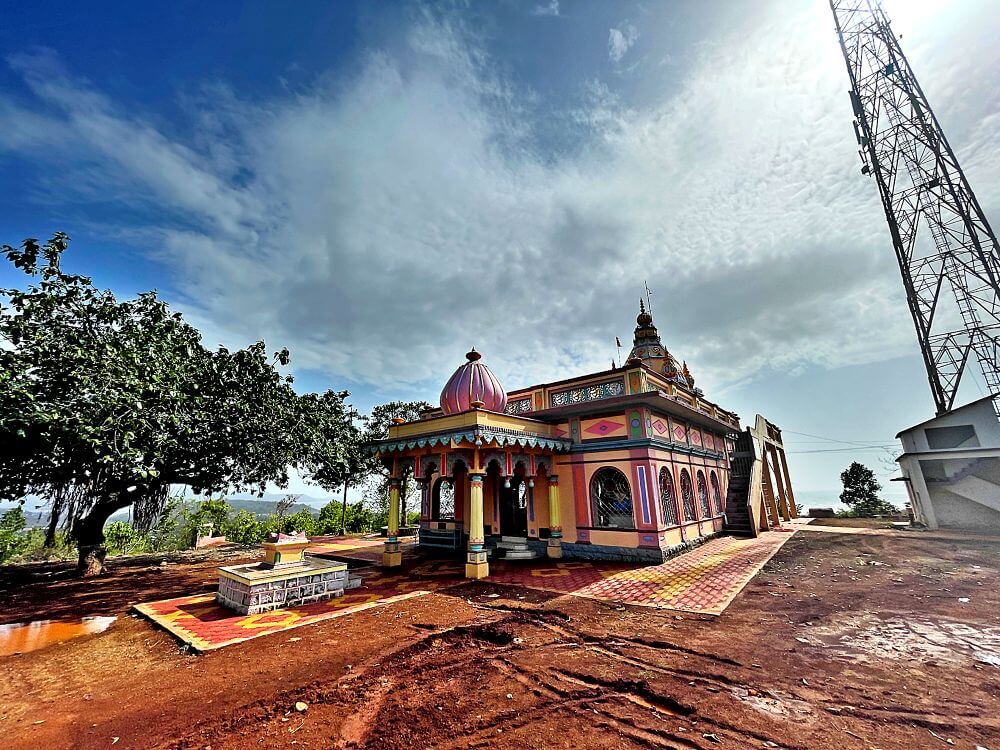
Shop Photo FramesIn the coastal tourist town of Murud, there stands an ancient temple dedicated to Lord Dattatreya. Located towards the north of this town, on a hill approximately 350 meters above sea level, this sacred temple is nestled in a spacious setting. The temple is grand and rich in historical heritage. In the Konkan region, the Datta Sampradaya spread widely due to holy saints like Vasudevananda Saraswati Tembye Maharaj. The Datta Temple here illuminates the profound influence of the Datta Sampradaya in Konkan. This temple is a major attraction for devotees and tourists alike. From here, one can behold a captivating, breathtaking view of Murud town, Janjira Fort, and Kasa Fort.
This temple belongs to the Peshwa era. During the reign of Chhatrapati Shahu Maharaj, efforts were underway to restore the administrative order of Swarajya, which had been disrupted by Aurangzeb’s invasions. Historical records state that during those turbulent times in the first half of the eighteenth century, Brahmendraswami Dhavadshikar consecrated the sacred Datta Padukas at this holy place. Brahmendraswami Dhavadshikar was an eminent yogi and saint of that era. He was the spiritual Guru of Chhatrapati Shahu Maharaj, Peshwa Balaji Vishwanath, and Bajirao Peshwa. He was a devout worshipper of Lord Ganesha. In the village of Pedhe near Chiplun, within the holy precincts of the ancient shrine of Lord Parshuram, he performed silent, austere penance from 1686 to 1698 AD. On the auspicious day of Pausha Shuddha Purnima in 1698, he manifested at Parshuram Kshetra. Following this, he renovated the ancient, dilapidated Parshuram temple there. Like Shahu Chhatrapati and the Peshwas, many chieftains and nobles were his devoted followers, leading to abundant donations. Historical references mention that when the Peshwas faced financial difficulties, Brahmendraswami provided them with loans. From these funds, he also undertook noble public works such as constructing several temples, lakes, and wells. The Datta Temple in Murud is one of those noble works.
There is a profound spiritual significance behind a devout Ganesha worshipper like Brahmendraswami establishing a Datta temple. Konkan is venerated as the land of Lord Parshuram. Brahmendraswami had chosen Parshuram Kshetra for his intense penance. According to the sacred lore in the ‘Dattatreya Dnyankosh’, Lord Dattatreya was the Guru of Lord Parshuram. It was by the divine grace of Lord Datta that Parshuram rid the earth of Kshatriyas twenty-one times to avenge his father’s murder. Yet, even after that act, his mind found no inner peace. Hence, he once again sought refuge at the lotus feet of Datta Guru. In Swami Vasudevananda Saraswati Tembye’s sacred text ‘Shri Datta Mahatmya’, it is written: *”Shri Dattachen sakhya karuna | Rama rahila sannidhana ||”* (Having formed a divine bond with Lord Datta, Parshuram abode in His close presence). Thus, after building the temple of Parshuram, Brahmendraswami constructing the temple of Parshuram’s Guru—Lord Datta—holds deeply sacred meaning.
A legend regarding this temple also relates that after Swamiji displayed a miracle to the Siddi of Janjira, the Datta Padukas were consecrated on this hill. The great history researcher Rao Bahadur Dattatray Balwant Parasnis provided detailed accounts of the relationship between Swamiji and the Siddi in his book ‘Mahapurush Brahmendraswami Dhavadshikar – Charitra Va Patravyavahar’. Published nine years after the Revolt of 1857, the book notes that in 1707, after the death of Abyssinian Siddi Kasim of Janjira, Yakud Khan Siddi Surur alias Bade Khan succeeded to the throne. Unlike Siddi Kasim, he was not hostile towards Hindus. The fame of Brahmendraswami had reached his ears. A popular legend at the time held that Brahmendraswami could cross the sea creek sitting on a simple banana leaf. Desiring to have the darshan of such an extraordinary, saintly yogi, Bade Khan invited Swamiji to Dandarajapuri. At that time, Swamiji crossed the creek sitting upon a banana leaf and arrived in Dandarajapuri. According to some accounts, the Siddi had summoned Swamiji to help locate his missing brother-in-law, for which he sent a royal palanquin to Murud. However, Swamiji declined to ride in the palanquin, placed a banana leaf onto the sea, sat upon it, and journeyed to Janjira. Witnessing this miracle, Bade Khan was filled with awe. Later, exactly on the day predicted by Swamiji, Bade Khan’s brother-in-law returned safely. Deeply moved, Bade Khan honored Swamiji with grand Dakshina. Parasnis notes that on this occasion, Swamiji obtained Inam Sanads (royal land grant deeds) for the villages of Pedhe and Avadas from Bade Khan for the Parshuram Devasthan. Following this, Swamiji consecrated the sacred Datta Padukas near an Audumbar (cluster fig) tree on this hill.
There are two pathways to reach this hill: one is a flight of 315 steps, and the other is a motorable road. In 1906–07 AD, the Chief Justice of the former Janjira Princely State, Rajadhyaksha, installed a small idol of Lord Dattatreya in this Paduka temple. The holy Datta Padukas consecrated by Brahmendraswami were reverently placed before this idol. A small temple was also built here at that time. Built in the traditional Konkani architectural style, this ancient temple featured a tiled, sloping roof. In 1926–27, this small shrine underwent renovation. It is said that on every wooden pillar in the Sabhamandap (assembly hall), inspirational verses were carved on glass. The Sabhamandap had a wooden ceiling intricately carved with scenic landscapes of the surrounding region as viewed from the Datta Temple. Subsequently, on June 21, 1997, the temple was renovated once again. This renewed temple stands on the original foundation, preserving the old walls. Replacing the tiled roof, a cement concrete slab was constructed to beautifully adorn both the Sabhamandap and the Garbhagriha (sanctum sanctorum).
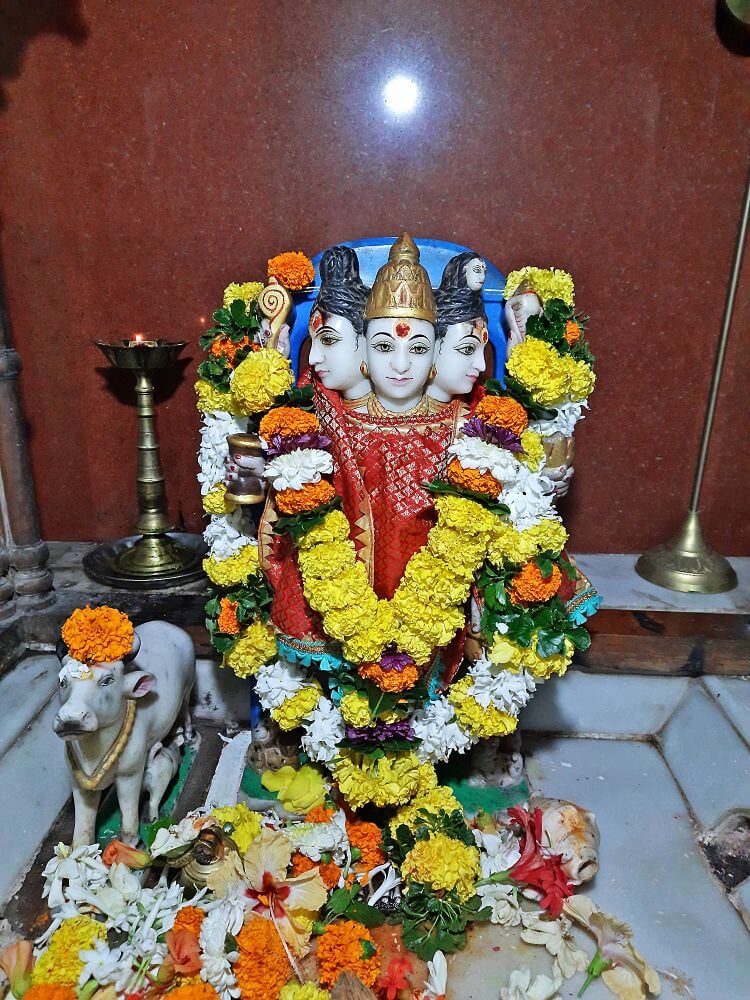
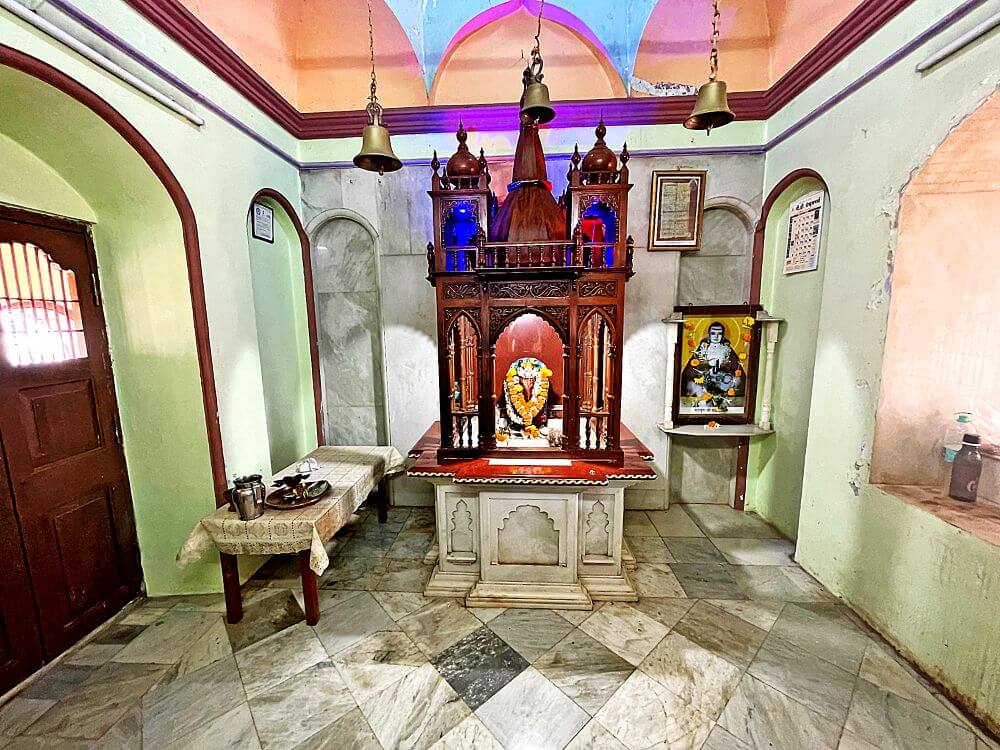
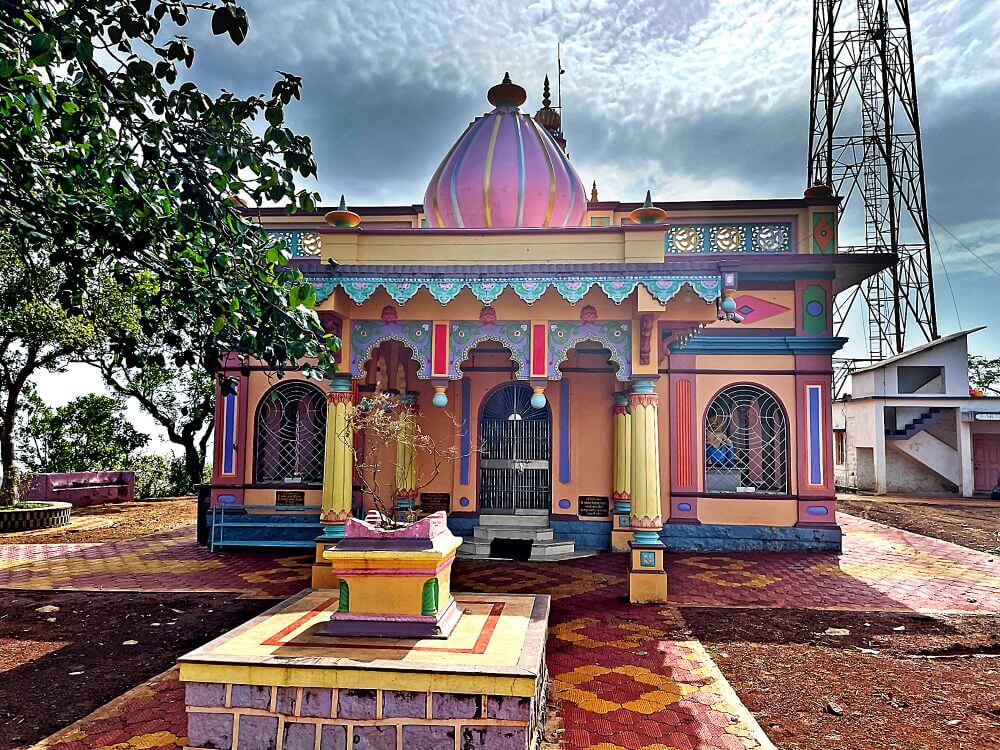
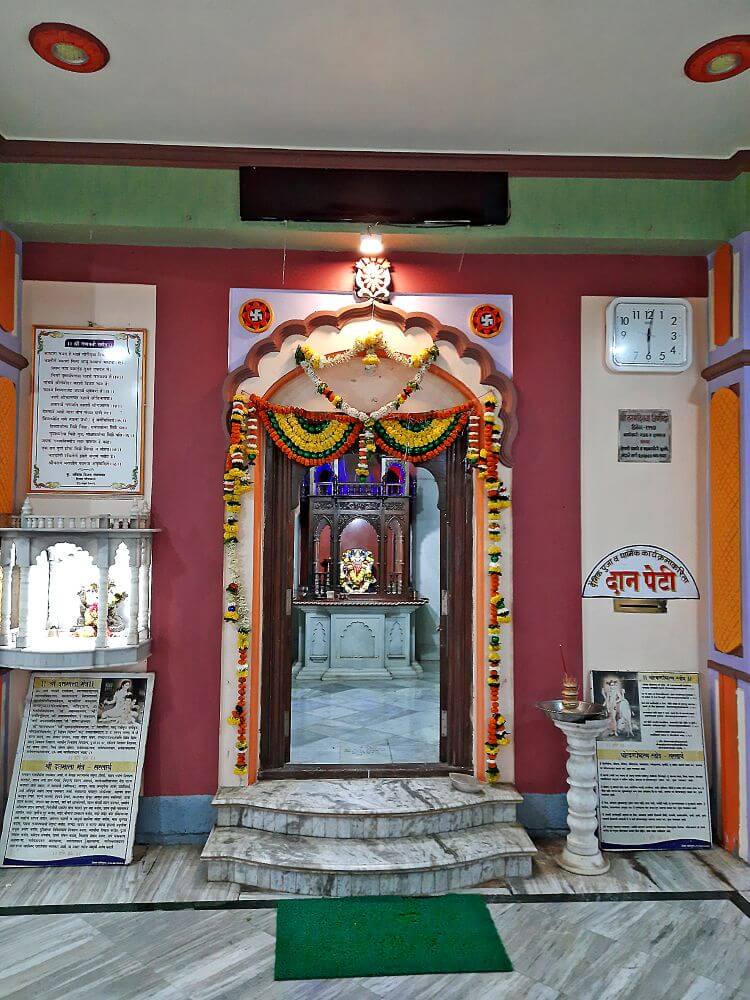
The architecture of this renovated temple comprises a Mukhamandap (entrance porch), a Sabhamandap, a Garbhagriha, and elegant Shikharas (spires) above both the Mukhamandap and the Garbhagriha. In front of the open-style Mukhamandap, a Tulsi Vrindavan rests on a small platform. The Shikhara above the Mukhamandap roof is shaped like a modak, adorned with a small Amalaka at its apex. Ascending five steps leads into the Sabhamandap, which features spacious windows that fill the temple with abundant natural light. The circumambulatory Pradakshina path around the sanctum is accessed directly from the Sabhamandap. On the front wall of the Garbhagriha, to the right of the doorway, lies a shrine housing a sacred metallic idol of Lord Ganesha. Inside the Garbhagriha, upon a raised Vajrapitha (exalted pedestal), resides the idol of three-faced Lord Dattatreya housed within an exquisitely carved wooden shrine. Adjacent to it, the sacred Datta Padukas are consecrated. A revered portrait of Brahmendraswami is also enshrined here.
There is a tradition of performing Pradakshina (circumambulation) around this Datta Temple. This holy shrine is spread across an area of 106 gunthas, making the Pradakshina route quite extensive. On Thursday evenings, devotional programs such as Bhajan and Keertan are organized at the temple. Devotees blissfully immerse themselves in the chanting of Lord Datta’s name. A grand pilgrimage fair (Yatra) is held here on Datta Jayanti. This three-day fair carries a tradition spanning nearly 100 years. According to records, the Yatra festival was first celebrated here in the year 1927. A festival is also celebrated here on the auspicious day of Guru Purnima.
This sacred temple stands as a testament to deep spiritual devotion, ancient architectural grandeur, and rich local cultural traditions.
The sanctum sanctorum houses the divine idol consecrated according to ancient Vedic traditions, surrounded by serene courtyards and traditional temple architecture.
Navratri, Maha Shivratri, Annual Temple Jatra & Deepotsav
Compare and book flights, secure top-rated local hotels near the temple, hire reliable guides, and rent cars instantly.
Extend your pilgrimage by visiting other highly sacred temples located nearby.


Add ₹999 more to unlock FREE SHIPPING!
Your sacred cart is currently empty.
Shop Photo FramesFill in your delivery details below to place your order.
Add comment