
Add ₹999 more to unlock FREE SHIPPING!
Your sacred cart is currently empty.
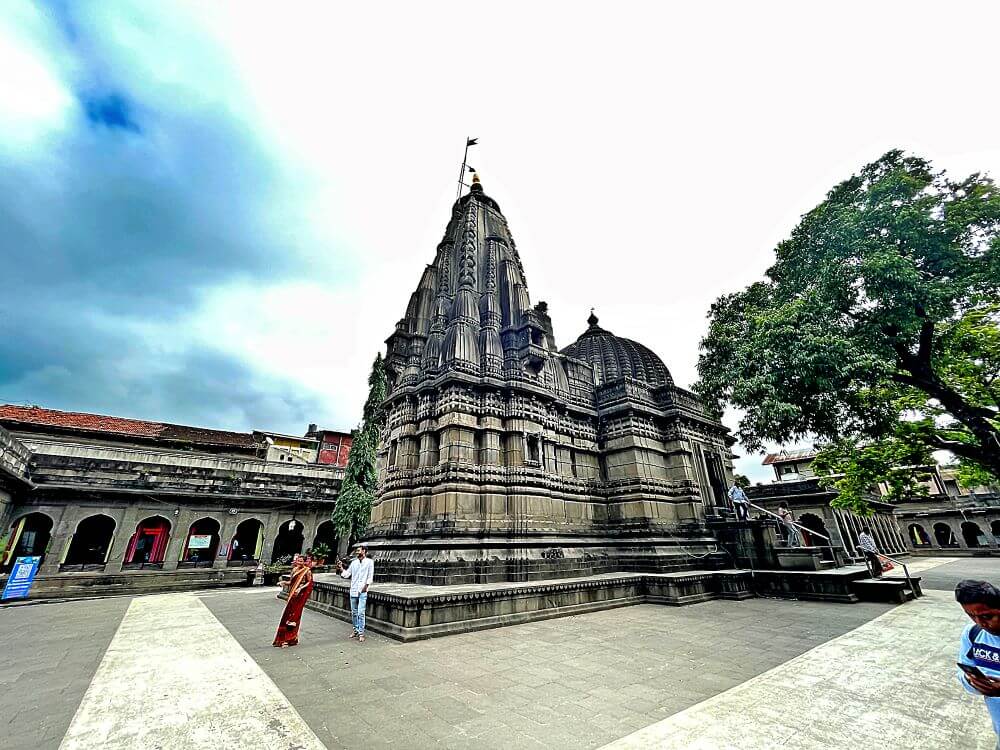
Shop Photo FramesShri Kshetra Panchavati in Nashik is a site sanctified by the presence of Lord Shri Ram, Sita, and Lakshman! The area is named ‘Panchavati’ as it originated from the expanse of five banyan trees. Scholars of the Ramayana believe that Lord Shri Ramchandra resided here for about two years. It is said that a grand temple was later built at the very spot where Lord Ramchandra had constructed a hut (Parnakuti) and resided. This is the Kalaram Mandir!
Regarding the name of the temple, legend has it that while Lord Shri Ram was living here during his exile with Sita and Lakshman, Ravana’s sister Shurpanakha arrived. At that time, Lakshman cut off her nose and ears. Subsequently, 14,000 demons came to attack Ram and Lakshman. Lord Ram annihilated them all. In this battle, Ram assumed a colossal and ‘Kaal-swaroop’ (form of Time/Death) appearance. As ‘Kaal-swaroop’, the name ‘Shri Kalaram’ became famous. The history of the construction of this black stone temple is also significant. Previously, there was a wooden temple here. The Leelacharitra mentions that Shri Chakradhar Swami visited this temple for darshan in the 13th century. Saint Eknath Maharaj also visited the temple in 1599 for the darshan of Shri Ram. Samarth Ramdas Swami worshipped Shri Ram in this very temple. Devotees believe that Saint Shri Gajanan Maharaj attained the vision of Lord Shri Ram in this temple itself. This old wooden temple was renovated during the Peshwa era.
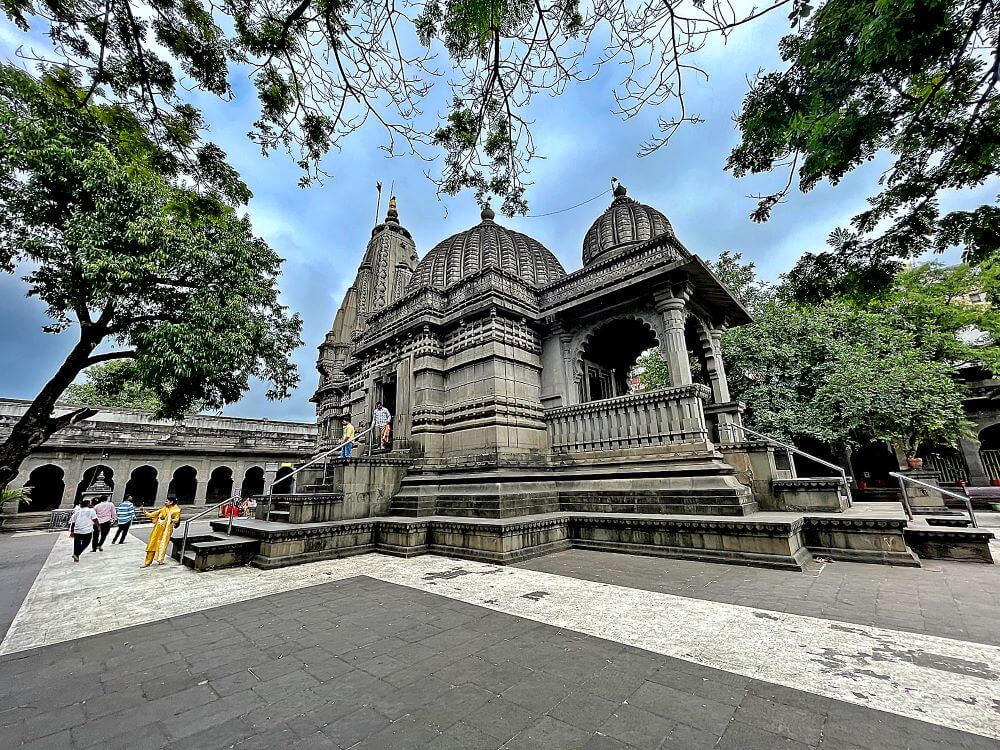
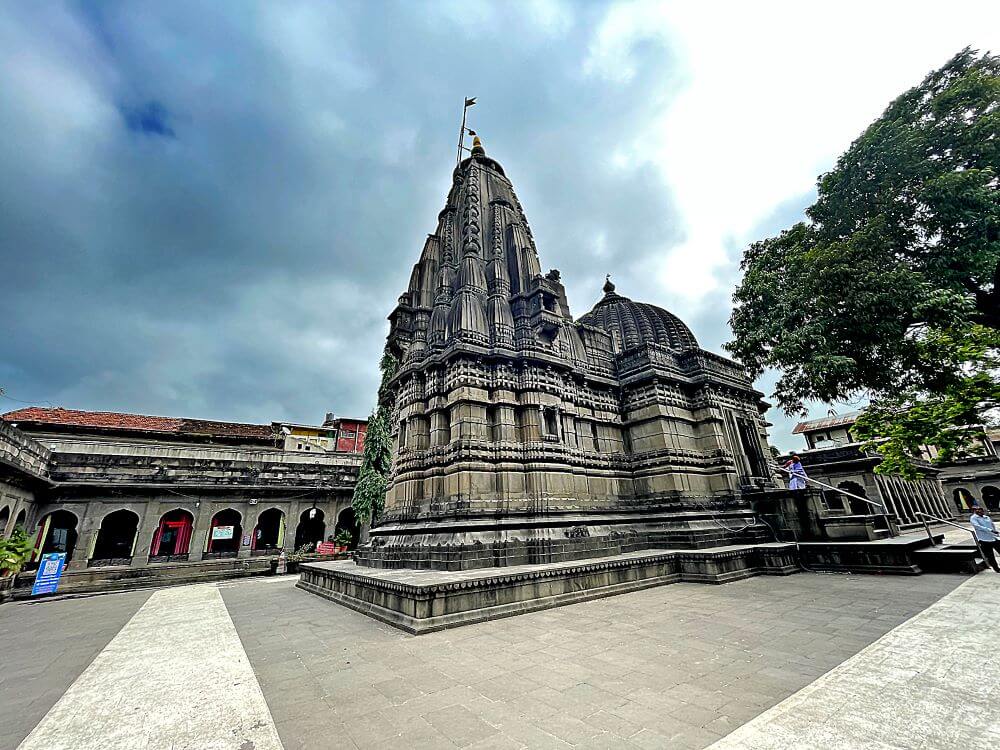
Following the orders of Gopikabai Peshwa, wife of Balaji Bajirao alias Nanasaheb Peshwa, the Peshwa’s Sardar, Rangrao Odhekar, renovated the temple between 1778 and 1790 AD. The temple is built in the Nagara style, using entirely black stone. These stones were brought from a hill called ‘Ramshej’, located five kilometers from Nashik. Devotees believe that Lord Shri Ram used to go to this hill at night to sleep.
Two thousand artisans and architects worked for 12 long years to complete the construction of this temple. At that time, it cost 23 lakh rupees. The temple is 245 feet long and 145 feet wide, and its height up to the pinnacle (kalash) is 69 feet. The architecture of the Kalaram Mandir is similar to that of the ancient Jyotirlinga temple at Trimbakeshwar. The temple spire is gold-plated.
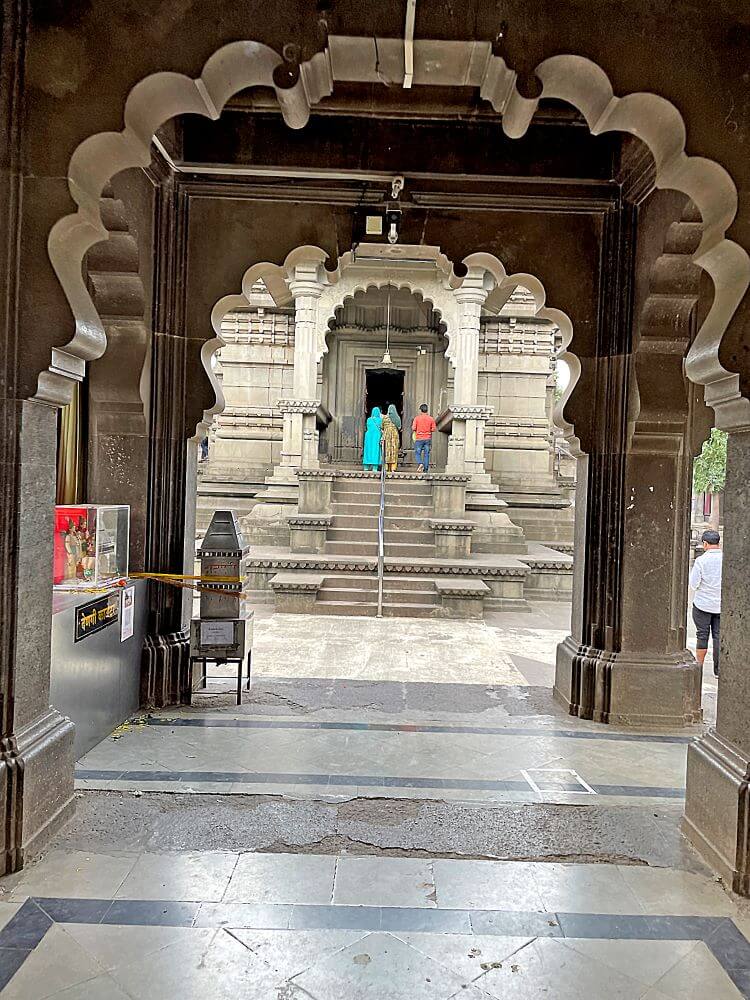
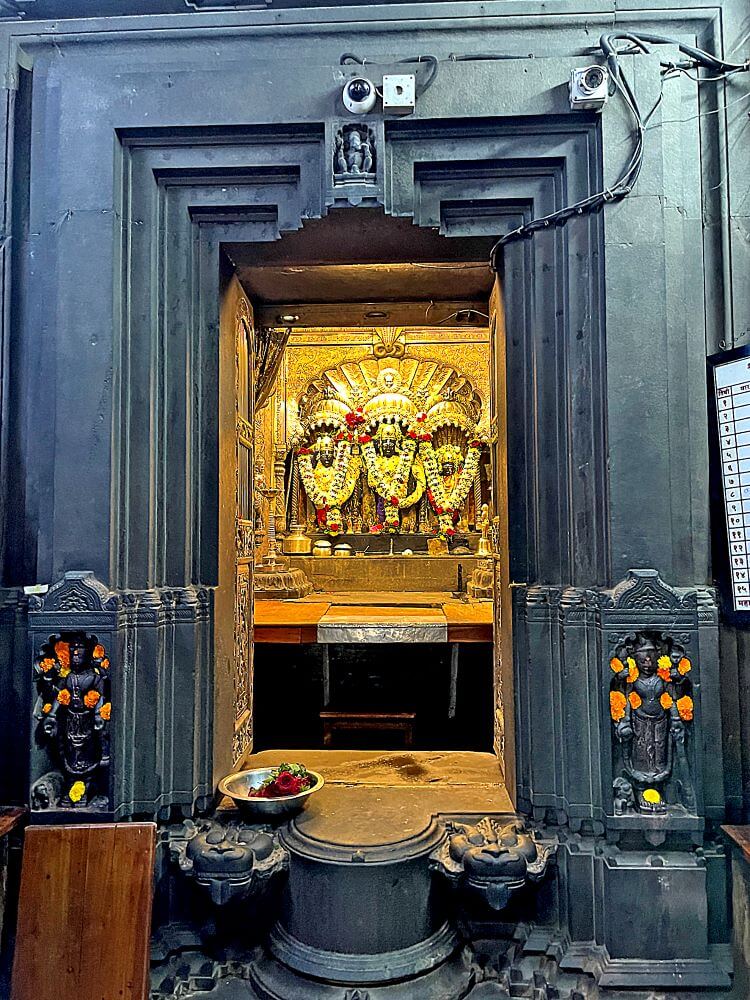
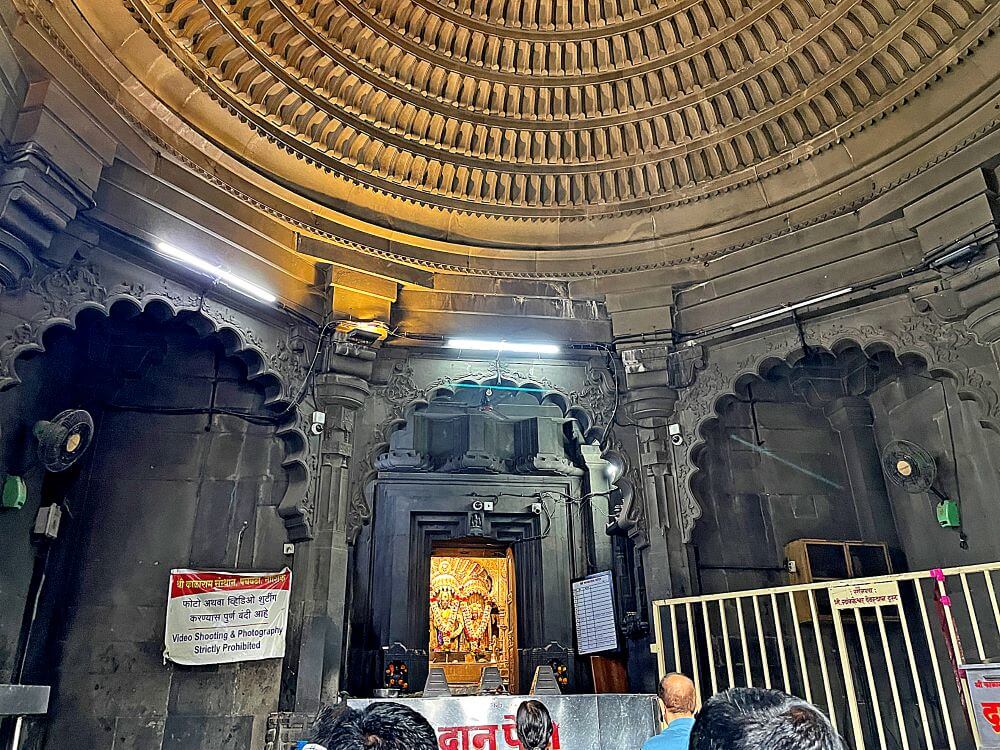
Surrounded by four walls on all sides, the temple has an arched entrance on the east side. Upon entering, there is a temple courtyard, decorated with arches and pillars. After entering the sanctum sanctorum (gabhara) from there, one gets the darshan of the idols of Shri Ram, Sita, and Lakshman. These idols, carved entirely from black stone, are two feet tall. Since these idols represent the deities during their exile, they are depicted wearing bark garments (valkale).
Legend has it that some Naga-panthi sadhus used to live at the temple site. They found the self-manifested (swayambhu) idols of Ram, Lakshman, and Sita in the Godavari riverbed at specific intervals. The place where the Ram idol was found is known as Ramkund, the place where Lakshman’s idol was found is Lakshmankund, and the place where Sita’s idol was found is known as Sitakund.
The Shri Ram Janmotsav is celebrated here with great enthusiasm and devotion from Gudi Padwa to Dwadashi. On the morning of Padwa, a Mangal Aarti is held from 9 to 10 AM. The traditional hereditary priests, the Mankari Buwa and Salkari Buwa, perform the ritualistic worship along with their wives. The deities are given a ceremonial bath, dressed in rich attire, and adorned with floral decorations.
On Chaitra Shuddha Ekadashi, the Rath Yatra of Shri Ram is taken out. All festivals like Narsimha Jayanti, Ganeshotsav, and Shri Krishna Jayanti are celebrated here with great fervor. During Diwali, the temple is illuminated from Govatsa Dwadashi (Vasubaras) to Kartik Purnima. On the day of Naraka Chaturdashi, all the deities are given an Abhyangsnan (ceremonial oil bath) at dawn.
Previously, Dalits were not allowed entry into this temple. On March 2, 1930, a temple-entry Satyagraha was held here under the leadership of Dr. Babasaheb Ambedkar. This event is recorded in history as the ‘Kalaram Mandir-Pravesh Satyagraha’. The temple is located near the Godavari river ghats.
This sacred temple stands as a testament to deep spiritual devotion, ancient architectural grandeur, and rich local cultural traditions.
The sanctum sanctorum houses the divine idol consecrated according to ancient Vedic traditions, surrounded by serene courtyards and traditional temple architecture.
Navratri, Maha Shivratri, Annual Temple Jatra & Deepotsav
Compare and book flights, secure top-rated local hotels near the temple, hire reliable guides, and rent cars instantly.
Extend your pilgrimage by visiting other highly sacred temples located nearby.


Add ₹999 more to unlock FREE SHIPPING!
Your sacred cart is currently empty.
Shop Photo FramesFill in your delivery details below to place your order.
Add comment