
Add ₹999 more to unlock FREE SHIPPING!
Your sacred cart is currently empty.
Shop Photo FramesThe Malhari Martand, also known as the Khandoba Temple, which holds deep historical significance, is situated in Parbhani city, the main administrative center of Parbhani district. Khandoba is a popular folk deity in the states of Maharashtra, Karnataka, and Andhra Pradesh, and is considered the family deity (Kuldaivat) of the twelve Balutedars and eighteen Paged castes of Maharashtra. Across Maharashtra, nine major Khandoba shrines are famous as the heads of the nine Khandas: Jejuri, Pali, Naldurg, Malegaon, Satare, Nimgaon-Davadi, Shedung, Chandanpuri, and Bale. The temple in Parbhani city is regarded as a significant place of faith within this historical tradition. The Champashasthi Jatra festival organized at this temple is considered of special importance.
Although this temple is about 75 years old, it is said that the idol of Khandoba here is hundreds of years ancient. This idol manifested from the ground at this very spot about 75 years ago. It is said that in those days, there was a neem tree here. Turmeric began to appear naturally on the trunk of that tree. Seeing this turmeric, the belief grew among the locals that Khandoba resided there, and some people began to worship Khandoba under that tree. Over time, the number of devotees worshipping Khandoba increased. Later, the tree fell, and from the roots of the tree, beneath the ground, the ancient stone idol of Khandoba appeared. This solidified the devotees’ belief that this was indeed a sacred site of Khandoba. Thereafter, the devotees of Khandoba came together and built a small temple here in 1953. Daily worship and annual festivals commenced. In those days, the Champashasthi Jatra would last for fifteen days. Later, after fifty years, in 2004, the temple underwent renovation. Due to increasing urbanization and daily markets, the Champashasthi fair, which previously lasted for fifteen days, is now limited to three days.
The tradition of the priests at this temple is unique. In the 1960s, on the occasion of the temple’s annual fair, various cultural and educational programs were initiated through the efforts of the then-Member of Parliament from Parbhani, Sheshrao Bhau Deshmukh. As part of this program, a Waghya-Murali folk art competition was organized. Folk artist Bansi Yaduji Dhage, a native of Kausadi, won first place in this competition. Seeing his devotion to God and his excellent folk art, MP Sheshrao Bhau Deshmukh entrusted him with the entire responsibility of the temple’s worship and daily management. Since then, his descendants have been carrying out this responsibility.
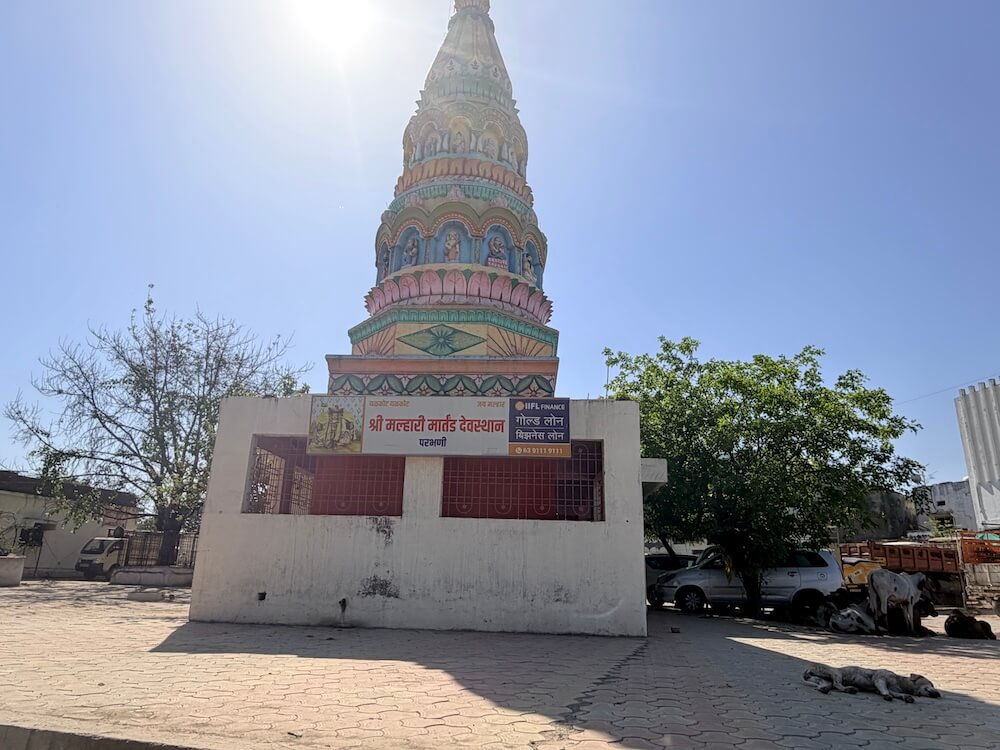
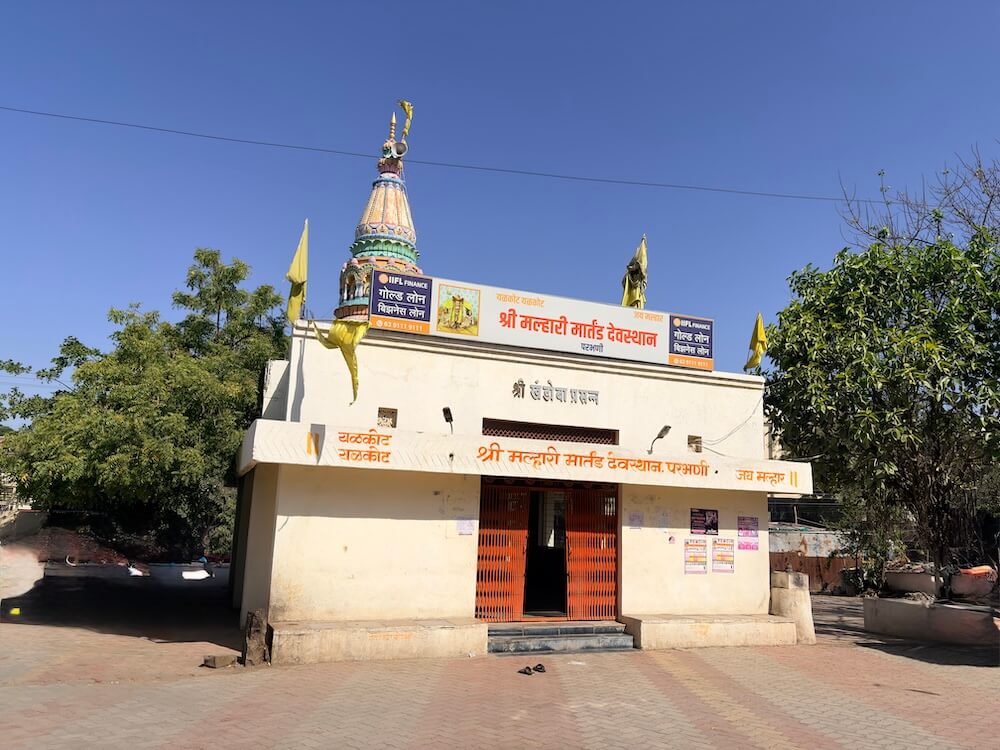
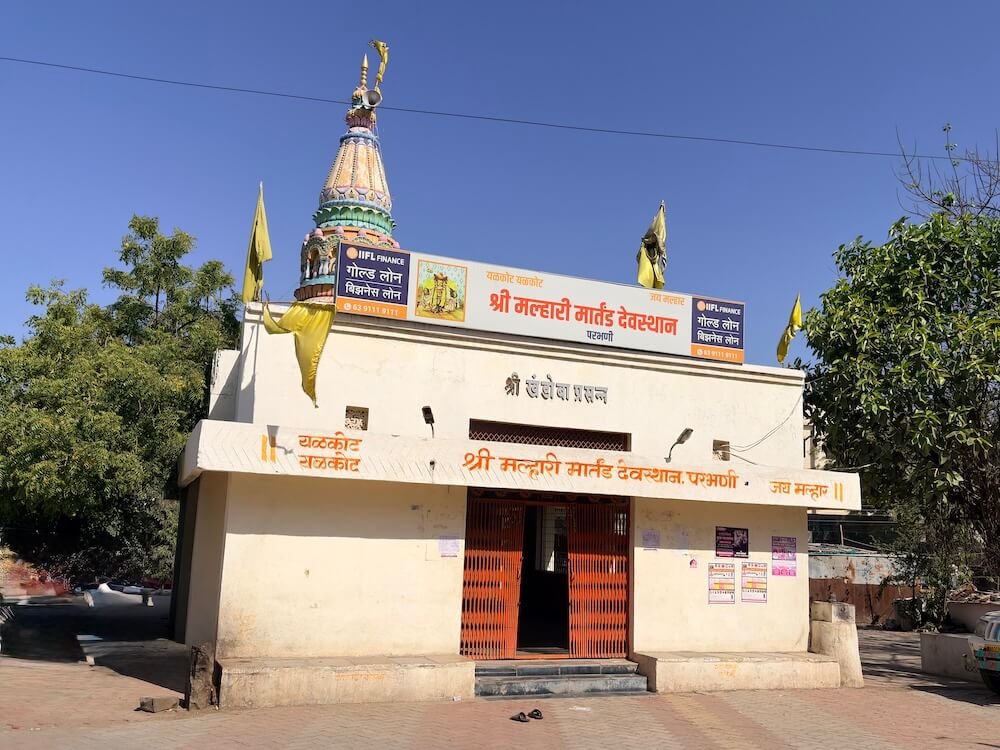
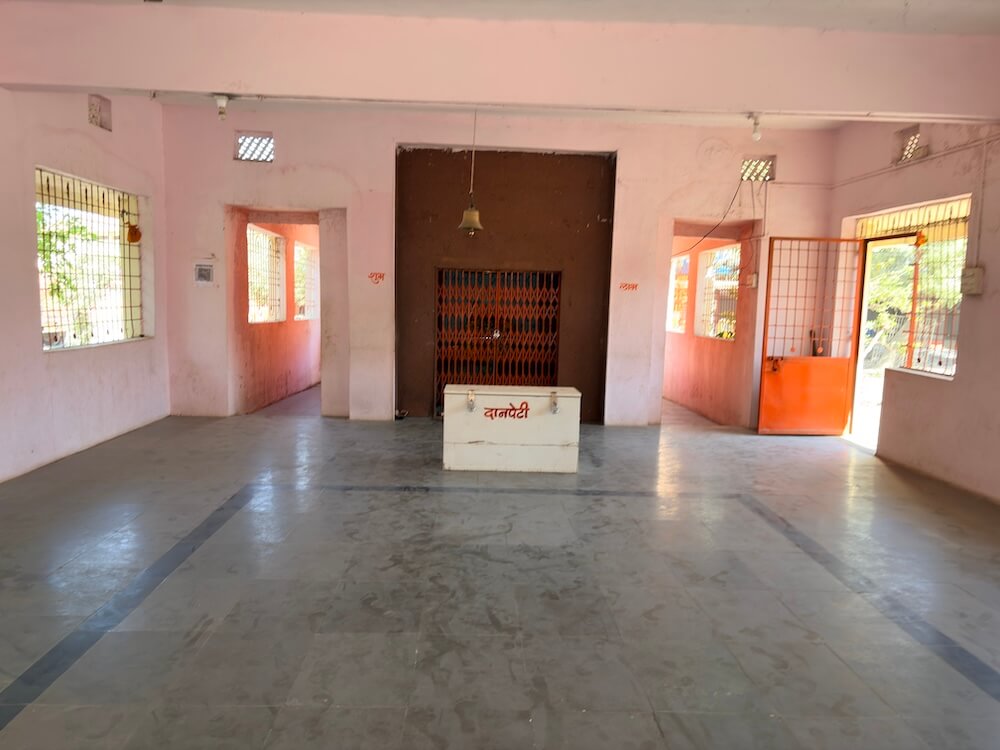
Although this temple is located in a bustling part of the city, there is sufficient open space available in the temple premises. There is a parking area in front of the temple and an open courtyard covered with paver blocks. The architecture of the temple is divided into sections: the Sabhamandap (assembly hall) and the Antaral (vestibule). The entrance to the Sabhamandap is at a higher level than the courtyard. There are seats for devotees on both sides of the courtyard facing the entrance.
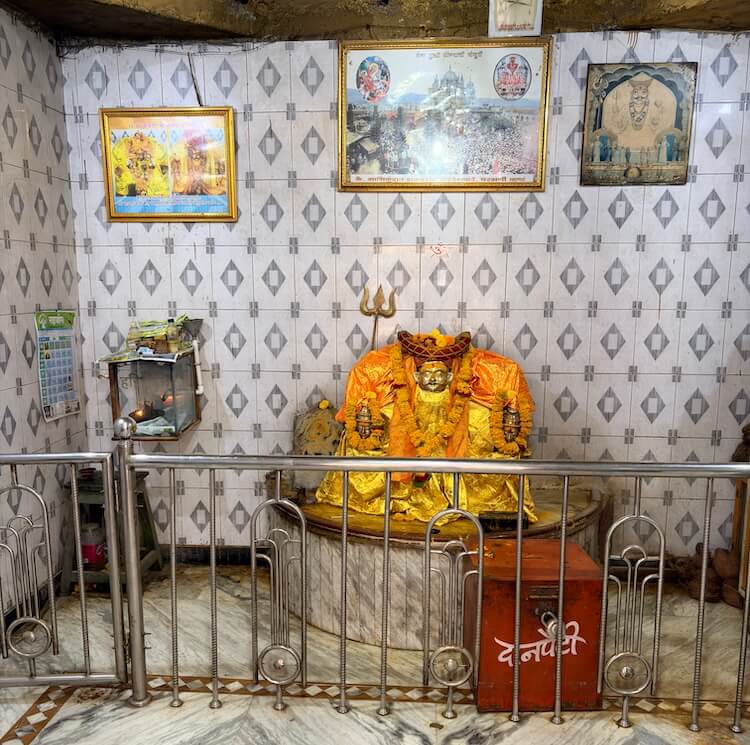
The Sabhamandap here is enclosed and has ventilators for light and air. There is a Yajna Kund on the floor in front of the entrance inside the Sabhamandap. Apart from the main entrance, there are two other independent doors in the Sabhamandap leading to the circumambulation paths (Pradakshina Marg) on the left and right sides of the sanctum sanctorum. In the front part of the Sabhamandap is the sanctum sanctorum (Garbhagriha) of the temple. In this sanctum, on a high Vajrapitha, are the idols of Khandoba, Mhalsa, and Banai, carved from a single stone. Traditional brass masks are placed on these deities. A turban (Pheta) is tied on the head of the Khandoba idol. There is a brass trident on the right side of the idol.
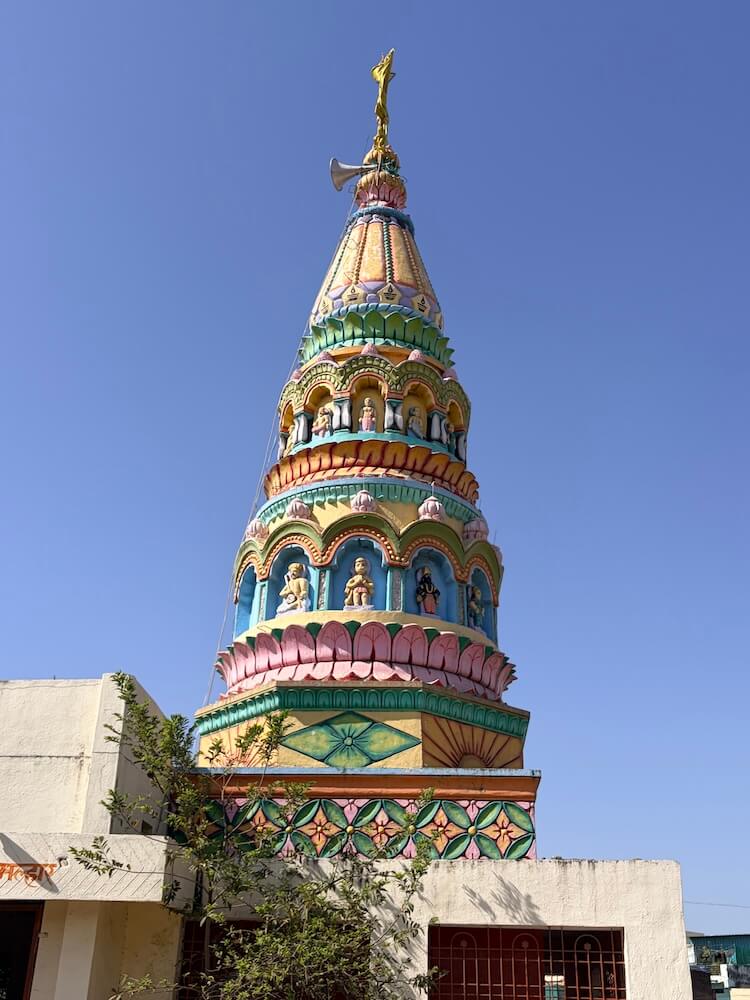
There is an enclosed circumambulation path outside the sanctum sanctorum. A stone railing has been built on the roof of the temple on all four sides for safety. On the roof of the sanctum, there is a four-tiered circular Shikhara (spire). The lower three tiers of the Shikhara each have twelve niches containing idols of various deities. The topmost fourth tier tapers upwards. All these tiers of the Shikhara are separated from each other by a Padma-dala Mandala, which is a lotus petal design. On the highest part of the Shikhara, there are two stone Amalakas placed one above the other, topped with a golden Kalash.
Every year, Khandoba’s Navratri is celebrated from Margashirsha Shuddha Pratipada to Margashirsha Shuddha Shashthi. According to mythology, during this period, a battle took place between Lord Khandoba and the demons Mani and Malla. On the day of Champashasthi, Khandoba killed these demons and achieved victory; therefore, Champashasthi is celebrated as a victory festival. During these six days of the festival, Khandoba’s worshippers and devotees observe a strict fast. During these days, brinjal and onion are completely avoided in food. On the day of Champashasthi, at 4 AM, the Abhishekam and Mahapuja of the deity are performed amidst the chanting of Vedas. After that, the ‘Varu’, which is considered the symbol of the deity (the horse), is released. In the afternoon, amidst the sound of drums and the showering of Bhandara (turmeric powder), the deity’s palanquin departs for a procession around the village. During this ceremony, devotees collectively chant ‘Yelkot Yelkot Jai Malhar’. At night, a procession is taken out with devotees dancing with the deity’s sticks (Kathis). During the festival, Bhandara is showered in large quantities in the temple premises and throughout the city. On the day of Shashthi, traditional offerings (Naivedya) of Jondhalya cha Thombra (sorghum porridge), wheat bread (Rodga), brinjal bharta, spring onions, and garlic vegetable are offered to the deity. By consuming this Mahaprasad, devotees break their six-day fast. Considering the local importance of this festival, a public holiday is declared in Parbhani city on this day. On behalf of the Parbhani Municipal Corporation, outdoor sports competitions such as Kho-Kho, Kabaddi, Langdi, long jump, rope skipping, and cricket matches are organized on the occasion of the fair.
Apart from this festival, various religious rituals are performed in the temple during Somvati Amavasya, Dussehra, Diwali, and the entire month of Shravan. The number of devotees visiting the temple for Darshan on every full moon (Pournima), new moon (Amavasya), as well as every Sunday and Monday, is significant. Devotees can have Darshan of Khandoba in this temple daily from 6 AM to 12 PM and from 4 PM to 9 PM.
This sacred temple stands as a testament to deep spiritual devotion, ancient architectural grandeur, and rich local cultural traditions.
The sanctum sanctorum houses the divine idol consecrated according to ancient Vedic traditions, surrounded by serene courtyards and traditional temple architecture.
Navratri, Maha Shivratri, Annual Temple Jatra & Deepotsav
Compare and book flights, secure top-rated local hotels near the temple, hire reliable guides, and rent cars instantly.
Extend your pilgrimage by visiting other highly sacred temples located nearby.


Add ₹999 more to unlock FREE SHIPPING!
Your sacred cart is currently empty.
Shop Photo FramesFill in your delivery details below to place your order.
Add comment