
Add ₹999 more to unlock FREE SHIPPING!
Your sacred cart is currently empty.
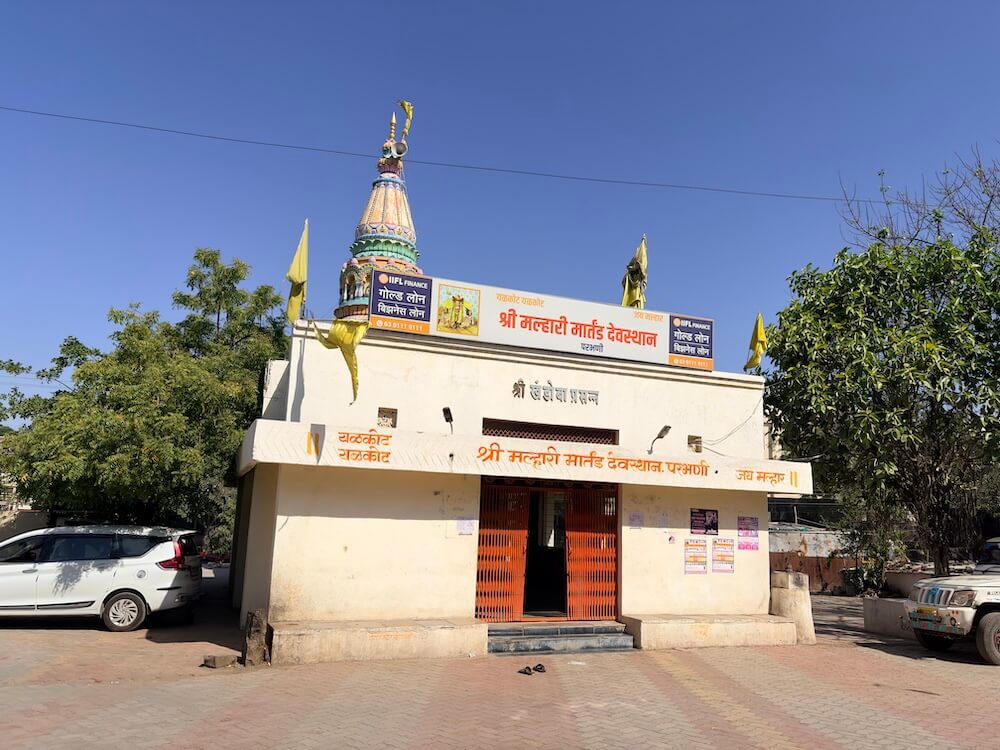
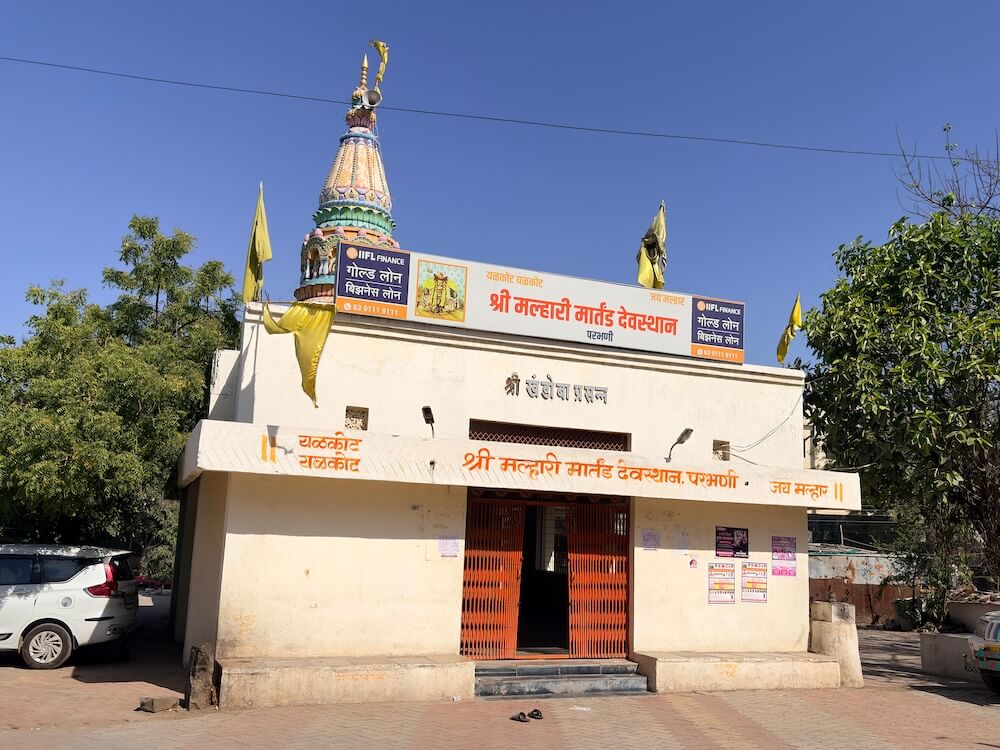
Shop Photo FramesKnown by various names such as Khandoba, Khandeshwar, Martand, Malhari, and Mallana, this deity is the Kuldev (family deity) of the eighteen communities across Maharashtra, Karnataka, and Andhra Pradesh. The ‘Malhari Mahatmya’ is considered the primary scripture of Khandoba. The main temple at Jejuri, built by Veerpal in the year 1381 and expanded by Ragho Mambaji in 1635, was visited by Chaitanya Mahaprabhu, and Nana Fadnavis had once made a vow (navas) of one lakh here. There are Khandoba temples in villages across Maharashtra. The Malhari Martand Temple, the presiding deity of Parbhani city, is famous as ‘Prati Jejuri’ (the Jejuri of this region). Devotees have deep faith that this awakened deity fulfills their vows. Since the year 1960, there has been a tradition of the local administration declaring a public holiday in Parbhani on the occasion of Champa Shashthi for this fair.
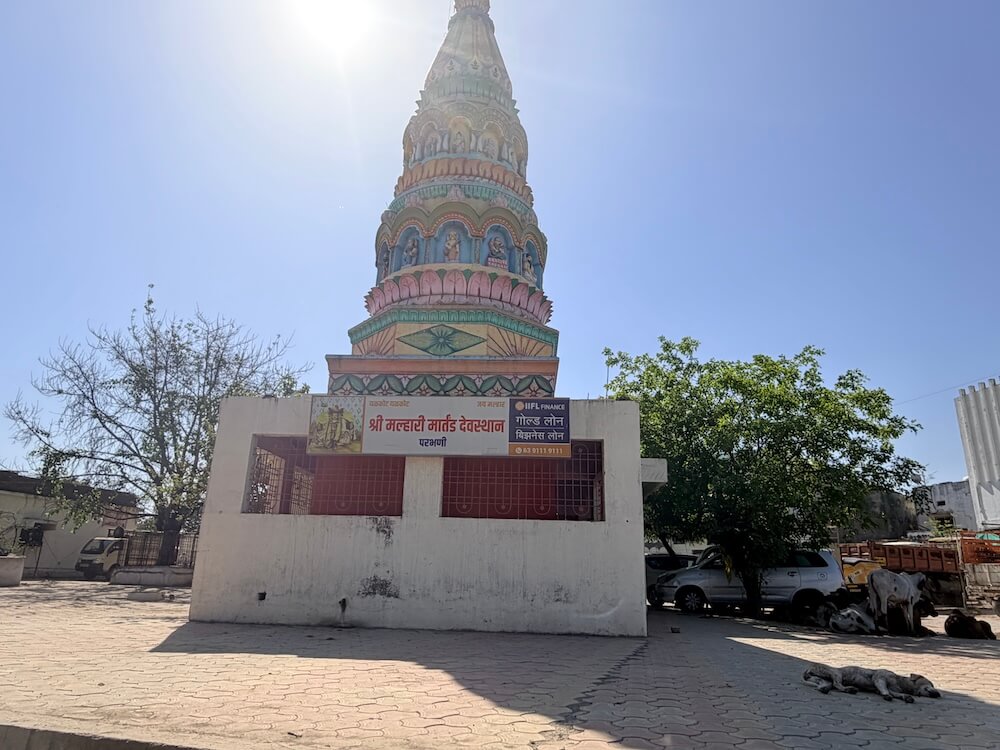
This city, which boasts an historical background dating back to the Stone Age, is situated in the valley of the Godavari River, known as the ‘Dakshin Ganga’. In ancient times, this village was known by the names ‘Parvani’ and ‘Prabhavati’. It is said that there was once a grand temple of Goddess Prabhavati here, from which the city derived the name ‘Prabhavati Nagari’. There is no strong historical evidence regarding the etymology of the name Parbhani. However, it is believed that the name ‘Parbhani’ evolved as a corruption of the name Prabhavati. Currently, this is an important junction on the Manmad-Kacheguda and Parbhani-Parli Vaijnath railway lines. The city houses many religious sites, including the Balaji Bairagi Temple, Baleshwar Mahadev Temple, Balaji Temple, Gaudi Parshwanath Jain Shwetambar Temple, Jabreshwar Temple, and the Samadhi temple of Ranganath Maharaj Parbhani-kar, a saint of the Warkari tradition and scholar of the Dnyaneshwari. Among all these sites, the Shri Malhari Martand Temple, standing in the heart of the city, is considered the main center of faith of ancient tradition.
The history of the temple’s establishment is that there used to be a large neem tree in this area. After this tree completely dried up, local villagers found an idol of Khandoba in the ground at that spot in the year 1953. Thereafter, the villagers, through public participation, built a small temple there and performed the formal consecration of the idol. As the fame of this temple spread, devotees from various parts of Parbhani district began to arrive in large numbers for darshan. Later, due to the increasing crowd of devotees, the temple was renovated about twenty years ago, and this large temple seen today was constructed. After the establishment of the temple, various folk arts and sports competitions were organized during the fair that began here. In a major competition for Waghya-Muralis in the 1960s, Bansi Dhage, a native of Kausadi in Jintur taluka, won first place. Impressed by his art, the then Member of Parliament from Parbhani, Sheshrao Deshmukh, entrusted the responsibility of the temple to Bansi Dhage. Since then, the Dhage family has been serving Khanderaya here.
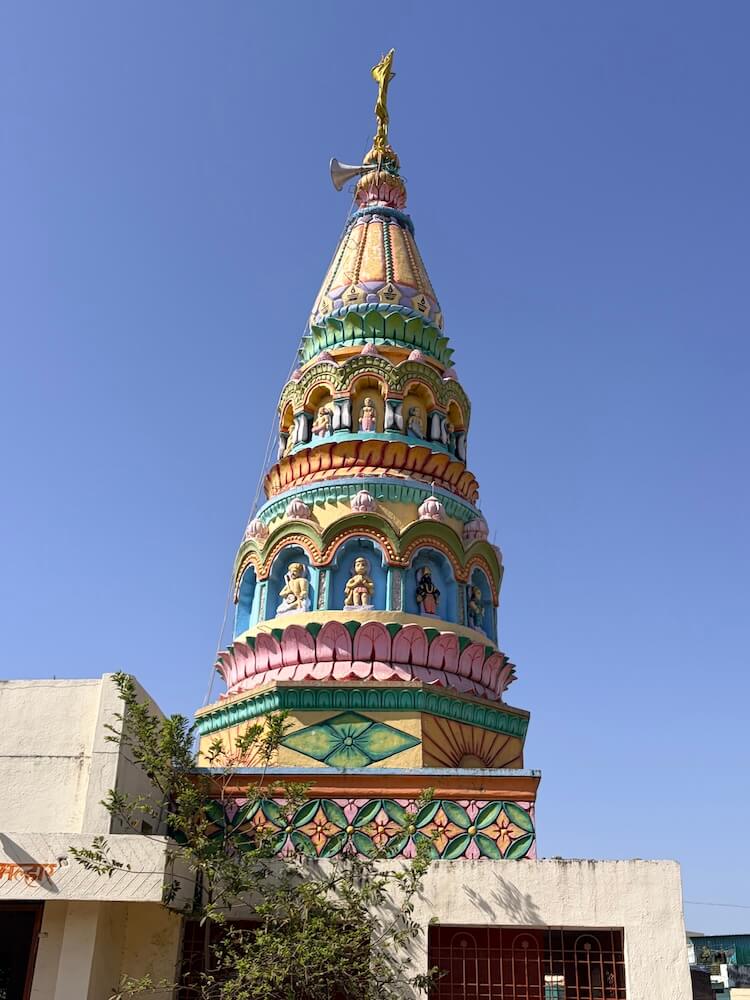
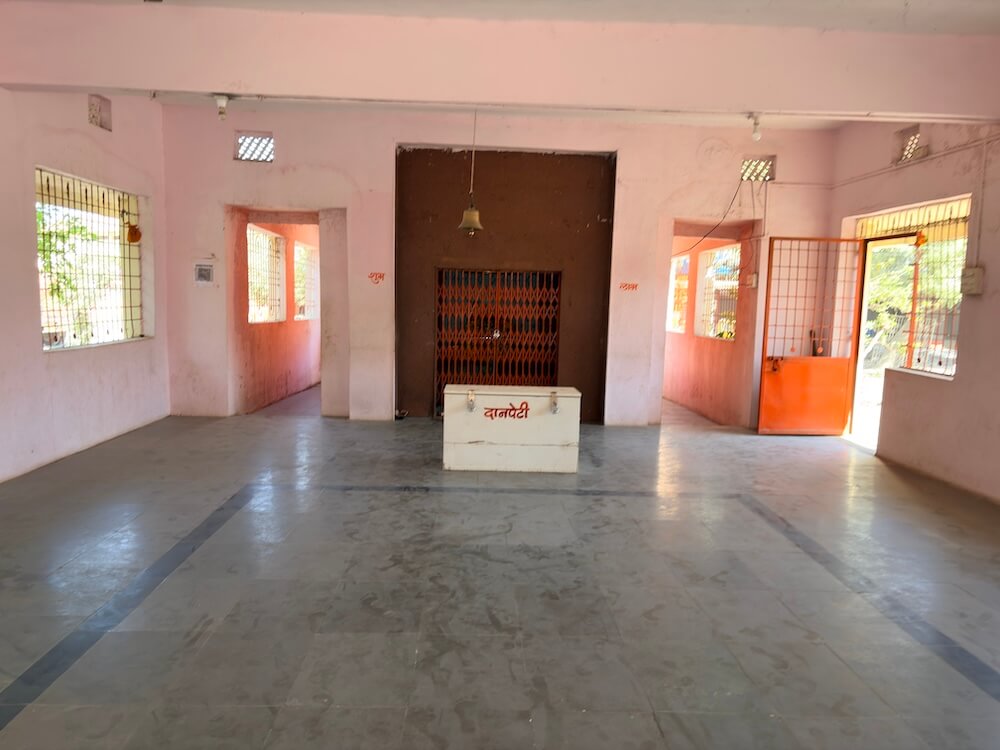
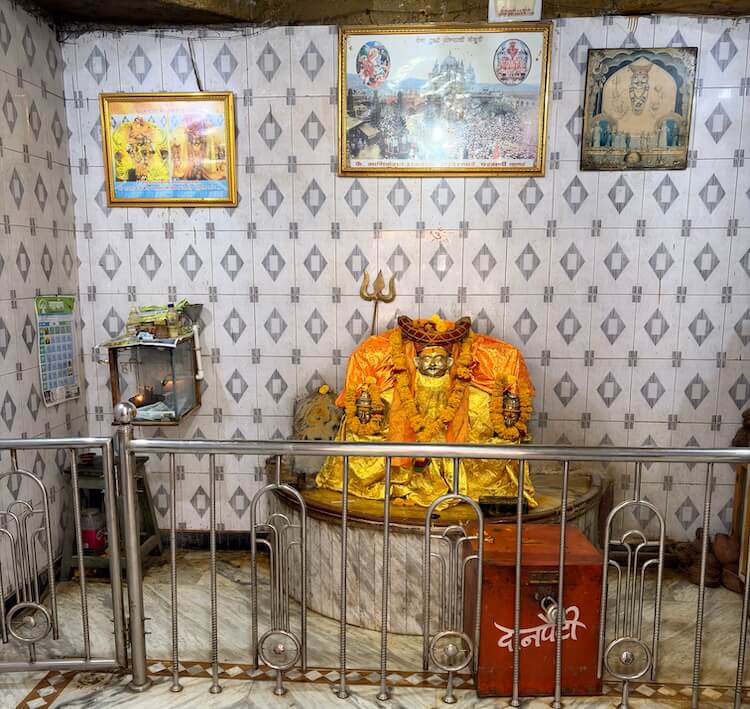
The temple is structured with a main Sabha Mandap (assembly hall) and a Garbhagriha (sanctum sanctorum). The Sabha Mandap of the temple is very spacious. In the main Garbhagriha ahead of it, the main mask-adorned idol of Khandoba is installed on a semi-circular pedestal. On both sides of this main idol, which wears a traditional turban, are the idols of his two wives, Mhalsa and Banai. These idols are dressed in yellow garments. To the left of the main idol is a stone idol of Khanderaya riding a horse, and a large trident is erected behind the idol. There is a tall shikhara (spire) over the Garbhagriha. This shikhara, which tapers towards the top, has many niches containing idols of various gods and goddesses. At the highest point of the shikhara is a circular Amalaka and a Kalash above it.
Every year on Champa Shashthi, a large fair is held here. This annual fair began in the year 1953. Previously, this fair would last for fifteen consecutive days, during which Waghya-Muralis from various parts of the district would come here for the jagaran (vigil) of Khanderaya. Over time, the duration of this fair has now come down to three days.
This festival begins on the Amavasya (new moon) preceding Champa Shashthi. On this day, Ghatasthapana is performed in the temple. On the main day of Champa Shashthi, Abhishek and Mahapuja of the main idols are performed between 4:00 and 6:00 in the morning. Thereafter, at 8:00 in the morning, the ‘Waru’ (horse) of Khanderaya is ceremonially paraded. Various religious rituals and programs continue in the temple throughout the day. From the morning of Champa Shashthi, a large crowd of devotees from the rural parts of the district gathers here.
Hundreds of devotees take darshan of Khandoba amidst the chants of ‘Yalkot Yalkot Jai Malhar’. Many devotees whip their own backs with a lash (asud) in the temple premises to fulfill their vows. In the evening, a traditional procession of the deity’s staff (kathi) is taken out from the temple. After this main day, the festival is celebrated for the next two days. On the occasion of this fair, a ‘Kustyanchi Dangal’ (wrestling tournament) is also organized in the area.
Apart from this, traditional sports competitions such as Kho-Kho, Kabaddi, Langdi, long jump, and rope skipping are held on a large scale during this fair. Recognizing the importance of this fair, the local administration declares a public holiday in Parbhani city on the day of Champa Shashthi. This tradition of a public holiday has been continuing uninterrupted since the year 1960. Devotees can take darshan in this temple every day from early morning until late at night.
This sacred temple stands as a testament to deep spiritual devotion, ancient architectural grandeur, and rich local cultural traditions.
The sanctum sanctorum houses the divine idol consecrated according to ancient Vedic traditions, surrounded by serene courtyards and traditional temple architecture.
Navratri, Maha Shivratri, Annual Temple Jatra & Deepotsav
Compare and book flights, secure top-rated local hotels near the temple, hire reliable guides, and rent cars instantly.
Extend your pilgrimage by visiting other highly sacred temples located nearby.


Add ₹999 more to unlock FREE SHIPPING!
Your sacred cart is currently empty.
Shop Photo FramesFill in your delivery details below to place your order.
Add comment