
Add ₹999 more to unlock FREE SHIPPING!
Your sacred cart is currently empty.
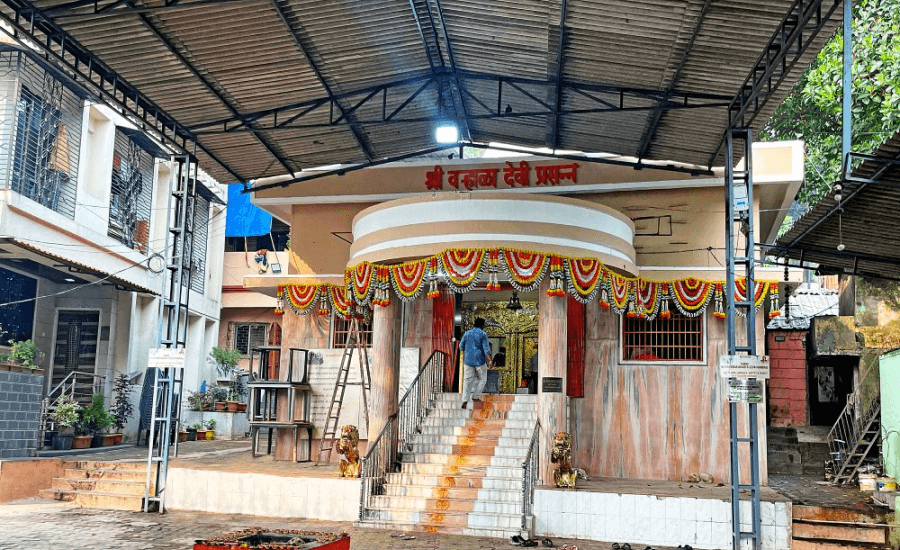
Shop Photo FramesVarhala Devi is the presiding deity (Gramadevata) of the ancient city of Bhiwandi in Thane district, a city renowned as the city of power looms. The temple of the Goddess is situated on the banks of Varhala Lake in the Kamatghar area of the city. As one of the ancient temples in Bhiwandi, Varhala Devi is revered as a Goddess who fulfills the vows of her devotees. Consequently, hundreds of devotees visit her for darshan every day. During the Navratri festival, the temple premises overflow with crowds of devotees who come to bow before the Goddess.
In ancient times, Bhiwandi, located at a strategic junction of water and land routes, was known as Bhimdi and Bimbri. The Greek astronomer and geographer Claudius Ptolemy, who lived in the second century CE, mentioned Bhiwandi as ‘Binda’ in one of his treatises. According to information in the fourteenth volume of the ‘Gazetteer of the Bombay Presidency’, there were six lakes in this city: Vadala (Varhala), Bhiwale, Mirale, Marale, Khakrale, and a small lake near the Nizampur mosque. The Varhala Lake covered an area of 57 acres. The Gazetteer states that this lake was built by a wealthy woman from Kamatgad (Kamatghar) near Bhiwandi. The Varhala Devi temple is situated on the banks of this very lake.
A legend regarding this is also recorded in the Gazetteer. It is said that the lake was built, but water would not accumulate in it. Upon realizing that the water would not collect until the local earth deity was propitiated, it was decided to perform a human sacrifice. The daughter-in-law of the head of Kamatghar was a devotee of Goddess Durga. She was pregnant at the time. Despite this, with the noble intention that water should accumulate in the lake and the water crisis in Bhiwandi should be resolved forever, she came forward to offer herself as a sacrifice. She took Jalasamadhi (water immersion) at this spot. Thereafter, water began to collect in the lake. Subsequently, the villagers built a temple for her near the lake and began worshipping her as the Gramadevata. The lake where she took Jalasamadhi came to be known as Varhala Lake.
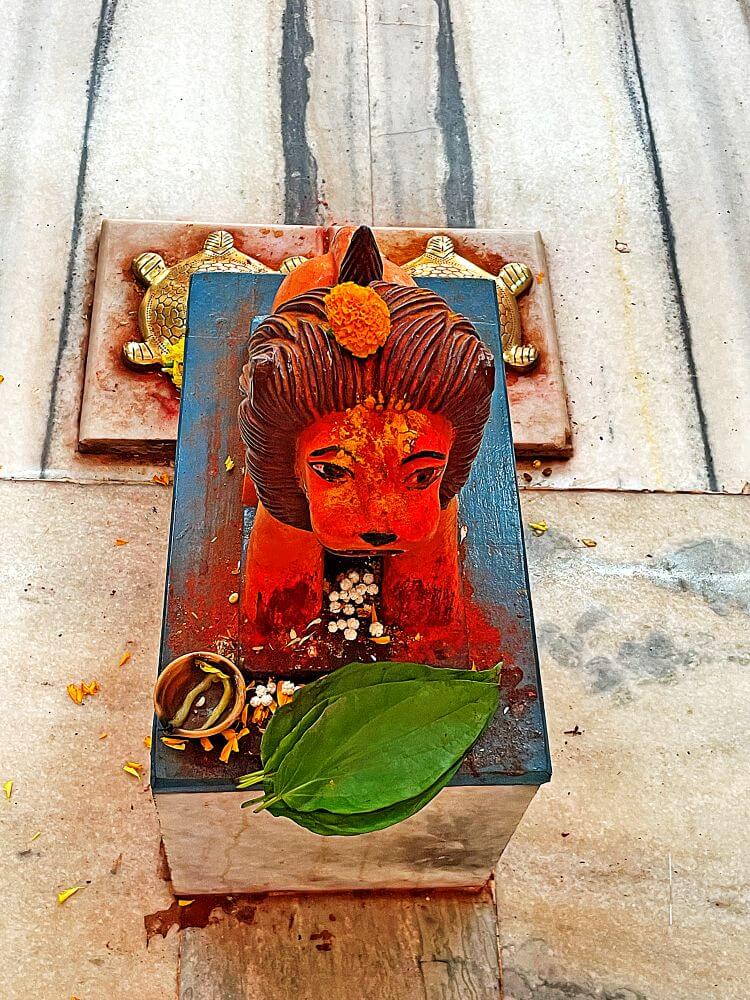
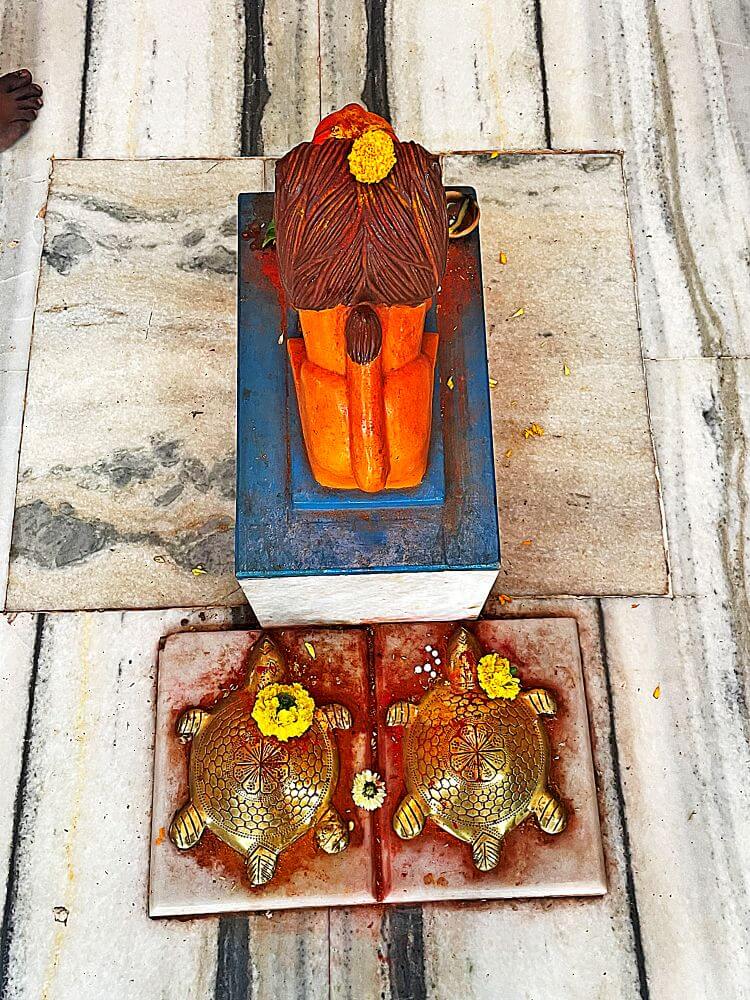
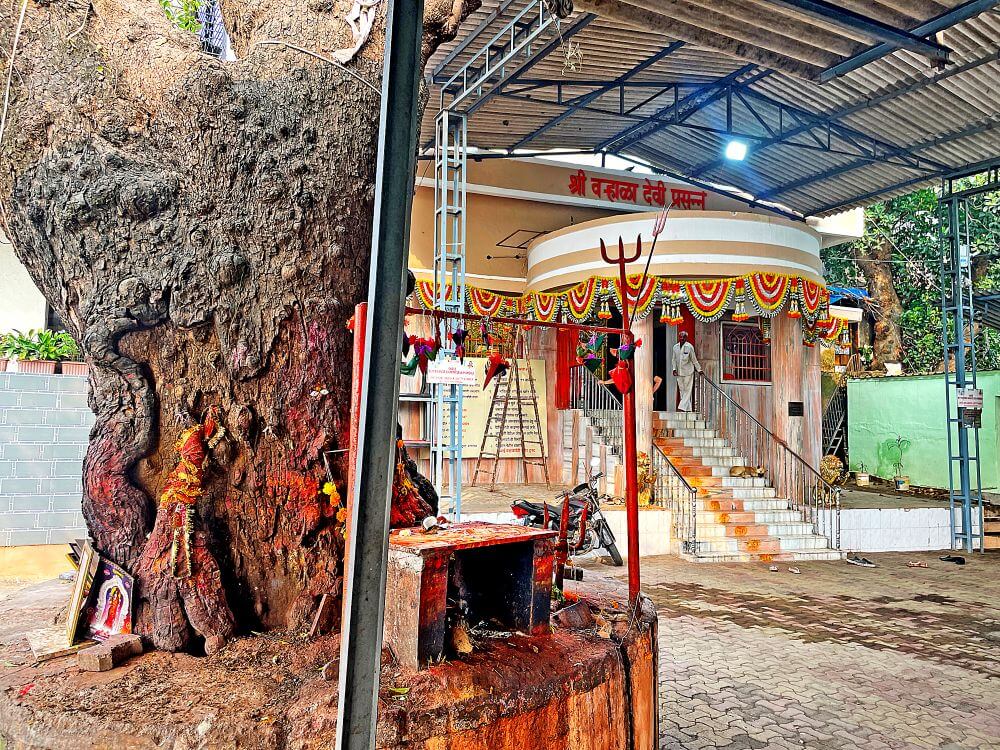
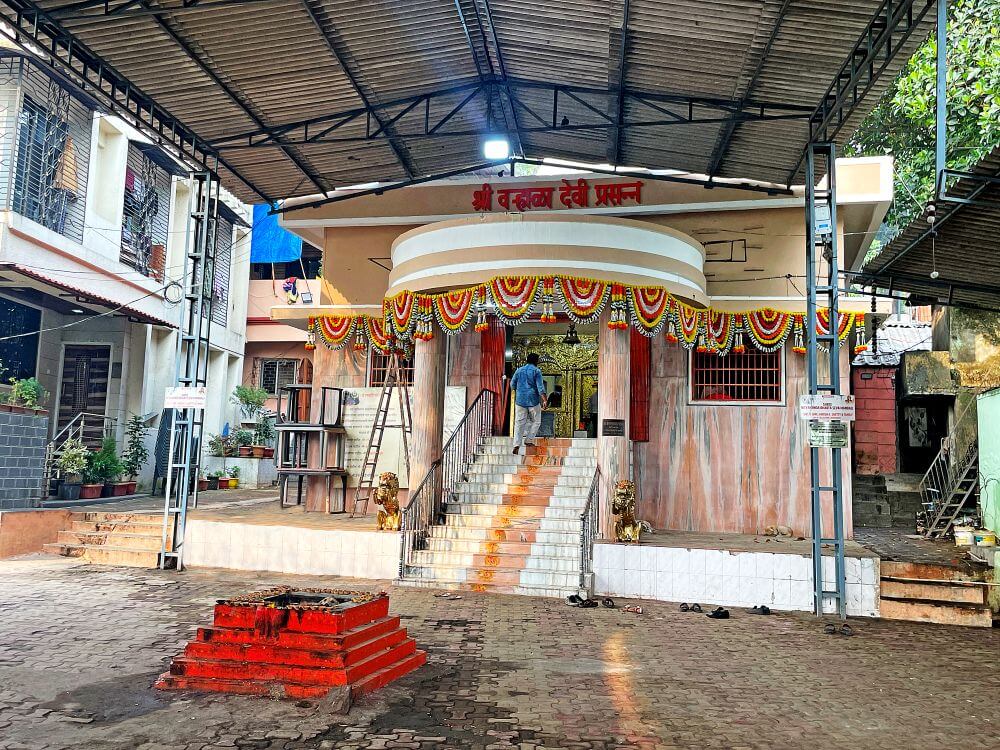
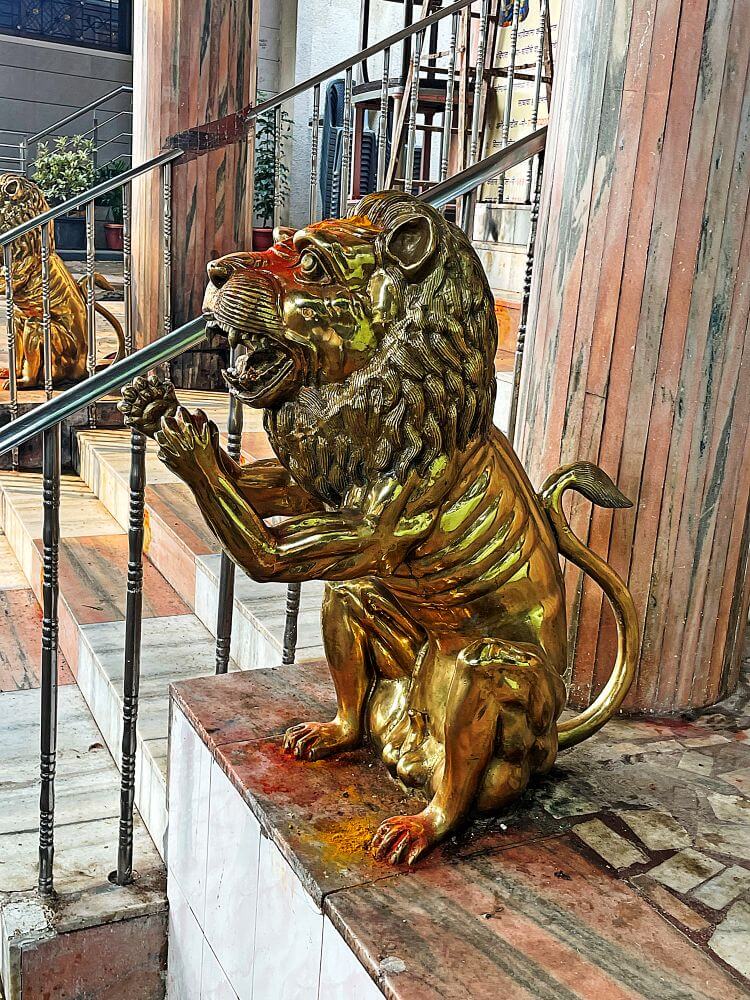
The temple is located in the Dhamankar Naka area of the city. Situated at a slight elevation from the main road, the temple is reached by a flight of stairs. Climbing these stairs leads into the temple courtyard. Near these stairs are shops selling flowers and offerings. There is an ancient tree in front of the temple. Near this tree, there are shrines to various deities. Beside this tree is a Yajna Kund. To the left of the temple is Varhala Lake. There are steps to go from the Mukhamandapa (entrance hall) to the Sabhamandapa (assembly hall). On both sides of these steps are statues of lions. The temple structure consists of a Mukhamandapa, a Sabhamandapa, and a Garbhagriha (sanctum sanctorum). In the Sabhamandapa, in front of the tortoise statue, is a statue of a lion, the vehicle of the Goddess. The entrance to the Garbhagriha in front is gold-plated and features attractive craftsmanship. In the Garbhagriha, inside a silver arch, is the idol of Varhala Devi on the left, and on the right is the idol of Goddess Durga riding a tiger. The standing Varhala Devi holds a child in her arms. During festivals, both Goddesses are adorned with masks and finery. Attractive decorations are made around the idols. During the nine days of Navratri, various religious programs are organized here. At that time, the temple premises are filled with crowds of devotees.
The vast lake to the left of the temple is a place of recreation for the city’s citizens. There is a garden for children and a jogging park here. This lake provides five MLD of water to Bhiwandi city every day. This lake is the ‘lifeline’ of Bhiwandi. A special water supply scheme was prepared to provide water to the city from this lake during the tenure of Shrimant Madhavrao Peshwa (1744 to 1772 CE). At that time, Ramaji Mahadev Bivalkar was the Subhedar of Kalyan. However, that scheme was not completed. Later, a severe famine occurred in Bhiwandi between 1848 and 1850. Against this backdrop, in 1851, water from this lake was brought into the city through clay pipes. The work cost 16,000 rupees at that time, of which 5,000 rupees were collected by local citizens. The remaining expenditure was borne by the East India Company government. Further improvements were made to this work in 1873-74 with additional expenditure.
The water from Varhala Lake used to be released through clay pipes into a cistern built in front of the Bhimeshwar temple. It would fall into this cistern through a Gomukh (cow-faced spout). Many such cisterns were built in the village connected to this main cistern. This is also recorded in the government gazetteer. Believing that the Ganga had descended in the form of these cisterns, the villagers started the Ganga Dashahara festival at the Bhimeshwar temple in 1850. The festival, held from the first to the tenth day of the bright fortnight of Jyeshtha, continues uninterrupted to this day. This year (2024), the 175th anniversary of this festival was celebrated.
This sacred temple stands as a testament to deep spiritual devotion, ancient architectural grandeur, and rich local cultural traditions.
The sanctum sanctorum houses the divine idol consecrated according to ancient Vedic traditions, surrounded by serene courtyards and traditional temple architecture.
Navratri, Maha Shivratri, Annual Temple Jatra & Deepotsav
Compare and book flights, secure top-rated local hotels near the temple, hire reliable guides, and rent cars instantly.
Extend your pilgrimage by visiting other highly sacred temples located nearby.


Add ₹999 more to unlock FREE SHIPPING!
Your sacred cart is currently empty.
Shop Photo FramesFill in your delivery details below to place your order.
Add comment