
Add ₹999 more to unlock FREE SHIPPING!
Your sacred cart is currently empty.
Shop Photo FramesThe village of Puntamba, situated on the banks of the Godavari River in the Rahata Taluka of Ahilyanagar district, is blessed with a rich religious, mythological, and historical heritage. In its journey from the source, the Godavari River turns southward only at Puntamba. The place where the east-west flowing river turns southward is considered extremely sacred from a religious perspective. Because Puntamba is home to religious sites including १६ Maruti temples, ६ Mahadeva temples, ३ Vitthal temples, २ Dattatreya temples, the Lakshmi-Narayan temple, and the Changdev Maharaj temple, it is known as the Village of Temples. In this village of temples, the ४००-year-old Yajnaseni Devi temple and the rare Hemadpanti-style Kartikeya Swami temple are famous.
According to historical references, in ancient times, Punyastambha or Tamranagari (present-day Puntamba) was the capital of King Vikramaditya. Because this village is situated on the banks of the Godavari and due to its important religious sites, it is also referred to as Dakshin Kashi. The Yajnaseni Devi temple is located on the banks of this Godavari. The Yajnaseni Devi temple is a place of faith for thousands of devotees. The legend regarding the origin of the Goddess here is that in ancient times, King Chandrasena ruled here, and his son suffered from a serious illness. He did not recover despite many treatments. At that time, the King had a dream one night that if he performed a Yajna on the banks of the Godavari and sacrificed a boy under the age of १२, his son would be cured.
According to this vision, a proclamation was made in the kingdom: “Any Brahmin who gives his son to the King for sacrifice in the Yajna will be gifted gold equal to the boy’s weight.” A poor Brahmin family with the surname Gorhe lived in the nearby village of Purangaon. They had five sons. One of them, a boy named Mudgal, heard this proclamation and thought that if his sacrifice could bring welfare to his family, he was ready to be sacrificed. He decided to be sacrificed, and the King was informed. The King gave gold equal to Mudgal’s weight to the Gorhe family, took Mudgal in a procession through the entire kingdom, and seated him near the Yajna altar for the sacrifice. As soon as Mudgal was worshipped and placed into the Yajna for the sacrifice, the Goddess appeared from the Yajna, caught Mudgal, and released him outside the altar. As the Goddess who emerged from the Yajna, she became famous as Yajnaseni. The temple of Shri Yajnaseni Devi is situated on the western side of the village on the banks of the Godavari.
Thereafter, Mudgal stayed here and served the Goddess for many years. He lived a long life of १४० years. He also wrote the text Mudgal Purana here. The temple houses a stone idol of the Goddess. This Goddess is considered the Kuldevi (family deity) of thousands of devotees in the Ahilyanagar district as well as in Khandesh. At a short distance from the Devi temple, Mudgaleshwar took Samadhi. This Samadhi temple is known today as the Mudgaleshwar (Munja) temple.
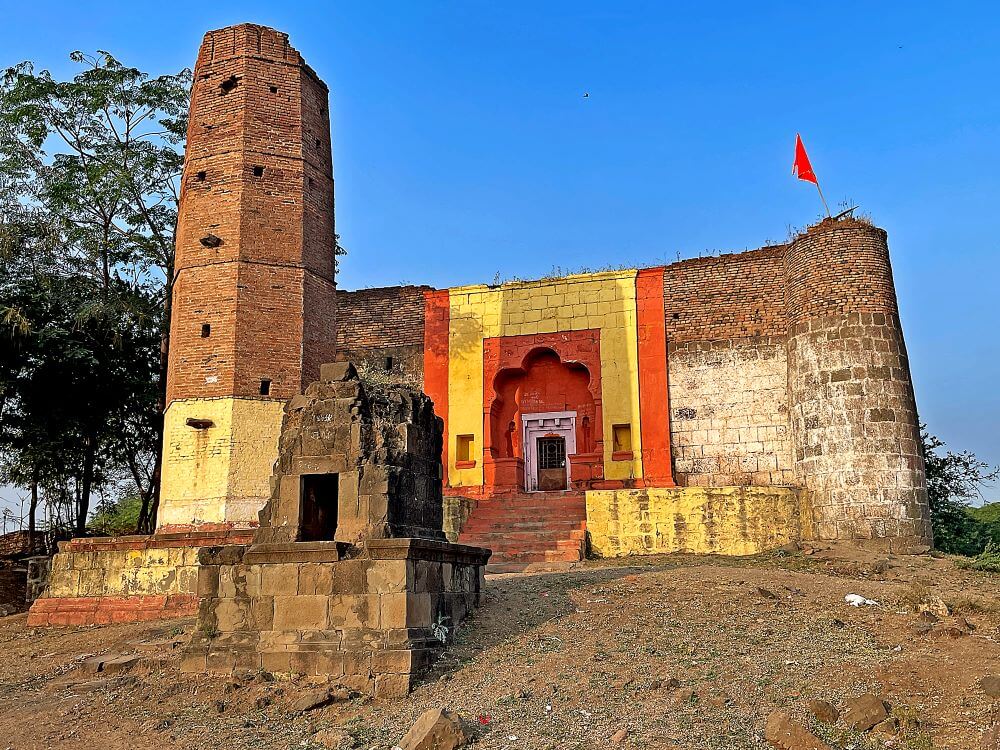
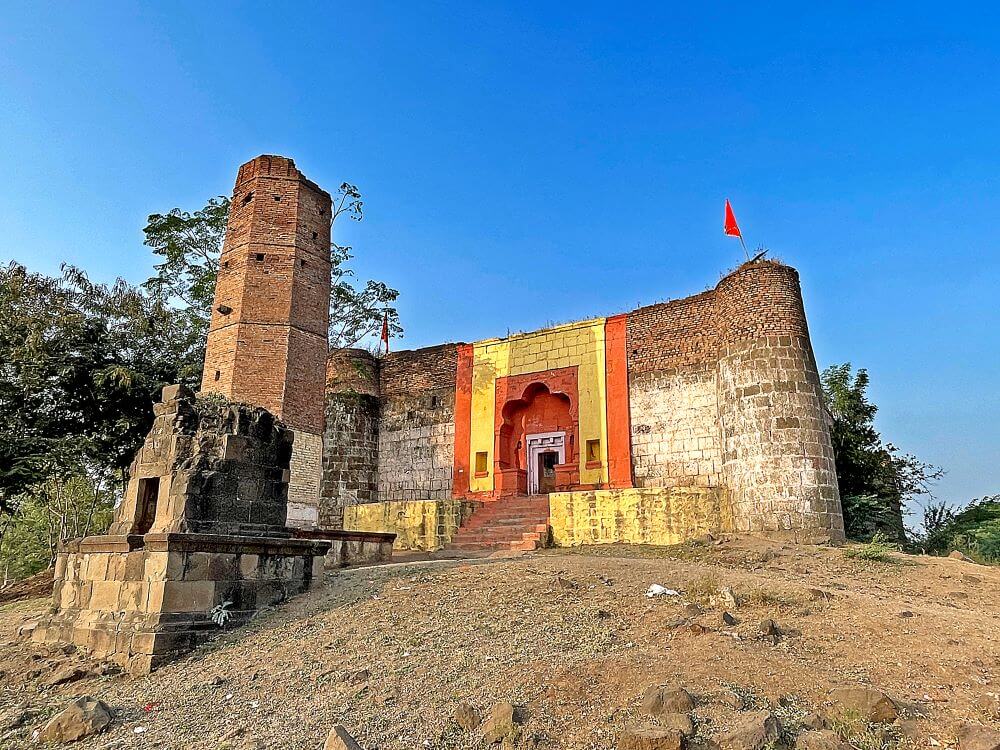
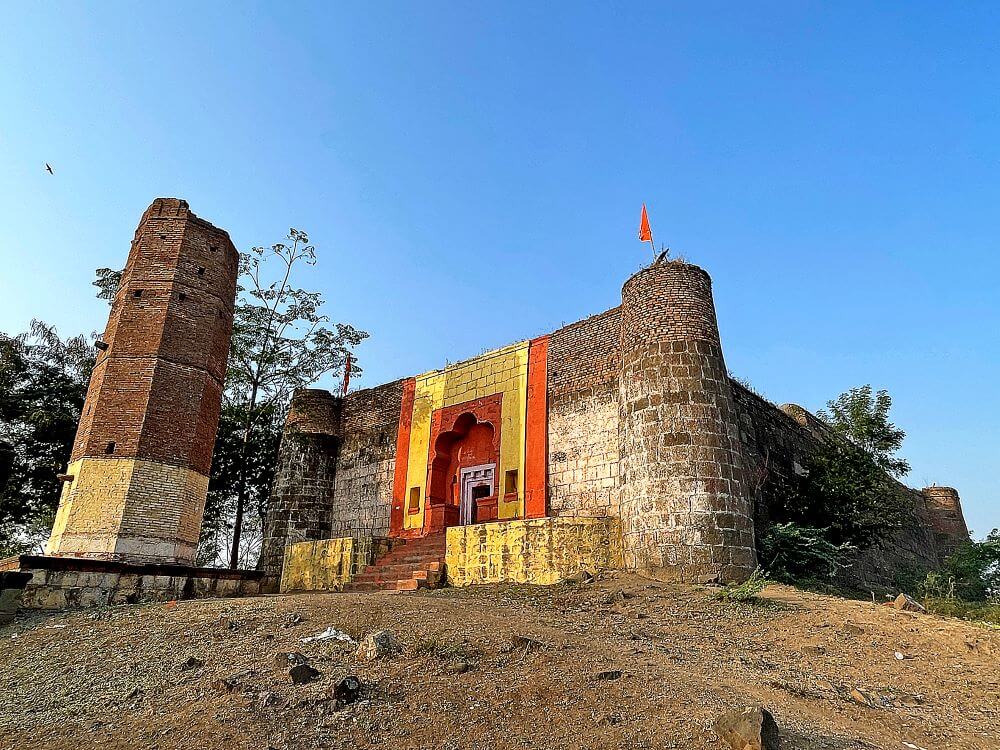
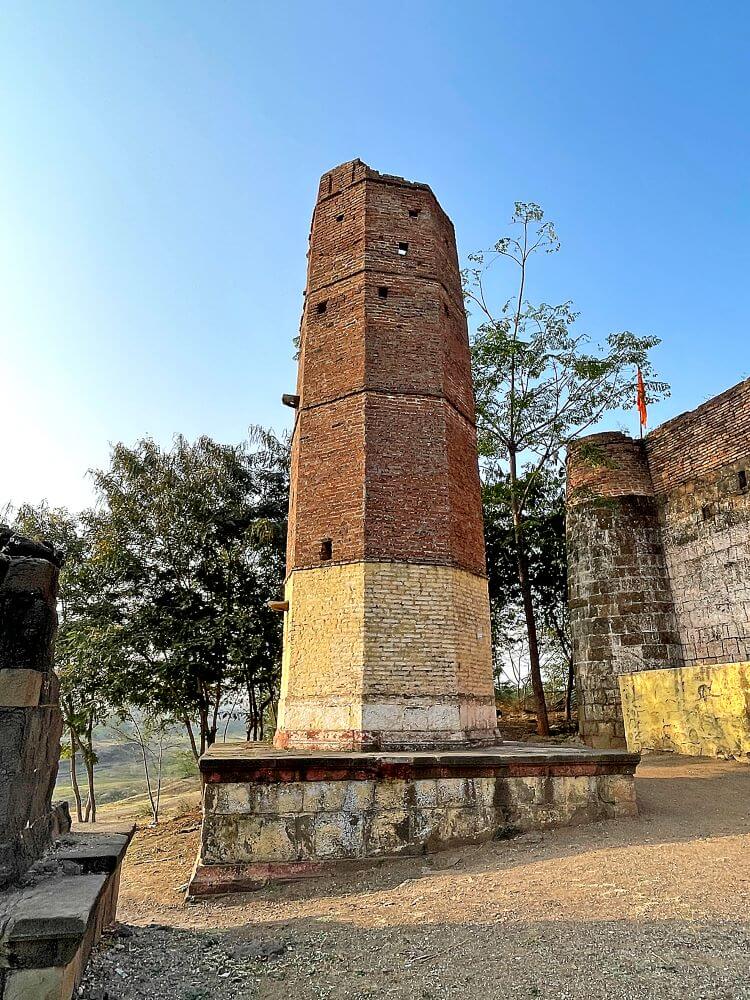
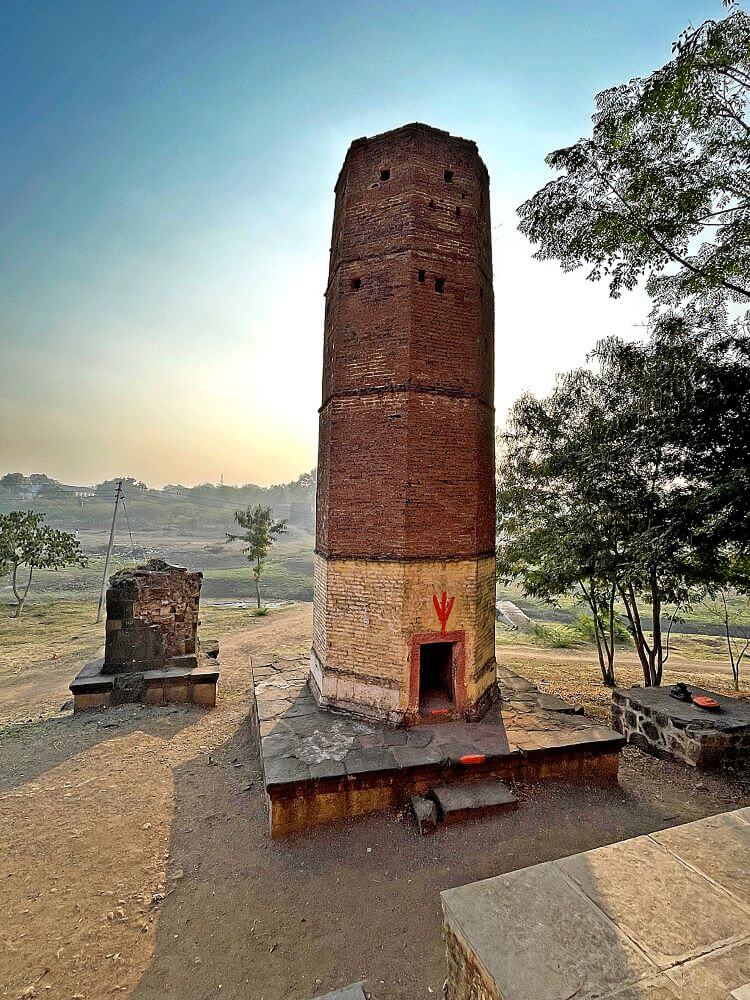
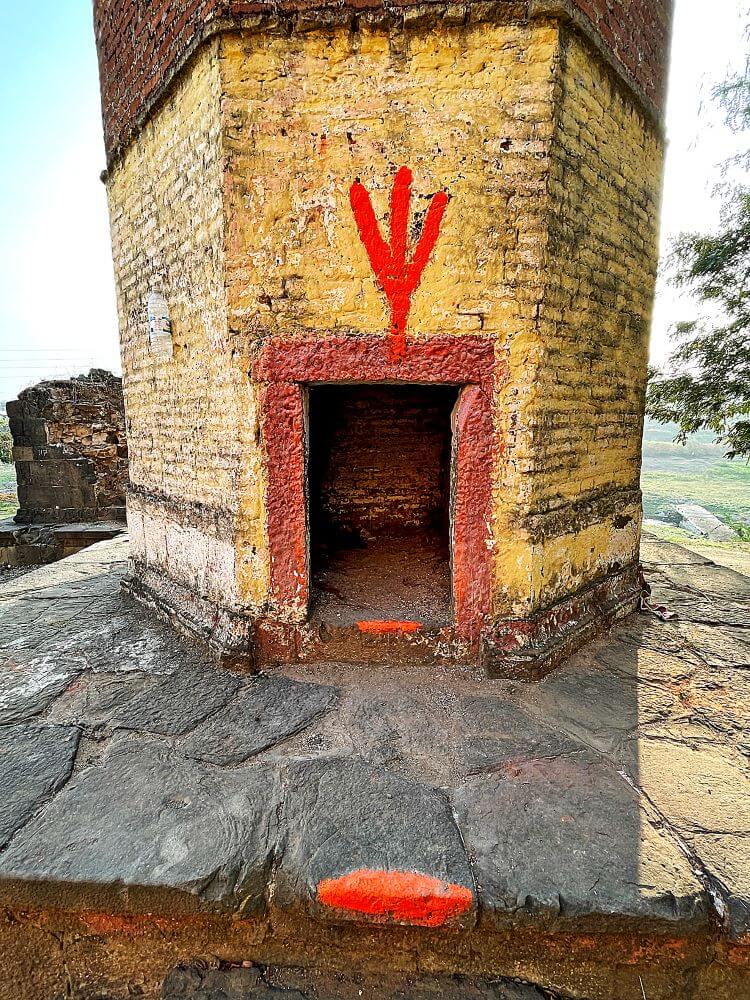
The Yajnaseni Devi temple on the banks of the Godavari is surrounded by high fortifications on all sides. Due to this, the temple has not been damaged by the frequent floods of the river. Near the entrance of the fortification, there is a tall ancient lamp tower (Deepmal), and one can reach the top through a narrow staircase inside this tower. After entering through the gate in the fortification, one enters the temple premises. The structure here is like an old mansion. The temple is designed with a Sabhamandap (assembly hall) and a Garbhagriha (sanctum sanctorum). There is a ४००-year-old inscription in the Sabhamandap, which mentions that Harbhaji Bidwai renovated the ancient and dilapidated temple in the year Shake १६८१.
On one bank of the Godavari is the Yajnaseni Devi temple, and on the other bank is the ancient temple of Kartikeya Swami. This temple was renovated in १६६४. It is said that near this temple was the place that defined the border between the Adilshahi and Nizamshahi kingdoms. There are ४ temples of Shri Kartikeya Swami in Maharashtra. While all those temples have a single-faced idol, the temple at Puntamba houses a six-faced (Shasthamukhi) idol of Kartikeya Swami. Although women are not allowed to enter this temple throughout the year, on the day of Kartik Purnima (Tripurari Purnima), women can enter the sanctum to take the darshan of Kartikeya Swami. Devotees believe that the darshan of Kartikeya Swami brings health, wealth, and prosperity to women. A large fair is held here on Kartik Purnima. Since women are permitted to take the darshan of Kartikeya Swami only on that one day, the presence of women at this fair is significant.
Along with being the Village of Temples, Puntamba is also famous for the historical farmers’ strike. The farmers’ strike that took place in २०१७ started from Puntamba village. After passing a resolution in the Gram Sabha, the farmers here went on strike from १ June २०१७. They stopped the supply of vegetables, food grains, and milk to the cities and also decided not to sow crops. The strike that started from here later turned into a state-wide movement. At that time, the Maharashtra government had to announce a loan waiver for farmers.
This sacred temple stands as a testament to deep spiritual devotion, ancient architectural grandeur, and rich local cultural traditions.
The sanctum sanctorum houses the divine idol consecrated according to ancient Vedic traditions, surrounded by serene courtyards and traditional temple architecture.
Navratri, Maha Shivratri, Annual Temple Jatra & Deepotsav
Compare and book flights, secure top-rated local hotels near the temple, hire reliable guides, and rent cars instantly.
Extend your pilgrimage by visiting other highly sacred temples located nearby.


Add ₹999 more to unlock FREE SHIPPING!
Your sacred cart is currently empty.
Shop Photo FramesFill in your delivery details below to place your order.
Add comment