
Add ₹999 more to unlock FREE SHIPPING!
Your sacred cart is currently empty.
Shop Photo FramesThe village of Puntamba, situated on the banks of the Godavari River in the Rahata Taluka of Ahilyanagar District, is blessed with a rich religious, mythological, and historical heritage. This village is included among the significant religious sites of Maharashtra. During its journey from its source at Trimbakeshwar to its confluence with the Bay of Bengal, the Godavari River flows southward only at Puntamba. The place where the east-west flowing river turns southward is considered extremely sacred from a religious perspective. At this holy site stands the Samadhi temple of the great Yogi Changdev Maharaj.
In the village of Puntamba, known in ancient times as Punyastambha and Tambilindapur, besides the Changdev Maharaj Samadhi temple, there are other important religious sites such as the Someshwar Temple (where Lord Pandurang, Saint Nivruttinath, Saint Muktabai, Saint Namdev, and Saint Goroba resided while Changdev Maharaj attained Sanjeevan Samadhi), the Kartik Swami Temple (a Hemadpanthi style temple, one of the few dedicated to Kartik Swami in the state), the Shaineshwar Temple (a temple from the era of King Vikramaditya), the Yagnaseni Devi Temple (a temple of the Goddess who manifested from a Yagna), and Kashi Vishweshwar (a temple renovated by Rashtrasant Janardan Swami Maungiri). Additionally, due to the presence of the Shri Ram Temple, the Twelve Jyotirlinga Temple, the Bhairavnath Temple, the Chakradhar Swami Temple, and the Mamabhache Temple, this village is known as the ‘Village of Temples’.
According to a legend, among the many attendants in Indra’s court, the Marudganas (who have control over the wind) insulted Indra. Enraged, Indra cursed them, saying, “You shall take birth on Earth.” When the Marudganas acknowledged their mistake and sought forgiveness, Indra granted them a reprieve, saying, “Brahma, Vishnu, Mahesh, and Adimaya will take incarnations, and you will be liberated by them.” Accordingly, the Marudganas took birth on Earth in the form of Changdev, and the deities took birth in the form of Dnyaneshwar and his siblings.
The great yogi Changdev was a Nathpanthi poet and saint of Maharashtra. Through rigorous penance, he had attained many siddhis (supernatural powers). He was well-versed in the Vedas, Shastras, Puranas, ۱۴ vidyas (branches of knowledge), and ۶۴ kalas (arts). He possessed the power to bring the dead back to life. Through the power of his yoga, he conquered time and lived for ۱۴۰۰ years. Every ۱۰۰ years, when the personification of time (Kaal) came to claim him, he would enter into a state of samadhi for ۶ months using his yogic power. Consequently, Kaal would return, and he would then change his name. In this way, he assumed ۱۲ different names.
Once, while Dnyaneshwar and his siblings were traveling from Nevase to Alandi, they stopped at Puntambe. At that time, Changdev was so renowned that it was believed he could bring the dead back to life upon emerging from his samadhi. Therefore, people would bring the bodies of the deceased before him and wait for him to come out of his meditation. When Saint Muktabai learned of this, she picked up a dog’s bone lying nearby and moved it over the bodies, upon which everyone came back to life, and even the dog to whom the bone belonged was brought back to life.
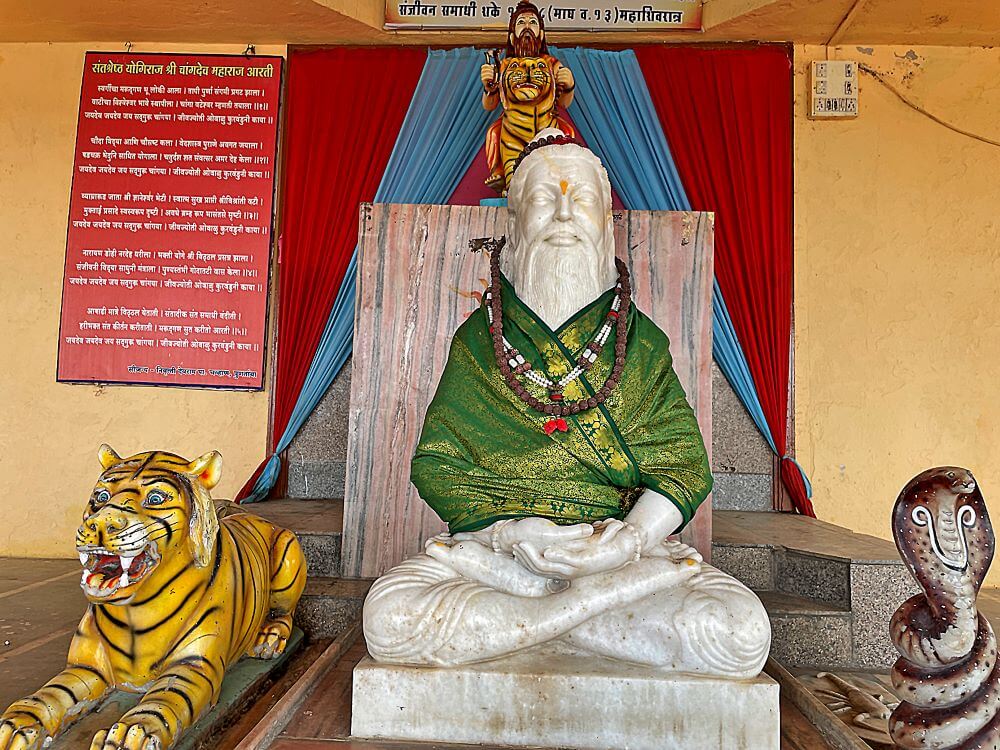
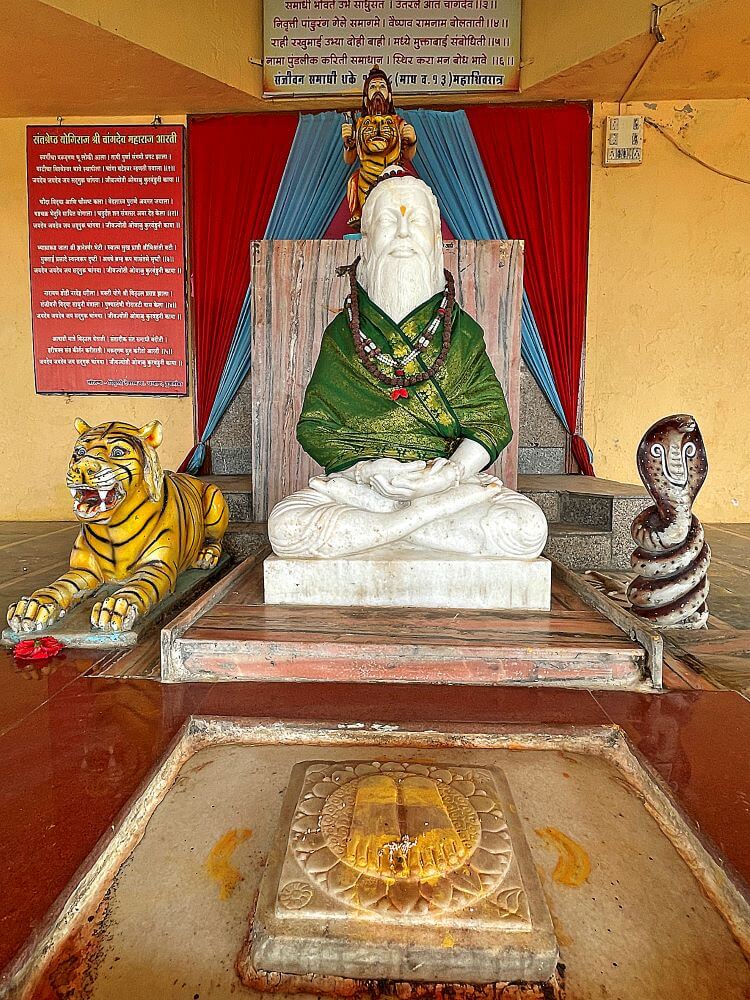
Hearing of Muktabai’s fame, Changdev decided to meet Dnyaneshwar and his siblings. In this meeting, he intended to demonstrate his own superiority. To this end, he sent a blank letter to Dnyaneshwar through a disciple, conveying his salutations and proposing a meeting. In response to this blank letter, Dnyaneshwar wrote sixty-five verses and sent them to Changdev. The teachings contained in these sixty-five verses are famous as the ‘Changdev Pasashti’. Changdev could not comprehend the meaning of Dnyaneshwar’s letter. Therefore, he resolved to see with his own eyes the one whose fame he had heard. Accordingly, while on his way to meet Dnyaneshwar, he rode upon a tiger, holding a serpent as a whip. At that time, Dnyaneshwar and his siblings were sitting on a wall in Alandi. Seeing Changdev, they became aware of the ego within him. In order to liberate Changdev from this, Dnyaneshwar, through the power of his spiritual practice, commanded the wall to move forward, and to everyone’s astonishment, the wall began to move from its place. Seeing this miracle, Changdev was humbled and surrendered to Dnyaneshwar. Later, Nivruttinath commanded Changdev to become a disciple of his younger sister, and thus he accepted discipleship under Muktabai.
After Dnyaneshwar took Samadhi in Alandi and Sopan Kaka in Saswad, all the saints, along with Pandurang, gathered at Puntambe. At this sacred place on the banks of the Godavari, Changdev decided to take Samadhi at the age of one thousand four hundred years. Seeking the blessings of his Guru Muktabai, Changdev descended into the Samadhi chamber. On the day of Magh Vadya thirteen, Shake one thousand two hundred eighteen, on the auspicious day of Mahashivratri, he attained Samadhi here.
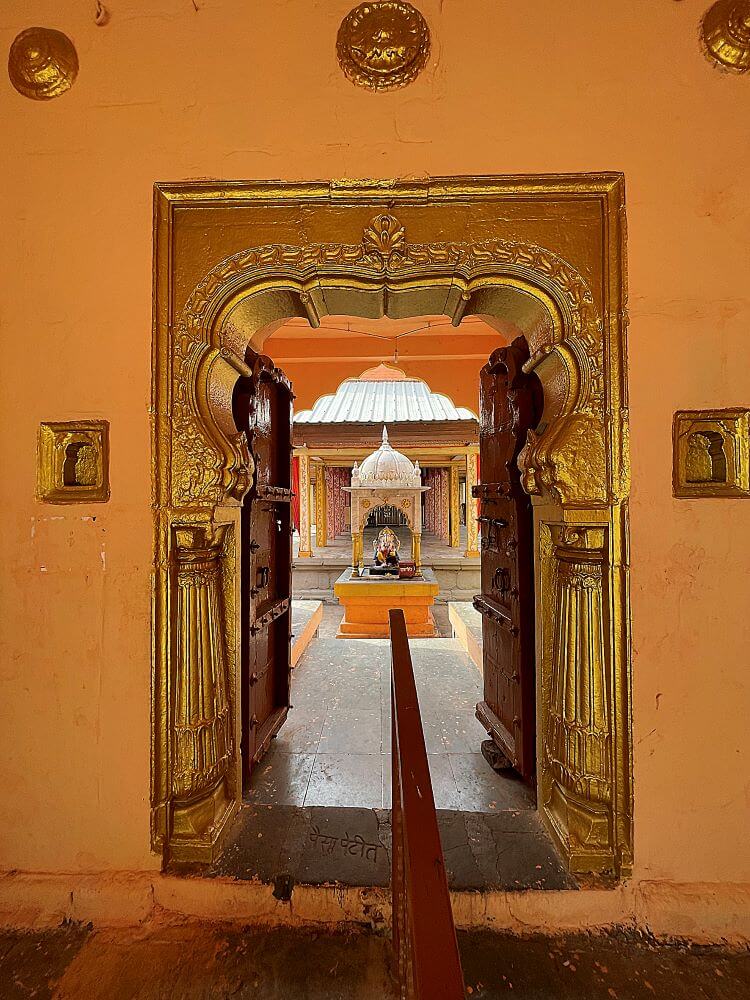
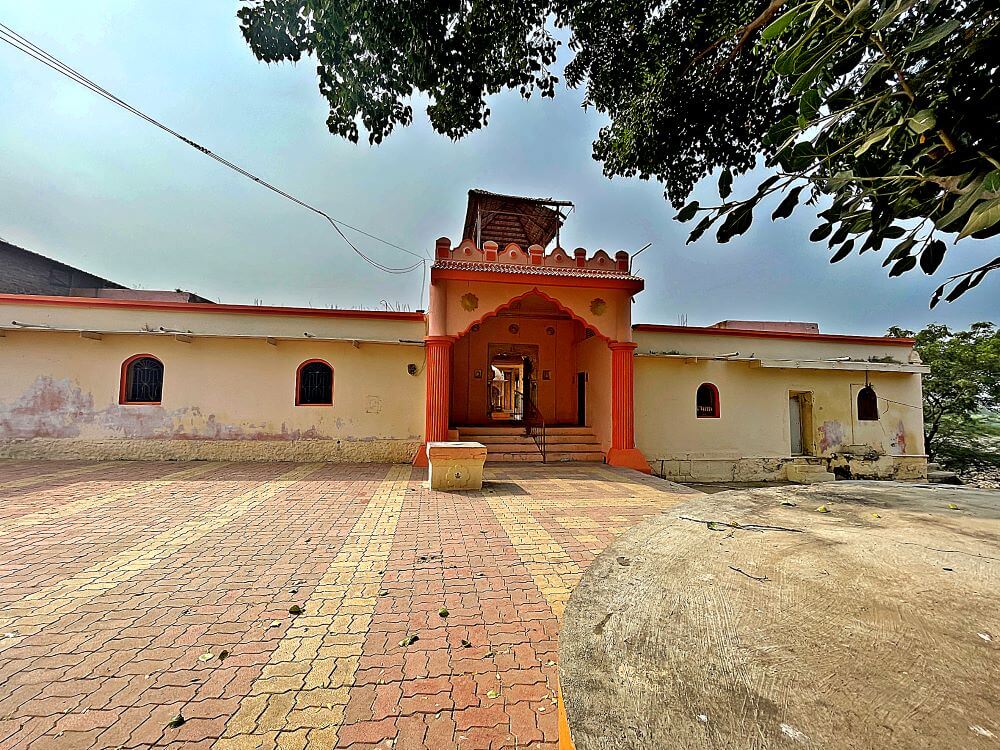
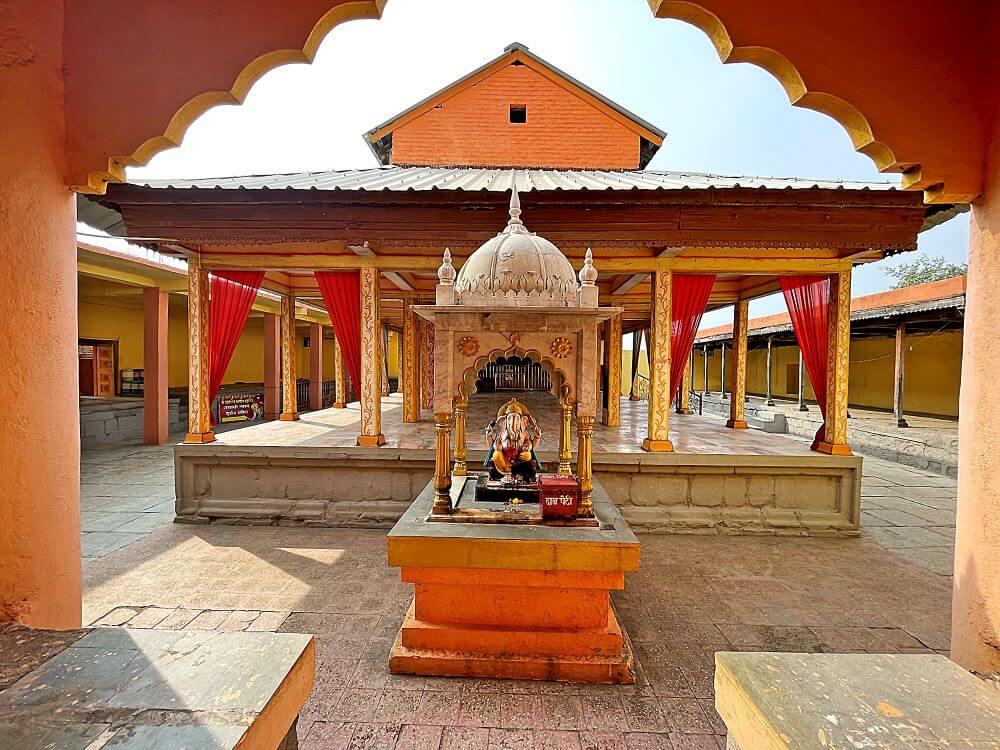
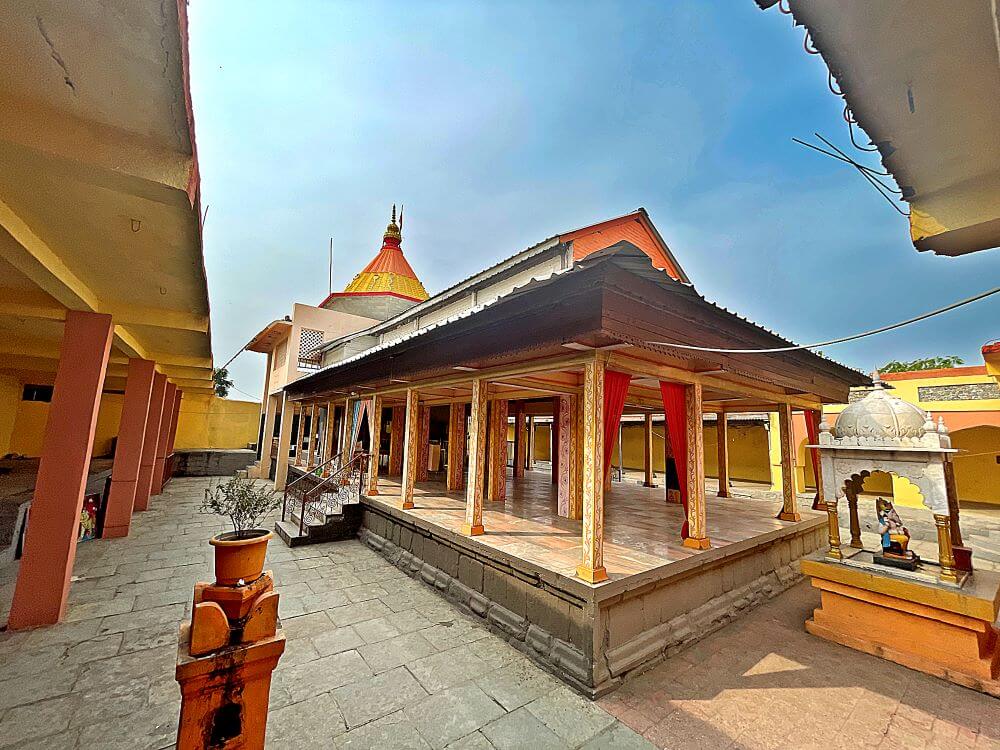
In the village of Puntambe, on the banks of the Godavari, lies the Samadhi temple of Yogiraj Changdev Maharaj in a scenic, natural setting. Upon entering through the gateway of the fortification surrounding the temple, one first receives the darshan of Lord Ganpati. Beyond that is the Sabha Mandap (assembly hall) of the temple. It is said that when the British built a bridge over the Godavari river here, the remaining timber was used to construct this Sabha Mandap. Entering the sanctum from the Sabha Mandap, one receives the darshan of the idols of Vitthal-Rukmini and Dnyaneshwar Mauli in the Garbhagriha. Behind this sanctum is the Samadhi site of Changdev Maharaj and his marble idol. There is also a temple here dedicated to Muktai, the Guru of Changdev Maharaj.
A grand fair is held here on Mahashivratri and Ashadh Vadya Ekadashi. It is believed that when Changdev Maharaj was entering Samadhi, Pandurang promised him that He would reside at this Samadhi site on Ashadh Vadya Ekadashi. Due to this faith, hundreds of devotees come to this temple for darshan on this day. Furthermore, it is believed that taking a holy dip in the Ganga on the Panchami (Rishi Panchami) that falls in the month of Bhadrapad brings special merit; therefore, many devotees come here to express their gratitude towards the sages and seers. Devotees can visit the temple and receive the darshan of Changdev Maharaj between 7 in the morning and 7 in the evening.
This sacred temple stands as a testament to deep spiritual devotion, ancient architectural grandeur, and rich local cultural traditions.
The sanctum sanctorum houses the divine idol consecrated according to ancient Vedic traditions, surrounded by serene courtyards and traditional temple architecture.
Navratri, Maha Shivratri, Annual Temple Jatra & Deepotsav
Compare and book flights, secure top-rated local hotels near the temple, hire reliable guides, and rent cars instantly.
Extend your pilgrimage by visiting other highly sacred temples located nearby.


Add ₹999 more to unlock FREE SHIPPING!
Your sacred cart is currently empty.
Shop Photo FramesFill in your delivery details below to place your order.
Add comment