
Add ₹999 more to unlock FREE SHIPPING!
Your sacred cart is currently empty.
Shop Photo FramesThe three-faced Shiva idol of Aghor-Bhairav, Tatpurusha Mahadev, and Vamadeva, carved in the caves of Gharapuri Island near Mumbai between the sixth and ninth centuries, is world-famous. The sculptures in these caves indicate the influence of the Shaiva sect in the Mumbai region during ancient times. There are many temples of Shiva in Mumbai, and one of the most famous among them is in Bhuleshwar. This area derived the name Bhuleshwar from the Mahadev temple located here. In this temple of Bhuleshwar, the presiding deity of the Gaud Saraswat Brahmin community, there is also an ancient shrine of Mother Shitala. Bhuleshwar Mahadev is the primary center of faith for Gujarati and Maharashtrian Shiva devotees, especially the merchant community.
Due to this temple, as well as the many small and large temples of various gods and goddesses in this area, Bhuleshwar is called the ‘Kashi of Mumbai’. During the British era, around the year 1744, large-scale house construction began in the Bhuleshwar area along with the Chakala, Umarkhadi, and Mandvi areas. About a century later, in 1865, Bhuleshwar was counted as a ward of the Mumbai Municipality. According to the ‘Greater Bombay District Gazetteer’, Bhuleshwar was a very squalid settlement at that time. The area had become filthy due to the cow sheds of the milkmen here. In 1871, the British government began sanitation efforts by relocating these cow sheds. However, a major epidemic of smallpox still broke out in this area in 1876. Mother Shitala, who resides in the Bhuleshwar Mahadev Temple, is considered the goddess who eradicates such epidemics. From the British era to the present day, this area is considered an important commercial hub of Mumbai.
Various legends are told about the Bhuleshwar Mahadev Temple here. Some of these legends were recorded by Krishnarao Raghunathji Navalkar, alias K. Raghunathji, in the book ‘The Hindu Temples of Bombay’ published in the year 1895. One such story is that a Rajput man named Bholanath established this temple. Because of this, it was named ‘Bholeshwar’, which later became ‘Bhuleshwar’. According to some, this temple was built from a donation given by a childless Bania widow before her death. According to another opinion, a woman from the Bania community wanted to build a house on the site where the temple currently stands. While digging the foundation for the house, the laborers found a Shivling there. When they informed the woman about this, she built this temple here instead of a house. K. Raghunathji has also mentioned in his book that it is said this temple was built by a Shenvi gentleman named Mangesh Anandrao Dhonde. He had purchased this land from Laxmibai, the widow of Madan Keshavji, who belonged to the Sutar caste. One part of this land was received by Sundar Babaji Barbhai. He established a Ganpati temple on it. The second part was received by Mukund Gujar, the founder of the Rameshwar temple, and the third part was received by Atmaram Vishwanath. At different times, they built three temples there, namely Kalbhairav, Kashi Vishweshwar, and Narmadeshwar. A part of this same land was purchased by Bhaydas Sakidas. He built the Bhuleshwar lake there. (This lake does not exist today. It is said that there is a flower market at that location.)
In the book ‘Bombay Place-Names and Street-Names: An Excursion into the By-ways of the History of Bombay City’ (The Times Press, 1917) by Samuel T. Sheppard, the opinion of Rao Bahadur P. B. Joshi regarding the establishment of this temple is cited. Stating that the claim of the name Bholeswar being derived from Bholanath is incorrect, he says, ‘This temple was built by a local wealthy fisherman. His name was Bhula or Bholya, and the Yajurvedi Brahmin priest there gave this temple the name Bholeswar based on that.’ Overall, the exact history of this temple is unclear. It is said that the seat of Mahadeva here dates back about 600 years. K. Raghunathji has stated, ‘The original temple here was established about 200 years ago and it was rebuilt about 70 years ago.’ This record by K. Raghunathji is from 1895. From this, it appears that this temple was established in the latter half of the seventeenth century, around 1695, and was rebuilt around 1825. The original temple here had a circular dome. Over time, its condition deteriorated. When it was on the verge of collapse, it was rebuilt by collecting public donations. K. Raghunath has also mentioned that 30 to 40 thousand rupees were spent for that purpose.
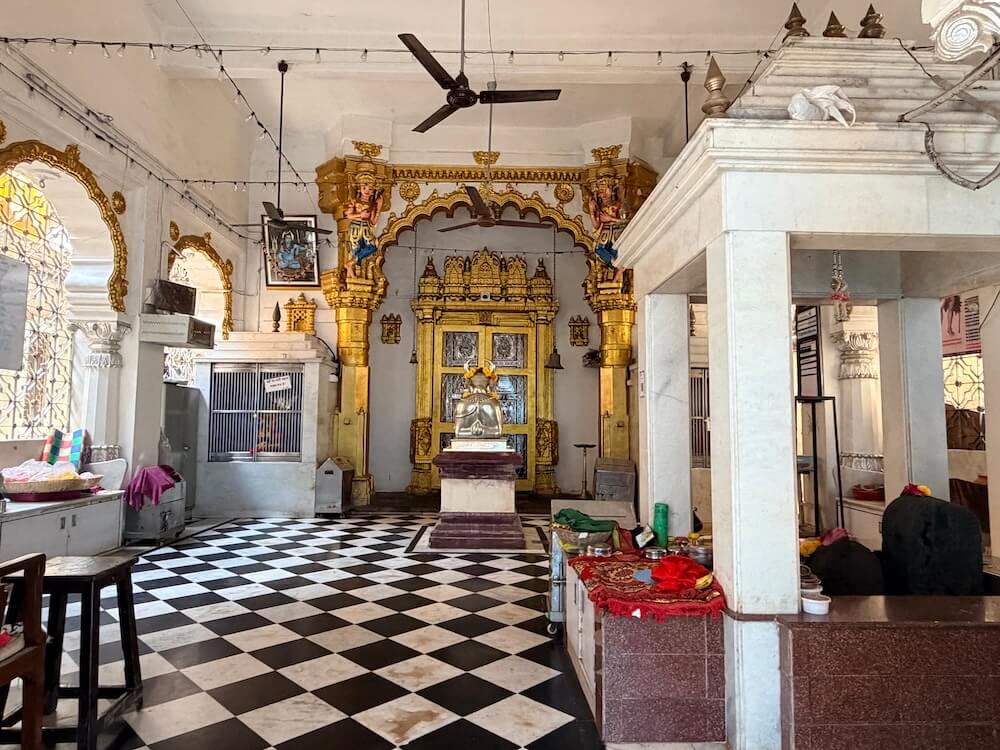
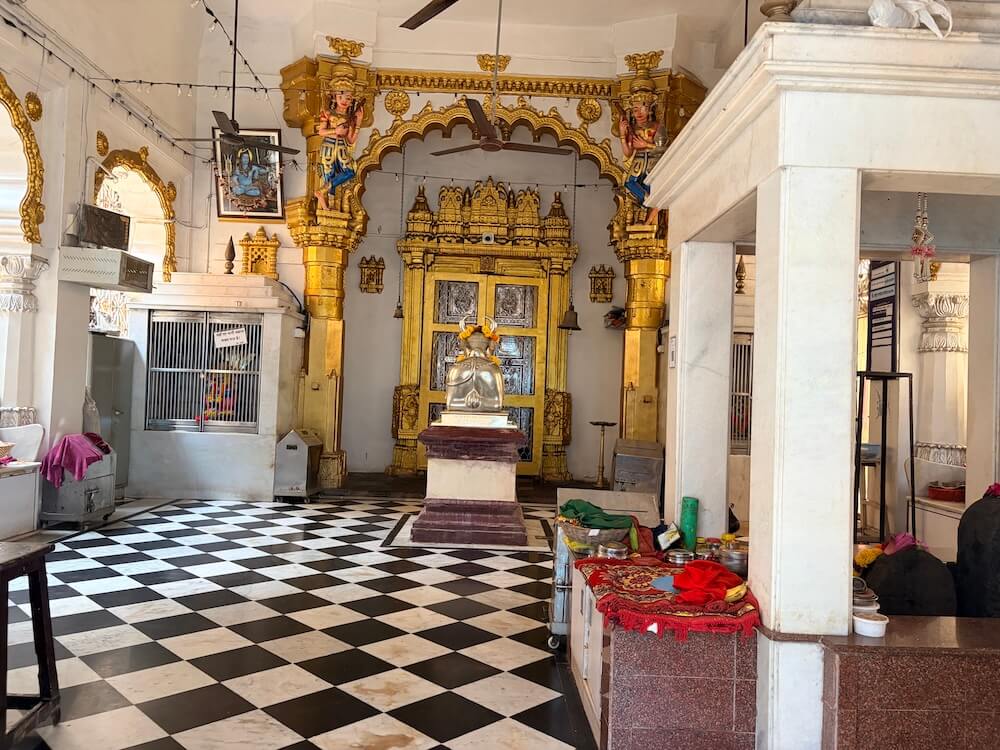
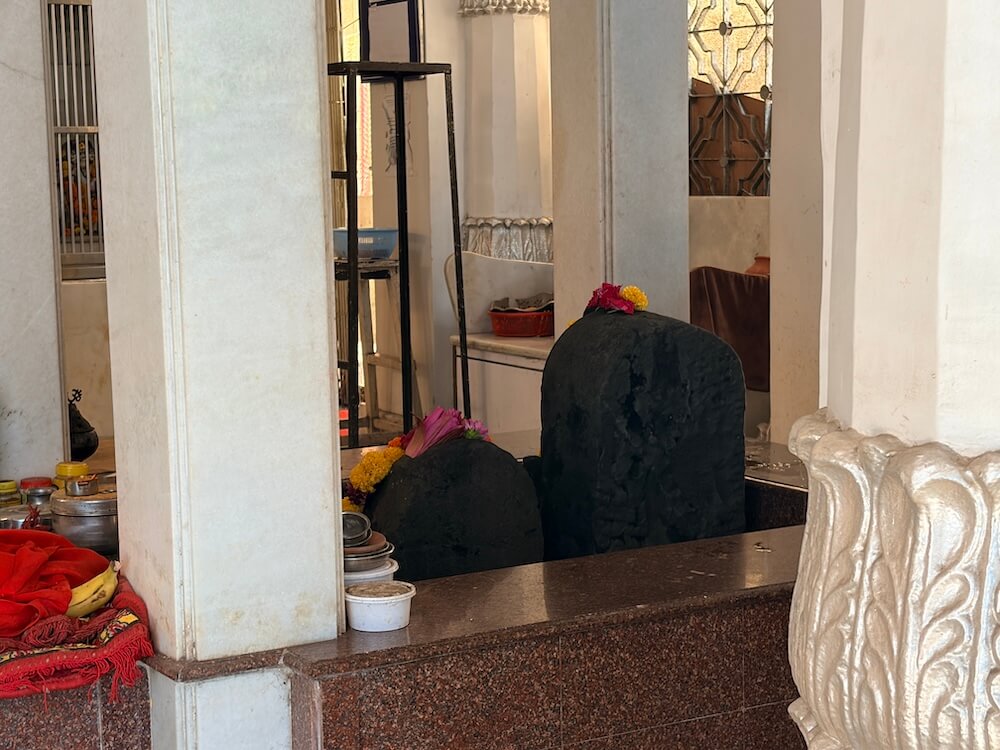
The path to this temple leads through a narrow alley situated within a row of shops on the highly bustling Bhuleshwar Road. In this alley, there is a shrine dedicated to Panchmukhi Maruti. A short distance from here stands the Bhuleshwar Mahadev Temple. This temple, which bears the hallmark of ancient Marathi architectural style, features a spacious assembly hall (Sabhamandap). It has a large, intricately carved arched entrance. The assembly hall is semi-open in design and features large windows with arched frames. Inside this expansive hall, on the right side, there is a large shrine built upon a high platform paved with marble tiles; it is open on all four sides and topped with a pyramid-shaped spire (Shikhara). This shrine houses the deity of Shitala Mata. The idol of Shitala Mata is located here, accompanied by two other smaller stone idols beside it. Until the nineteenth century, all three stone idols here were believed to represent Shitala Devi. Now, one of them is worshipped as Kali Mata and the other as Badiyar Dev. Shitala Mata is considered the deity who governs diseases such as measles, chickenpox, and smallpox caused by the Variola major virus. There was a belief, even among Parsis and Muslims in the past, that worshipping her could cure these ailments in children. It is said that women from these communities used to bring their sick children to this temple in earlier times.
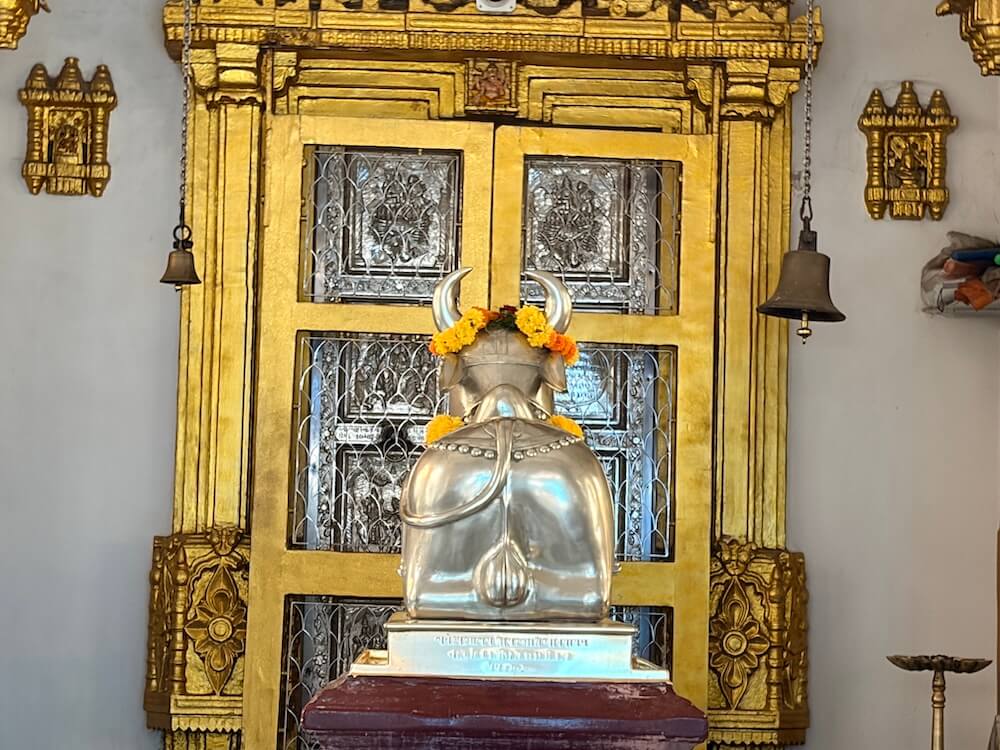
In the assembly hall of the Bhuleshwar Temple, upon a high stone pedestal, stands a stone idol of Nandi, the vehicle of Lord Shiva. This idol is covered with a silver sheet. On the sides of the entrance to the sanctum sanctorum, there are two large pillars connected by an arched gateway. At the top of these pillars are two tall sculptures of celestial damsels. The temple entrance is of an ancient stone style. The pillars of this three-branched entrance feature intricate carvings at the base. At the center of the lintel of the door frame, there is an idol of Lord Ganesha. In the upper part of the door frame, shapes of temple spires are carved. The pillars, the arch between them, and the door frame are plated with gold foil. The sanctum sanctorum is at a lower level than the assembly hall. Inside, the stone Lingam of Bhuleshwar is situated within a square-shaped base. A copper serpent deity holds its hood over this stone Lingam. There is a groove in the middle of this Lingam. Regarding this, the priests here recount a legend that a fisherman named Bhola once had a vision. In it, Lord Shiva told him that a Shiva Lingam was buried in the ground at a specific location. Following that dream, when Bhola dug at that spot, he found this Lingam. While digging, a pickaxe struck the Lingam, and blood began to flow from it. Seeing this, everyone became worried. Then, a priest advised them to perform a milk offering (Abhishekam) on the Lingam. Following this, the bleeding stopped. To the right in the sanctum sanctorum, an idol of Mother Parvati made of black stone is seated on a marble altar. In a niche in the back wall, there is a marble idol of Parvati.
Devotees can have Darshan at these Bhuleshwar and Shitalamata temples, owned by the ‘Gaud Saraswat Brahmin Temple Trust’, between 6:30 AM to 12:30 PM and 4:00 PM to 8:30 PM. Many devotees perform Dugdhabhishek here every Monday. However, permission to perform Abhishek with milk, curd, or water on any idol is granted only until 11:00 AM. The deity Bhuleshwar is worshipped three times a day in the temple. There is a large crowd of devotees at the temple on Mondays and Mahashivratri, which includes a significant number of traders and businessmen from the Bhuleshwar area. A fair is held here on Kojagiri Purnima and Tripuri Purnima in the month of Kartik. During this time, the deity’s Palkhi procession is taken out at night.
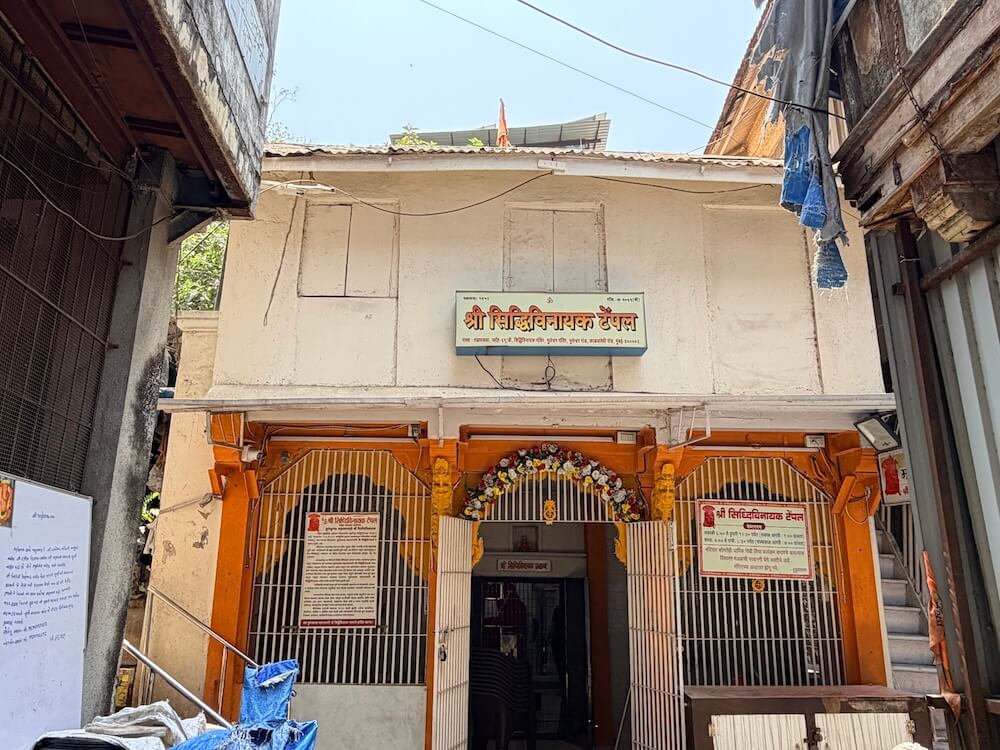
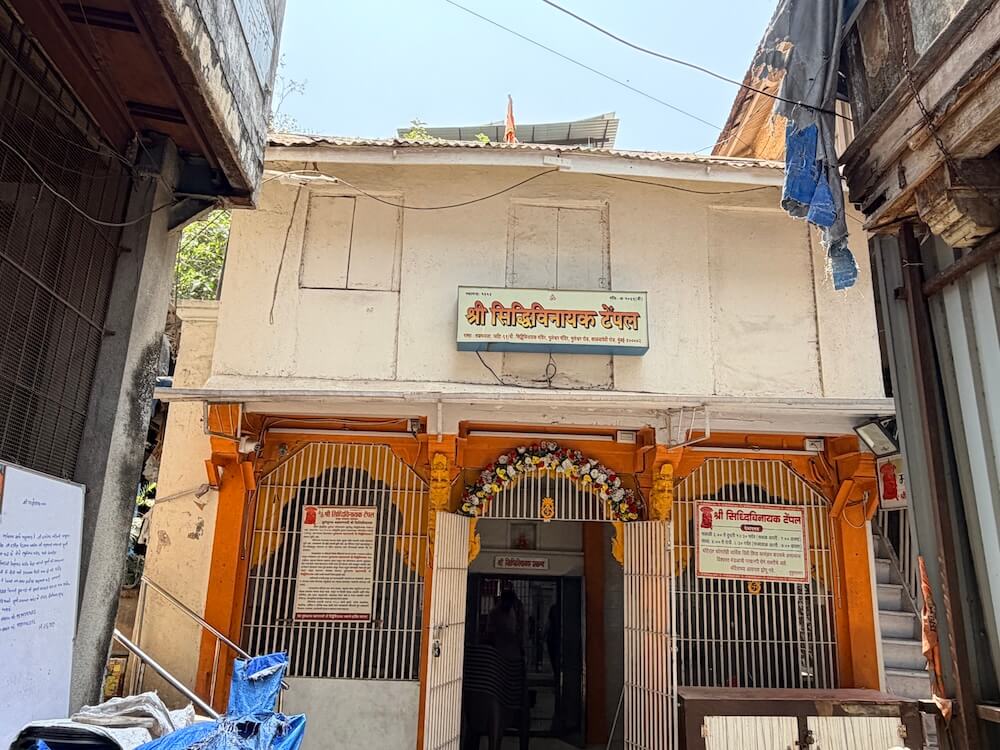
Adjacent to the Bhuleshwar temple is the Siddhivinayak temple. Devotees believe that this Ganpati is ‘Jagrut’ (awakened) and fulfills wishes. This Siddhivinayak is known as the ‘Mahaganpati of Bhuleshwar’. It is said that this place of Ganesha is ancient. Situated on the ground floor of an old two-story building, the temple structure consists of a Sabhamandap and a Garbhagriha. The idol of Siddhivinayak is seated on a high altar in the Garbhagriha. In front of the idol is a stone-carved statue of the Mushak, the vehicle of Ganesha. An idol of Saibaba is also enshrined here. Devotees can have Darshan in this temple from 6:00 AM to 12:30 PM and from 4:00 PM to 8:30 PM. The Shri Aarti is performed in the temple daily at 9:00 AM and 7:00 PM. A grand festival is celebrated here on the days of Magh Janmotsav and Bhadrapadi Ganesh Chaturthi. On these days, programs such as Sahasra Avartane, Ganeshabhishek, Maha Aarti, Bhajan, and Mahaprasad are organized.
This sacred temple stands as a testament to deep spiritual devotion, ancient architectural grandeur, and rich local cultural traditions.
The sanctum sanctorum houses the divine idol consecrated according to ancient Vedic traditions, surrounded by serene courtyards and traditional temple architecture.
Navratri, Maha Shivratri, Annual Temple Jatra & Deepotsav
Compare and book flights, secure top-rated local hotels near the temple, hire reliable guides, and rent cars instantly.
Extend your pilgrimage by visiting other highly sacred temples located nearby.


Add ₹999 more to unlock FREE SHIPPING!
Your sacred cart is currently empty.
Shop Photo FramesFill in your delivery details below to place your order.
Add comment