
Add ₹999 more to unlock FREE SHIPPING!
Your sacred cart is currently empty.
Shop Photo FramesBharatavarsha is blessed with many renowned cave temples. These include shrines carved into mountain rock, adorned with exquisite artistic sculptures. Some of these cave temples are revered as places of penance (tapobhumi) for yogis and renunciates, while others are celebrated as temples dedicated to Kshetrapala guardian deities. In the village of Bhose, within Miraj Taluka, there is one such ancient temple nestled in a mountain cave. Devotees hold the unwavering faith that Shri Dandoba Deva, enshrined within this temple in the Bhose village limits, is a living deity who grants their earnest prayers. A distinctive feature of this temple is the circumambulation path (pradakshina marga) carved through an underground tunnel within the mountain.
Regarding this sacred place, a legend is told that the present-day region of Sangli district was once part of the Dandakaranya forest during the Ramayana era. Within a cave in the hills here, a Shiva Lingam has been consecrated since ancient times. As this hill fell within Dandakaranya, the Mahadev residing there came to be known as Dandoba or Dandnath. While Shri Rama, Lakshmana, and Sita were spending their period of exile in the forest, Shri Rama performed spiritual practices in the cave here. According to some scholars, the Dandoba shrine here dates back to the fourteenth century. During that period, the Bahmani Sultans held sway over this region. As there is an eternal dhuni (sacred fire) in the temple, it is surmised that this place belongs to the era of the Navnath saints. If that is the case, the antiquity of the temple extends back to the tenth or eleventh century.
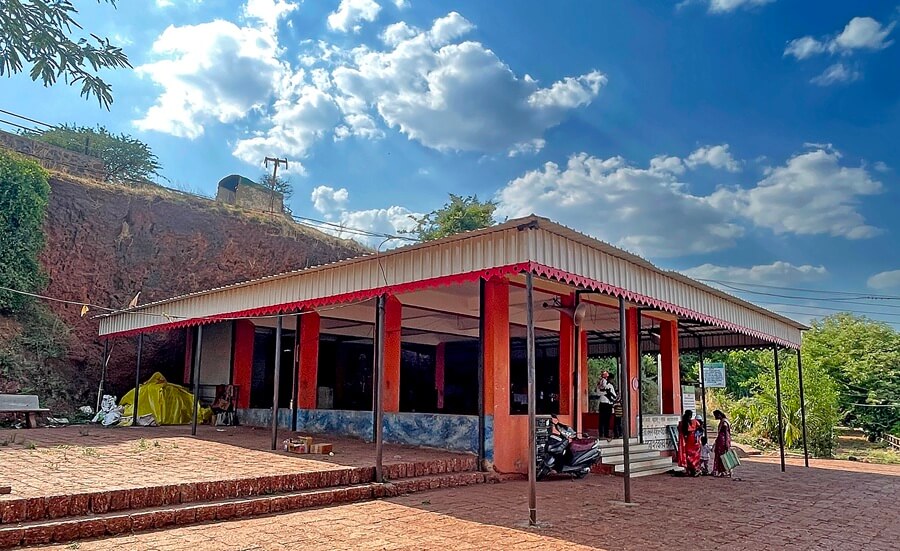
This sacred temple of Shri Dandoba is nestled on a hillock spanning over एक हजार एकशे हेक्टर in the precincts of five villages: Bhose, Siddhewadi, Malgaon, Khanderajuri in Miraj taluka, and Kharsing in Kavathe Mahankal taluka. Devotees can reach this divine abode by ascending approximately five to six kilometres from the base of the hill. Now, directly to the temple… A motorable road has been constructed for devotees to reach this sacred spot. This hill, formed of laterite rock, holds not only the temple cave but also numerous other caves, both large and small. Many historical remnants from ancient times are found here, though they have been effaced by the passage of time.
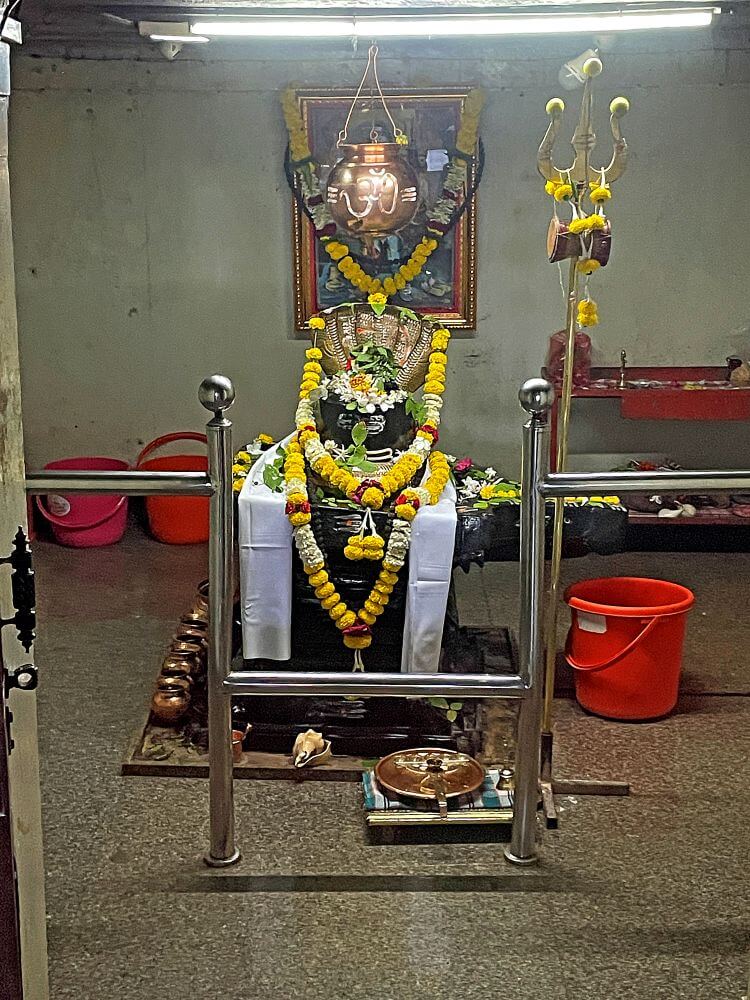
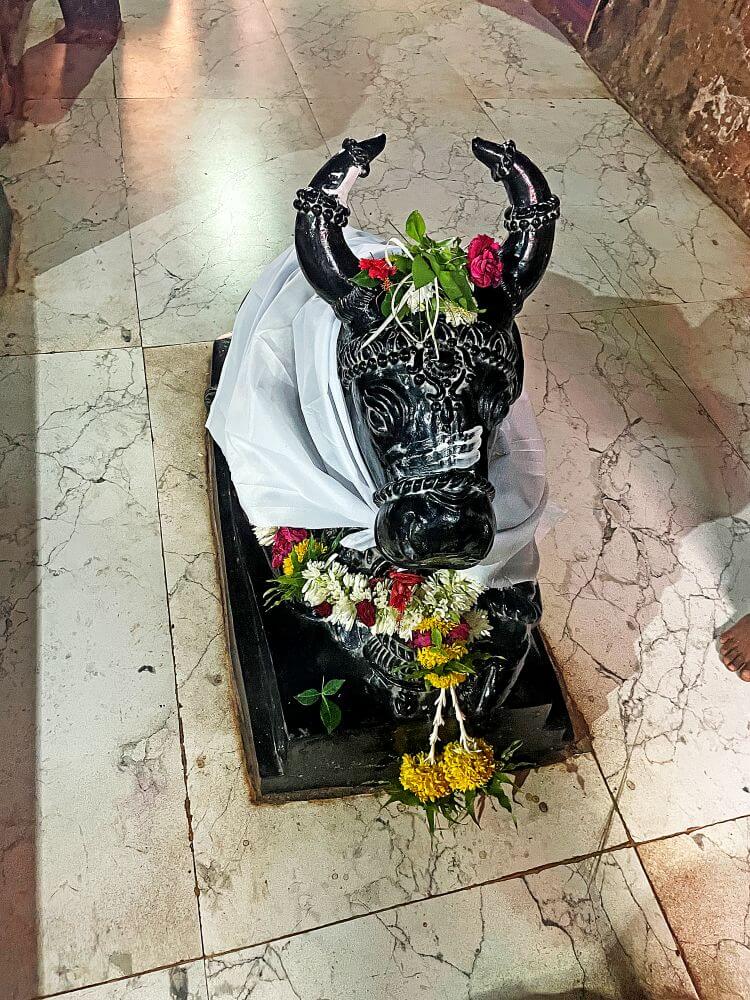
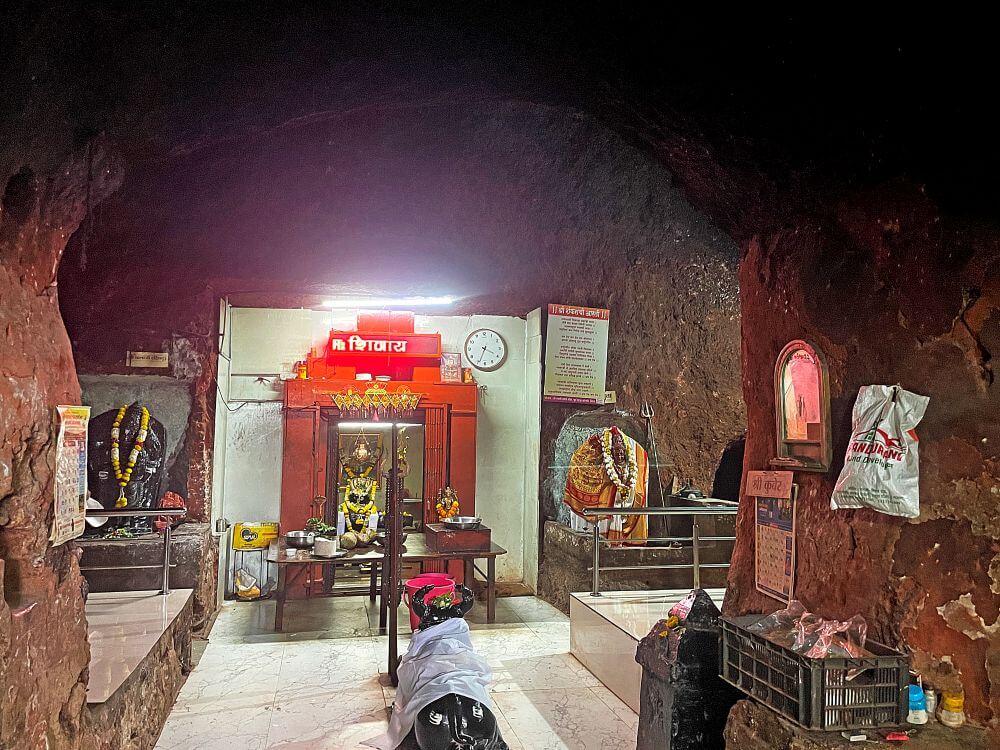
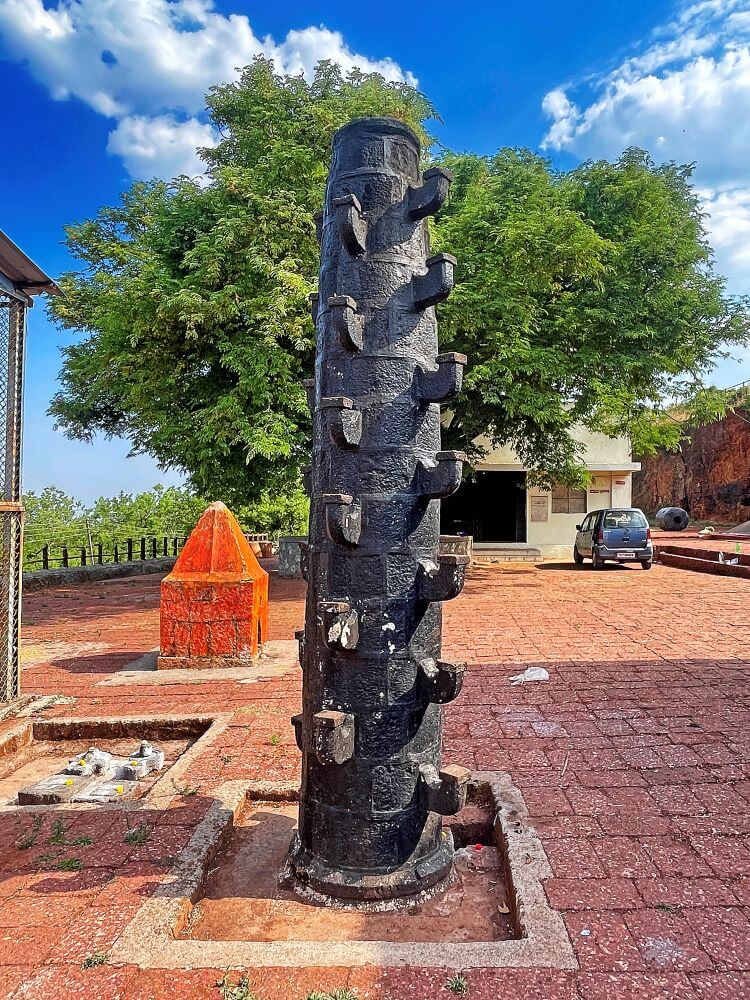
In front of this temple, which is situated within the forest boundaries, there is a small *deepmaala* (lamp tower) made of black stone. Ahead of it is an open assembly hall (*sabhamandapa*). As one enters this cave temple, a profound coolness is immediately felt. To the left of the *sabhamandapa*, on a raised platform, rests a black stone idol of Lord Ganesha. From here, one descends twelve steps to enter the main cave shrine. Where the steps end, on a platform, there is a black stone idol of Kaalbhairava. Beside it are idols of Kubera and a small *pindi*. In front of the *garbhagriha* (sanctum sanctorum) is a black stone Nandi. Outside the *garbhagriha* is a niche with an image of Lord Vishnu in His Balaji form, while on the other side is an idol of Durga Devi. Outside the *garbhagriha*, there is also a metal idol of Ardhanari Nateshwara. The *garbhagriha* has a wooden carved doorway and doorframes. One descends two steps to enter the *garbhagriha*. Here resides a black stone Shiv *pindi* of Dandnatha. This Shiv *pindi* is three feet tall, structured with an octagonal Vishnu part upon a square Brahma part, surmounted by a Shakti *yoni*, and topped with the Shiva part of the *lingam*. Above the *pindi* is an *abhisheka paatra* (vessel for ritual anointing). To its side are a brass *trishula* (trident), a *damaru* (drum), and a five-hooded *naga* (serpent).
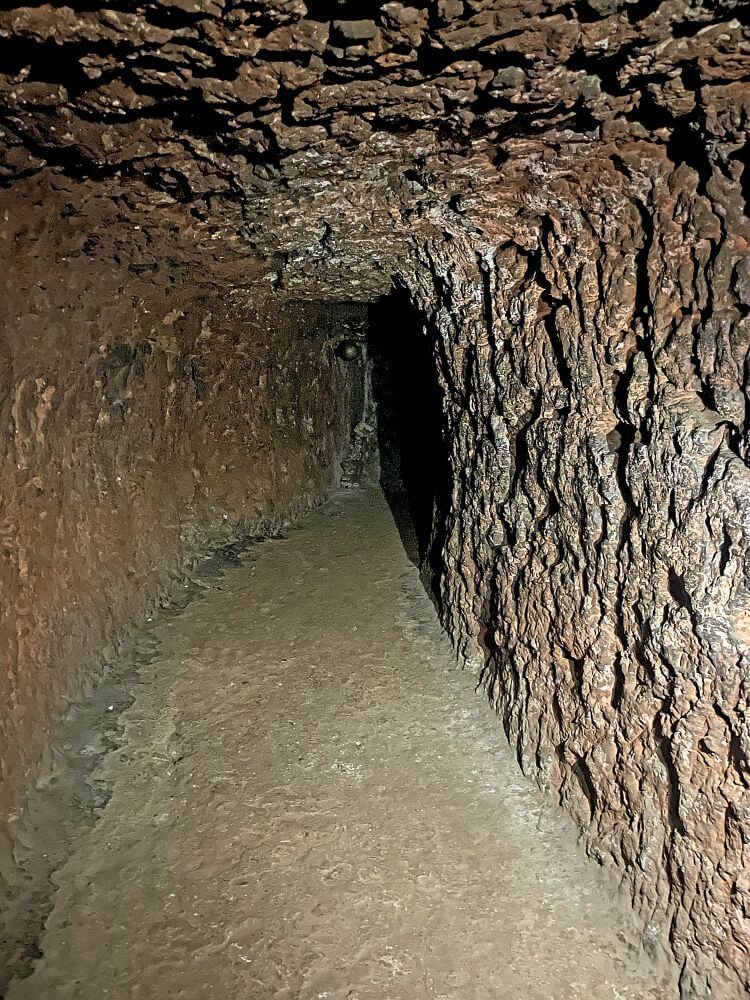
Within the cave itself, outside the sanctum sanctorum, a circumambulation path has been carved. This path appears dim in the light of the faint lamps. Beside the temple, there are some smaller caves. Inside one cave, there are further caves. Locals say these are ten to twelve feet deep. One has to crawl inside these. Within these caves are Shiva Lingams.
Before proceeding to the main temple’s assembly hall, one beholds the path and steps leading to the Kedārliṅga temple. Ascending this path, one is graced with the darśana of a śikhara that appears like a five-storied tower. This śikhara is approximately four hundred years old. As there is no fort on this hill, records regarding the precise purpose or reason for the construction of this śikhara are not found. The first three stories of this five-storied śikhara are square, with a pyramid-like structure. The upper two stories are hexagonal. There is space to climb this śikhara. A saffron flag flutters at the peak of the śikhara. One can ascend up to this point. There is enough space here for four or five people to stand at one time. From this śikhara, a panoramic view of a great distance is visible. It is said that where the flag is now placed on the kalaśa, there was previously a hole. When coins were dropped through it, they would fall directly onto the piṇḍī in the cave temple. Now, this hole has been filled, and the flag has been placed upon it. At some distance from here is the temple of Kedārliṅga Mahādeva.
In the temple, Mahashivaratri and the third Monday of Shravan are celebrated as the main annual festivals with great enthusiasm. On these occasions, the day begins with Laghurudra and Mahabhishek offered to the Lord. Throughout the day, the temple hosts bhajan, kirtan, pravachan, jagaran, musical programmes, and mahaprasad. At this time, thousands of devotees from the surrounding areas come for darshan of the Lord and to fulfil their vows. Mahaprasad is arranged in the temple every Monday of Shravan. On every Monday, Sunday, Purnima, and Amavasya, the number of devotees is substantial. This temple complex, which falls under the jurisdiction of the Forest Department and is adorned with natural beauty, attracts not only devotees but also wildlife enthusiasts, nature lovers, and tourists in large numbers.
This sacred temple stands as a testament to deep spiritual devotion, ancient architectural grandeur, and rich local cultural traditions.
The sanctum sanctorum houses the divine idol consecrated according to ancient Vedic traditions, surrounded by serene courtyards and traditional temple architecture.
Navratri, Maha Shivratri, Annual Temple Jatra & Deepotsav
Compare and book flights, secure top-rated local hotels near the temple, hire reliable guides, and rent cars instantly.
Extend your pilgrimage by visiting other highly sacred temples located nearby.


Add ₹999 more to unlock FREE SHIPPING!
Your sacred cart is currently empty.
Shop Photo FramesFill in your delivery details below to place your order.
Add comment