
Add ₹999 more to unlock FREE SHIPPING!
Your sacred cart is currently empty.
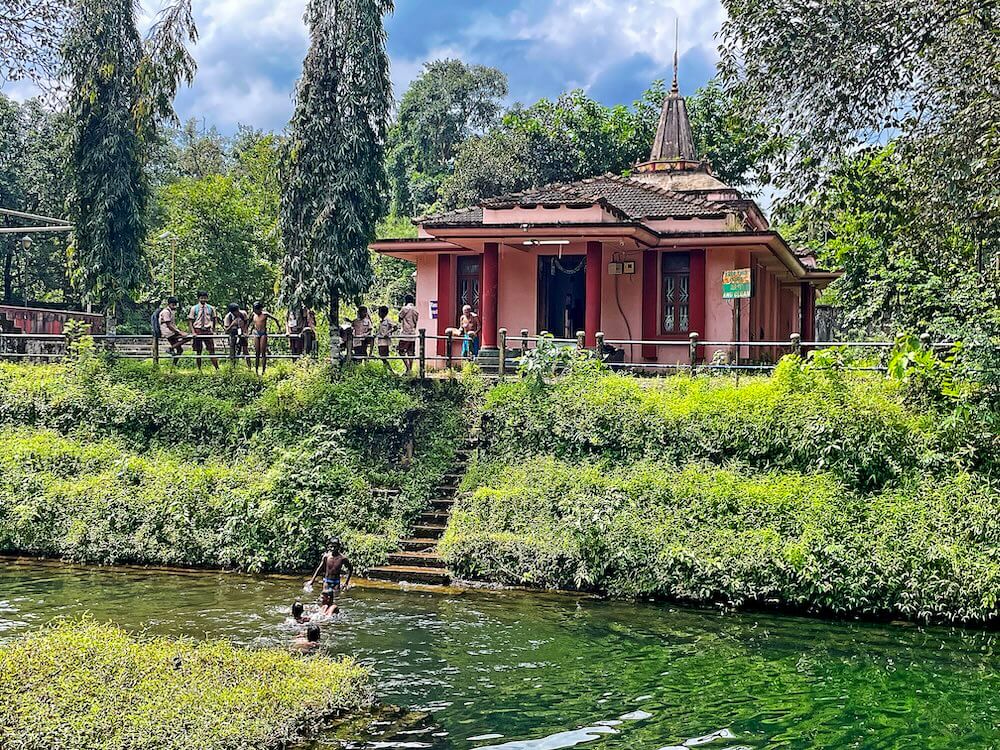
Shop Photo FramesBuilt during the Kadamba era and known for its unique ‘Bubbling Lake’ (Budbud Tale), the Gopinath Temple is situated within the nature-rich Netravali Wildlife Sanctuary. In front of the temple lies a pond with steps, similar to a Pushkarini. Its unique feature is that when one claps loudly or makes a loud sound, bubbles emerge from beneath the water. Because of this, it is known as the ‘Bubbling Lake’. Devotees, tourists, and architectural scholars visit this place to see both this lake and the ancient Gopinath Temple.
Gopinath means Krishna. The Mahabharata, Harivamsa, the fifth canto of the Vishnu Purana, the tenth canto of the Bhagavata Purana, and the Brahma Vaivarta Purana are considered the main foundations of the life of Krishna. The Krishna story prevalent everywhere today is the one from the tenth canto of the Bhagavata. In this text, the form of Krishna as the Lord of the Gopis (Gopinath) is prominently featured. Many legends are prevalent regarding this Gopinath temple. According to one story, Krishna appeared to a king of the Kadamba dynasty in a dream and said, “My idol is under the water. Find it and install it in a temple.” Accordingly, the Kadamba king ordered his officials to search for the idol in the forests of Netravali. At that time, this idol of Krishna was found in a well. Later, a temple was built there and the idol was installed.
Scholars estimate that this temple was built in the 12th century. It is said that it was renovated several times thereafter during the Vijayanagara Empire in the 13th century and even later. Because this temple was situated in the dense forests of Netravali, in an area that was very remote at the time, it was saved from the attacks of iconoclastic invaders like the Bahmanis or the Portuguese. It is said that the great 18th-century saint of Konkan and author of texts like ‘Siddhantasamhita’, ‘Akshayabodha’, and ‘Advayananda’, Sohiroba Ambiye (1714–1792), meditated in this temple for some time. Sohiroba Ambiye’s family was originally from Palye in Bicholim taluka.
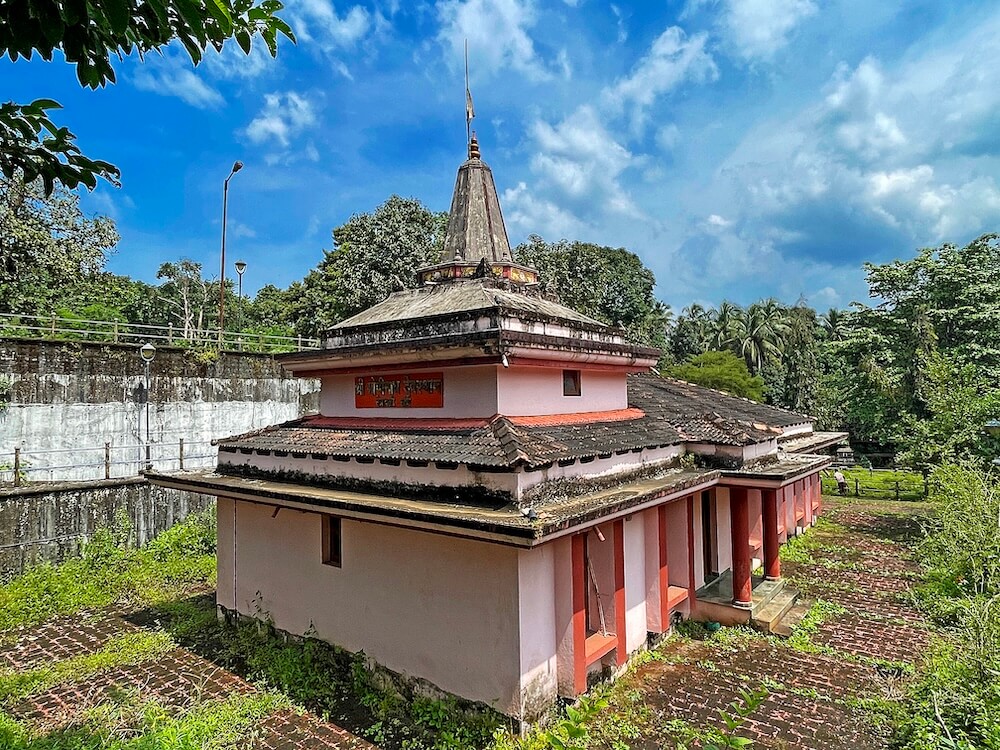
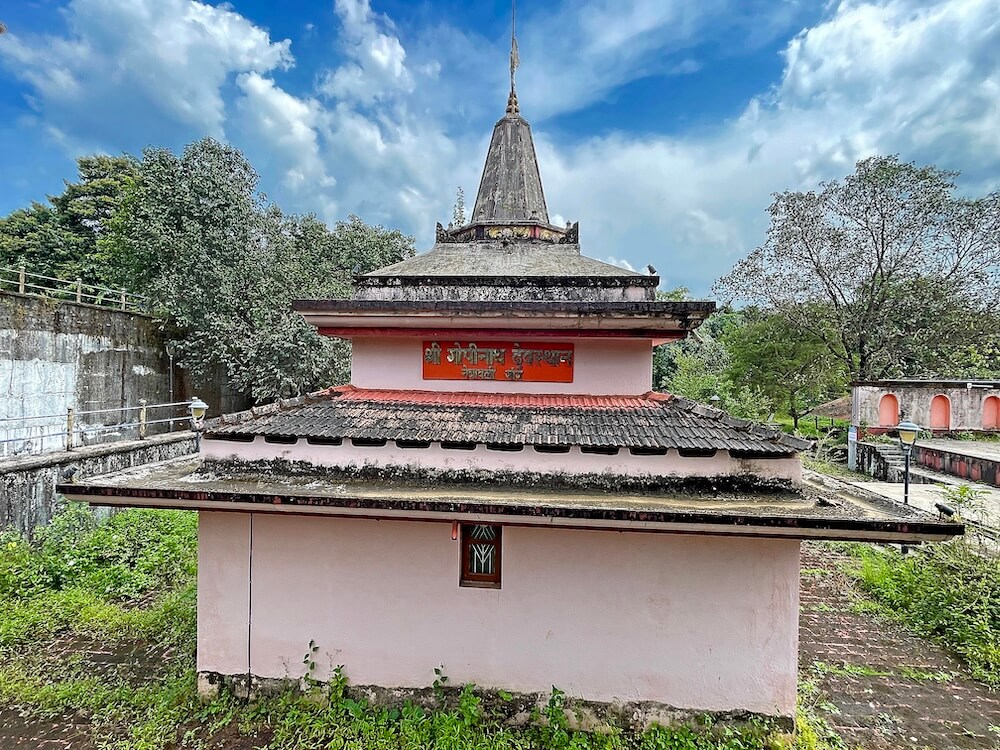
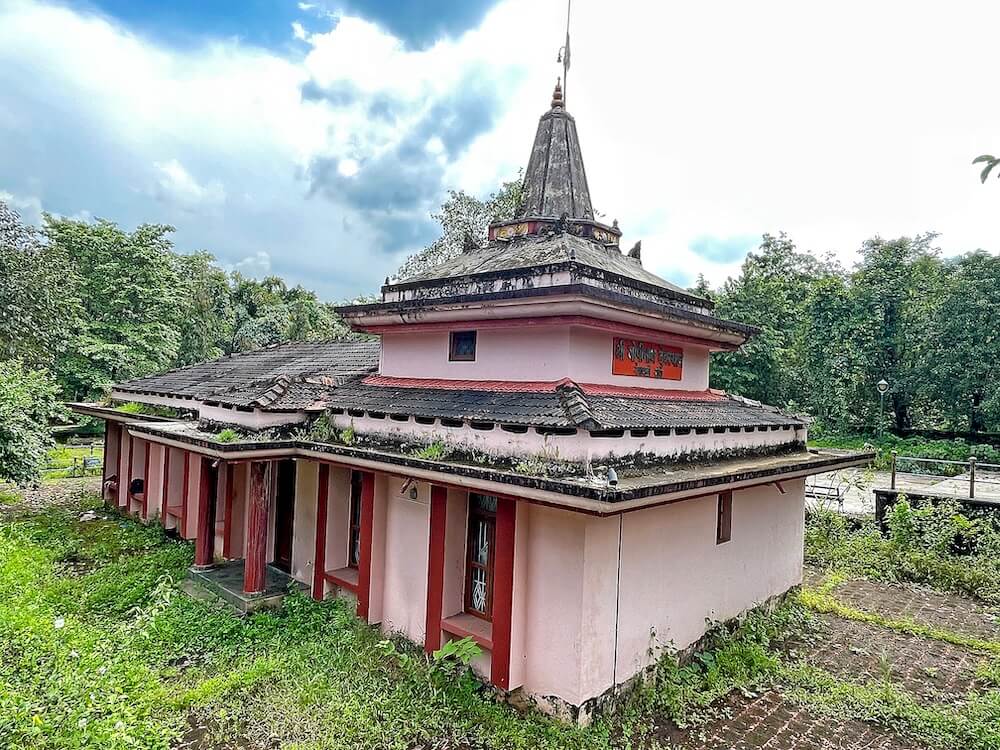
It is said that the original temple here was in the Kadamba architectural style. This architectural style is a confluence of the styles of the Hoysala and Chalukya periods. The pillars of this temple featured depictions of Surasundaris and the Leelas (divine plays) of Krishna. Over time, the temple structure became dilapidated. The construction developed leaks, and some parts collapsed. Then, between 1961 and 1980, the temple underwent periodic restoration and renovation. In this new structure, the size of the temple’s Sabha Mandapa (assembly hall) was increased. The second phase of temple renovation took place in the nineties. Modern construction methods were used at that time. Instead of the traditional Kadamba-style shikhara (spire), a shikhara with North Indian influence was built over the temple.
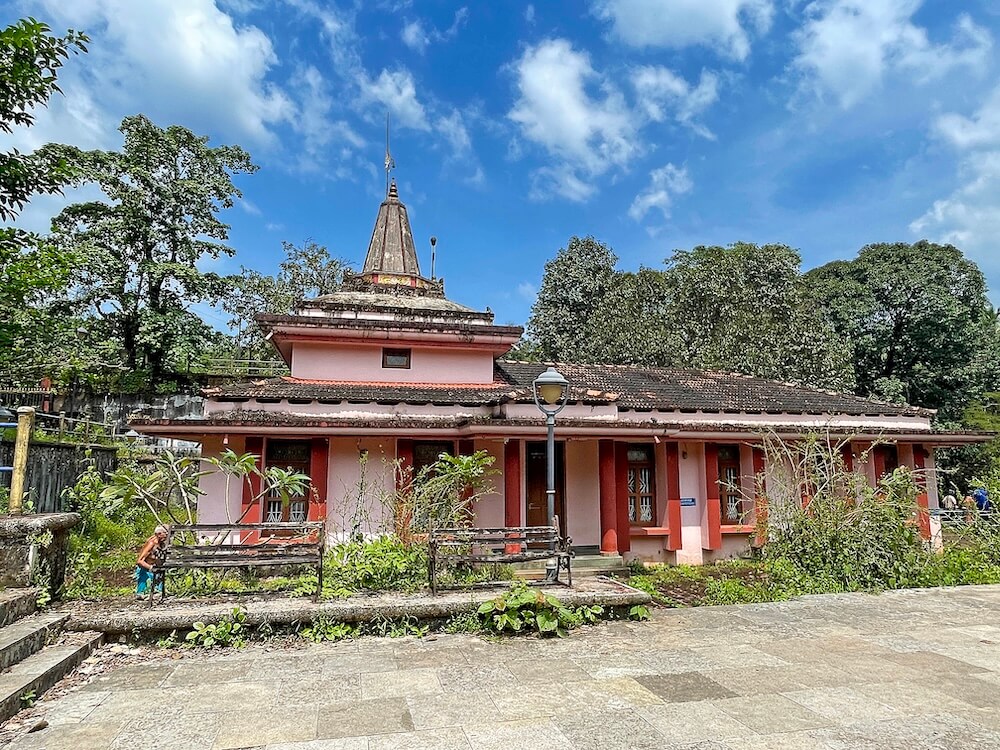
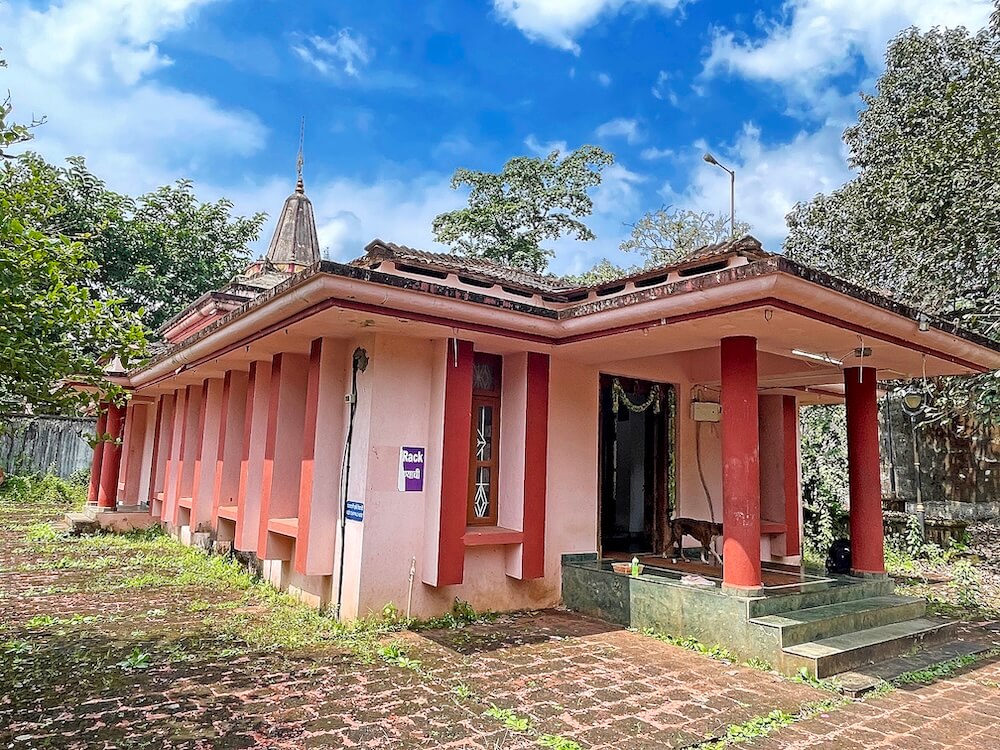
The structure of the temple consists of a semi-open Sabha Mandapa with large windows, an Antarala (vestibule), and a Garbhagriha (sanctum sanctorum) with a circumambulatory path. The idol of Muralidhari (flute-playing) Shri Krishna, installed on a Vajrapitha in the Garbhagriha, is very exquisite. This carved idol, made from a single monolithic stone, has beautiful craftsmanship. It is in the Tribhanga posture, meaning it is bent at three places. At Krishna’s feet, on one side, cattle (Godhan) are depicted. Like many other old temples in Goa, the roof of the rest of the temple, excluding the shikhara over the Garbhagriha, is tiled. There is a hexagonal shikhara built using cement over the Garbhagriha.
Devotees can visit this Gopinath temple daily from 6:30 AM to 12:30 PM and from 3:30 PM to 6:30 PM. The main festival celebrated here is Janmashtami in the month of Shravana. During this time, Bhajans-Kirtans, Rasleela dramas, and Annadan (food distribution) are organized. The second major festival is Govardhan Puja, performed in the month of Kartika. Other festivals include Ganesh Chaturthi and Holi, known as Shigmo. Local folk arts are performed during these festivals. A large number of devotees visit during these festive times.
In front of this temple is a large pond built with laterite stones on all four sides. Locals say that when one stands on its bank and chants ‘Omkara’ loudly, bubbles emerge from the water. A similar phenomenon can be seen at the Bombadeshwar temple in the village of Math Budruk in Malvan taluka, about 200 km away. Bubbles also emerge from the pond there. The village of Nadavade in Sindhudurg district is famous as the ‘village of springs’. Such bubbles emerge from the flowing water there. The scientific explanation for this is that there are porous rocks beneath the geological strata. There is air in their cavities. There are basalt-type rocks in Konkan. They contain salts. These are slowly washed away by the heavy rains here. This makes the rocks porous. Loud sounds create vibrations in the water. These vibrations cause the air in the cavities of the rocks to escape, thereby creating bubbles. Such bubbles appear even if one claps or shouts loudly. Tourists coming for jungle safaris in the Netravali Wildlife Sanctuary also make it a point to visit this place to experience this natural wonder.
This sacred temple stands as a testament to deep spiritual devotion, ancient architectural grandeur, and rich local cultural traditions.
The sanctum sanctorum houses the divine idol consecrated according to ancient Vedic traditions, surrounded by serene courtyards and traditional temple architecture.
Navratri, Maha Shivratri, Annual Temple Jatra & Deepotsav
Compare and book flights, secure top-rated local hotels near the temple, hire reliable guides, and rent cars instantly.
Extend your pilgrimage by visiting other highly sacred temples located nearby.


Add ₹999 more to unlock FREE SHIPPING!
Your sacred cart is currently empty.
Shop Photo FramesFill in your delivery details below to place your order.
Add comment