
Add ₹999 more to unlock FREE SHIPPING!
Your sacred cart is currently empty.
Shop Photo FramesThe Harihar Temple, which offers a divine glimpse of the unified form of Hari (Vishnu) and Hara (Shiva), is situated in Harihar Peth, Akola. This temple was built by Bachulal Agrawal, a staunch devotee of Gajanan Maharaj of Shegaon, who also constructed the famous Mota Ram Mandir in Akola. In this temple, which is over a hundred years old, the ‘Harihar Milan’ ceremony held on Vaikuntha Chaturdashi in the month of Kartik is very famous. During this ceremony, attended by hundreds of devotees, the atmosphere resonates with the chants of Hari-Hara.
In Hindu Dharma, there are many sects and traditions such as Shaiva, Vaishnava, Shakta, Smarta, and Saura. There have been instances of disputes between the Shaiva and Vaishnava sects regarding the supremacy of their respective deities and philosophical matters. In the Puranas dedicated to each deity, that specific deity is considered supreme while others are considered subordinate. There are also records of conflicts between them at times. It was for this reason that religious scholars and saints showed people the path of harmony between these deities. In Maharashtra, Saint Nivruttinath added Krishna-bhakti to Shiva-bhakti and stated through his Abhangas that both these deities are one and the same. Even before that, it is said that Hari and Hara were considered as one and their idols were worshipped. The earliest sculpture of Harihara was found in the Badami caves in Karnataka, which were excavated in the sixth century.
Regarding the creation of Harihara, a mythological legend states that after the churning of the ocean (Samudra Manthan), a conflict arose between the Suras (devas) and Asuras for the consumption of Amrita (nectar). At that time, Vishnu assumed the Mohini avatar. Mohini enchanted the Asuras and led them away, ensuring all the nectar went to the gods. At that moment, Mahadeva himself was captivated by this Mohini avatar of Vishnu. He attempted to embrace Mohini. At this very moment, Vishnu returned to his original form. However, due to that embrace, Shiva and Vishnu became one. From this, the form of Harihara was created. There is another legend that a dispute arose between Shaivas and Vaishnavas over whose deity was supreme. Then, both Shiva and Vishnu manifested in a single body and gave a message of unity.
According to iconography, the idol of Harihara is crafted in a specific manner. One part represents Vishnu and the other represents Shankara. The body on the Vishnu side is adorned with garments and ornaments, while the body on the Shiva side is carved with simple attire. The sculpture features symbols associated with Shankara, such as the Trishula (trident) and Damaru, as well as symbols associated with Vishnu, such as the Shankha (conch), Chakra (discus), and Gada (mace). The sculpture also includes Nandi and Garuda. In Maharashtra, many villages, pilgrimage sites, or temples are known by the name Harihar. However, such an idol of Harihara is rare. The idol in the Harihar Temple in Akola is crafted according to iconographic principles. This temple was established in the year 1901 AD. It is from this temple that the area derived the name Harihar Peth.
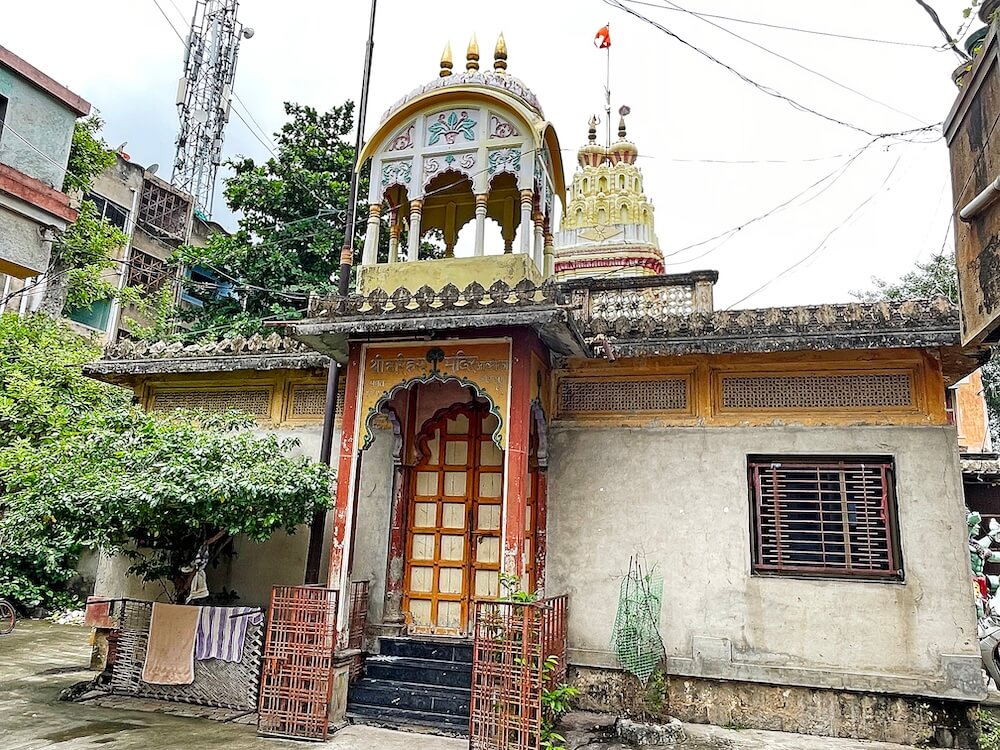
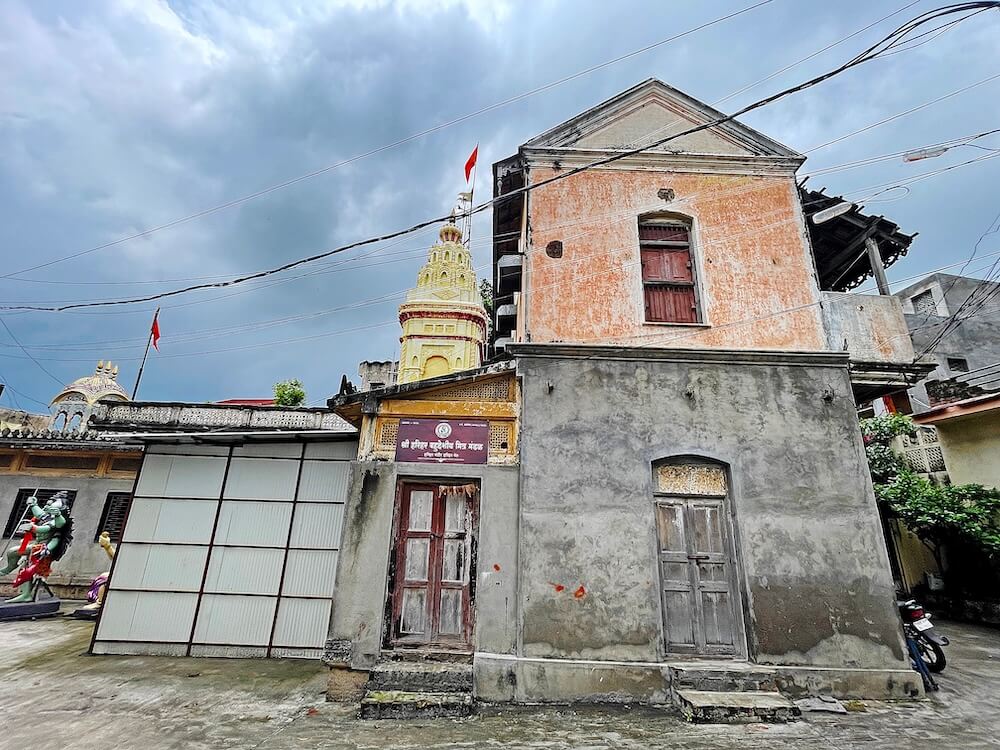
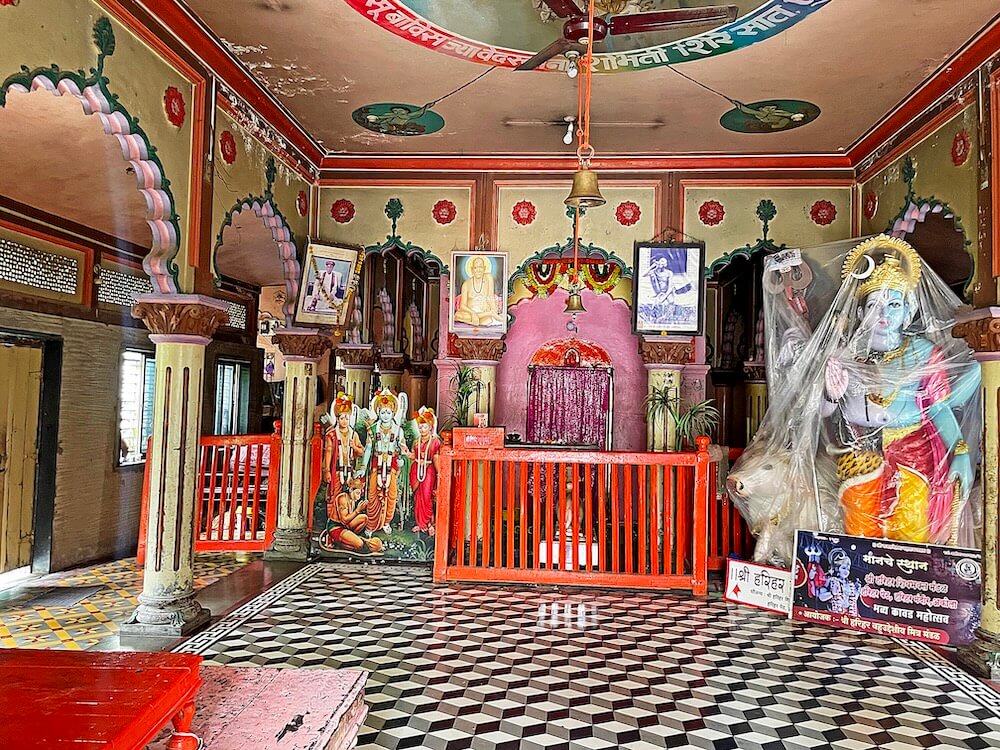
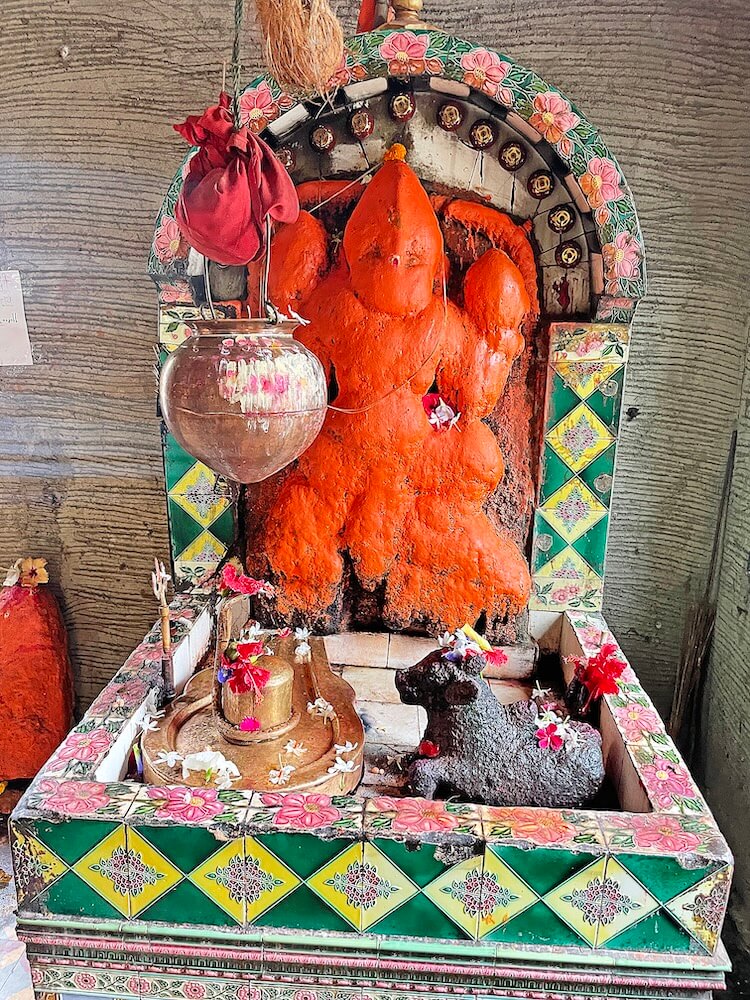
The Harihar Temple is located in a bustling and densely populated area of Akola city. Near the temple arch, there is a small Hanuman temple. Upon entering through this arch, one gets a glimpse of the ancient structure of the Harihar Temple. Near the Harihar Temple, there is an ancient well. It is said that Gajanan Maharaj often used to sit near this well. Above the entrance of this temple is a beautifully carved Meghadambari (canopy). The temple structure consists of a Sabhamandapa (assembly hall) and a Garbhagriha (sanctum sanctorum). One enters the Sabhamandapa of this temple, which stands on a high plinth, after climbing four steps. The circular pillars in the Sabhamandapa are connected to each other by arched gateways. In this Sabhamandapa, there are portraits of Bachulal Agrawal and Gajanan Maharaj.
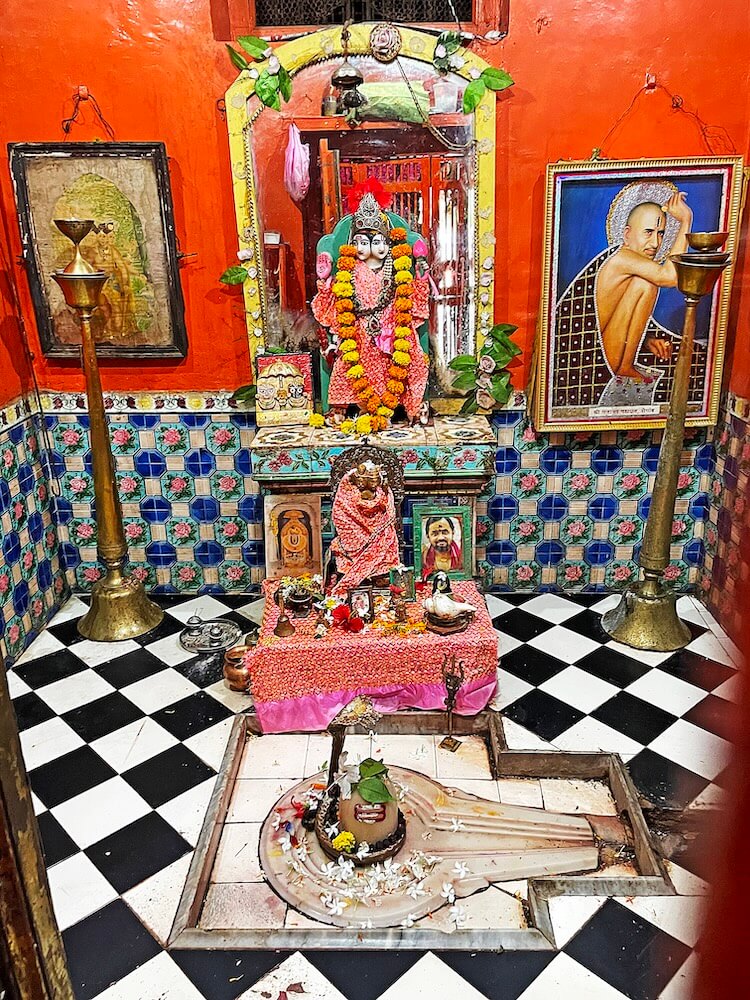
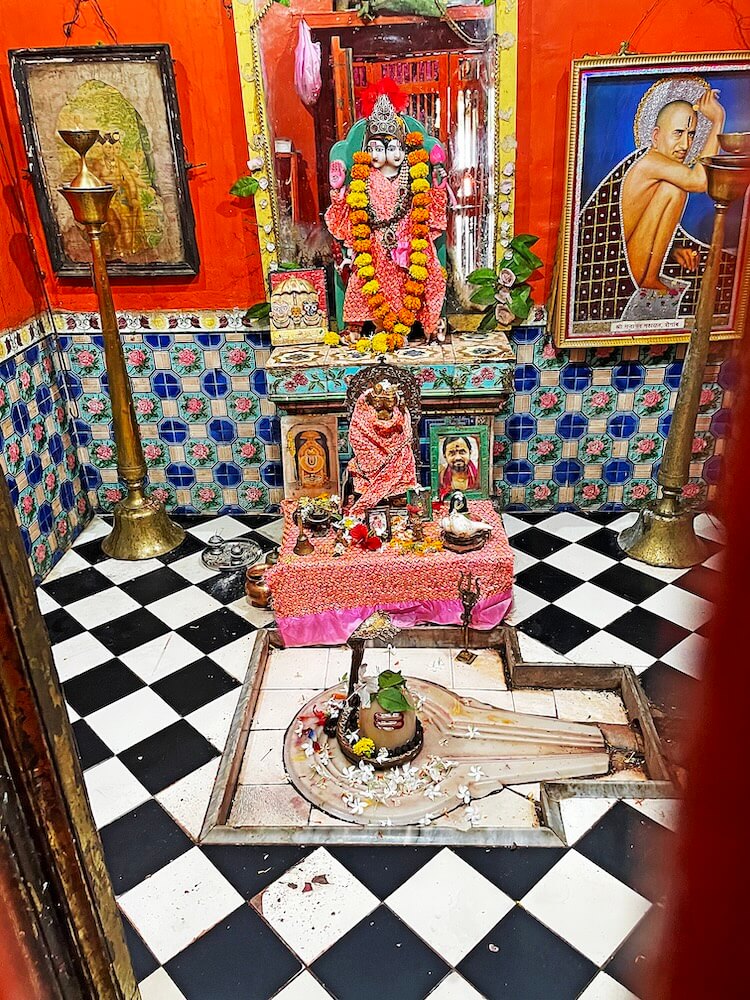
Beyond the Sabhamandapa, there is a wooden railing, and beyond that, leaving space for the circumambulation path (Pradakshina), is the structure of the Garbhagriha. Near the entrance of the Garbhagriha, there is an idol of a white marble Nandi on a pedestal. In the Sabhamandapa, on the floor, there is a Shivlinga, and on a Vajrapitha, there is a captivating idol of Harihara. The right side of this idol is Shri Vishnu, and the left side is Shiva. In Vishnu’s hands are the Shankha, Chakra, and Gada. In one of Mahadeva’s hands is the Trishula and Damaru, while the other hand is in a blessing posture. Behind the Shiva side is Nandi, and behind the Vishnu side is Garuda. Since both Hari and Hara reside here, there are two Urushringa-style spires on the Garbhagriha of this temple.
The management of this temple is handled by the Shriram and Harihar Sansthan, which also oversees the city’s Mota Ram Mandir. Daily worship and rituals are performed in this temple. Festivals like Ram Navami and Dattajayanti are celebrated here with great enthusiasm. The ‘Harihar Milan’ ceremony held on Paush Shukla Ekadashi, also known as Vaikuntha Ekadashi, is the main festival here. According to mythological legend, on Devshayani Ekadashi, Vishnu entrusts the responsibility of managing the universe to Mahadeva and goes to sleep on Shesha. He wakes up from his slumber on Devprabodhini Ekadashi. During this Chaturmas, Mahadeva manages the universe. On the day of Vaikuntha Ekadashi, Mahadeva hands over the management of the universe back to Vishnu and goes to Mount Kailash for penance. It is believed that on this day of Vaikuntha Ekadashi, ‘Harihar Milan’, i.e., the meeting of Vishnu and Shiva-Shankara, takes place. This day marks the conclusion of Chaturmas. It is believed that performing the ritualistic worship of Lord Mahadeva and Shri Vishnu on this day leads to salvation and removes all sorrows from life. Devotees believe that worshipping Harihara on this day removes all inauspicious effects from one’s horoscope. Therefore, hundreds of devotees from Akola visit this temple on this day. A grand Harihar Milan ceremony also takes place at the Rajrajeshwar Temple in the city.
This sacred temple stands as a testament to deep spiritual devotion, ancient architectural grandeur, and rich local cultural traditions.
The sanctum sanctorum houses the divine idol consecrated according to ancient Vedic traditions, surrounded by serene courtyards and traditional temple architecture.
Navratri, Maha Shivratri, Annual Temple Jatra & Deepotsav
Compare and book flights, secure top-rated local hotels near the temple, hire reliable guides, and rent cars instantly.
Extend your pilgrimage by visiting other highly sacred temples located nearby.


Add ₹999 more to unlock FREE SHIPPING!
Your sacred cart is currently empty.
Shop Photo FramesFill in your delivery details below to place your order.
Add comment