
Add ₹999 more to unlock FREE SHIPPING!
Your sacred cart is currently empty.
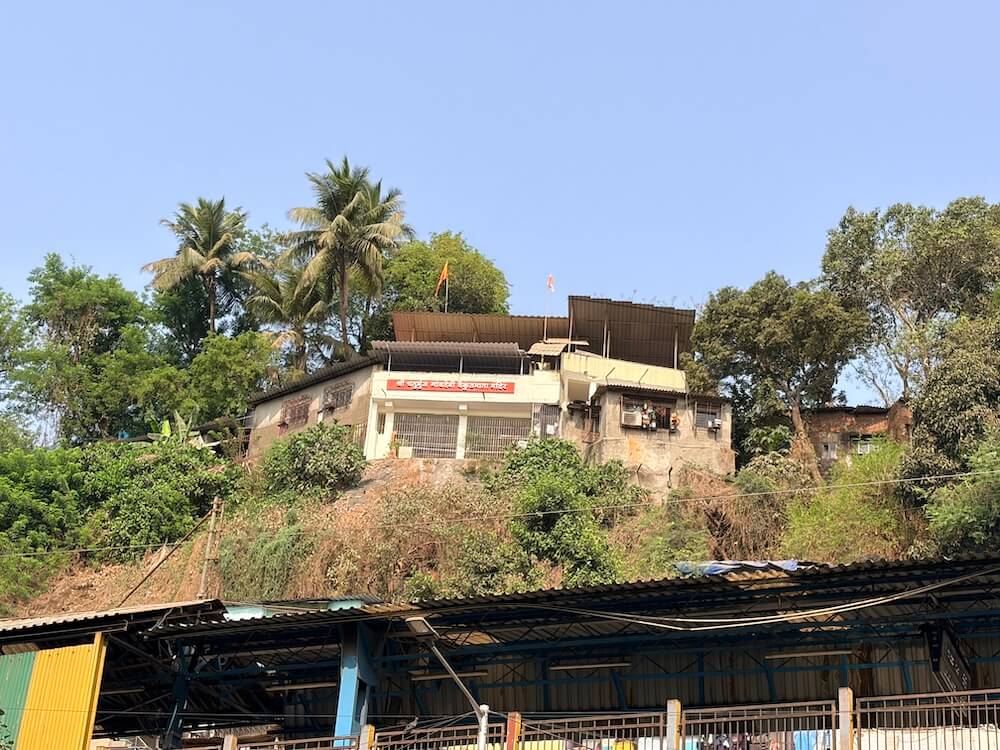
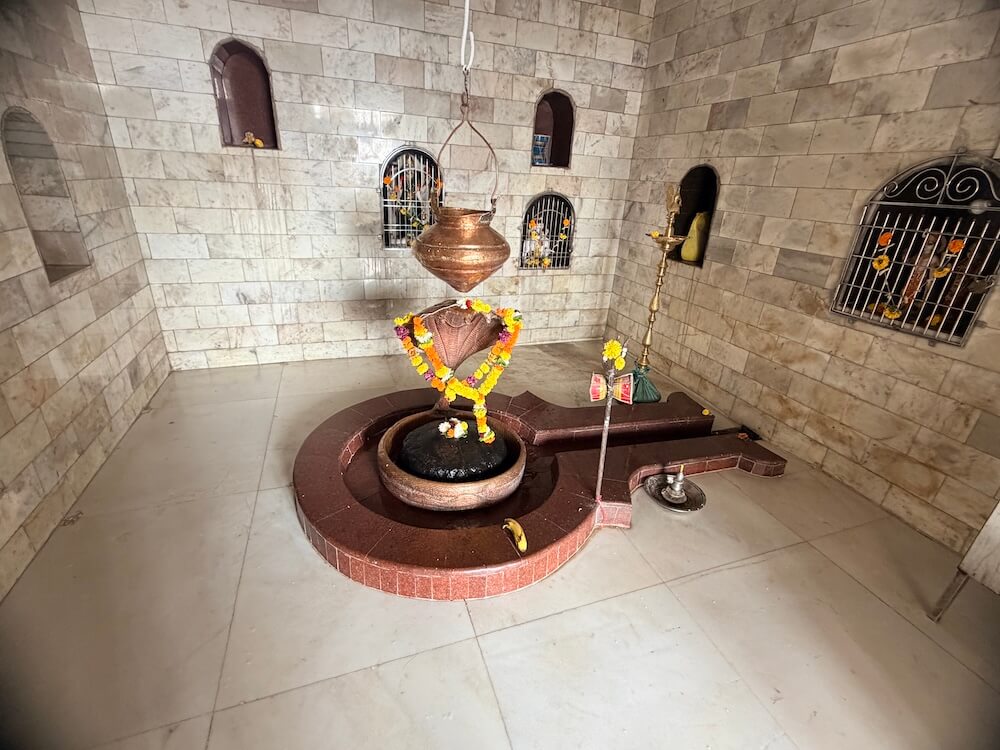
Shop Photo FramesThe temple of Vaikunthamata, the presiding deity of Mazgaon island—one of the seven original islands of Mumbai—is situated here on Bhandarwada Hill. Known as the Gavdevi of Mazgaon, this Goddess is the revered deity for many families of the Koli community. It is said that the Goddess has been present at this location since ancient times. Devotees believe that the Goddess here is ‘Jagrut’ (awakened) and grants their prayers. The temple also houses a ‘Swayambhu’ (self-manifested) Shiva Linga of Pataleshwar Mahadev. Like Navratri, a large number of devotees gather here on Mahashivratri as well.
The city of Mumbai was formed by the unification of seven original islands: Great Colaba, Little Colaba, Mumbapuri, Mazgaon, Parel, Worli, and Mahim. These islands have a history dating back to the Stone Age. Stone Age tools have been found in the Back Bay area of Mumbai. According to records in the ‘Gazetteer of Bombay City and Island, Volume 2’, published in the year 1910, these Stone Age humans had a direct connection to the original Dravidian Koli tribe of this region. The Gazetteer also states that the original home of the Koli tribes on these islands was a part of Gujarat. After settling on the seven islands of Mumbai, these tribes installed their respective presiding deities. It is generally accepted that Mumbadevi is one of those deities, and the city of Mumbai is named after her.
Vaikunthamata is the Goddess installed by the Koli community of Mazgaon on a high hill here. She is considered the village deity (Gramdevata) of Mazgaon. According to the book ‘The Origin of Bombay’ (1900) by Portuguese historian J. Gerson da Cunha, the origin of the name Mazgaon is explained in three ways. Some say that because this village was at the center of the island, it was called ‘Majghar’ (middle house), which led to the name Mazgaon. Others attribute its origin to ‘Masagaon’, meaning ‘Mahishgram’ or the village of buffaloes. According to Da Cunha, the original name of this village might have been ‘Machhgaon’. Its Sanskritization is done as ‘Matsyagram’. This Machhgaon later became Mazgaon. Nitin Salunkhe, a scholar of Mumbai’s history, has stated in his book ‘Agnat Mumbai’ that the name Mazgaon was given by the Portuguese. Until the year 1769, for about 267 years, there was a Portuguese colony on the western coast of Morocco. The locals there called themselves ‘Mazighan’. Based on this, the Portuguese named that colony ‘Mazgaon’, meaning the land of the original inhabitants. Later, the Sultan of Morocco expelled the Portuguese. Thereafter, the Portuguese established their colony on the coast of Brazil. They named that colony ‘Nova de Mazgaon’. That city still exists in Brazil today. Subsequently, when the Portuguese took control of the islands of Mumbai, they named one of the islands after their old colony – Mazgaon.
The exact history of the establishment of the Vaikunthamata Gavdevi Temple is not available. According to local experts, there was a small temple of the Goddess here since at least the sixteenth-seventeenth century. The Goddess was worshipped in the form of a stone slab. The legend regarding this temple is that in the year 1739, during the Battle of Vasai against the Portuguese, the brave warrior Chimaji Appa had made a vow to this Goddess of Mazgaon. After the success of this campaign, he renovated the temple. After the recent renovation and modernization, the temple and its premises have attained their current form.
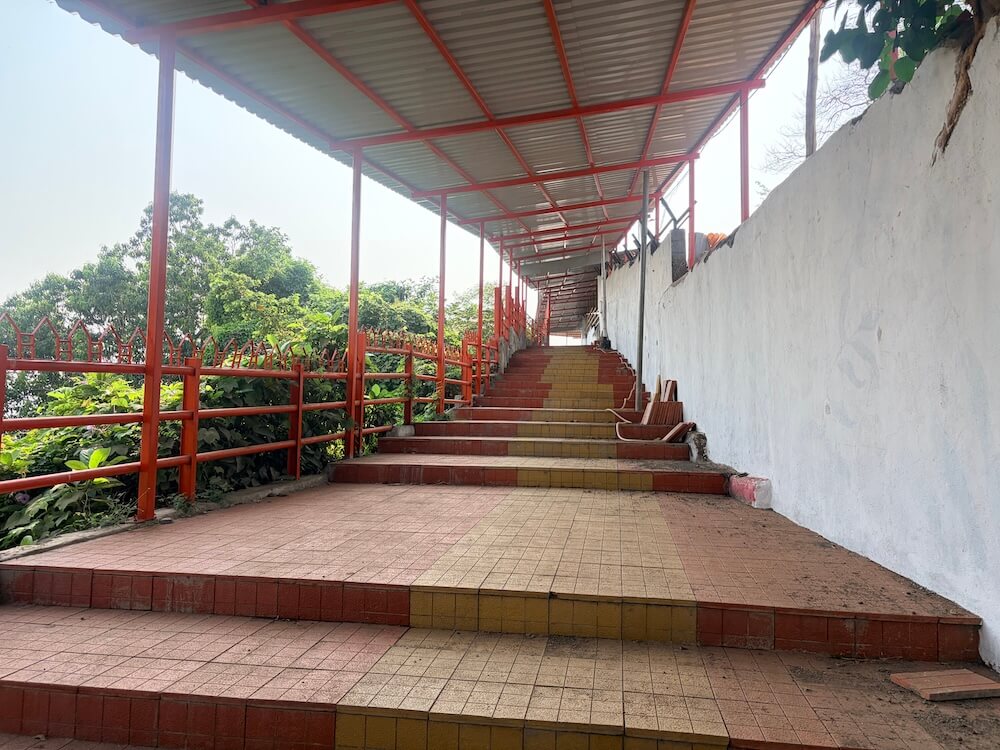
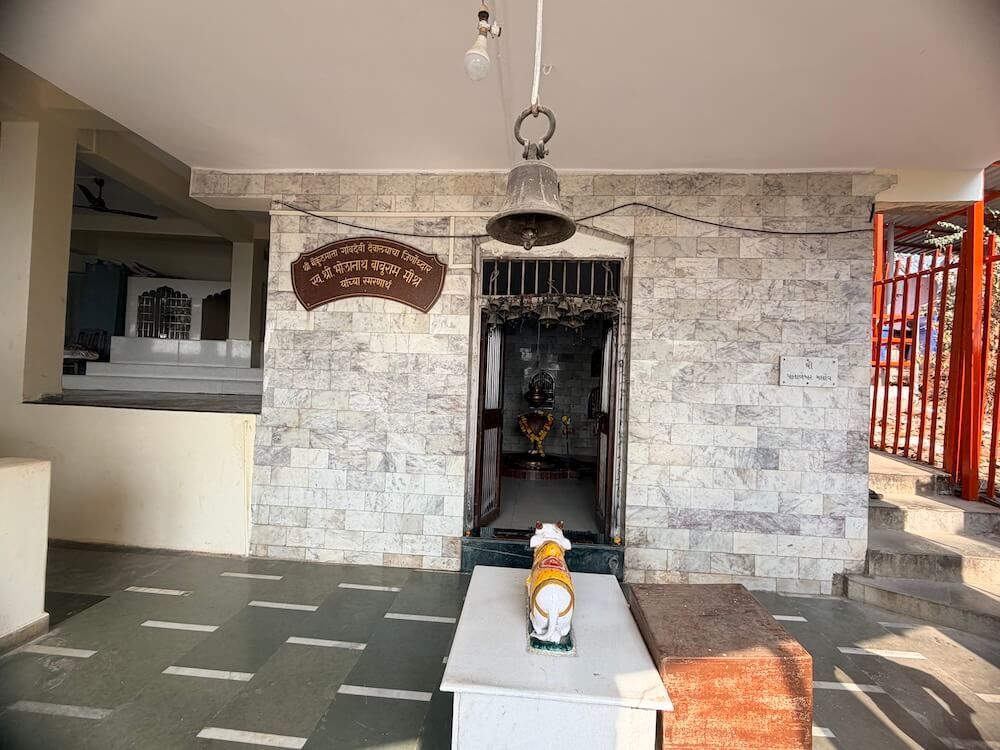
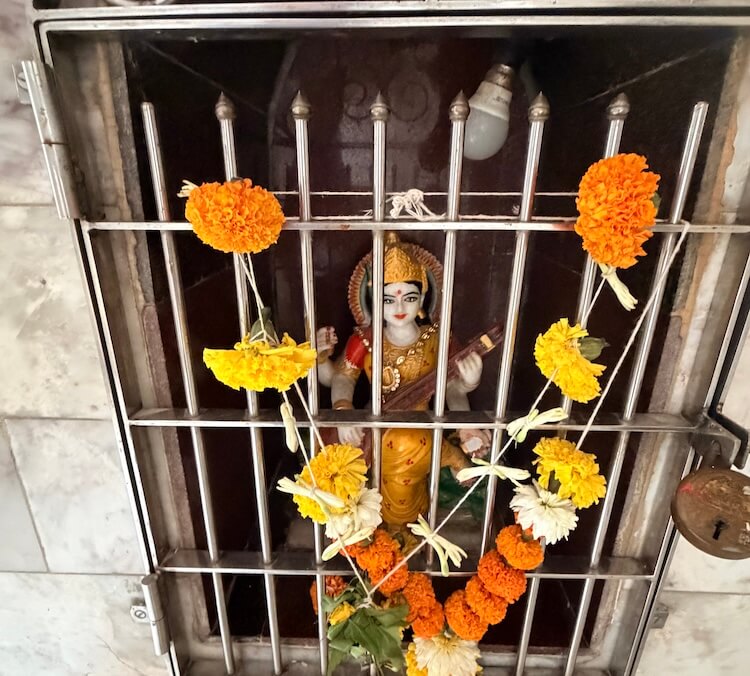
The temple is situated on Bhandarwada Hill, a short distance ahead of the ‘Joseph Baptista Garden’ of the Brihanmumbai Municipal Corporation in Mazgaon. Stairs have recently been built on the path leading up the hill. Upon reaching the top of the hill, one first gets the darshan of the Pataleshwar Mahadev temple. This temple, built with marble tiles, is situated in a cement concrete pavilion. In front of the temple, on a marble platform, is a stone statue of Nandi. Next to the platform is a statue of a tortoise. Inside the basement, the Swayambhu Shiva Linga of Pataleshwar Mahadev is installed. Around it is a large ‘Shalunka’ (base) made of marble tiles. The Shiva Linga is coiled by a copper serpent with its hood raised. Above it is a copper ‘Galantika’ (dripping vessel). In the niches of the walls of the sanctum sanctorum, marble statues of Saraswati, Ganpati, Parvatimata, Dattatreya, and Lakshmi-Narayan are seated.
On a large platform to the right of this temple, in marble shrines built on one side, are the statues of Lord Krishna, Maruti, Khandoba, and Goddess Bhagwati. After descending 11 steps from here, one enters the temple of Vaikunthamata. The temple consists of a ‘Sabhamandap’ (assembly hall) and a silver shrine for the Goddess within it. This shrine was installed here in the year 2021. The front part of this Sabhamandap, built in cement concrete, is fitted with an iron grill, which allows plenty of light in this area. Two large brass bells are hung from the ceiling in the Sabhamandap in front of the Goddess’s shrine. The idol of Vaikunthamata is seated in this large shrine, which is covered with silver foil featuring intricate carvings. The Goddess is in a ‘Chaturbhuj’ (four-armed) form and is a wielder of weapons. The idol is adorned with garments, ornaments, and garlands of flowers. The idol has a brass mask and a crown on it. Adjoining the wall at the back of the shrine is a horizontal natural stone. Vermilion (Shendur) is applied to this stone-form idol of the Goddess. To the left of this shrine is a small wooden shrine, in which statues of Vitthal-Rukhumai are seated. Being on a high hill, one can see a panoramic view of the surrounding area from this temple. The Mazgaon Dock area is visible from here.
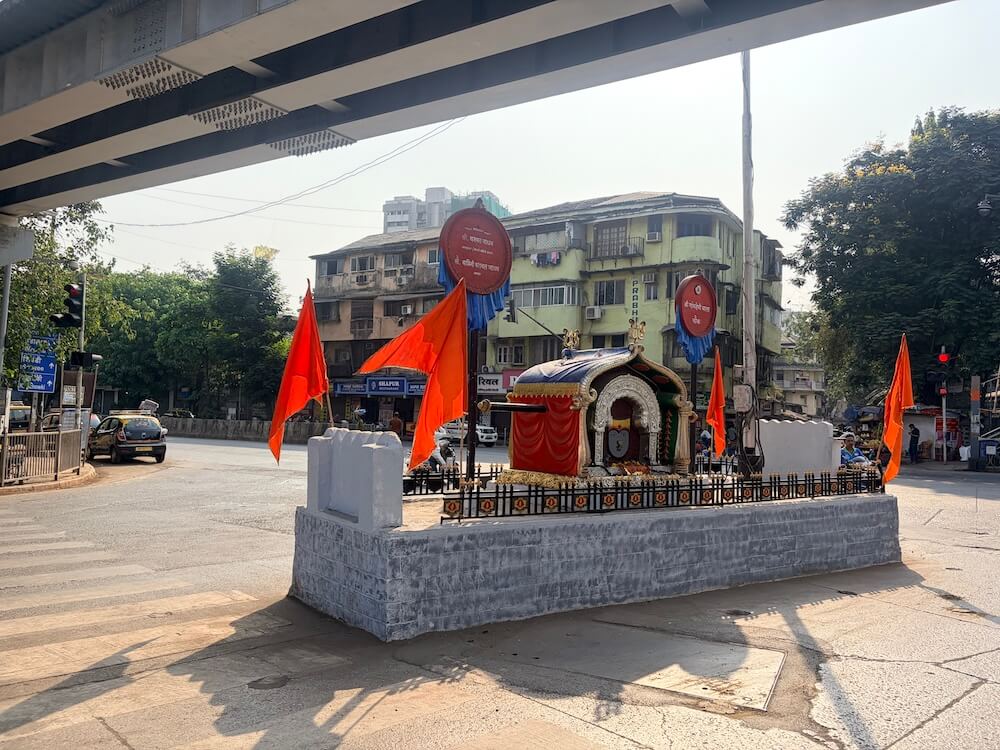
The annual fair of this Gavdevi of Mazgaon is held on Mahashivratri. Many families in this area have faith in the Goddess. Over time, many families here migrated elsewhere and the daughters here got married and moved to their in-laws’ homes, but during this fair, these families and the married women (Saubhagyavati) who consider this their maternal home, make it a point to come for the darshan of the Goddess. There is a tradition of offering a ‘Oti’ (a ritual offering of a coconut and blouse piece) to the Goddess. Along with the fair, the Palkhi procession held on Chaitra Purnima is a major festival at this temple. This procession is organized by the ‘Mazgaon Gavdevi Utsav Mandal’. Many devotees from the area participate in this Palkhi procession. Devotees can have darshan of the deity in the temple from 6 in the morning until 8:30 in the night.
This sacred temple stands as a testament to deep spiritual devotion, ancient architectural grandeur, and rich local cultural traditions.
The sanctum sanctorum houses the divine idol consecrated according to ancient Vedic traditions, surrounded by serene courtyards and traditional temple architecture.
Navratri, Maha Shivratri, Annual Temple Jatra & Deepotsav
Compare and book flights, secure top-rated local hotels near the temple, hire reliable guides, and rent cars instantly.
Extend your pilgrimage by visiting other highly sacred temples located nearby.


Add ₹999 more to unlock FREE SHIPPING!
Your sacred cart is currently empty.
Shop Photo FramesFill in your delivery details below to place your order.
Add comment