
Add ₹999 more to unlock FREE SHIPPING!
Your sacred cart is currently empty.
Shop Photo FramesGoddess Durga is Adishakti, the Supreme Divine Energy. According to mythological lore, she came to be known as Durga because she slayed the demon named Durg. The Markandeya Purana states that Goddess Durga was manifested from the divine essences of deities such as Shiva, Yama, Vishnu, Chandra, Indra, Varuna, Bhumi, and Surya. Goddess Durga possesses both fierce (Raudra) and gentle (Saumya) forms. In Kolkata, she manifests in her Kali form, whereas in Goa (Gomantak), she resides in her peaceful Shanta form. Idols of her various forms are found in different places. One such ancient, exquisitely sculpted black stone idol of Goddess Durga is enshrined in the temple at Kunkawale in Malvan Taluka. Devotees hold an abiding faith that this Goddess fulfills vows and answers every call of her devotees.
Although precise historical records regarding the exact age of this Durgadevi Temple in Kunkawale are unavailable, it is estimated to be over a thousand years old. There is a welcome arch at the entrance of the temple courtyard. In the courtyard, resting on a pedestal, stands a five-tiered octagonal Deepastambha (lamp tower). Adjacent to it is a unique Tulsi Vrindavan. The lower section of the Vrindavan features various geometric shapes topped with a lotus motif. Within this lotus flower, elephant heads (Gajashirsha) face all four directions. Held within the trunks of these elephant heads is another lotus flower motif. Additionally, there is an ancient well in the courtyard, reverently referred to as the Teertha well. Local villagers believe that taking a holy bath in the water of this well cures skin ailments.
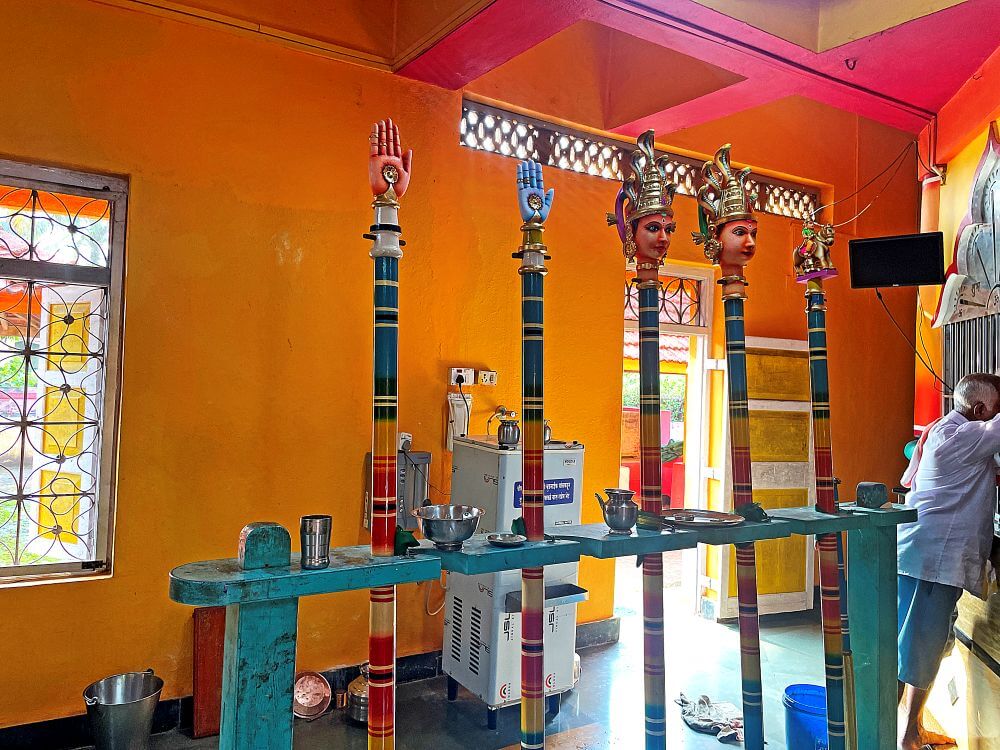
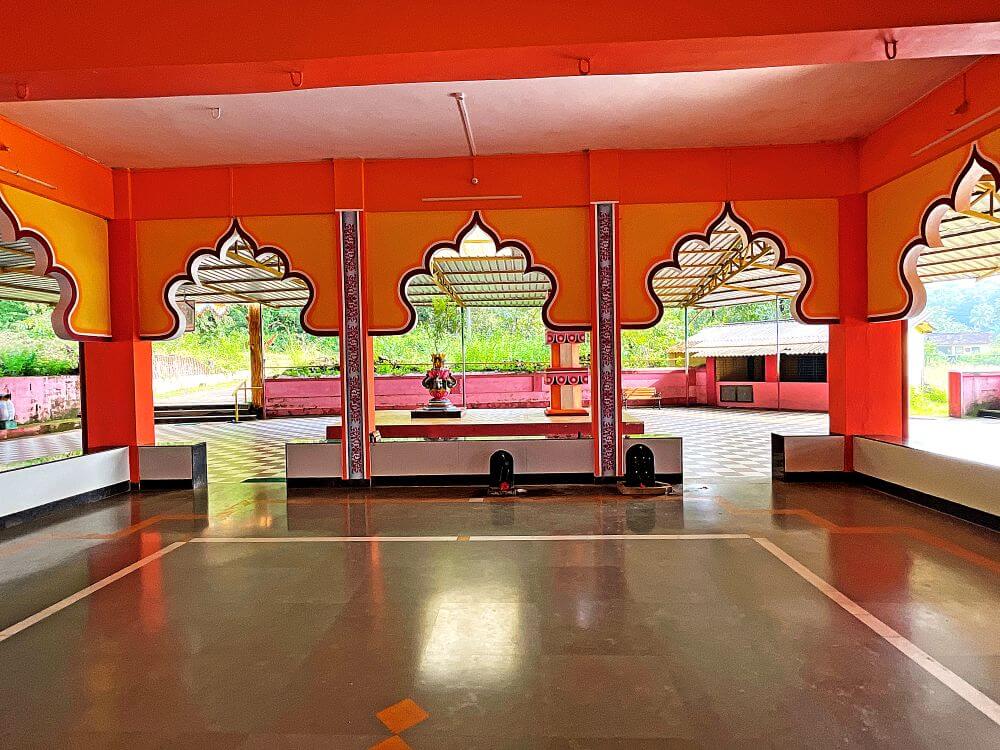
The architectural structure of the temple comprises a Sabhamandapa (assembly hall), Antarala (vestibule), and Garbhagriha (sanctum sanctorum). One enters the Sabhamandapa from near the Deepastambha. The Sabhamandapa here is semi-open, featuring side seating arrangements (Kakshasans) for devotees. The wooden entrance door of the Antarala is adorned with intricate carving on its frame. The Antarala is an enclosed structure featuring four lattice windows (Gavakshes) to allow light and ventilation. Within the Antarala are enshrined the Tarangdevatas, including Rasai, Daroba, Pawna Devi, Ravalnath, and Gango. On the other side is a wooden palanquin (Palkhi) used during festive occasions. There are exit doors on both sides of the Antarala. Above the Darshan Mandapas located outside these doors are modak-shaped spires (Shikharas) topped with Kalashas.
Beyond the circumambulatory path (Pradakshina marga) in the Antarala lies the Garbhagriha. In the center of the Garbhagriha stands a beautifully carved wooden Makhar supported by four pillars. Enshrined inside the Makhar is a four-armed (Chaturbhuja) standing idol of Goddess Durga, about four and a half feet in height, sculpted from black stone. It is said that originally, a sacred stone (Pashan) was worshipped in this temple. Around 350 years ago, a sculptor who was a devout follower of the Goddess spent two years in solitude to carve this exquisitely beautiful idol. The Goddess is four-armed; her left hands hold a Chakra (discus) and a sword, while her right hands hold a Trishula (trident) and an Amritapatra (vessel of nectar). She wears a intricately sculpted crown on her head, along with necklaces, armlets (Bajuband), and other finely detailed artistic ornaments and garments. The Goddess wears wooden sandals (Khatawa) on her feet, and on either side near her feet stand female attendants (Shaktis). One attendant stands armed as a guardian (Dwarpal), while the other holds a fly-whisk (Chavari). Behind this attendant is a sculpted serpent, and carved beneath is the image of a tiger. The back-slab (Pathshila) of the idol features floral and vine motifs. In front of the idol rests an ancient stone Prasadapatra. Devotees believe that the sacred water (Teertha) from the Goddess’s Abhisheka and the water from her Amritapatra grant relief from various illnesses.
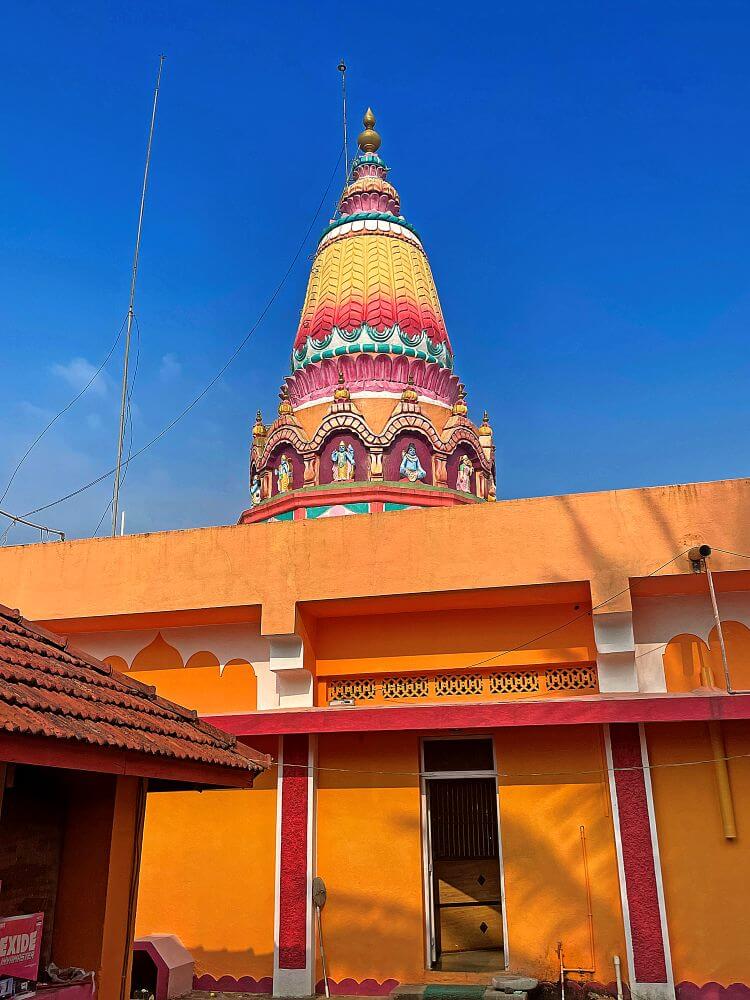
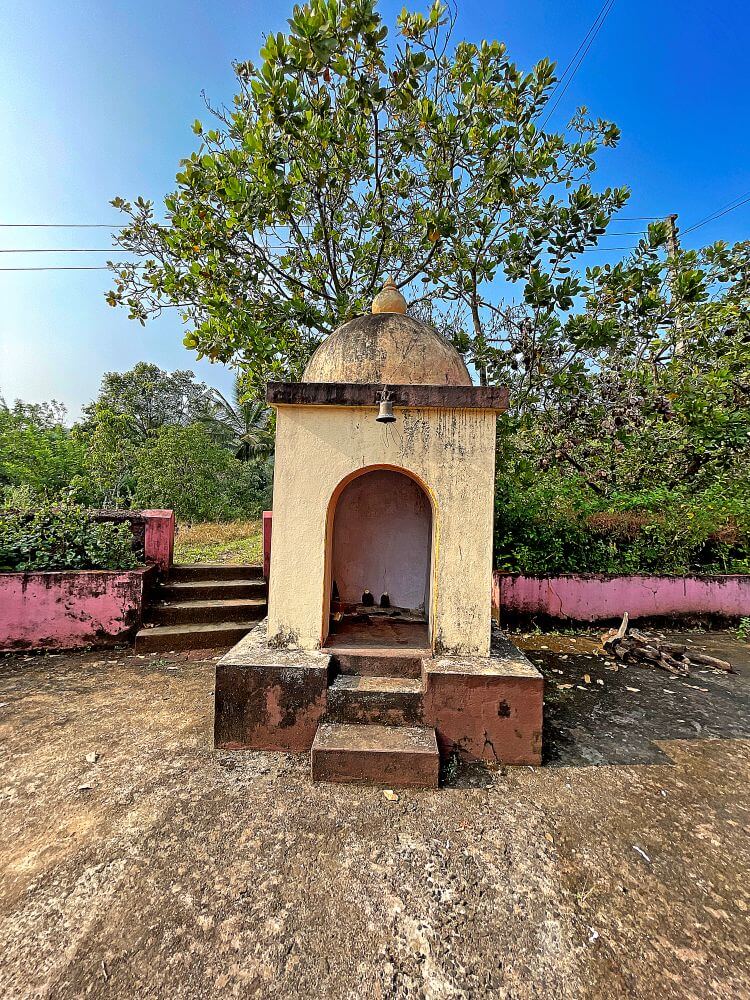
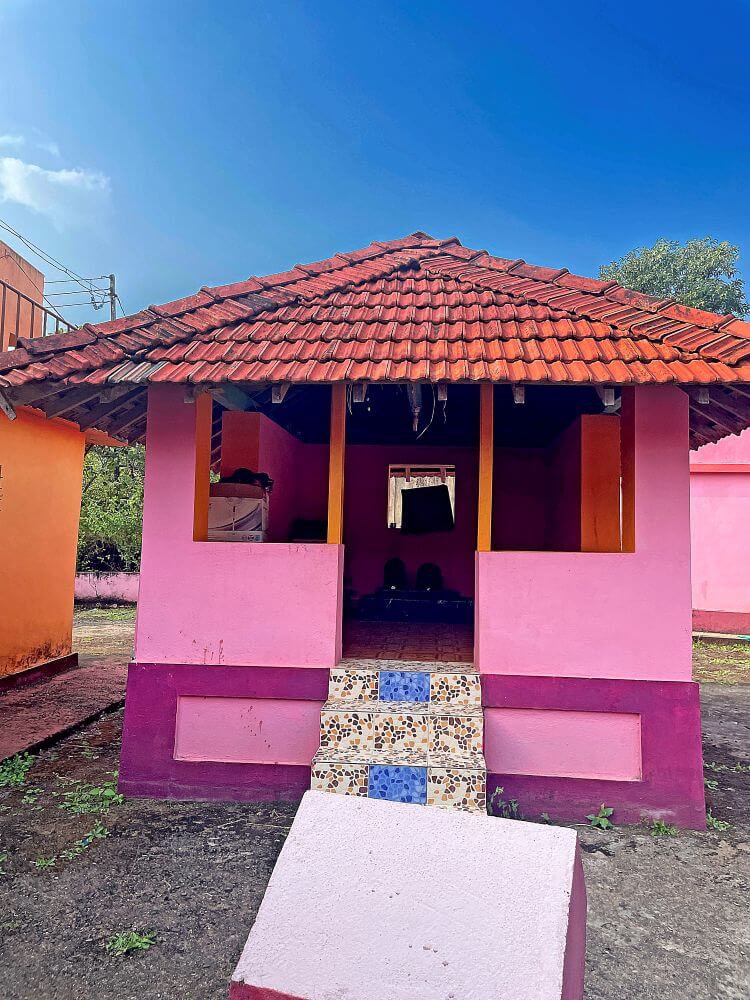
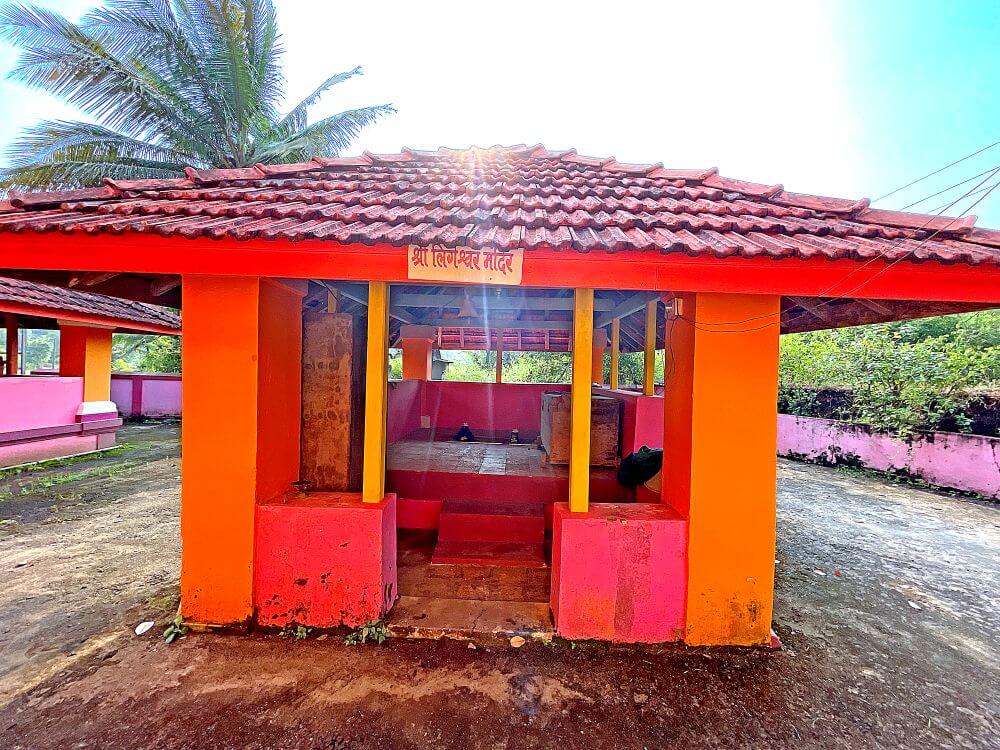
The temple roof features two spires (Shikharas). The smaller Shikhara above the entrance of the Sabhamandapa is modak-shaped and crowned with a Kalasha. The Shikhara above the Garbhagriha is approximately twenty feet high. The lower half of this Shikhara is dodecahedral (twelve-sided), featuring twelve niches (Devakoshtas) housing idols of deities such as Ganesha, Lakshmi, and Saraswati. The upper circular portion tapers towards the top, crowned with an Amalaka and a Kalasha. Located within the temple courtyard is the Lingeshwar Temple. This shrine houses black stone idols of Lord Brahma and a Shiva Linga. Sacred rituals such as Narayan Nagbali are performed here. Entry for women is prohibited inside this Lingeshwar Temple. Adjacent to this shrine is the Bhavai Devi Temple, which enshrines idols of Goddess Bhavai and a right-trunked Lord Ganesha. In an adjoining shrine, there are stone symbols and idols of various local and family deities. Located in a small shrine (Devli) in the courtyard is the Rajasatta stone.
Various annual festivals in the temple begin from Chaitra Padwa. Chaitra Navratri, Narali Purnima, Rishi Panchami, Diwali, Tulsi Vivah, Tripurari Purnima, the annual fair (Jatrotsav) of the Goddess (celebrated on Margashirsha Vadya Chaturthi), and Navratrotsav are celebrated with immense fervor and devotion. During all annual festivals, divine rituals such as Abhisheka, Bhajans, Keertans, Pravachans, Jagaran, Gondhal, and Dashavatari folk drama performances are organized. Alongside these, Mahaprasad is distributed to the gathered devotees.
This sacred temple stands as a testament to deep spiritual devotion, ancient architectural grandeur, and rich local cultural traditions.
The sanctum sanctorum houses the divine idol consecrated according to ancient Vedic traditions, surrounded by serene courtyards and traditional temple architecture.
Navratri, Maha Shivratri, Annual Temple Jatra & Deepotsav
Compare and book flights, secure top-rated local hotels near the temple, hire reliable guides, and rent cars instantly.
Extend your pilgrimage by visiting other highly sacred temples located nearby.


Add ₹999 more to unlock FREE SHIPPING!
Your sacred cart is currently empty.
Shop Photo FramesFill in your delivery details below to place your order.
Add comment