
Add ₹999 more to unlock FREE SHIPPING!
Your sacred cart is currently empty.
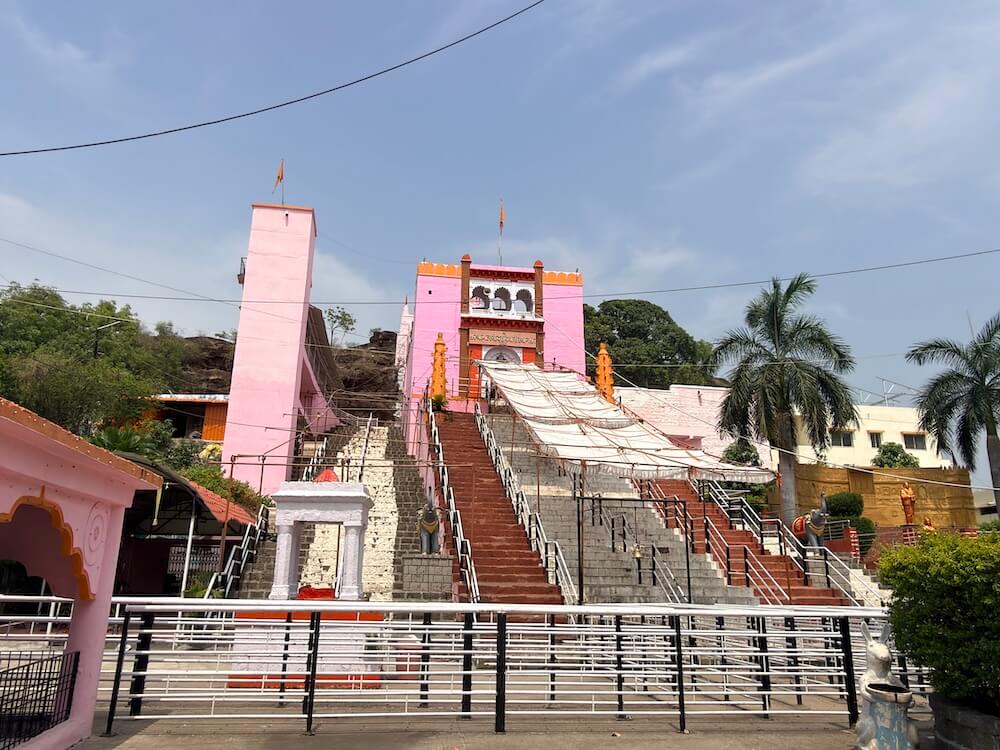
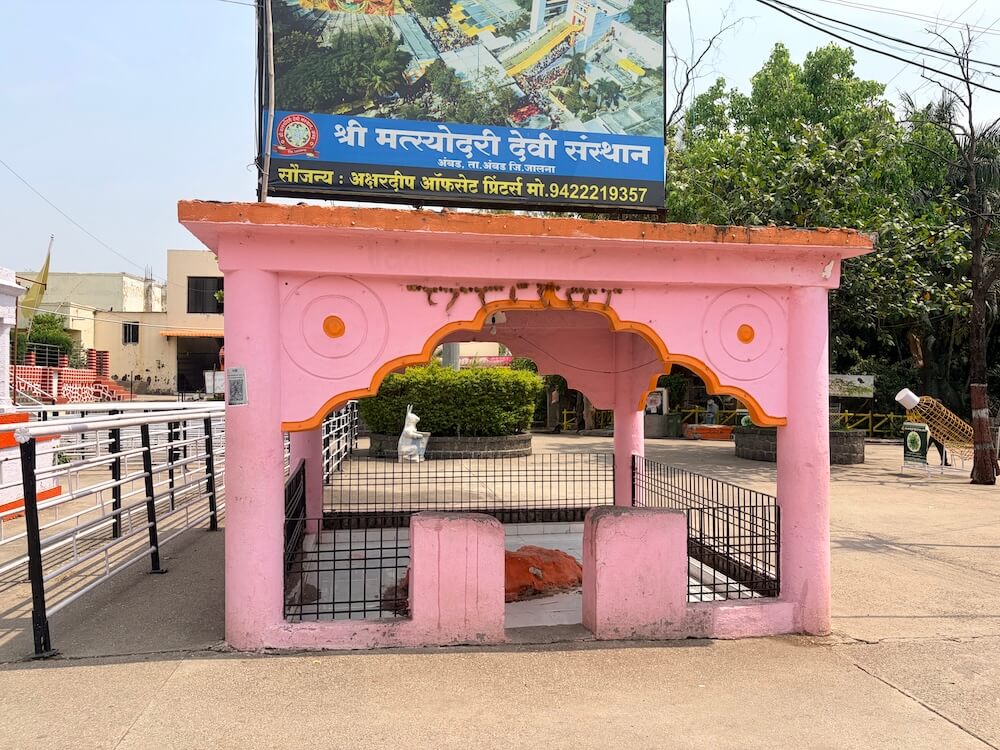
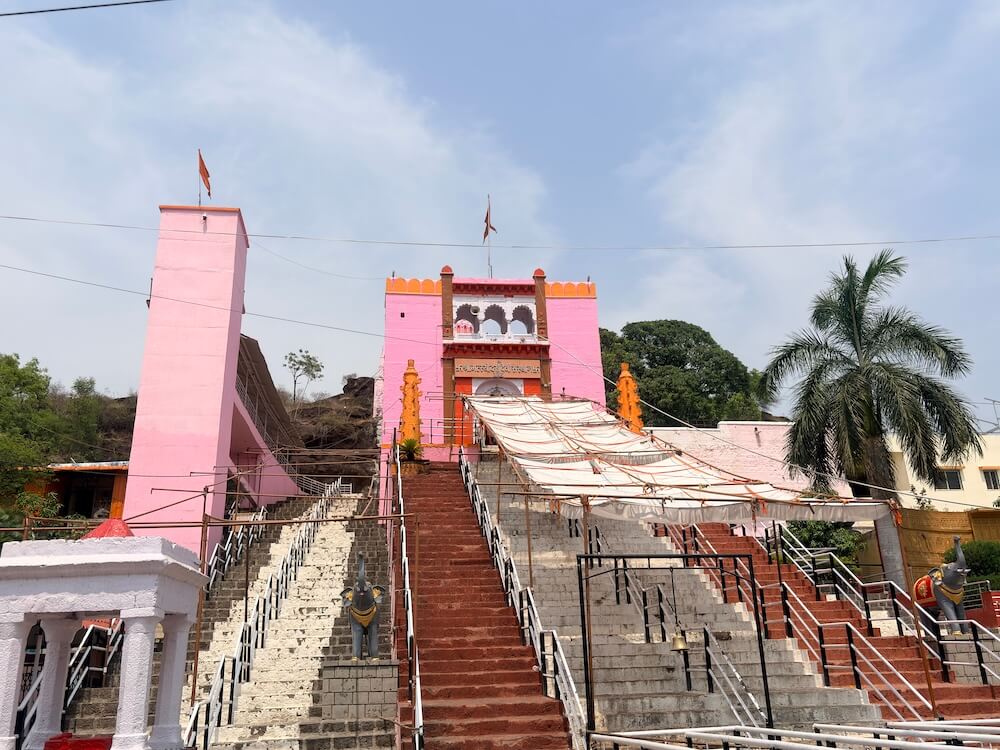
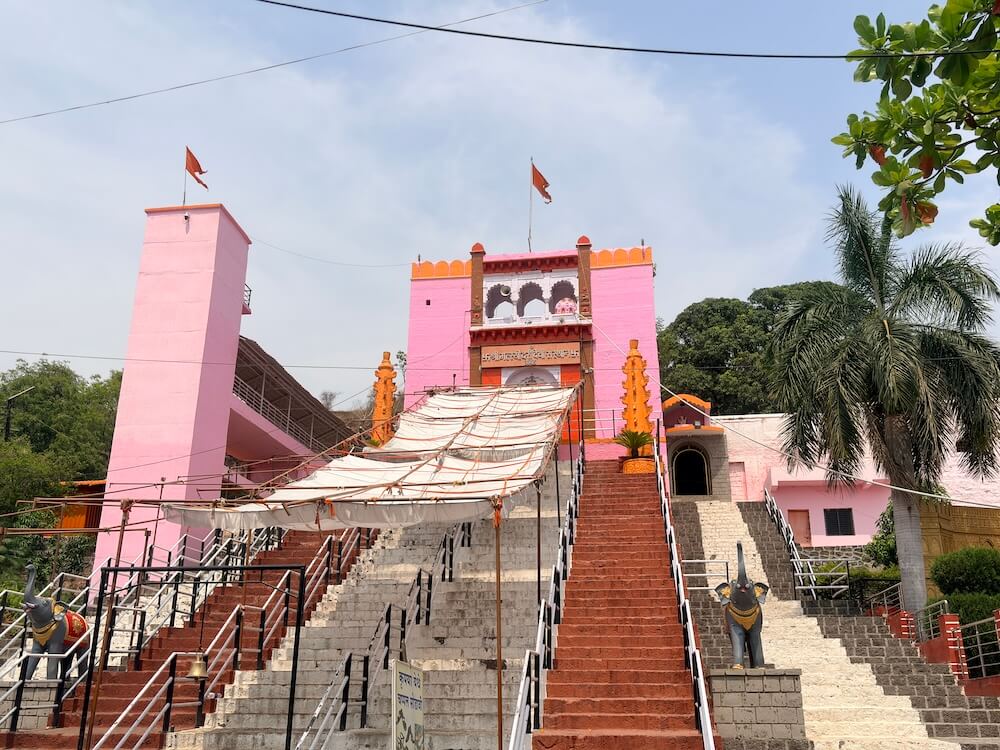
Shop Photo FramesSituated in the town of Ambad in Jalna district, the historic Matsyodari Devi Temple is a renowned and spiritually awakened pilgrimage site across the entire Marathwada region. This temple is considered the primary family deity (Kuldaivat) of Jalna district and a profound center of faith for devotees. The Mother Goddess is widely celebrated for fulfilling the heartfelt wishes of her devotees and for being a deity who responds to their vows (Navas). The temple is located on a hill near Ambad town. The shape of this hill resembles a fish swimming in water, or a ‘Matsya’. When viewed from the front, the hill appears like a fish with its mouth open, tapering towards the back. Because the Goddess resides on this hill, which is shaped like the belly (udar) of a fish, she is known as Matsyodari Devi.
Historically, the town of Ambad was an important center in ancient times, connecting to the major trade route of Pratishthan, or Paithan. According to historical gazetteers and available research, the Marathwada region saw significant development in architecture and culture during the reign of the Yadava kings of Devgiri.
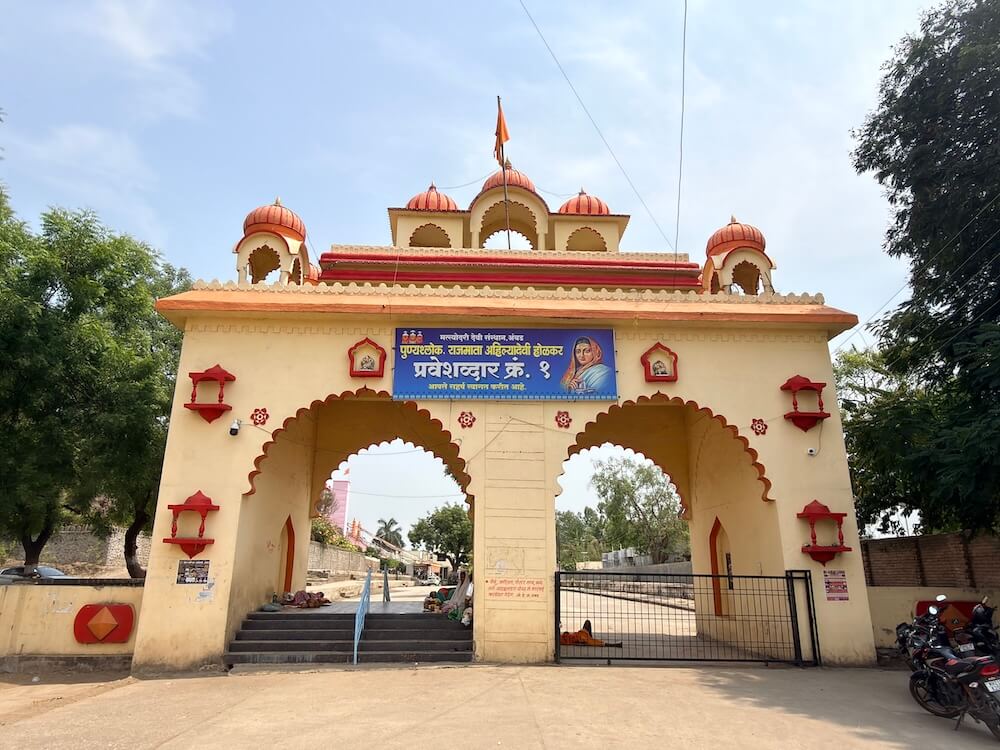
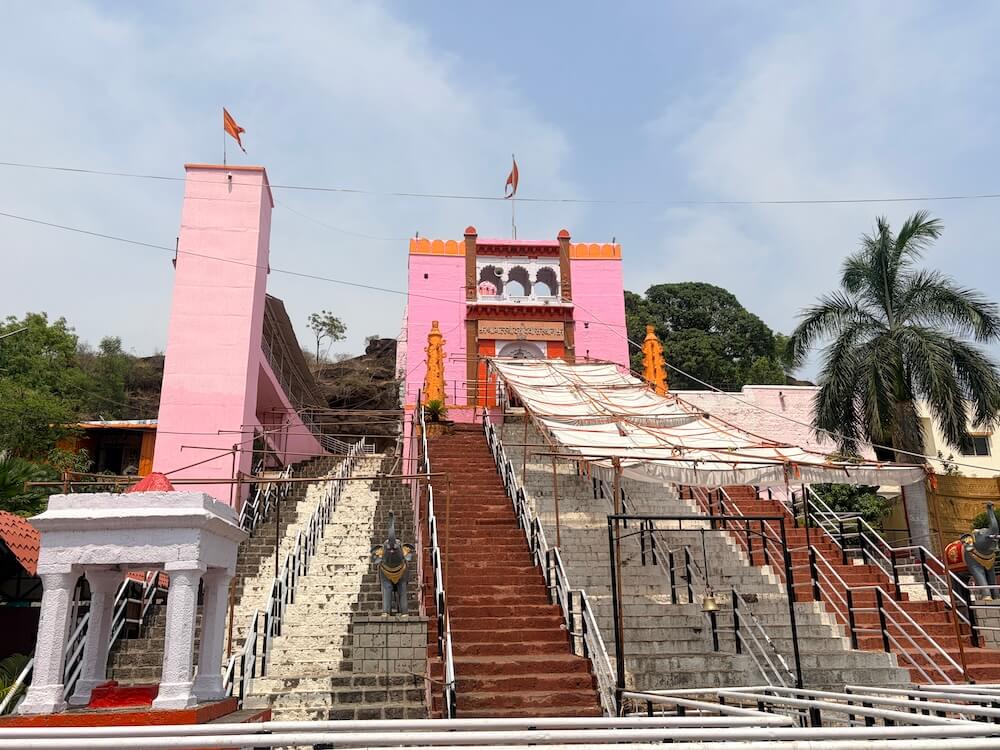
During the prosperous era of the Yadava Empire, a small temple existed on this hill. The current magnificent structure was built in the eighteenth century. According to records from the Holkar royal family of Indore, the Peshwas had gifted the Ambad Pargana to Malharrao Holkar. This Pargana later became an important part of the Holkars’ private estate (Khajgi Daulat). During the reign of Punyashlok Ahilyadevi Holkar, the temple underwent a major renovation. Evidence shows that Ahilyadevi donated large endowments and fertile lands for the daily worship and annual expenses of the Goddess. She also initiated an annual grant (Varshasan) for the temple. Ahilyadevi constructed stone steps to climb the hill and a strong fortification wall around the temple. In addition to improving the temple, she also built two large water reservoirs named ‘Pushkarini’ and ‘Kavandi’ to solve the drinking water problem in Ambad. This entire district remained under the rule of the Nizam of Hyderabad for a long time and continued to be under the Nizam even after the country’s independence. Later, after a long struggle in the Marathwada Liberation Movement and the sacrifices of many revolutionaries, this region became an official part of independent India.
The text ‘Matsyodari Mahatmya’ contains a detailed description of the long spiritual dialogue between the devotee Sage Markandeya and King Ambarish. In the Sahyadri Khand of the Skanda Purana, this mountain is referred to as Matsyadri Parvat. Legend has it that the Goddess manifested from this very hill in Ambapuri for her devotee King Ambarish, taking the form of the trinity—Mahakali, Mahalakshmi, and Mahasaraswati. The town of Ambad was also founded by King Ambarish. Having renounced royal splendor in search of peace, he lived in a secret cave on this hill to meditate. The Samadhi of King Ambarish, featuring two human footprints carved into stone at the foot of the hill, remains a primary subject of devotion for pilgrims today. At the base of the temple lies the stone of Tanaji Deshmukh, a supreme devotee of Mother Matsyodari. A stone cistern known as ‘Sita’s Nhani’ (Sita’s Bath) also exists on the hill.
The architecture of this unique temple is exquisite. In a natural cave within the belly of the hill, there are three ‘Tandalas’ (stone forms) of the Goddess representing Mahakali, Mahalakshmi, and Mahasaraswati. The collective residence of these three Mothers is the main feature of this shrine. About sixty steps have been built to reach this grand temple on the hill. Two tall lamp towers (Deepmalas) in front of the main entrance add to the temple’s beauty. Upon entering the main gate, one finds many beautiful sculptures carved into the stone walls. Among them, on a prominent wall, is a highly unique sculpture depicting three fish bodies sharing a single mouth, exquisitely carved in stone. This image conveys the message of the oneness of the Mother. According to art historians, a very rare sculpture of Jyeshtha, or Alakshmi, is carved on the temple ceiling. Considered the elder sister of Goddess Lakshmi who appeared during the churning of the ocean, she is referred to as ‘Akkabai’ in Maharashtra. Outside the sanctum sanctorum, a four-and-a-half to five-foot-tall statue of Hara-Gauri is installed. In this sculpture, Shiva has Parvati seated on his left thigh, with his left arm resting on her shoulder. In his right hand, a trident (Trishul) and prayer beads (Akshamala) are visible, while Parvati is seen holding a fruit called ‘Bijpurak’. At the feet of this statue, one can see the sculpture of Nandi, Shiva’s vehicle, and a very rare sculpture of a monitor lizard (Ghorpad) at Parvati’s feet. In the sanctum sanctorum, there is the main eight-armed idol of the Goddess seated on a fish. Such an idol of the eight-armed Goddess (Ashtabhuja) seated on a fish vehicle (Matsyavahana) is considered extremely rare in all of Maharashtra. An ancient underground passage is used to exit the sanctum.
Various festivals and fairs are celebrated with great enthusiasm in this temple throughout the year. Every year in the month of Ashwin, a grand Sharadiya Navratri festival is organized here. During this time, in October, a large fair is held in Ambad. This fair and religious festival lasts for a total of 12 days. During the festival, a special traditional musical program called ‘Veena Bhajan’ continues uninterrupted for twenty-four hours in the temple. For the citizens of Ambad, Diwali begins with this Sharadiya Navratri festival. There is an old tradition of ‘Ghati Basne’ (sitting in meditation/vow) in the temple during Navratri. After their vows are fulfilled, many women sit in the temple during this period. Additionally, devotees fulfill their vows by breaking coconuts on every step. For the health of their children, parents follow a unique vow here: the child is dropped from the empty space in the ceiling of the assembly hall (Nagarkhana). Citizens standing below safely catch the child in a blanket. The seventh and fifth days of the Navratri festival are considered extremely significant. On these days, a grand display of lamps (Deepotsav) and fireworks takes place at the temple. On the ninth day (Navami), various religious programs including a sacrificial fire (Homa-Havan) are performed. This festival, which begins on the first day, continues until the full moon of Ashwin, i.e., Kojagiri Purnima. On Kojagiri Purnima, a special night worship is held, and a large crowd of devotees gathers.
In addition to this, a grand annual fair of Matsyodari Devi is also organized here in the month of Chaitra. During the Chaitra Yatra, various religious rituals and a magnificent Palkhi procession of the Goddess take place. A second major festival of lights, Deepotsav, is celebrated at the temple on Kartik Purnima, also known as Tripurari Purnima. On this day, thousands of lamps are beautifully arranged by the ‘Matsyodari Deepotsav Mandal’. Earthen lamps are lit all around the main temple building, both the lamp towers (Deepmalas), and the 65 steps. The entire hill becomes illuminated by the glow of the lamps.
Religious rituals are performed regularly in the temple every day. During the month of Shravan, various religious programs are organized, including daily Abhishekam, Puja, and Aarti. Furthermore, Naivedya is offered to the Goddess daily at 7:00 AM and 12:00 PM, and Aarti is performed regularly in the evening. There is an age-old tradition of making various vows to the Goddess and, upon the fulfillment of wishes, climbing the hill barefoot or by performing Dandavat (prostrations). Devotees can have Darshan here daily from 6:00 AM to 8:00 PM.
This sacred temple stands as a testament to deep spiritual devotion, ancient architectural grandeur, and rich local cultural traditions.
The sanctum sanctorum houses the divine idol consecrated according to ancient Vedic traditions, surrounded by serene courtyards and traditional temple architecture.
Navratri, Maha Shivratri, Annual Temple Jatra & Deepotsav
Compare and book flights, secure top-rated local hotels near the temple, hire reliable guides, and rent cars instantly.
Extend your pilgrimage by visiting other highly sacred temples located nearby.


Add ₹999 more to unlock FREE SHIPPING!
Your sacred cart is currently empty.
Shop Photo FramesFill in your delivery details below to place your order.
Add comment